Back to Blog

Why is my brake fluid low?

04/05/2025
    Why is my brake fluid low?  Image


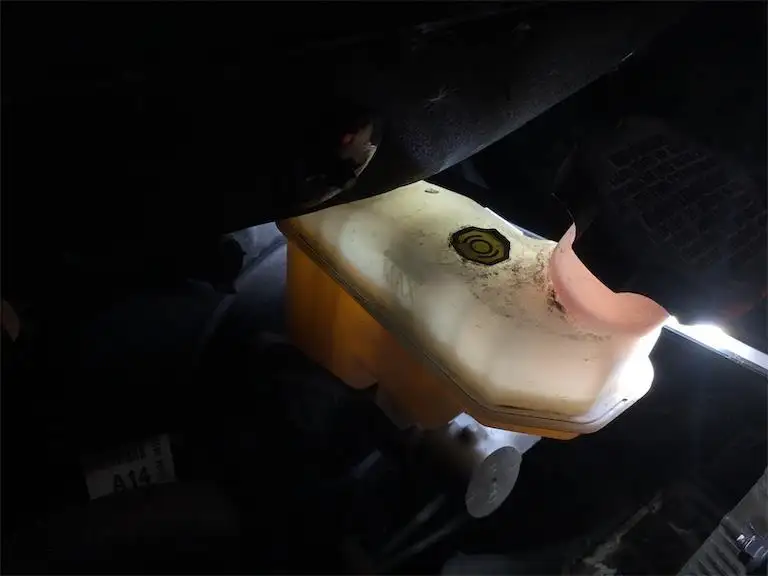
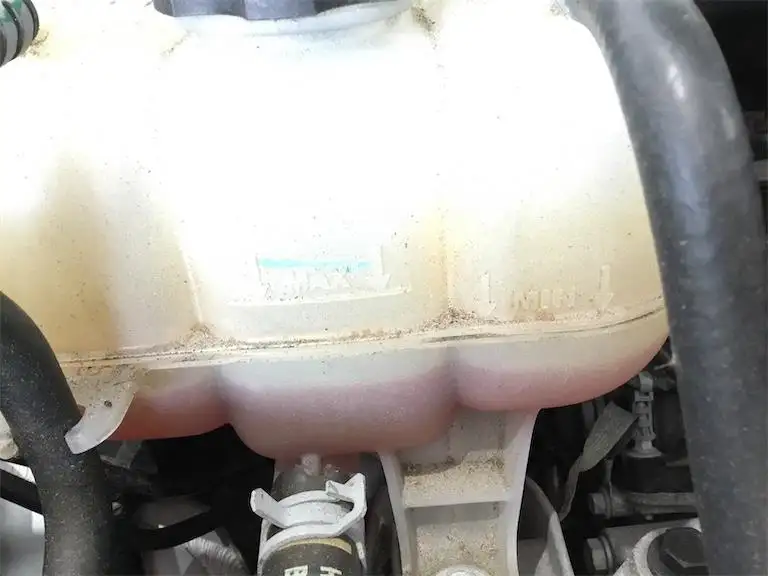
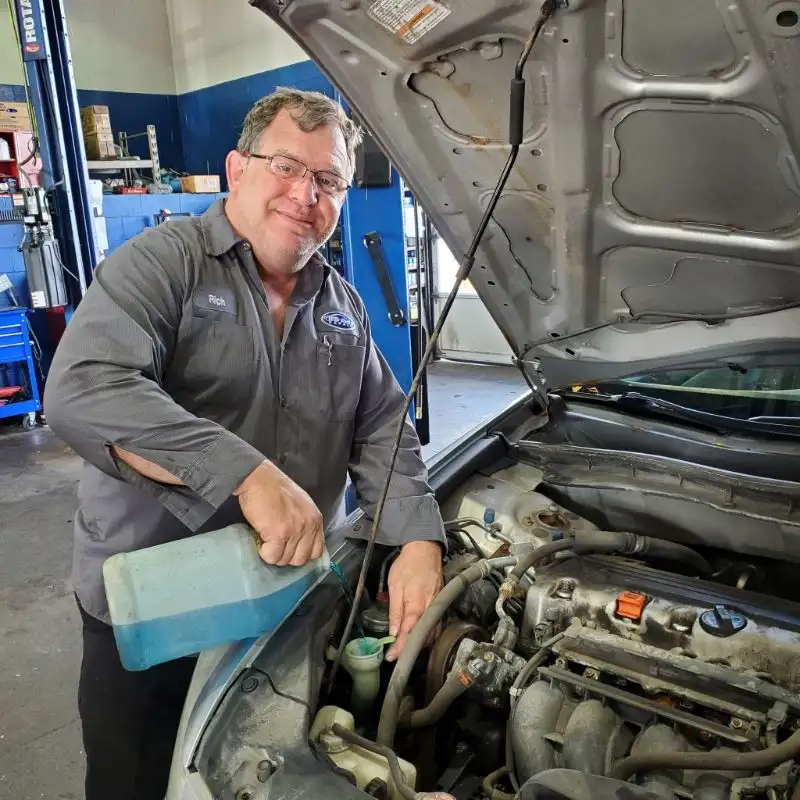
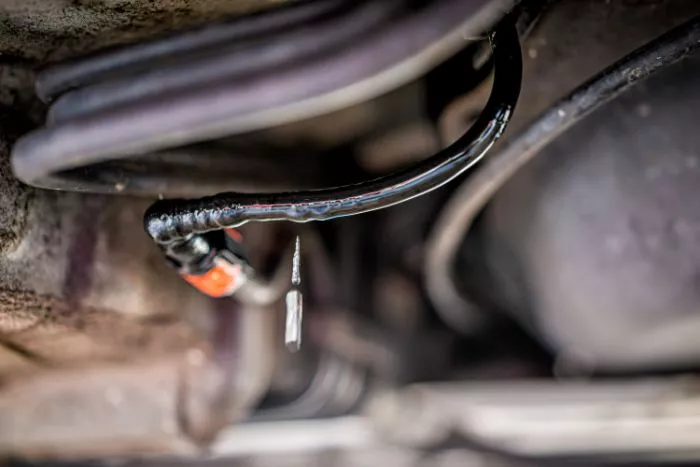
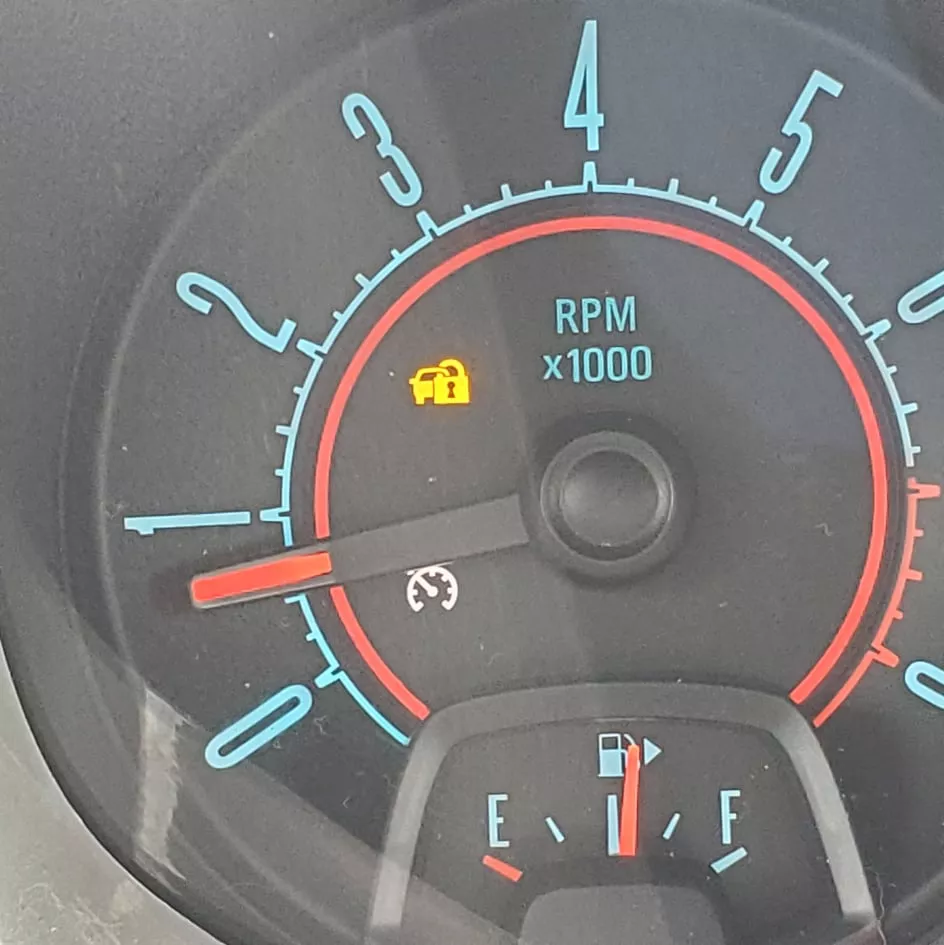
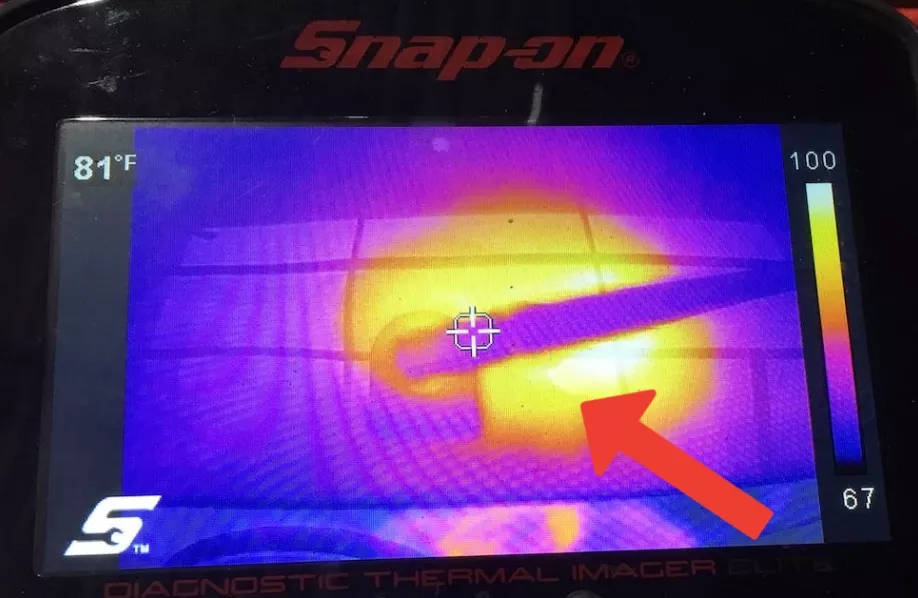
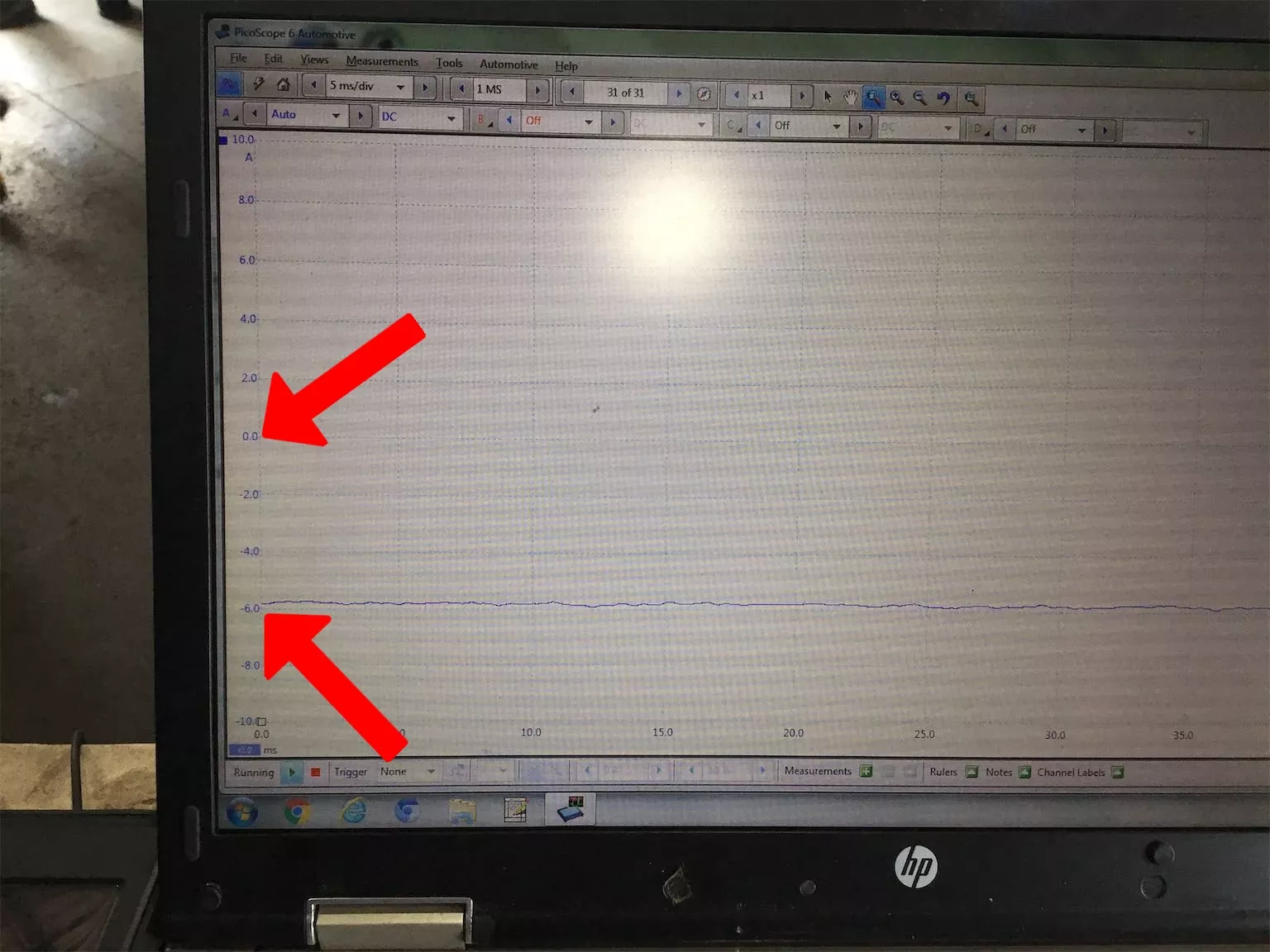
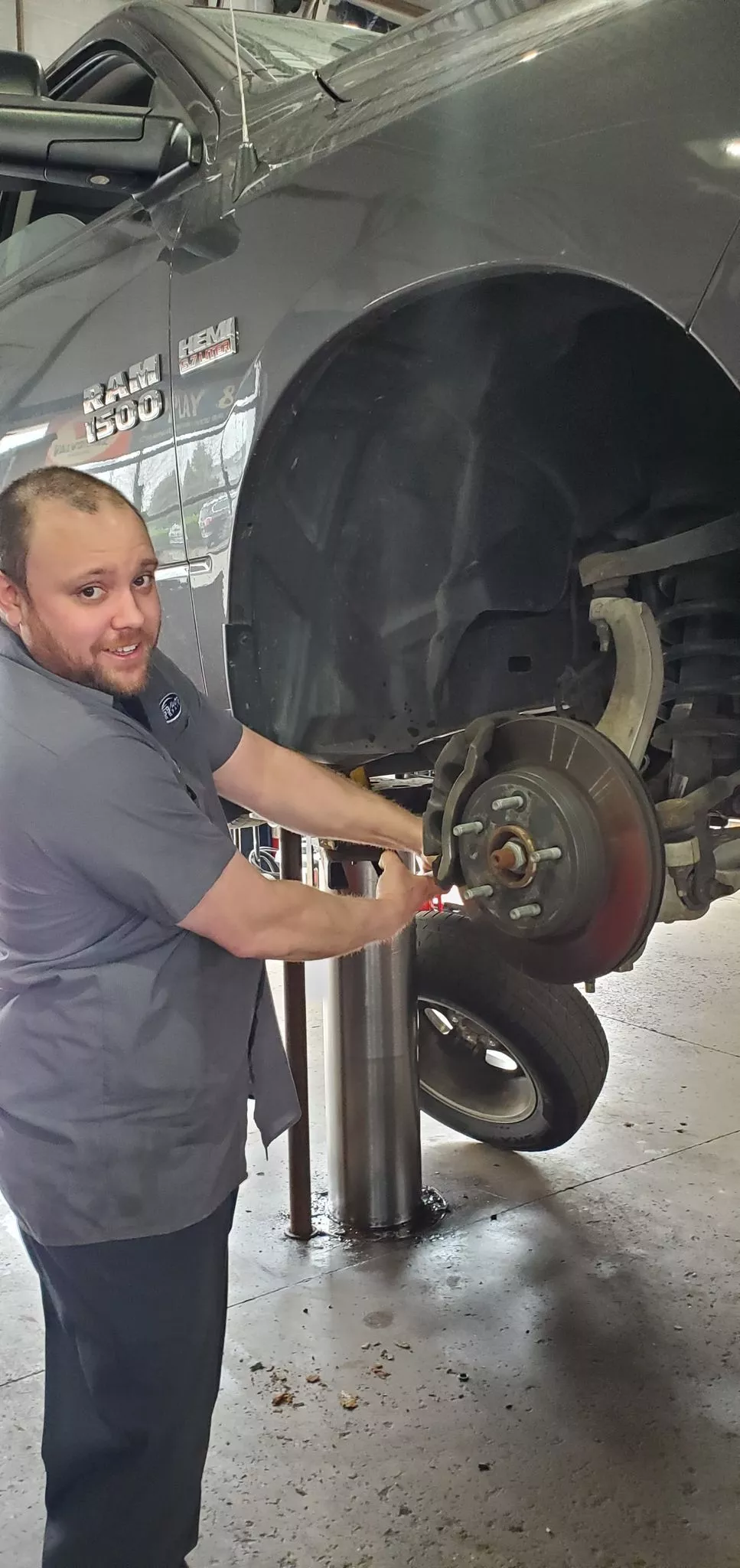
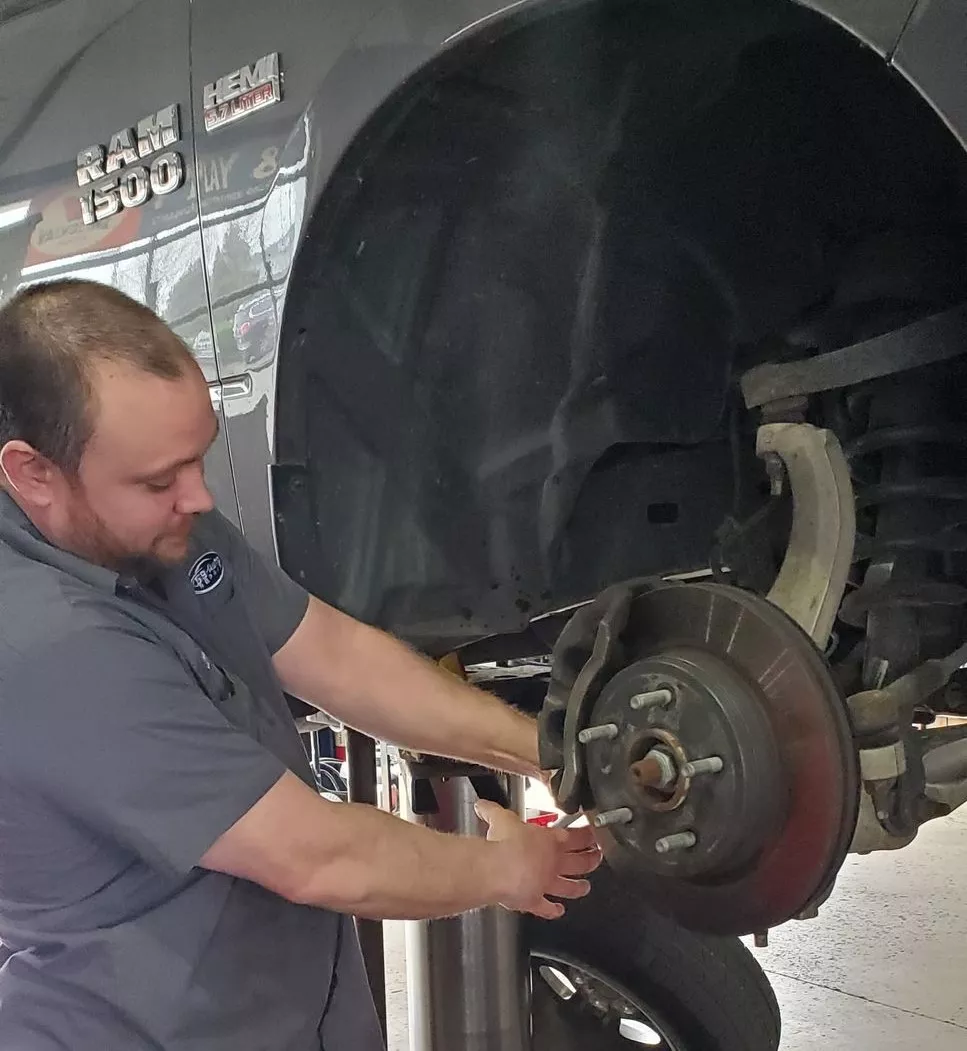
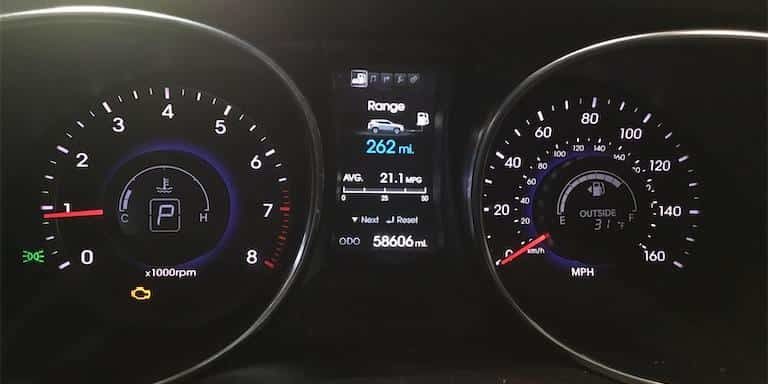
    Don't ignore that dashboard warning light in Plainfield, IL! If your brake light is on, one of the first things to check is your brake fluid level. At 59 Auto Repair, your local Plainfield mechanic for all your auto repair needs, we want to emphasize the critical importance of maintaining a full brake fluid reservoir. Brake fluid is the hydraulic fluid that transmits the force from your foot on the brake pedal to the brake calipers, enabling your vehicle to slow down and stop.

    A low brake fluid level can lead to several dangerous issues. You might experience reduced braking power, resulting in longer stopping distances, making it harder to react safely. A spongy brake pedal can also occur, indicating air has likely entered the brake lines due to the low fluid, compromising the necessary hydraulic pressure. In the most severe cases, extremely low brake fluid can even lead to complete brake failure, a terrifying situation for any driver. Furthermore, operating your vehicle with low brake fluid can introduce air and moisture into the system, potentially causing corrosion and damage to other essential brake components like the master cylinder and calipers, leading to more extensive and costly brake repair in the future.

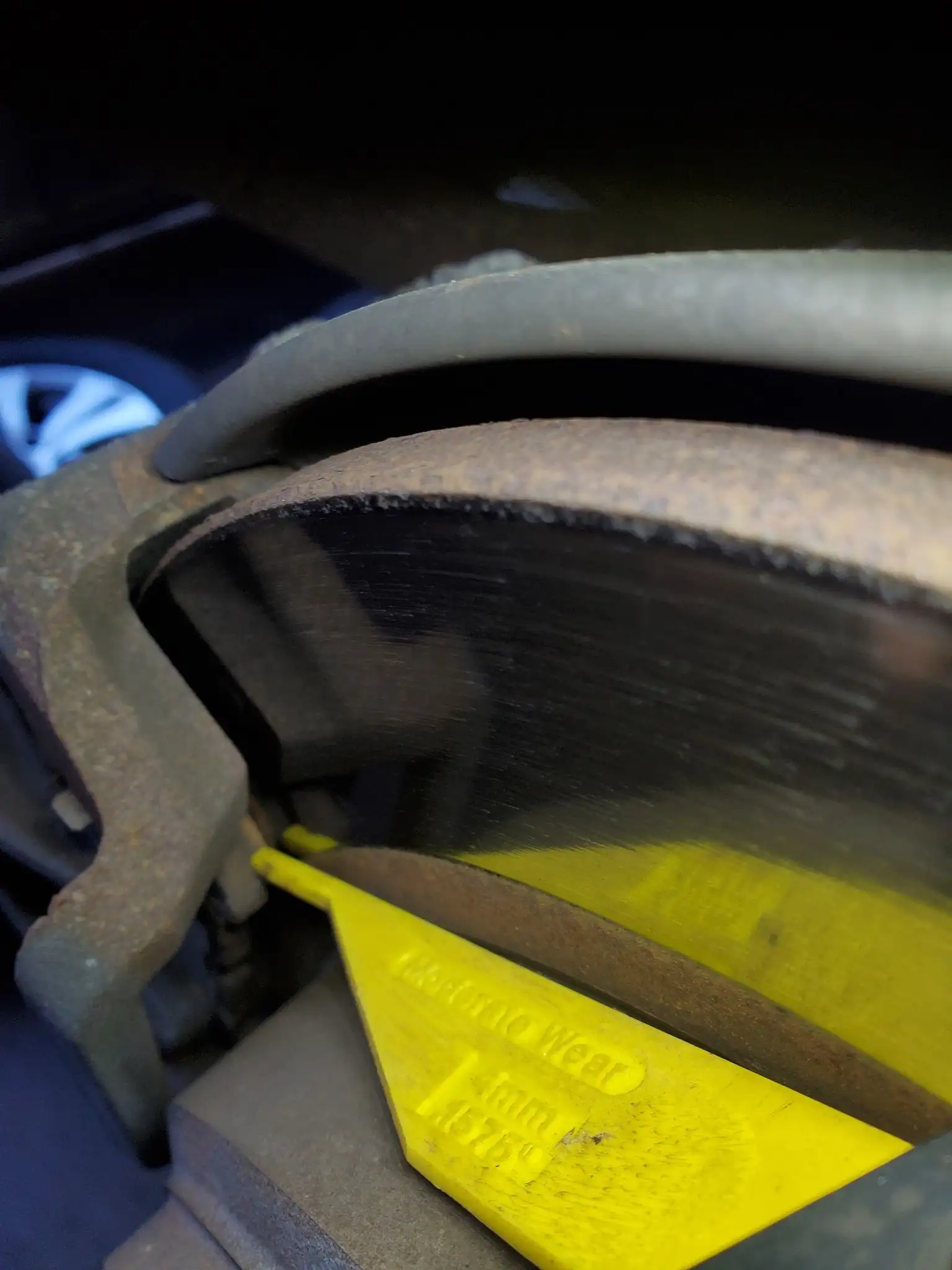
    It's important to understand that brake fluid doesn't simply evaporate. A consistently low brake fluid level usually signals either a leak within the braking system, which can occur in various places like brake lines or calipers, or, less commonly, it can be a consequence of significantly worn brake pads, where the fluid level drops slightly to compensate for the increased piston travel. However, a substantial drop in fluid level almost always points to a leak.

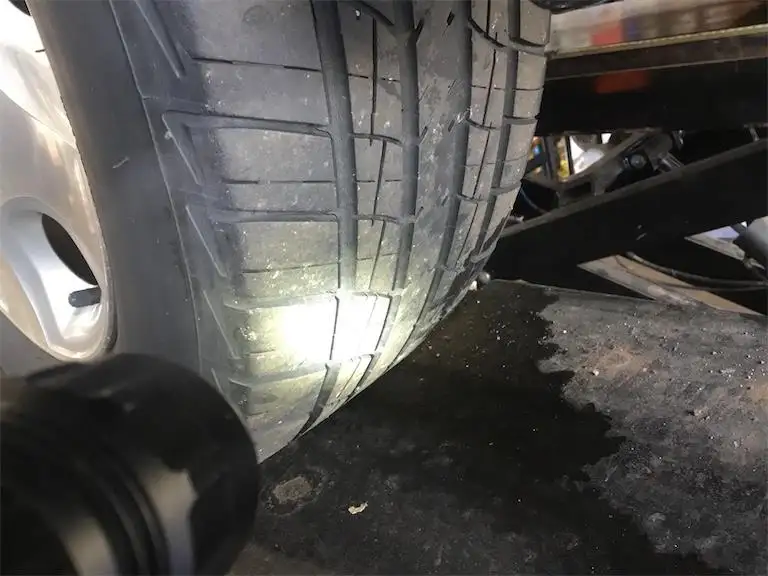
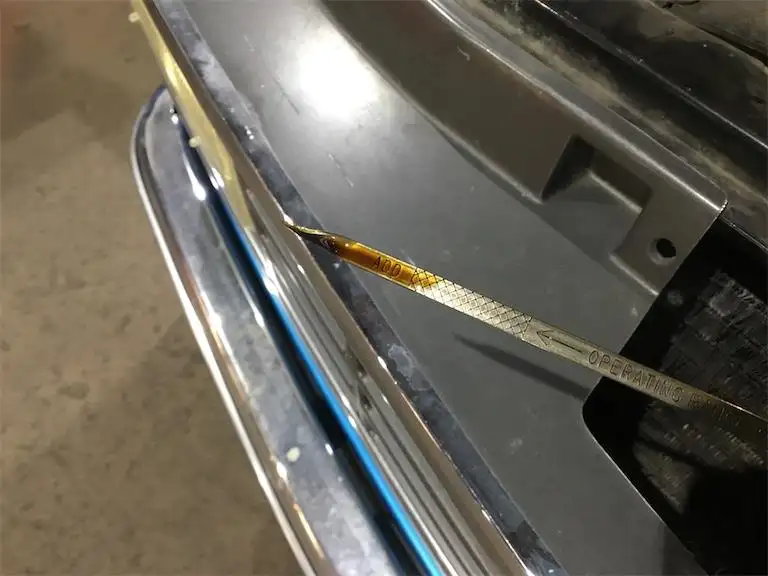
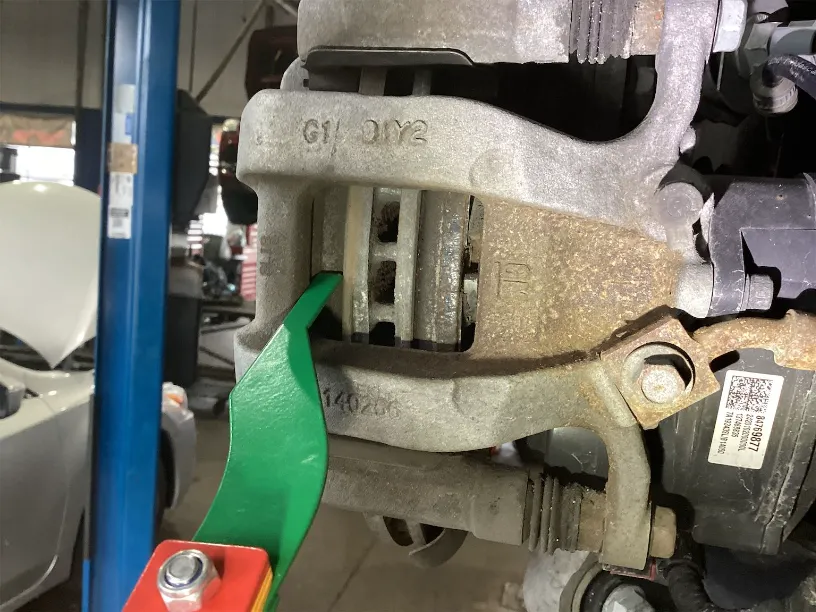
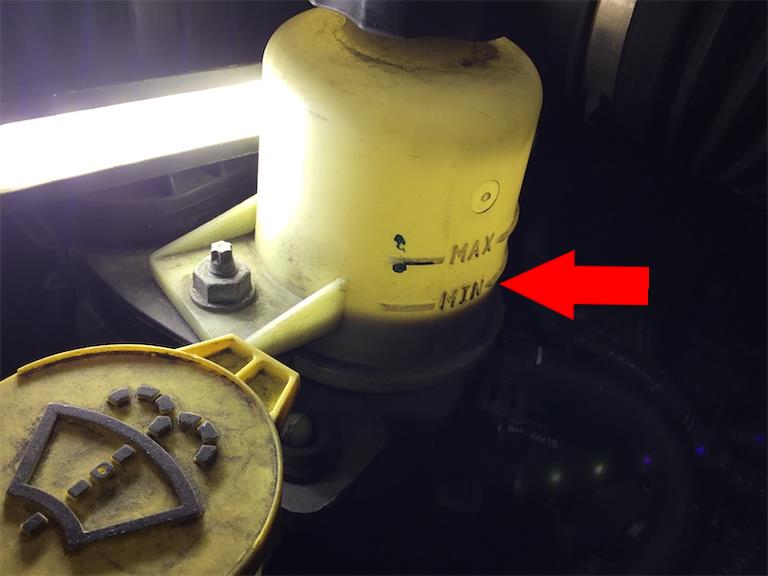
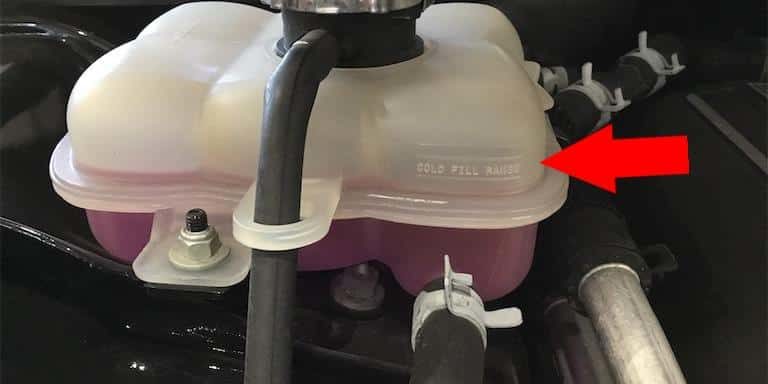
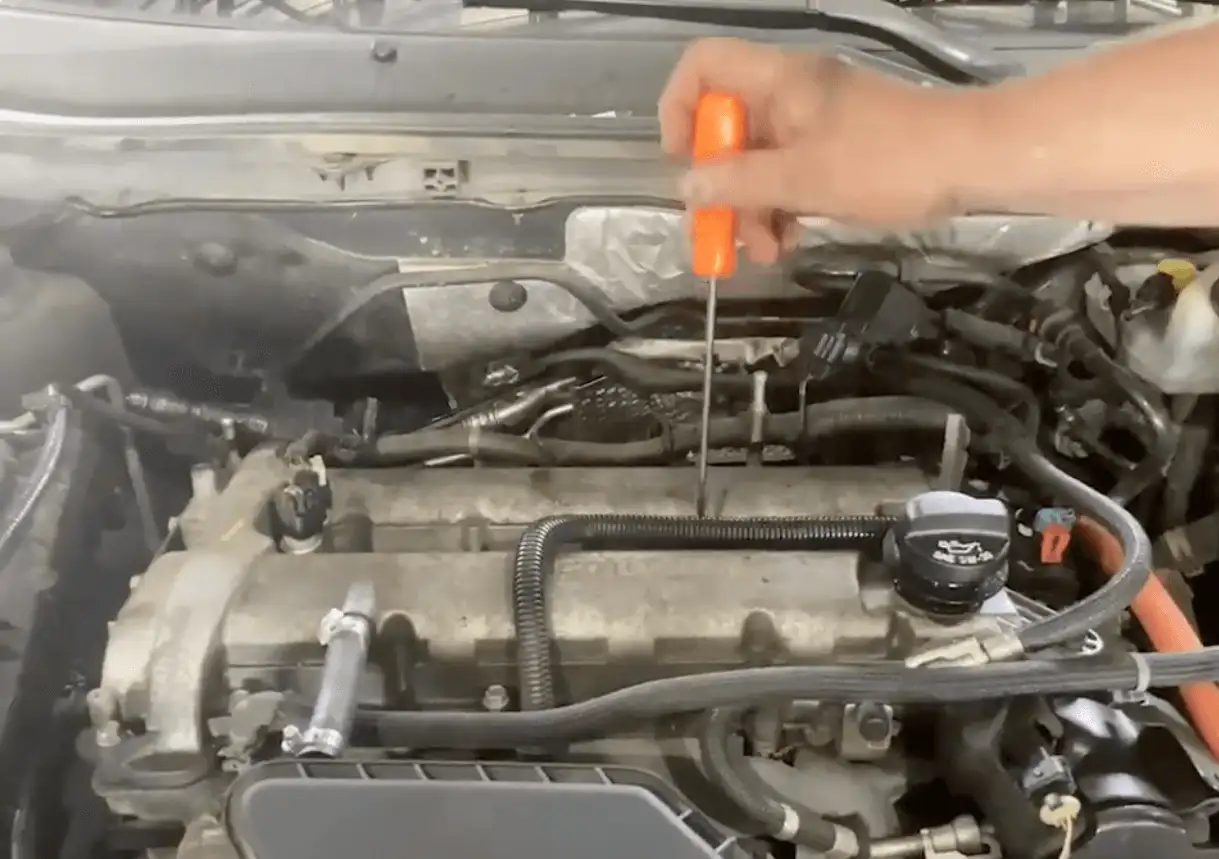
    If you discover your brake fluid is low, it's crucial to take immediate action. First, check the brake fluid reservoir under your hood and ensure the level is between the minimum and maximum markings. Next, visually inspect around your wheels, brake lines, and master cylinder for any signs of fluid leaks. Even if you decide to add more fluid, it is absolutely essential to schedule a comprehensive inspection at 59 Auto Repair in Plainfield, IL. Our experienced mechanics can accurately diagnose the underlying cause of the low brake fluid and perform the necessary brake repair to guarantee your safety on the road.

    At 59 Auto Repair, we are dedicated to providing exceptional auto repair services to the Plainfield, IL community. Our skilled technicians possess the expertise and utilize advanced equipment to diagnose and repair any brake system issue, ensuring your vehicle's safety and reliability. We are committed to using high-quality parts and stand firmly behind our workmanship. Don't delay addressing a potential brake issue. If you suspect a problem or notice your brake fluid is low, bring your vehicle to 59 Auto Repair in Plainfield, IL. We are your trusted local auto repair experts in Plainfield. Call us today to schedule your important brake inspection.

    Send Us A Message

    *Required
    • Where Can I Find a Trusted Auto Repair Shop in Plainfield? Image

      Where Can I Find a Trusted Auto Repair Shop in Plainfield?

      If you’re driving through town and suddenly hear a strange noise under your hood, you might find yourself asking, “Where can I find a trusted auto repair shop in Plainfield?” At 59 Auto Repair, we’re here to make sure your car troubles don’t turn into major headaches.

      We’re proud to be a top-rated choice for Plainfield auto repair, and our skilled mechanics and automotive technicians are ready to get you back on the road safely and quickly.

      Why Choose 59 Auto Repair in Plainfield?

      Whether you need routine maintenance or a serious repair, our experienced team provides reliable, affordable service right here in the heart of Plainfield. Here’s why we’re a go-to spot for auto care in the area:

      1. Certified Automotive Technicians

      Our team is made up of ASE-certified automotive technicians who stay up to date with the latest training and tools. That means when you bring your car to us, you're getting professional service from experts who know your vehicle inside and out.

      2. Honest, Local Mechanics You Can Count On

      At 59 Auto Repair, we believe in building trust with our customers. We explain every repair clearly, offer upfront pricing, and never recommend services you don’t need. Our Plainfield mechanics treat your car like it’s their own.

      3. Convenient Location & Fast Service

      Located just off Route 59, we’re easy to find whether you're a long-time local or new to the area. We offer fast turnaround times and convenient scheduling to get you back behind the wheel without delay.

      What Services Do We Offer?

      From oil changes to engine diagnostics, our full-service auto repair shop in Plainfield covers it all:

      • Brake repair and replacement
      • Engine and transmission diagnostics
      • Oil changes and preventative maintenance
      • Heating and cooling system repairs
      • Tire rotation, alignment, and replacement
      • Electrical system diagnostics
      • And more!

      Need an Auto Repair in Plainfield? Just Ask Your Phone!

      More people are using voice search every day to find what they need fast. If you’re driving or at home and your car starts acting up, just say:

      “Hey Siri, find a mechanic near me.”
      “OK Google, who does auto repair in Plainfield?”
      “Alexa, where’s the best automotive technician in Plainfield?”

      Chances are, you’ll hear about us — 59 Auto Repair — because we’ve earned a reputation for quality service, honest work, and fast repairs.

      Call or Visit 59 Auto Repair Today

      If your car needs attention, don’t wait. Come see the trusted automotive technicians at 59 Auto Repair in Plainfield. Call us now or book your appointment online. We’re here to make car care simple, honest, and affordable — just like it should be.

      Looking for a mechanic near you? Visit 59 Auto Repair — Plainfield’s trusted name in auto care.

      08/09/2025Read more
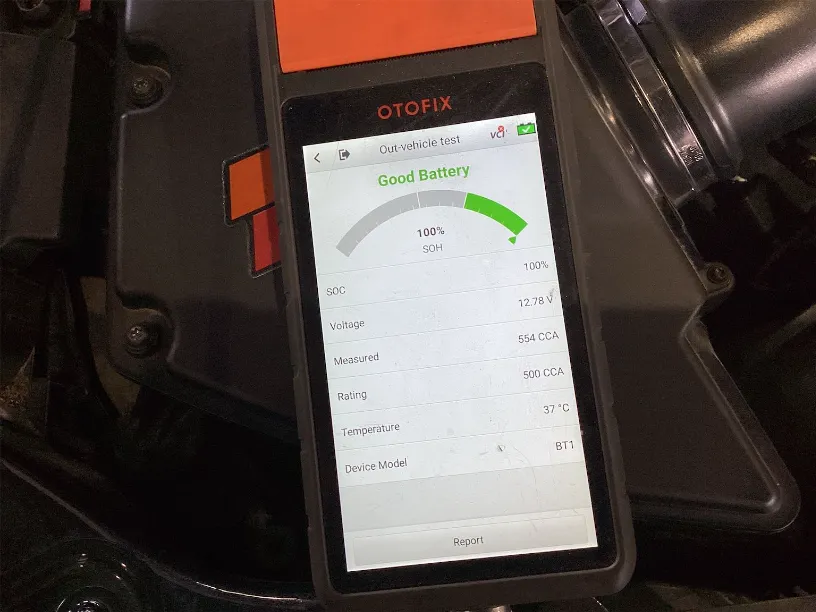
    • How does a car battery work?  Image

      How does a car battery work?

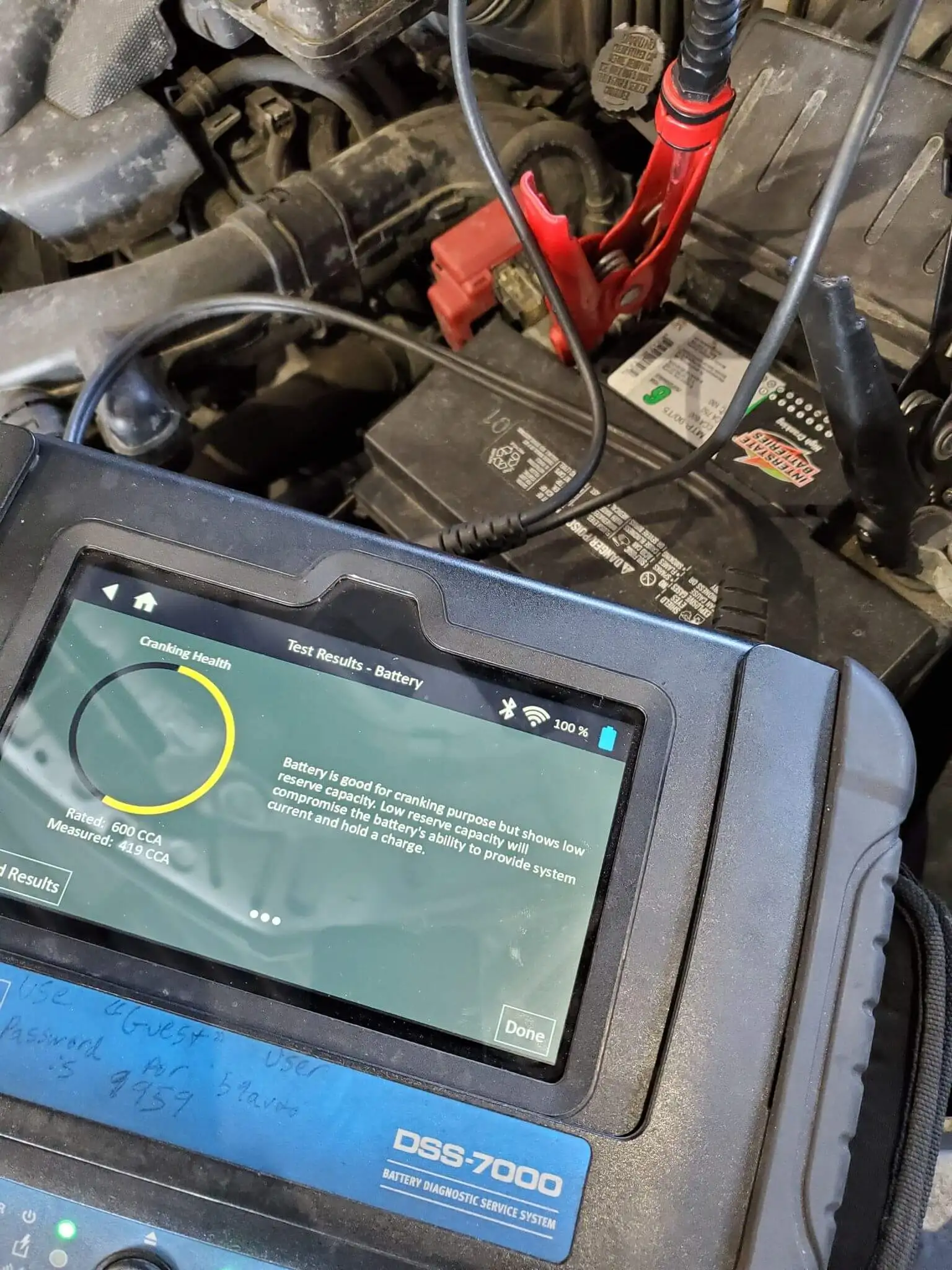
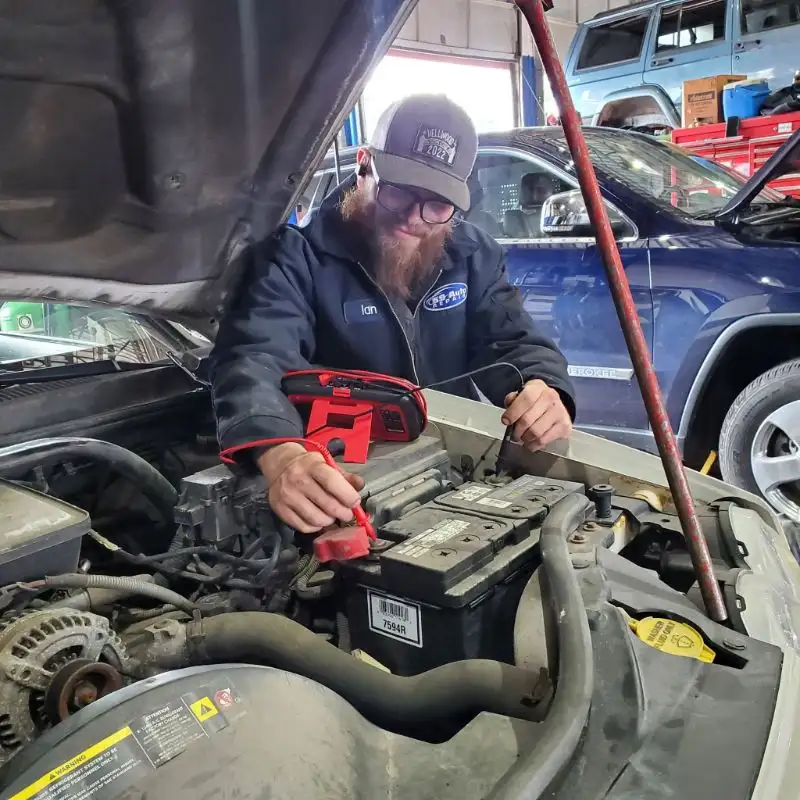
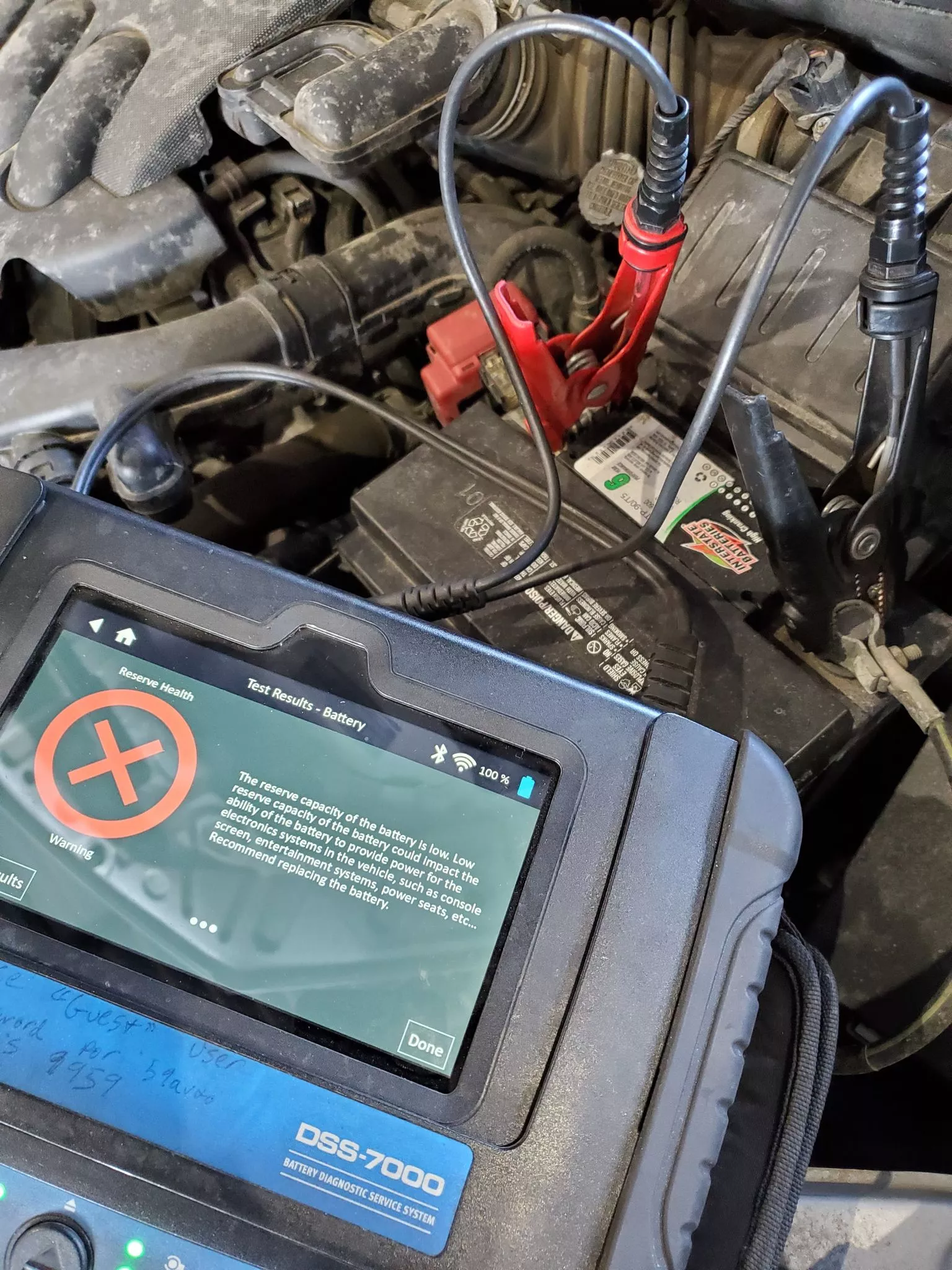
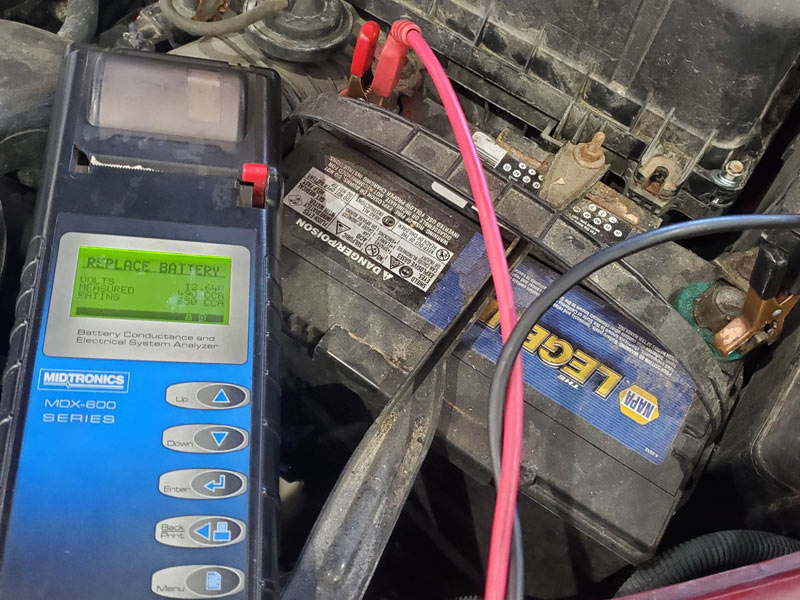
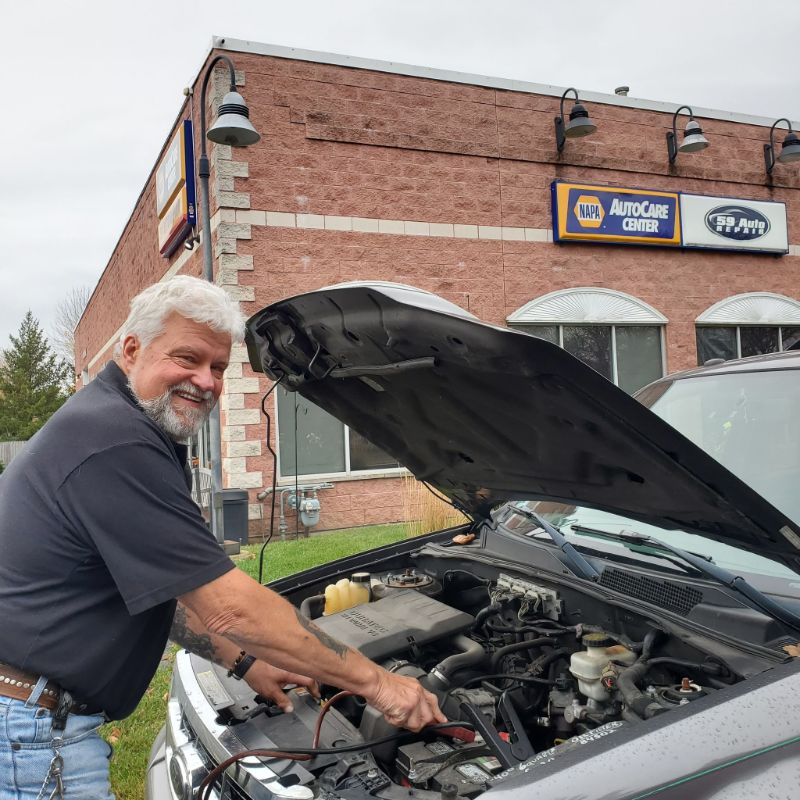
      A car battery is a vital component that powers your vehicle's electrical system, from starting the engine to powering accessories like headlights, radio, and power windows. Understanding how a car battery works can help you maintain it properly and avoid unexpected breakdowns.

      The Basics: A typical car battery is a lead-acid battery. It consists of six cells, each containing lead plates immersed in a sulfuric acid electrolyte solution. When the battery is charged, a chemical reaction occurs between the lead plates and the electrolyte, storing electrical energy.

      Charging and Discharging

      Charging: During charging, an external source of electricity, such as an alternator, reverses the chemical reaction within the battery. This process converts electrical energy into chemical energy, storing it in the battery.

      Discharging: When you turn on your car's ignition or use its electrical accessories, the stored chemical energy is converted back into electrical energy. This process powers the vehicle's systems.

      Key Components

      Lead Plates: These are the positive and negative electrodes within each cell. They undergo chemical reactions during charging and discharging.

      Electrolyte: A sulfuric acid solution that conducts electricity and facilitates the chemical reactions between the lead plates.

      Separator: A porous barrier that separates the positive and negative plates, preventing them from touching and causing a short circuit.

      Case and Cover: These components protect the internal components of the battery from physical damage and environmental factors.

      Signs of a Weak Battery

      Slow Cranking: The engine takes longer to start, especially in cold weather.

      Dim Headlights: The headlights may appear dimmer than usual.

      Frequent Battery Drains: The battery may need to be recharged often.

      Tips for Battery Maintenance

      Regular Battery Checks: Have your battery checked by a qualified mechanic or technician at 59 Auto Repair in Plainfield, IL.

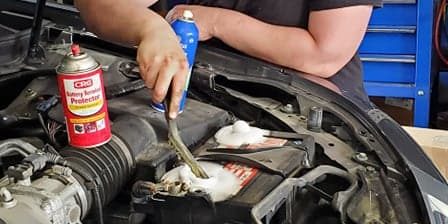
      Clean Battery Terminals: Corrosion on the battery terminals can hinder electrical conductivity. Clean them regularly with a wire brush and a battery terminal cleaning solution.

      Consider a Battery Tender: A battery tender can help maintain your battery's charge, especially during periods of inactivity. If your vehicle sits for extended periods of time, it is a good idea to have a battery tender installed on your vehicle to ensure a consistent charge.

      If you're experiencing any issues with your car's battery, it's essential to consult with a professional auto mechanic near you. 59 Auto Repair in Plainfield, IL, can diagnose and resolve battery problems, ensuring your vehicle is always ready to go.

      11/14/2024Read more
    • Why should I replace my coolant?  Image

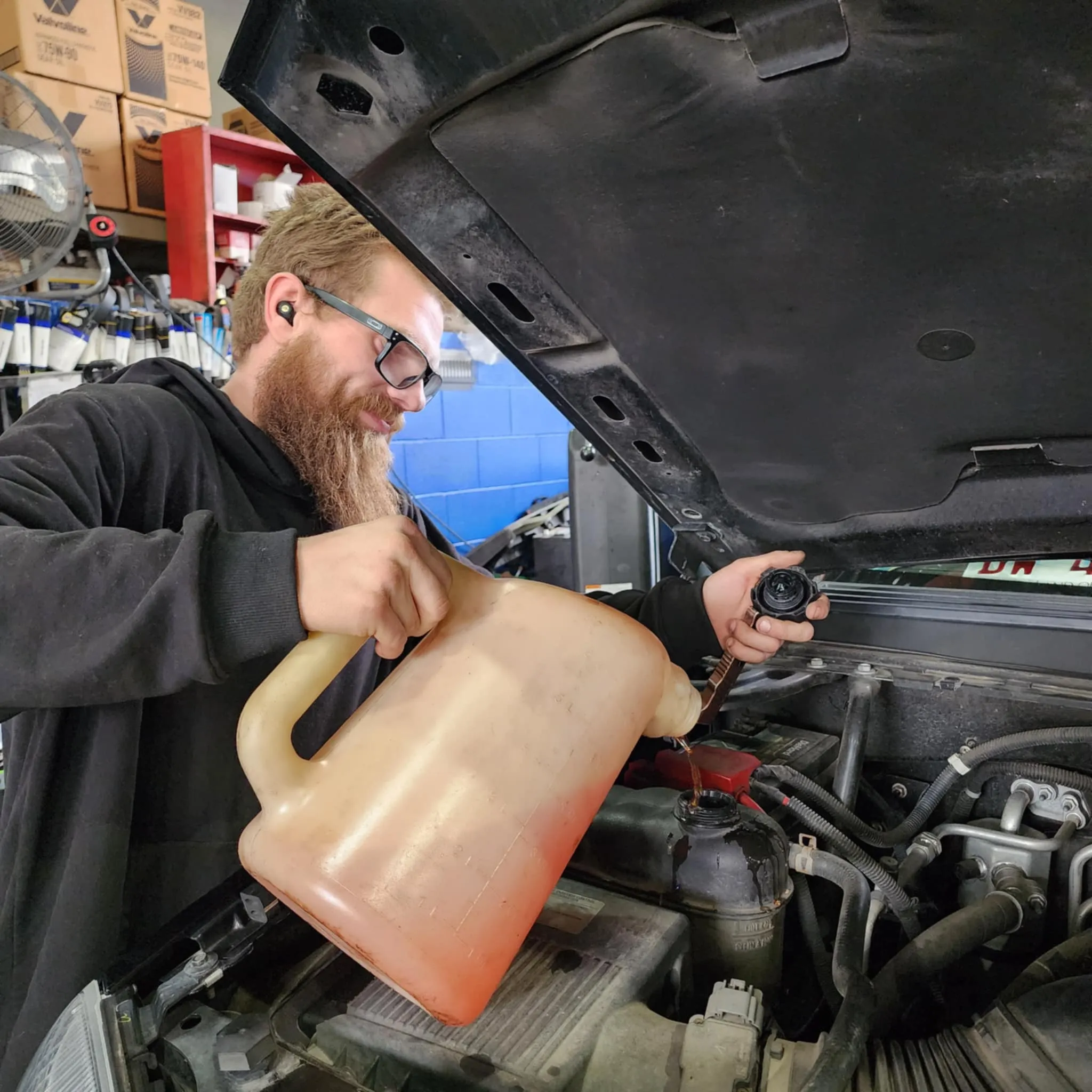
      Why should I replace my coolant?


      Protect Your Engine: The Vital Role of Coolant Replacement in Vehicle Maintenance

      Your vehicle's engine is a powerhouse, generating significant heat as it gets you where you need to go. Managing this heat effectively is crucial for performance and longevity, and that's where your engine's coolant comes in. Often overlooked, this vital fluid does more than just prevent overheating in the summer and freezing in the winter; it plays a critical role in the overall health of your engine. At 59 Auto Repair, we know that proper vehicle maintenance includes paying attention to this essential system.

      Over time and miles, the coolant in your vehicle's radiator and engine passages degrade. Protective additives that prevent corrosion and inhibit the buildup of scale and rust wear out. When this happens, the fluid becomes less effective at transferring heat and, more critically, loses its ability to protect the metal components it touches. Old, depleted coolant can contribute to corrosion within the radiator, water pump, thermostat housing, and even engine block passages, potentially leading to clogs, leaks, and costly repairs down the road.

      Scheduling a regular coolant exchange service with a qualified mechanic is a proactive step towards protecting your investment. Replacing the old, worn-out fluid with fresh coolant restores the vital anti-corrosion properties and ensures optimal heat transfer. This simple maintenance task helps prevent overheating, protects against internal engine damage, maintains the efficiency of your heating and cooling system, and can extend the life of key components like the water pump and radiator. Think of it as essential preventative care for your engine's circulatory system.

      Performing a coolant exchange correctly involves more than just draining the old fluid. Our experienced mechanic team at 59 Auto Repair ensures the system is addressed properly, using the specific type of coolant recommended for your make and model. We ensure the system is filled correctly to avoid air pockets, which can impede performance. Entrusting this service to professionals guarantees it's done right, safeguarding your engine's health.

      Don't wait until you see the temperature gauge climbing or discover a leak. Make coolant system service a regular part of your vehicle maintenance schedule. If you're unsure when your coolant was last replaced, or if you'd like to ensure your vehicle is protected, contact the experts at 59 Auto Repair today. We're here to help keep your engine running cool and reliably for years to come. Schedule your appointment with our skilled mechanic team!

      04/12/2025Read more
    • Why are my radiator hoses flat? Image

      Why are my radiator hoses flat?


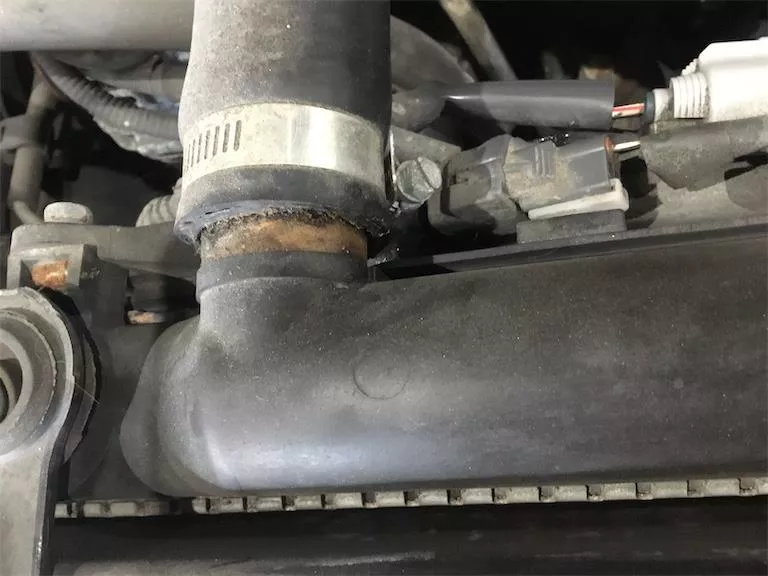
      Most of the time when a radiator hose is flat there is a vacuum issue on the vehicle. A technician will inspect components such as the radiator cap to determine the cause and recommend a repair. Just because the hose is flat does not necessarily mean it needs to be replaced. Most hoses break down from the inside out. We recommend replacing radiator hoses at 100,000 miles to prevent a coolant leak from forming. The technician will inspect the hoses to see if they feel loose, sticky, or cracked. These are all signs that it is time to replace the hoses. Call today to schedule your appointment to have the radiator hoses inspected.

      10/13/2022Read more
    • Can Brake Rotors Cause Vibration? Image

      Can Brake Rotors Cause Vibration?


      You're cruising down the highway, and suddenly, you apply the brakes, only to feel an unsettling vibration through the steering wheel or the entire vehicle. It's a common scenario, and many drivers wonder: can brake rotors cause vibration? The short answer is yes, they can. In this blog post, we'll dive into the details of why brake rotors can cause vibration and what you can do to address this issue.

      Brake Rotors 101


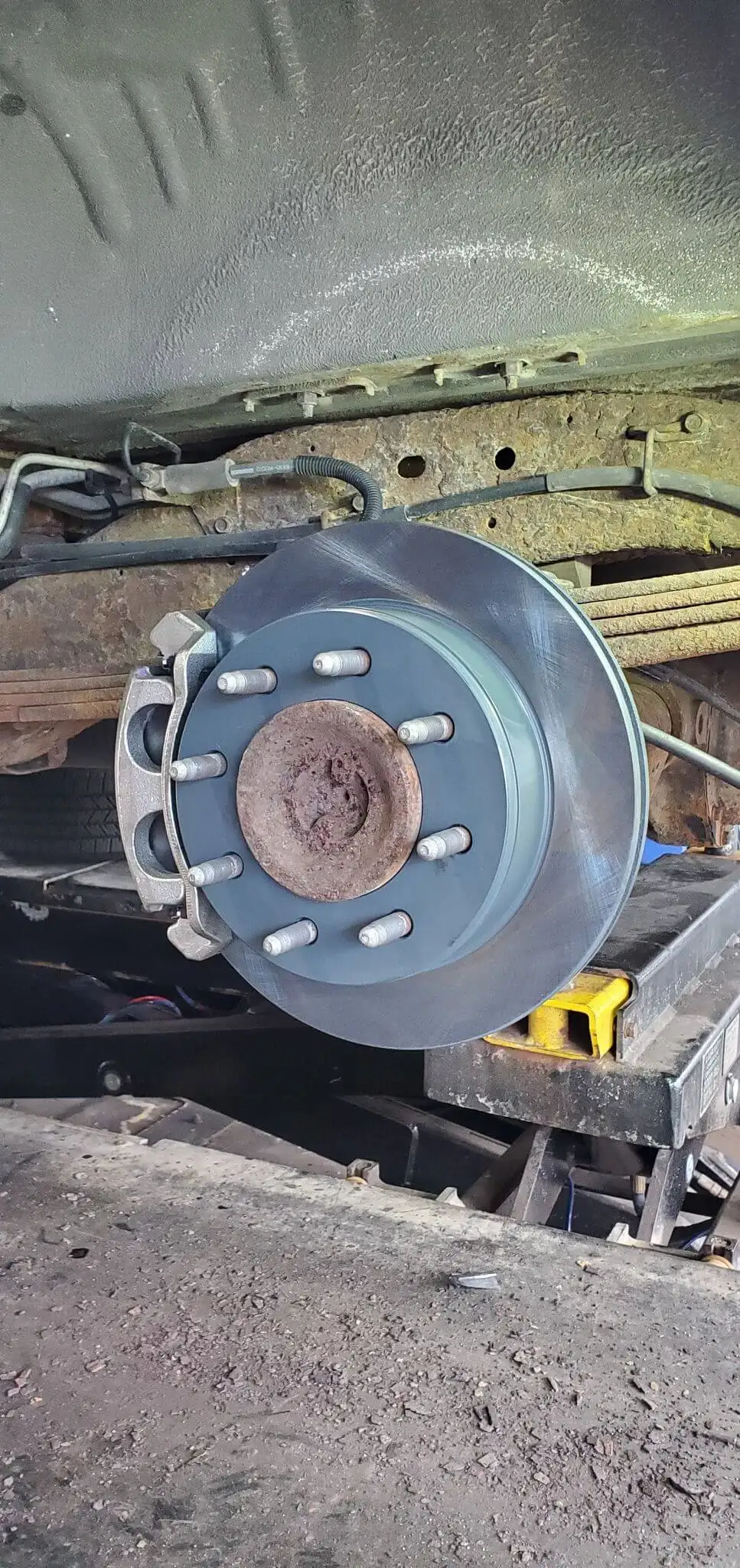
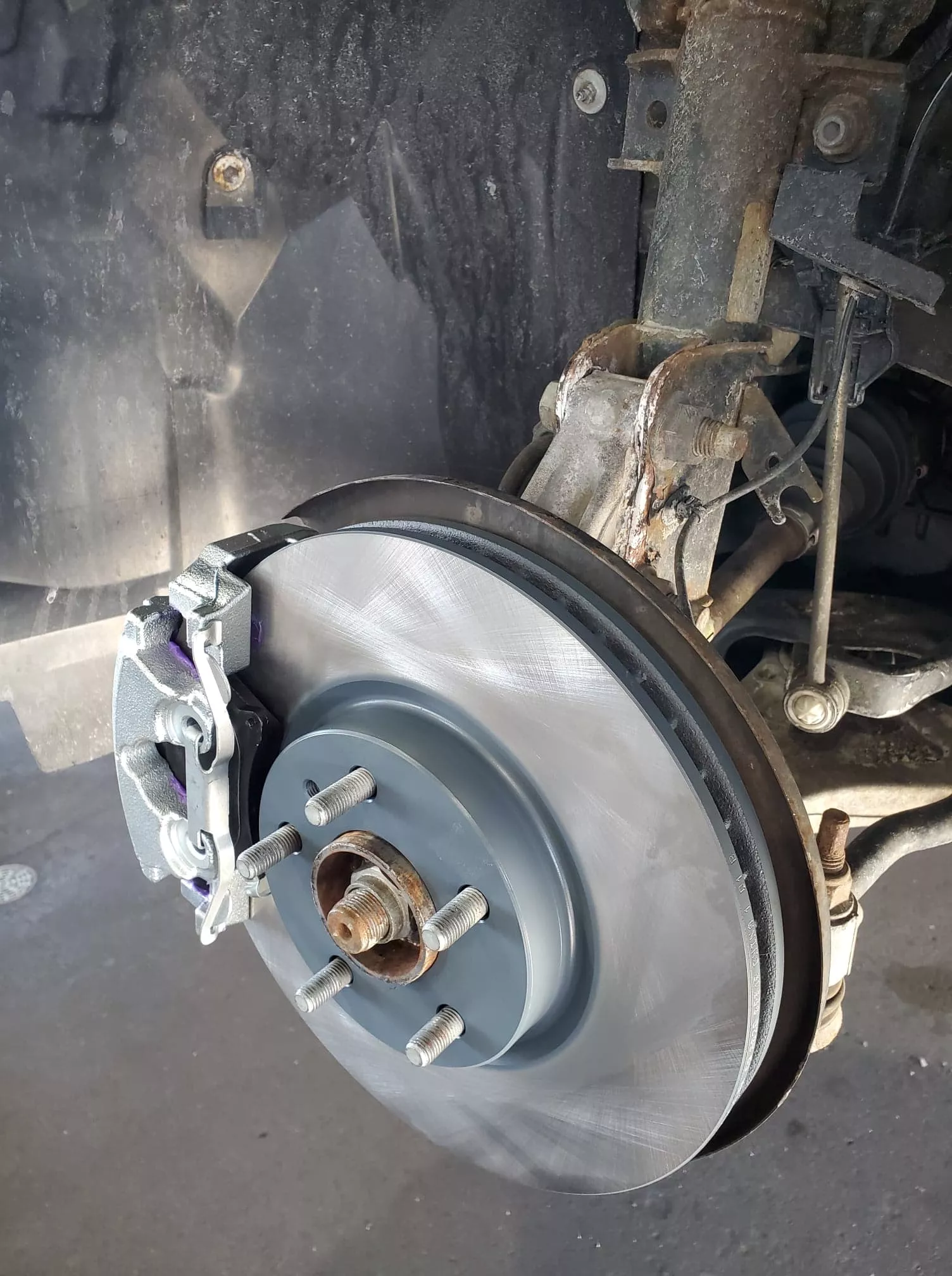
      First, let's get acquainted with what brake rotors are and how they work. Brake rotors, also known as brake discs, are a crucial part of your vehicle's braking system. They are typically made of cast iron or composite materials and are attached to the wheel hubs. When you apply the brakes, brake pads press against the rotors, creating friction that slows down and ultimately stops your vehicle.


      Why Do Rotors Cause Vibration?

      Brake rotors can cause vibration due to a phenomenon known as "brake rotor warping." Here's how it happens:

      1. Heat Buildup: During braking, a significant amount of heat is generated because of the friction between the brake pads and rotors. This heat causes the rotors to expand.
      2. Uneven Cooling: After you release the brakes, the rotors cool down rapidly. However, this cooling process is not always uniform across the entire rotor surface.
      3. Warped Rotors: The uneven cooling can lead to uneven contraction, causing the rotor to warp or develop variations in thickness.
      4. Vibration: As you drive and apply the brakes, the brake pads make contact with the warped rotor surface. This results in an uneven braking force, which translates into the vibration you feel in the steering wheel or the vehicle itself.

      Addressing Brake Rotor Vibration

      Now that we know why brake rotors can cause vibration, let's explore how to address this issue:

      1. Rotor Resurfacing: If the rotors are only slightly warped, they can often be resurfaced by a professional mechanic. This involves removing a thin layer of material from the rotor's surface to restore a smooth and even contact surface.
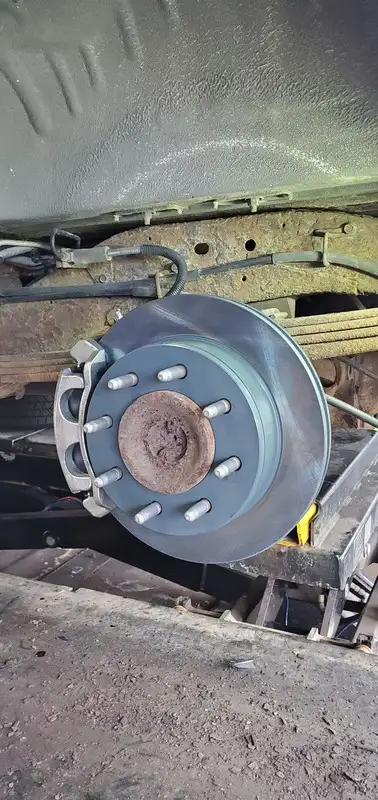
      2. Rotor Replacement: In more severe cases of warping or if the rotors are too thin to be resurfaced safely, it's recommended to replace them. New rotors ensure consistent braking performance.
      3. Quality Brake Pads: Using high-quality brake pads can help reduce the likelihood of rotor warping. Quality pads tend to generate less heat and provide better overall braking performance.
      4. Proper Braking Habits: Avoid excessive and aggressive braking, which can generate more heat and accelerate rotor wear. Instead, practice smooth and gradual braking.
      5. Regular Maintenance: Routine brake inspections and maintenance can catch rotor issues early, preventing them from escalating into a significant problem.

      09/13/2023Read more
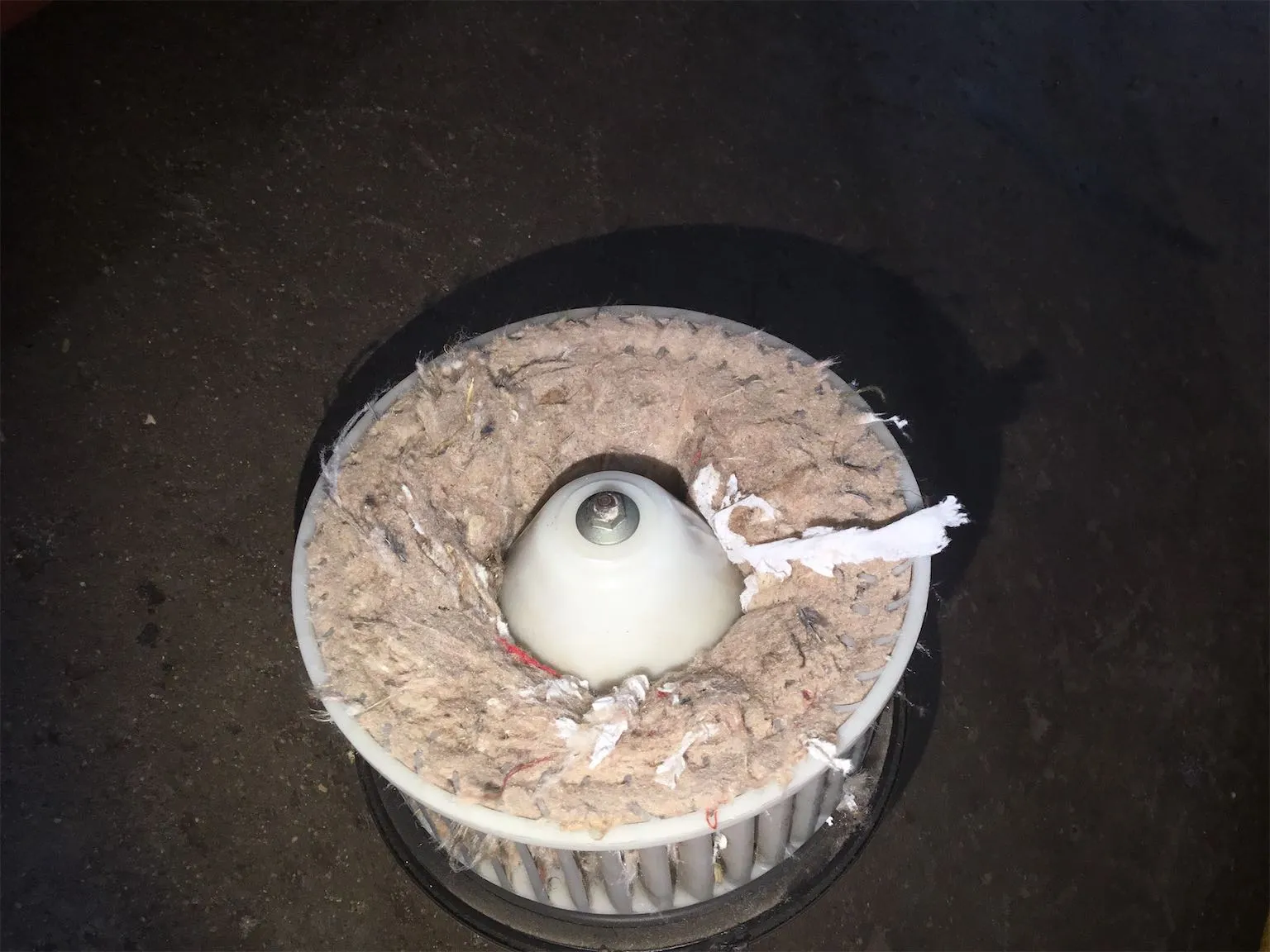
    • What happens when a mouse makes a nest inside a blower motor?  Image

      What happens when a mouse makes a nest inside a blower motor?

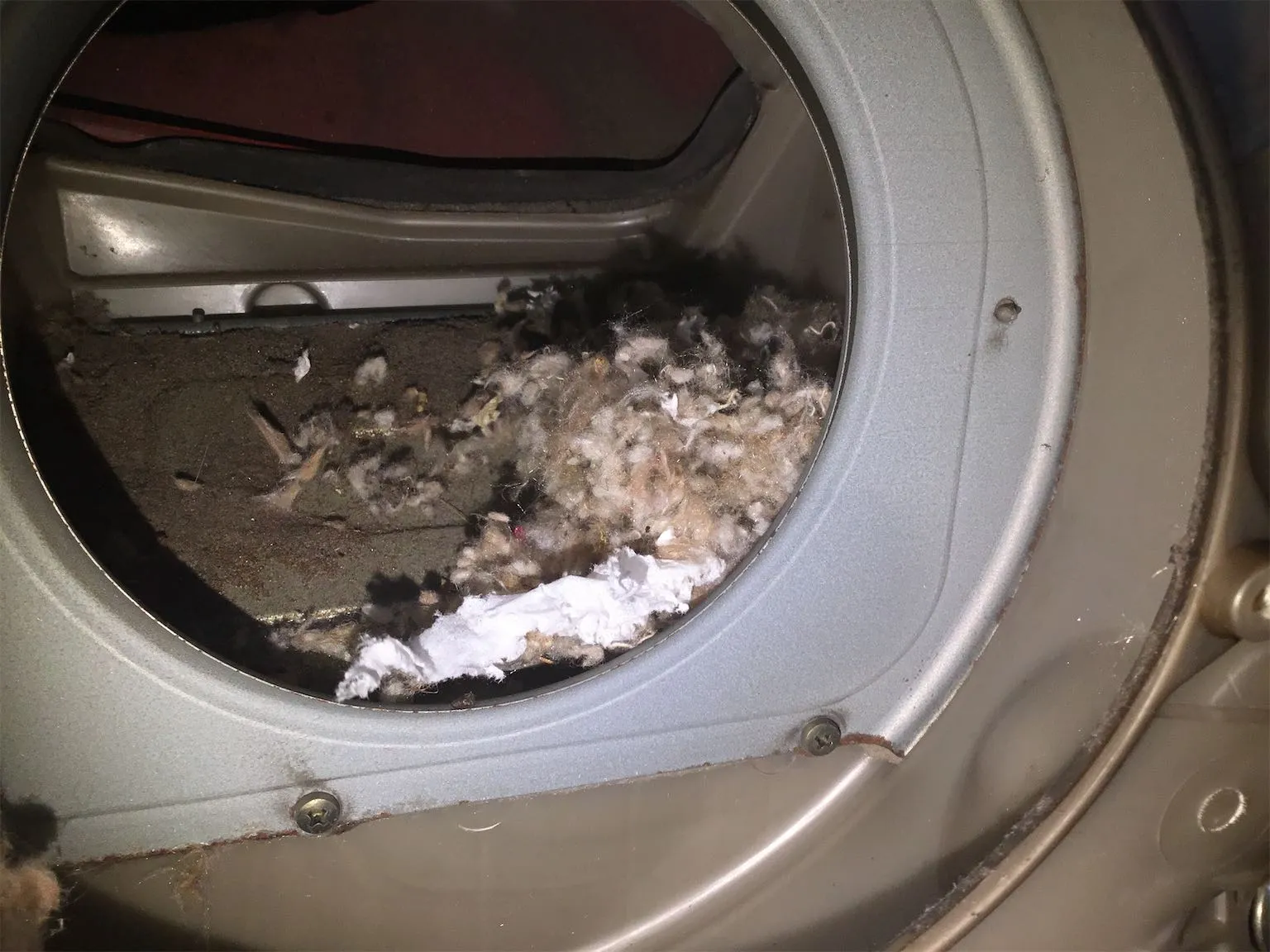
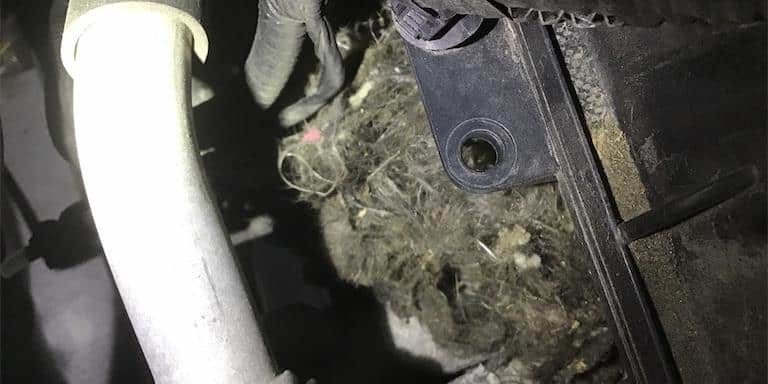
      When unexpected guests take up residence in your car, it can lead to some truly frustrating and potentially damaging situations. One common, yet often overlooked, issue arises when a small critter, particularly a mouse, decides your vehicle's blower motor is the perfect spot to build a cozy nest. This might sound like a minor annoyance, but the reality is that a mouse's tenancy in your blower motor can cause a surprising amount of trouble for your vehicle's systems and your comfort.

      Initially, you might notice strange noises coming from your vents – perhaps a persistent squeaking, scratching, or even a thumping sound as the blower motor tries to operate with an obstruction. As the nest grows, it can restrict the airflow from your HVAC system, leading to a significant reduction in heating or air conditioning performance. You might find that even on the highest fan setting, the air barely trickles out. Beyond the immediate performance issues, a mouse nest introduces organic material into your car's ventilation. This can create unpleasant odors, especially when the system is running, and can even become a breeding ground for bacteria or mold, potentially impacting the air quality inside your vehicle. In more severe cases, the nesting material can overheat due to friction with the blower motor, posing a fire risk. Furthermore, mice are known for gnawing, and they might chew through wires, leading to electrical problems that affect not only the blower motor but other critical components of your car.

      If you suspect a mouse has made a home in your blower motor, or if you're experiencing any of these symptoms, it's crucial to have a certified mechanic inspect your vehicle as soon as possible. While some might be tempted to try and address the issue themselves, a professional inspection is vital for several reasons. A certified mechanic has the experience and specialized tools to safely access the blower motor area, remove the nest and any debris, and thoroughly clean the system. More importantly, they can assess the extent of any damage caused by the rodent. This includes checking for chewed wires, damaged fan blades, or contamination within the HVAC system. They can also ensure that no other areas of your car have been compromised by the rodent, such as the engine bay or cabin filters. Attempting to fix the problem yourself without the proper knowledge or tools could lead to further damage, or you might miss underlying issues that could cause more significant problems down the road. For reliable car repair in Plainfield, seeking out a certified mechanic will give you peace of mind knowing your vehicle is in expert hands and all potential damages are addressed properly, ensuring the safety and longevity of your car. Call to schedule an appointment at 59 Auto Repair today! 

      06/05/2025Read more
    • Your EV Experts  Image

      Your EV Experts

      Shocking Service: Why 59 Auto Repair is Your EV's Best Friend

      Electric vehicles (EVs) are revolutionizing the way we drive. They're clean, efficient, and packed with cutting-edge technology. But when it comes to repairs and maintenance, you can't just take your EV to any mechanic. You need a team that understands the unique complexities of these advanced machines. That's where 59 Auto Repair comes in.

      We're not just another auto shop. We're your dedicated EV experts, equipped with the knowledge, tools, and passion to keep your electric vehicle running at peak performance. Here's why you should trust 59 Auto Repair with your prized EV:

      Specialized EV Training and Expertise: EVs are fundamentally different from traditional gasoline-powered vehicles. They rely on high-voltage electrical systems, complex battery packs, and sophisticated software. Our technicians have undergone specialized training to understand the intricacies of these systems. We stay up to date with the latest advancements in EV technology, ensuring we can accurately diagnose and repair any issue. We invest in continuous training. EV technology is always evolving, and we are dedicated to evolving with it.

      State-of-the-Art Diagnostic Equipment: Diagnosing EV problems requires specialized tools and software. We've invested in advanced diagnostic equipment specifically designed for electric vehicles. This allows us to quickly and accurately pinpoint issues, saving you time and money. We are able to read and interpret the complex codes that EV's produce.

      Battery Expertise: The battery is the heart of your EV. Our technicians are trained to handle battery diagnostics and even replacements. We understand the importance of maintaining optimal battery health to maximize your EV's range and performance. We can perform battery health checks and advise you on the best course of action.

      High-Voltage System Safety: Working with high-voltage electrical systems is inherently dangerous. Our technicians are trained in strict safety protocols to ensure the safety of both our team and your vehicle. We prioritize safety above all else. We understand the safety precautions that must be taken when working on high voltage systems.

      Comprehensive EV Services:

      We offer a full range of EV services, including:

        • Battery diagnostics and repairs
        • High-voltage system repairs
        • Brake system maintenance (regenerative braking)
        • Suspension and alignment services
        • Tire services
        • HVAC repair.
        • And much more!

      Commitment to Customer Satisfaction: We understand that your EV is a significant investment. We strive to provide transparent and honest service, keeping you informed every step of the way. Your satisfaction is our top priority.

      Protecting your investment: EV's are a large investment, and maintaining them correctly protects that investment. We aim to keep your EV running like new. Don't trust your electric vehicle to just anyone. Trust the experts at 59 Auto Repair. We're committed to providing the highest quality EV service, ensuring your vehicle stays charged and ready for the road ahead.

      Contact us today to schedule your EV service appointment!

      02/27/2025Read more
    • Nice to See You – Free Online Concert Event Image

      Nice to See You – Free Online Concert Event

      A Free online concert to unite Plainfield, IL during the COVID-19 Pandemic.

      Local service organizations in the Plainfield area are joining forces for an online concert to be broadcast on Saturday, April 25th at 4:00pm at NiceToSeeYouPlainfield.com and at the Plainfield Area Chamber of Commerce Facebook page.

      The hour long event, titled “Nice to See You”, will feature intimate performances by four local artists and will be streaming live at NiceToSeeYouPlainfield.com and The Plainfield Area Chamber of Commerce Facebook Page.

      This online concert event is a celebration of the Plainfield first responders, essential workers, local businesses and the community coming together to support one another.

      100% of the proceeds raised during this event will benefit food pantries, faith-based service organizations and first responders.” A Go Fund Me page for the event will be available for those that want to make free will donations.

      The event is the brainchild of local resident, John Evans, who felt called to serve others during this difficult time. He said, “I wanted to show support for our Plainfield area heroes, our first responders. I knew my fellow Plainfield Lions would support this, but I also knew we could make this bigger if we united with Kiwanis Club of Plainfield, Plainfield Area Chamber of Commerce, Plainfield Rotary and Plainfield Junior Woman’s
      Club”.

      https://www.facebook.com/events/221650785604851/

      The core of this event is the musical performances of local artists; AD3 Acoustic Trio, Seth Mercer, Davi & Alyne Lopes and Erika Miner.

      Committee member Andy Buttimer stated, “We all witnessed the healing energy and unifying power that music recently provided in the streets of Chicago and balconies in Europe. Neighbors, who haven’t seen each other recently, have the opportunity to come together and experience live music online from their driveways, backyards and living rooms.”

      The non-profit event will be emceed by committee members Joe LaGiglia and Tasha Marsaglia. Event support has come from fellow committee members Andy Buttimer, Tom Wyler, Warren Lindsay, Chad Holstead, Andrew Egan, Kristen Robertson and
      Brandon Bernicky.

      The concert will stream live on NiceToSeeYouPlainfield.com and the Plainfield Area Chamber of Commerce’s Facebook page, beginning at 4:00pm on Saturday, April 25th.

      04/17/2020Read more
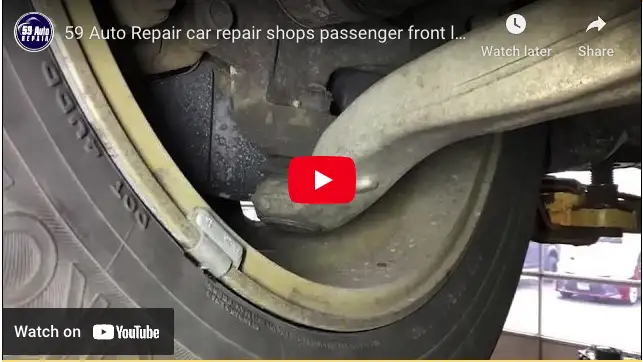
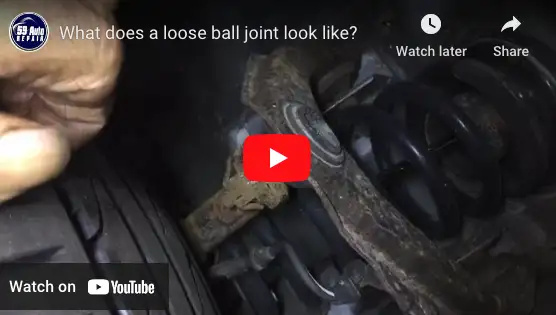
    • What happens when you have Loose Ball Joints? Image

      What happens when you have Loose Ball Joints?

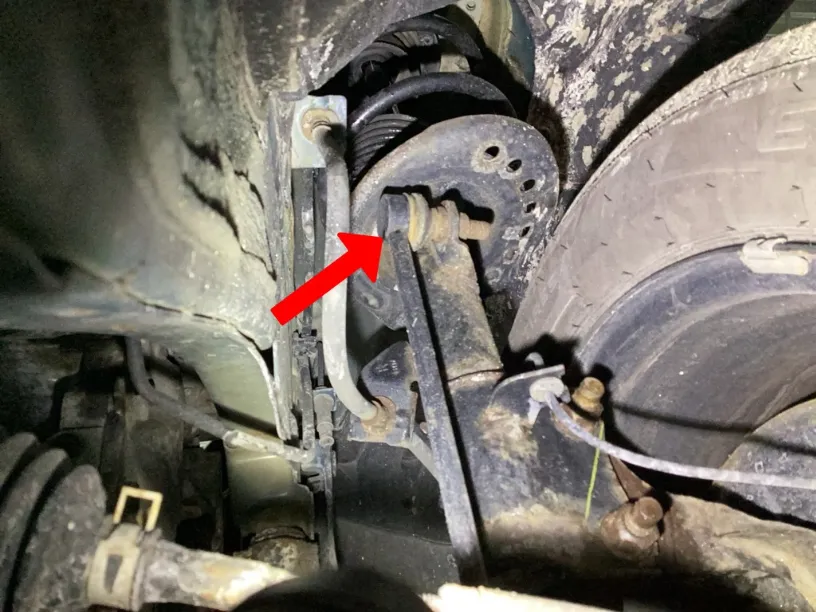
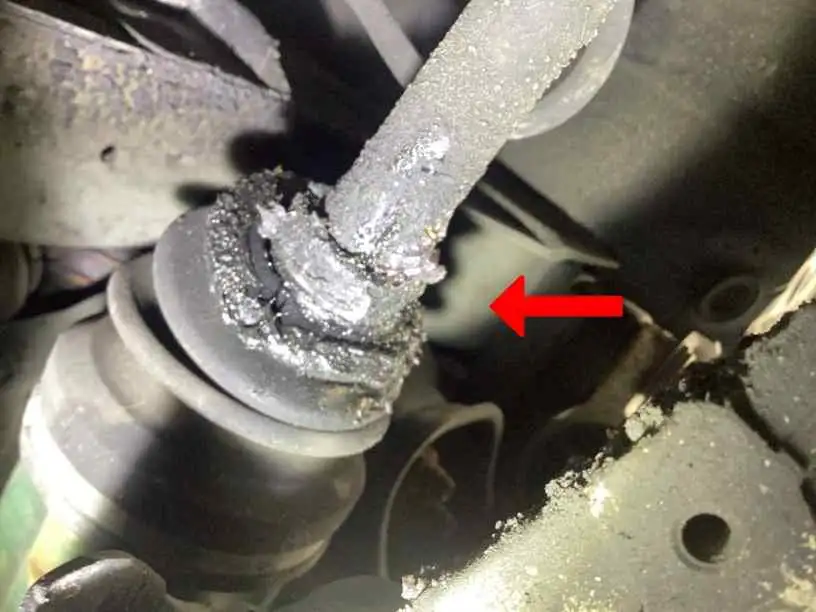
       Auto Repair car repair shops passenger front lower ball joint is loose sway bar links loose


      Is your car making strange noises or feeling unstable on the road? You might have a loose ball joint. This critical component connects your steering and suspension system, ensuring your car handles smoothly. If your ball joint is worn or damaged, it can lead to dangerous driving conditions.

      Are you wondering if your car needs a ball joint replacement? Visit 59 Auto Repair, a reputable car repair shop near you. Our experienced auto mechanics in Plainfield, IL, can diagnose the issue and provide a reliable solution. We offer top-notch auto repair services to keep your vehicle in optimal condition.

      Loose ball joints can cause a variety of symptoms, including:

      Noise: A clicking, popping, or grinding noise, especially when turning or going over bumps.

      Vibration: The steering wheel may vibrate or feel loose.

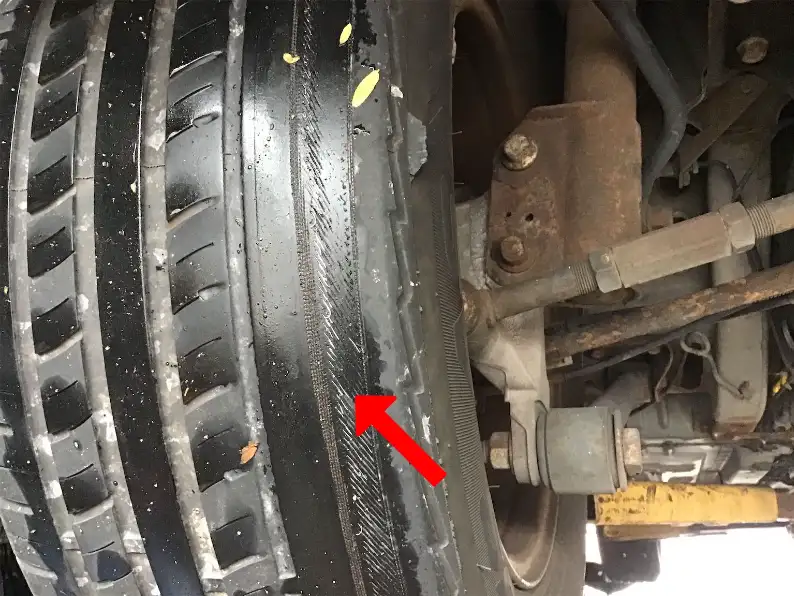
      Uneven tire wear: Excessive wear on one or more tires can indicate a problem with the suspension system, including loose ball joints.

      Difficulty steering: The car may pull to one side or be harder to steer.

      If you notice any of these symptoms, it's important to have your car inspected by a qualified mechanic. Ignoring a loose ball joint can lead to more serious problems, such as a blown tire or loss of control.

      Don't compromise your safety. Schedule an appointment with 59 Auto Repair today. We'll inspect your car thoroughly and recommend the necessary repairs. With our expertise and commitment to customer satisfaction, you can trust us to get your car back on the road safely.

      Remember: Loose ball joints can be a serious safety hazard. Don't ignore the signs. Contact 59 Auto Repair for professional auto repair in Plainfield, IL.


      09/03/2024Read more
    • School Supply Drive!  Image

      School Supply Drive!

      Driving Education Forward: 59 Auto Repair Teams Up with RichEnDeed for School Supply Drive!

      At 59 Auto Repair, we believe in keeping more than just your car running smoothly – we believe in helping our community thrive. That's why we're incredibly excited to announce our partnership with RichEnDeed for their annual School Supply Drive!

      Why This Matters: As summer winds down and the new school year approaches, many families face the challenge of providing their children with the essential supplies they need. Things like notebooks, pencils, backpacks, and art supplies are crucial for a successful learning experience, but for some, these items can be a significant financial burden. The RichEnDeed School Supply Drive steps in to bridge this gap, ensuring that every student starts the academic year feeling prepared and confident, regardless of their family's circumstances. We understand that a strong education is the foundation for a brighter future. By providing students with the necessary tools, we're not just giving them school supplies; we're giving them the opportunity to learn, grow, and achieve their full potential.

      How You Can Help: Making a difference is easy! 59 Auto Repair is proud to be an official drop-off location for new school supply donations. We're collecting items right here at our shop in Plainfield, IL, through July 31st.

      What kind of supplies are needed? Think about what a student might need for a successful year! Popular items include:

      • Backpacks
      • Notebooks
      • Loose leaf paper
      • Pencils and pens
      • Crayons, markers, and colored pencils
      • Glue sticks
      • Scissors
      • Rulers
      • Erasers
      • Folders and binders
      • Calculators
      • Highlighters

      Every single donation, big or small, makes a tangible impact on a student's educational journey. When you drop off supplies, you're directly helping to equip a child for success in the classroom.

      Our Commitment to Community: Being a part of the Plainfield community means more to us than just providing top-notch auto service. It means giving back and supporting the initiatives that strengthen our local area. Partnering with RichEnDeed is a perfect example of how we strive to contribute positively to the lives of our neighbors. So, the next time you're in for an oil change, tire rotation, or any other automotive need, consider bringing along some school supplies. Let's work together to make this year's RichEnDeed School Supply Drive the most successful one yet!

      Thank you for helping us drive education forward!

      Drop off your new school supply donations at 59 Auto Repair by July 31st!

      06/03/2025Read more
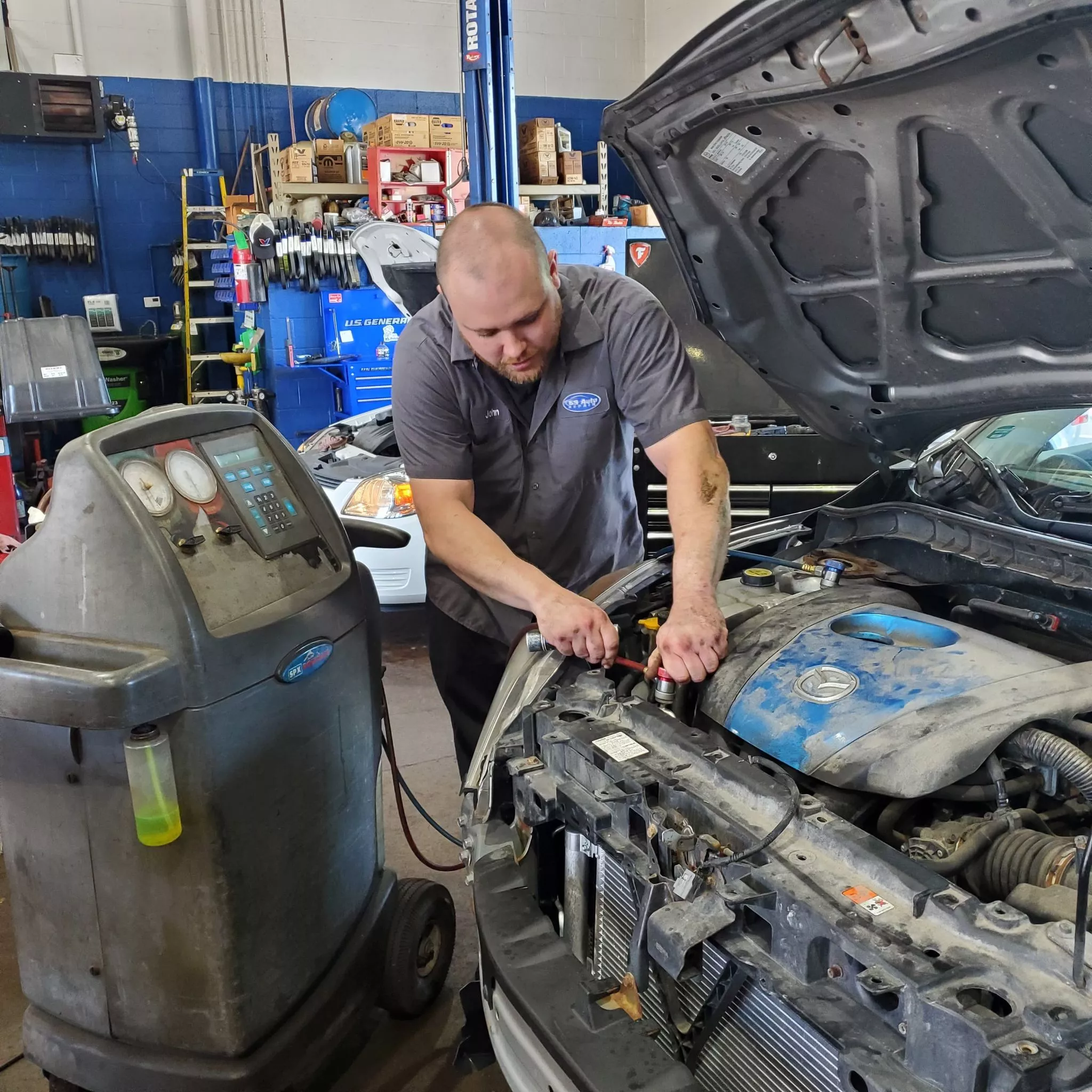
    • Why is my auto air conditioning blowing warm?  Image

      Why is my auto air conditioning blowing warm?

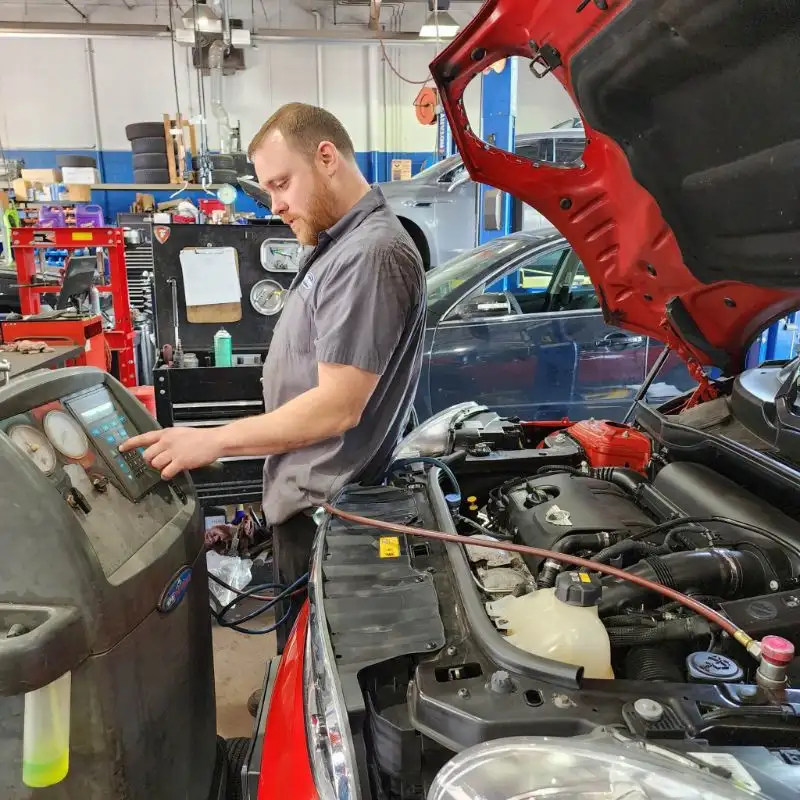
      When the ac in your vehicle is blowing warm, the car may be low on refrigerant. Refrigerant is a gas so leaks cannot be detected by the naked eye. The mechanic will need to add in a fluorescent dye to be able to check the system for leaks using a black light. If the refrigerant level gets too low, the ac compressor may not turn on. Leaks are commonly found on the air conditioning compressor and the ac condenser. If the vehicle is overheating, the air conditioning will also blow warm. This is to try to cool off the engine before causing catastrophic engine damage. If your ac is blowing warm, call today to schedule an appointment to have it checked! 

      06/22/2022Read more
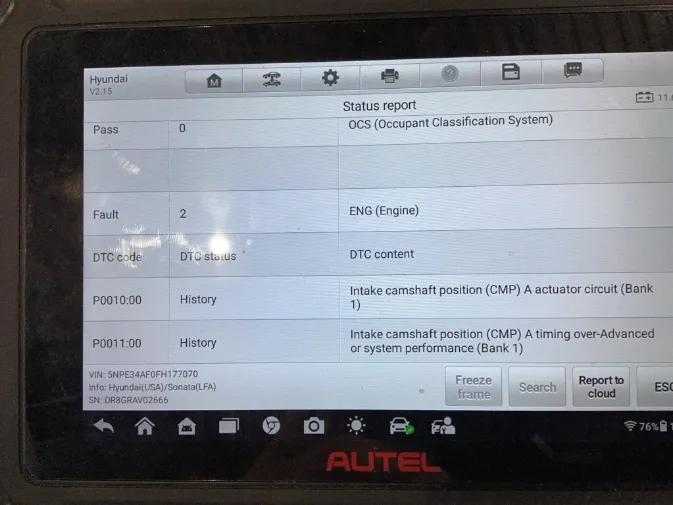
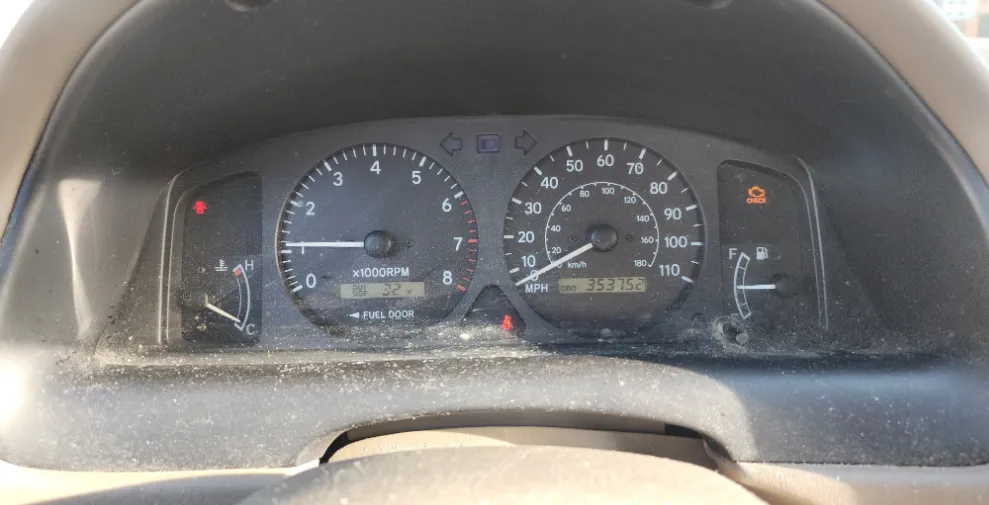
    • What is the Difference Between Check Engine Light Diagnostics and Having the Codes Pulled? Image

      What is the Difference Between Check Engine Light Diagnostics and Having the Codes Pulled?

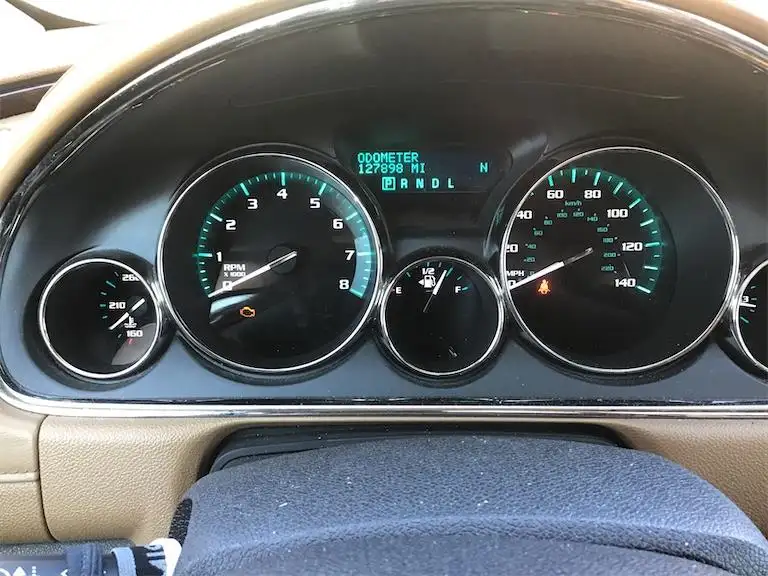
      It’s a scenario every driver dreads: you’re cruising down the road when that glowing amber engine icon flickers to life on your dashboard. Your heart sinks, and your mind immediately jumps to dollar signs. In an effort to save a few bucks, many drivers head to a local parts store that offers to "pull the codes" for free. While this seems like a shortcut to a solution, there is a massive difference between reading a code and performing a professional diagnostic. Understanding this distinction is the key to keeping your car healthy and your wallet full.

      The "Free Code" Trap: A Symptom, Not a Cure

      When you have your codes pulled at a parts store, a technician plugs a basic scanner into your car’s On-Board Diagnostics (OBD-II) port. The scanner spits out a code—let’s say P0420. The clerk might tell you that this code "means" you need a new catalytic converter. However, this is a common misconception.

      A code doesn't tell you exactly which part is broken; it tells you that a specific sensor has detected a reading outside of its normal operating range. Using the P0420 example, your catalytic converter might be fine, but a faulty oxygen sensor, an exhaust leak, or even a simple spark plug misfire could be causing the error. If you buy a catalytic converter based solely on that code, you might spend hundreds of dollars and still have the check engine light staring back at you the next day.

      Why Professional Diagnostics Save You Money

      Professional diagnostics at a shop like 59 Auto Repair involve a comprehensive investigation that goes far beyond a simple code scan. Our ASE-certified mechanics use the code as a starting point—a clue in a larger mystery. True diagnostics involve live data streaming, circuit testing, and physical inspections of the components involved. We don't just ask what the car is feeling; we figure out why it’s feeling that way.

      By paying for a professional diagnostic, you are essentially buying insurance against "parts cannon" repairs. Many DIYers and inexperienced shops will keep replacing parts one by one until the light finally goes off. This "guess-and-check" method is incredibly expensive. At 59 Auto Repair, our goal is to ensure you only replace exactly what is necessary, saving you from the high cost of unnecessary repairs and repeated labor charges.

      The Human Element: The Expertise of ASE Mechanics

      Modern vehicles are essentially rolling computers with thousands of interconnected systems. A code for a transmission issue could actually be caused by a ground wire or a low battery. This is where the expertise of our ASE-certified technicians comes into play. Our team has the training to interpret complex data patterns that a basic scanner simply can't see.

      When you bring your vehicle to 59 Auto Repair, we perform a multi-point inspection to look for signs of wear, frayed wires, or vacuum leaks that a computer might miss. We bridge the gap between digital data and mechanical reality, ensuring that the root cause of your check engine light is addressed the first time. We also have the latest tools and equipment to ensure we see all the data, not just a simple code.

      Peace of Mind on the Road

      Ignoring a check engine light or simply clearing the code without fixing the problem can lead to catastrophic engine failure or decreased fuel efficiency. When you choose a professional diagnostic, you aren't just fixing a light; you're ensuring the longevity of your vehicle. You leave our shop with the confidence that your car has been vetted by professionals who prioritize your safety and your budget.

      Don't settle for a guess when it comes to your engine's health. If that light is on, bring your vehicle to 59 Auto Repair. Let our expert team provide the clarity and precision your car deserves.

      01/29/2026Read more
    • What is a TPMS sensor and why is it important? Image

      What is a TPMS sensor and why is it important?

      Why Your TPMS Light Is On and Why You Shouldn’t Ignore It

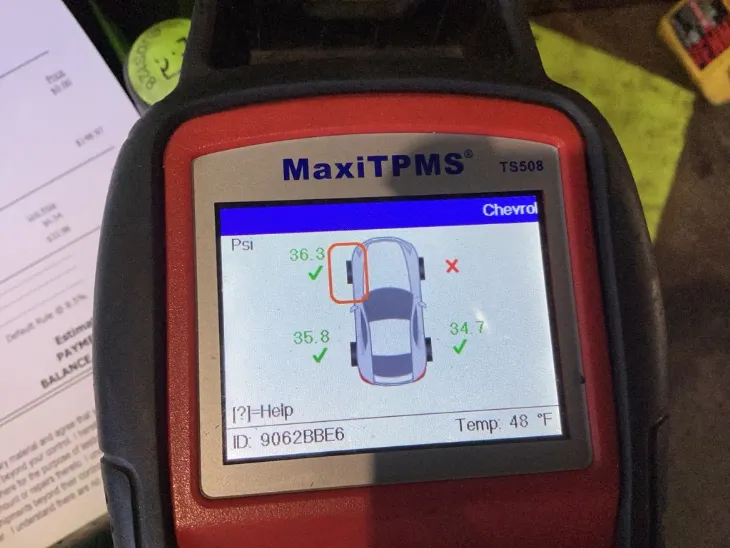
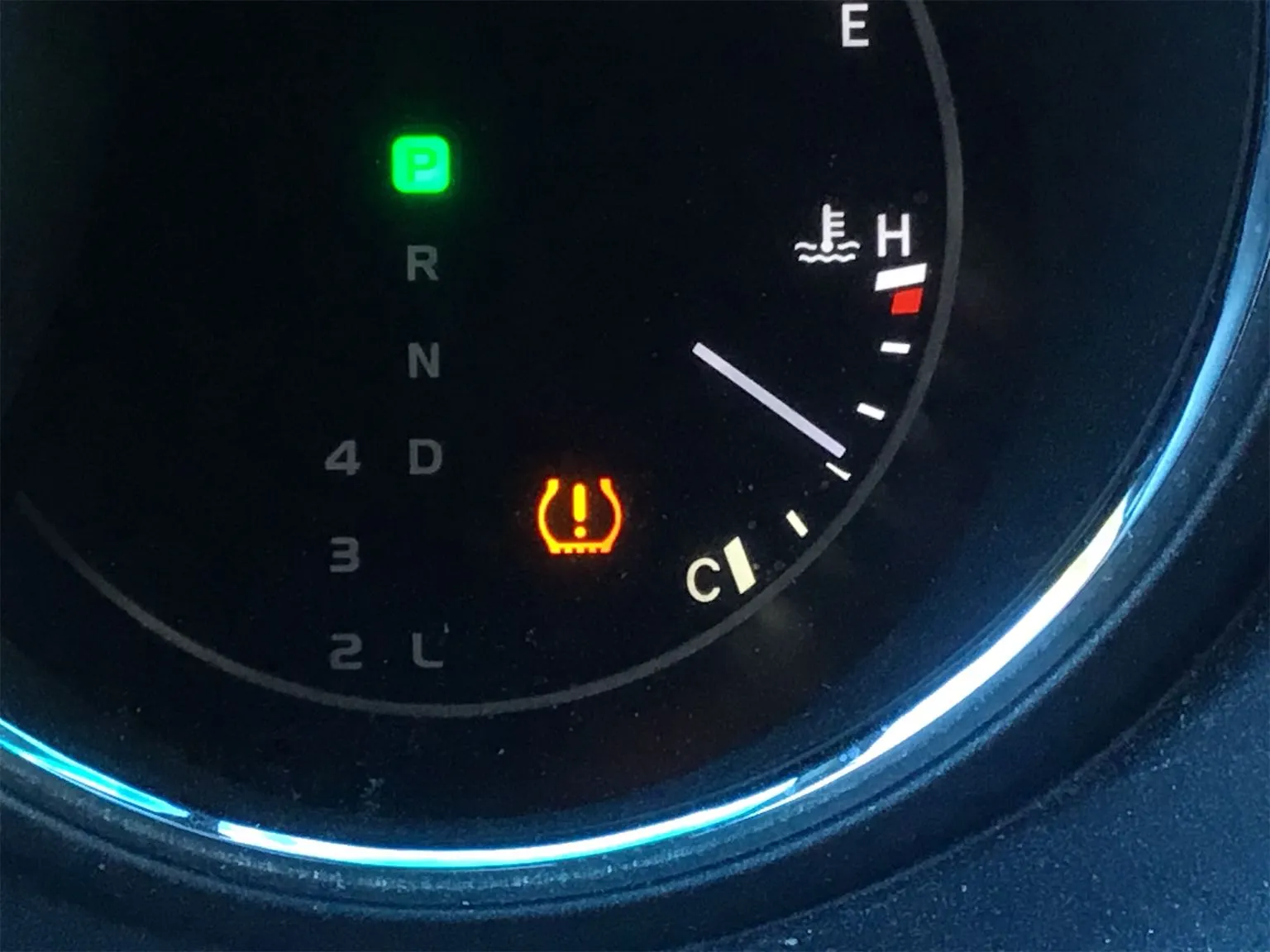
      If you have ever noticed a glowing yellow horseshoe icon with an exclamation point on your dashboard, you have encountered your Tire Pressure Monitoring System, or TPMS.

      At 59 Auto Repair, we know that many drivers in Plainfield, IL find this light frustrating, but it serves a critical safety function. These sensors are designed to alert you the moment your tire pressure drops to an unsafe level, helping you avoid dangerous blowouts and improving your overall fuel economy. Because low tires create more rolling resistance, keeping them properly inflated actually saves you money at the gas pump and extends the life of your tread.

      Where TPMS Sensors Are Located

      What many drivers do not realize is that these sophisticated sensors actually live inside your tires, mounted directly to the inner side of the air valve. Because they are located in such a harsh environment, they are constantly exposed to extreme temperature changes, road salt, and physical vibrations.

      Over time, the internal batteries, which are sealed and cannot be replaced individually, eventually die, usually after five to ten years. When that battery fails, the sensor stops communicating with your vehicle’s computer, and that dashboard light will stay on regardless of how much air is in your tires.

      Why Professional TPMS Service Matters

      If you are searching for a reliable mechanic near you to handle a TPMS issue, it is important to choose a shop with the right diagnostic tools. When a sensor fails or becomes corroded, it requires professional equipment to remove the tire from the rim, replace the unit, and relearn the new sensor to your vehicle’s onboard computer.

      At 59 Auto Repair, we specialize in this precise type of auto repair to ensure your safety system is functioning exactly as the manufacturer intended.

      Do Not Ignore a Faulty TPMS Light

      Ignoring a faulty TPMS sensor might seem like a minor inconvenience, but it leaves you driving blind to potential punctures or slow leaks. Our team is proud to be the go-to choice for quality auto repair services in Plainfield, IL, providing honest assessments of your vehicle’s electronics and tires.

      If your light is blinking or staying on, stop by and let our experts ensure your tires are monitored correctly so you can get back on the road with total peace of mind.

      Schedule your appointment today!

      04/08/2026Read more
    • Is Your Ride Feeling a Bit... Floppy? Signs Your Sway Bar Links Are Done Image

      Is Your Ride Feeling a Bit... Floppy? Signs Your Sway Bar Links Are Done

      Is Your Ride Feeling a Bit... Floppy? Signs Your Sway Bar Links Are Done

      If you’re cruising through the streets of Plainfield and notice your car feels less like a precision machine and more like a boat on high seas, you might be dealing with a common suspension culprit: bad sway bar links.

      At 59 Auto Repair, we see this all the time. While sway bar links (also known as stabilizer links) are relatively small components, they play a massive role in your vehicle's safety and handling. Here is how to tell if it's time to visit your favorite local mechanic.

      What Exactly Do Sway Bar Links Do?

      Your sway bar is a metal rod that connects the left and right sides of your suspension. Its job is to reduce "body roll"—that leaning feeling you get when taking a sharp turn. The sway bar links are the essential connectors that attach the bar to the rest of the suspension assembly. When they wear out, the bar can't do its job, and your steering feel suffers.

      4 Tell-Tale Signs of Failing Sway Bar Links

      Clunking or Rattling Noises: This is the most common symptom. If you hear a "clunk-clunk" sound when driving over speed bumps, potholes, or even just pulling into a driveway, those links likely have too much play in the joints.

      Poor Handling and Body Roll: If your car feels "loose" or leans excessively during cornering, your stabilizer system isn't providing the counter-pressure it should.

      Visible Wear or Damage: If you take a peek behind your wheel, you might see a broken link or a torn rubber boot. If the grease has leaked out of the ball joint, the part is effectively on its deathbed.

      Vibrations in the Steering Wheel: While often related to tires, a loose sway bar link can cause enough instability in the suspension to be felt through the steering column.

      Why You Shouldn't Wait

      Driving with a broken sway bar link won't necessarily leave you stranded on the side of the road immediately, but it will compromise your ability to handle emergency maneuvers. In a sudden swerve, a functioning suspension system can be the difference between staying on all four wheels and losing control.

      Mechanic's Tip: Sway bar links are almost always replaced in pairs. If the left one has failed due to age and Plainfield’s pothole-prone winters, the right one usually isn't far behind!

      Get Your Suspension Checked in Plainfield

      If your car is making mysterious noises or feeling a bit unstable, don't guess—get it inspected. At 59 Auto Repair, we specialize in professional auto repair in Plainfield to keep your commute smooth and your family safe.

      03/21/2026Read more
    • Is Your Car Making a Grinding Noise? Understanding Scored Rotors Image

      Is Your Car Making a Grinding Noise? Understanding Scored Rotors

      If you’ve ever hit the brakes and heard a harsh, metal-on-metal screeching sound, your car is trying to tell you something important. For many drivers looking for auto repair in Plainfield, IL, that sound is the first sign of "scored" brake rotors. But what exactly does that mean, and why should it matter to you? At 59 Auto Repair, we believe that understanding your braking system is the best way to stay safe on the road and avoid hefty repair bills down the line.

      What Are Scored Rotors?

      Think of your brake rotors as the spinning discs behind your wheels. When you press the brake pedal, your brake pads squeeze against these discs to create the friction needed to stop your car. In a perfect world, these rotors should be smooth and flat.

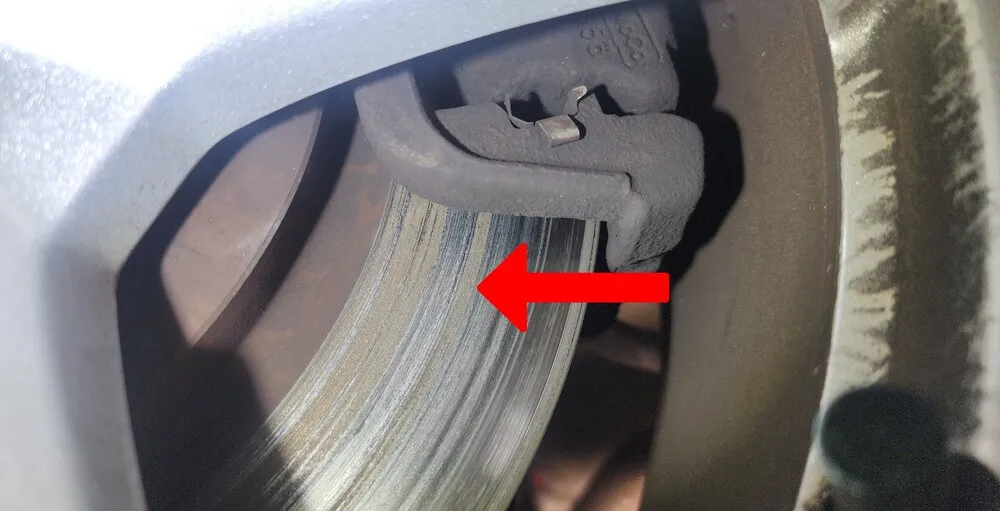
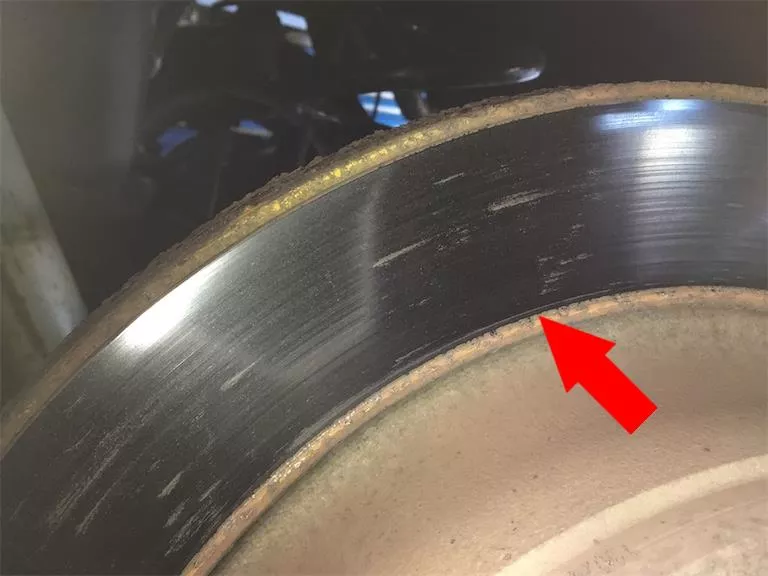
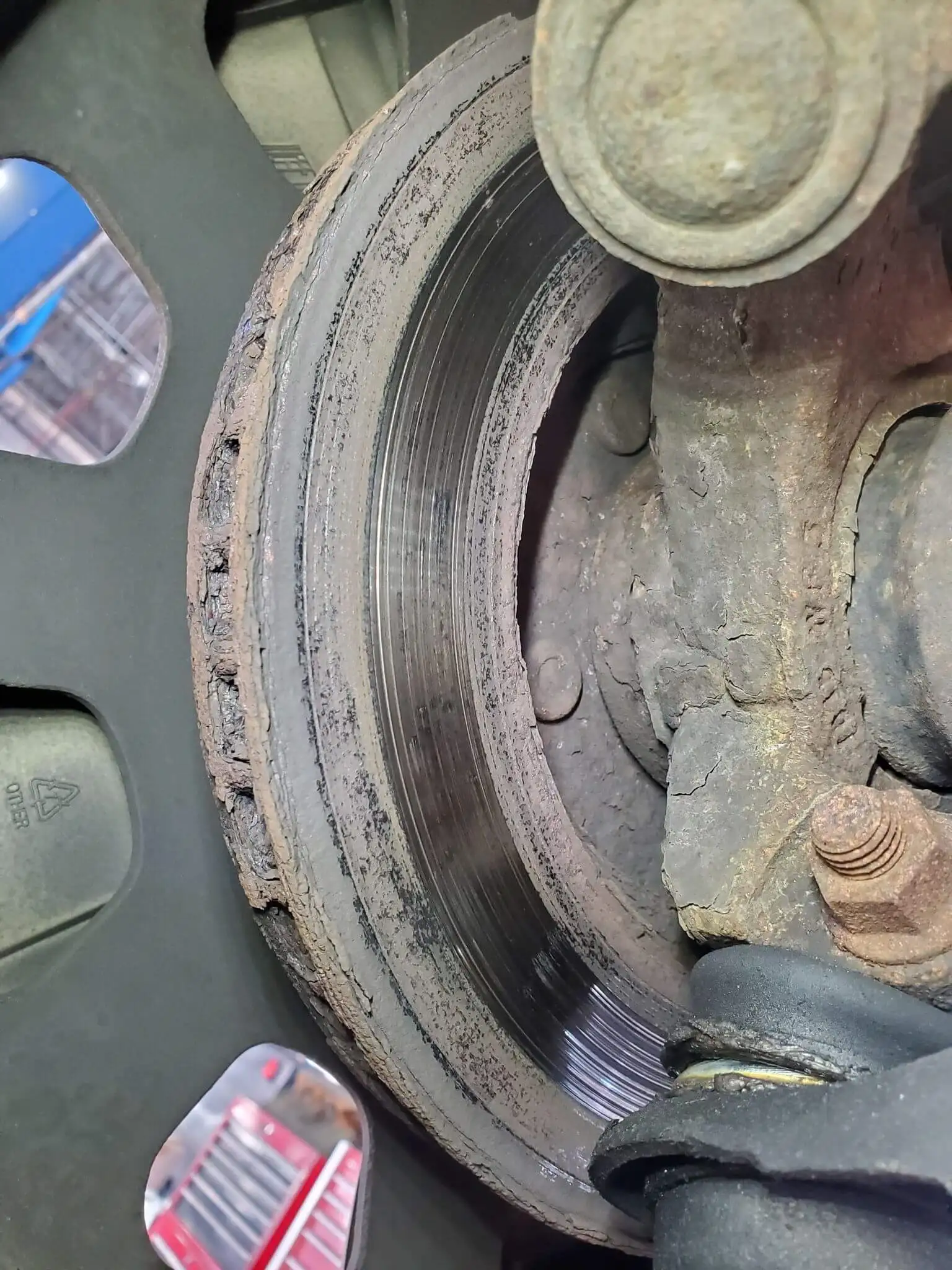
      However, "scoring" occurs when deep scratches, grooves, or pits develop on the surface of the rotor. It looks a bit like the surface of an old vinyl record, and it’s usually caused by debris getting caught between the pad and the rotor—or more commonly—by letting your brake pads wear down until the metal backing plate starts digging into the disc.

      Why You Shouldn't Ignore the Grooves

      Driving with scored rotors is more than just an annoying noise issue; it’s a performance problem. Because the surface is no longer flat, your brake pads can’t make full contact with the rotor. This significantly reduces your stopping power and can lead to a pulsating feeling in the brake pedal or steering wheel.

      If you are searching for a mechanic near me because your car feels shaky when slowing down, scored rotors are likely the culprit. Ignoring this issue doesn’t just compromise your safety—it also puts extra strain on your entire braking system, eventually leading to more expensive parts failing prematurely.

      Expert Brake Care in Plainfield

      The good news is that caught early, brake repair doesn't have to be a headache. Depending on the depth of the grooves, a skilled technician can sometimes resurface (or "turn") the rotors to make them smooth again. However, if the scoring is too deep, replacing the rotors is the only safe option to ensure your car stops exactly when you need it to.

      If you’ve been searching for auto repair near me to get a professional opinion, our team is here to help you determine the most cost-effective and safest path forward.

      Don’t wait until a small squeak turns into a major safety concern. Call to schedule your appointment today!

      03/03/2026Read more
    • What happens if a mouse gets into my vehicle?  Image

      What happens if a mouse gets into my vehicle?

      The tiny invaders known as mice can cause a surprising amount of damage to your vehicle, leading to unexpected and potentially costly auto repair. If you're in Plainfield, IL and suspect you have rodent residents under your hood, it's crucial to understand the potential consequences.

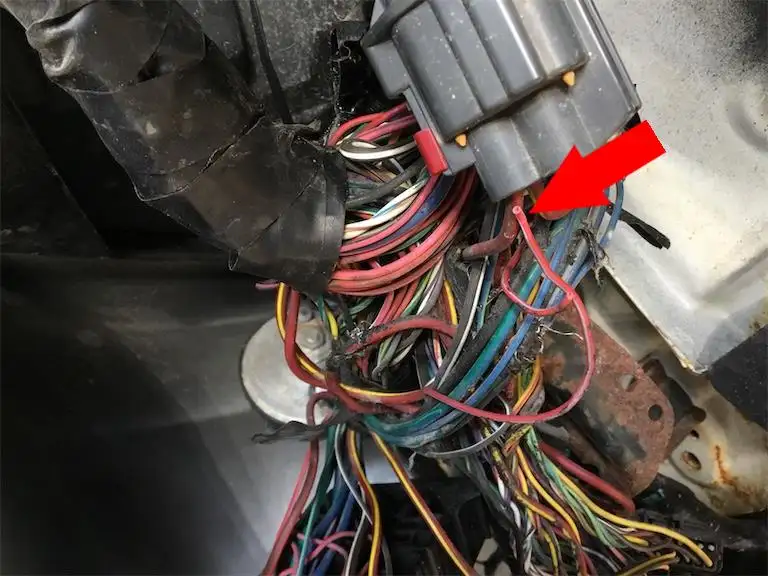
      One of the most common and concerning issues is damage to your vehicle's wiring. Mice love to gnaw on the soy-based coatings often used on modern automotive wires. This can lead to a host of electrical problems, from malfunctioning lights and intermittent dashboard warnings to complete system failures. Imagine your engine suddenly sputtering or your power windows refusing to budge – all thanks to a small rodent's snack time. A skilled automotive technician will need to meticulously trace and repair these chewed wires, which can be a time-consuming process.

      Beyond wiring, mice can also wreak havoc on other critical components. They might build nests in your air filter box, leading to restricted airflow and poor engine performance. They can also chew through vacuum lines, affecting everything from your climate control to your brake booster. Speaking of brakes, imagine the nightmare scenario of a mouse gnawing on a brake line! While less common, it's a terrifying possibility that underscores the importance of addressing a rodent infestation promptly. Any compromise to your brakes demands immediate attention from a mechanic to ensure your safety on the road.

      Furthermore, mice can leave behind droppings and urine, creating unpleasant odors and potentially fostering bacteria and allergens within your vehicle's cabin and ventilation system. This can be particularly problematic for individuals with allergies or respiratory sensitivities. A thorough cleaning and sanitization may be required in addition to any necessary auto repair work.

      In conclusion, when mice enter your vehicle, they can cause a wide range of problems, from minor inconveniences to serious safety hazards. If you notice signs of rodent activity, such as chewed wires, nesting materials, or unusual odors, don't delay. Bringing your vehicle to a trusted automotive technician in Plainfield, IL, for a comprehensive inspection and timely auto repair is the best course of action to prevent further damage and ensure your vehicle remains safe and reliable.

      07/25/2025Read more
    • Uh Oh! What Happens When a Spark Plug Fouls Out? - 59 Auto Repair Image

      Uh Oh! What Happens When a Spark Plug Fouls Out? - 59 Auto Repair

      That little engine in your car relies on a delicate dance of precisely timed explosions to get you from point A to point B. And at the heart of this combustion process lies the humble spark plug. But what happens when one of these crucial components decides to call it quits and "foul out"? 59 Auto Repair in Plainfield is here to break it down for you.

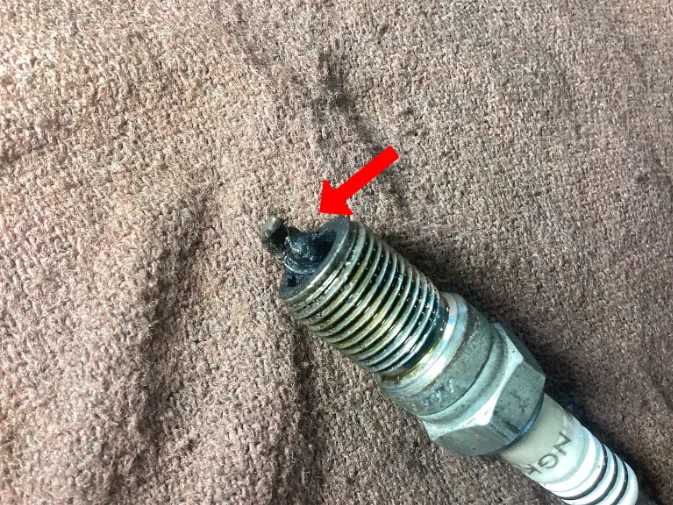
      A fouled spark plug is essentially a spark plug that has become contaminated to the point where it can no longer reliably ignite the air-fuel mixture in your engine's cylinders. This contamination can come in many forms, including carbon buildup from incomplete combustion, oil fouling from leaking valve seals or worn piston rings, fuel fouling from an overly rich mixture, and ash deposits from fuel or oil additives. Even physical damage, like a cracked insulator or damaged electrode, can lead to a fouled spark plug.

      So, what are the tell-tale signs of a fouled spark plug? You might experience a rough or shaky idle, a jerking or hesitation during acceleration, and a noticeable loss of power, making your car feel sluggish. You'll likely see a decrease in your fuel economy, and in severe cases, a fouled spark plug can even prevent your engine from starting. Often, the check engine light on your dashboard will illuminate when there are misfires caused by fouled spark plugs.

      Ignoring a fouled spark plug can lead to more serious problems down the road. The unburnt fuel can damage your catalytic converter, a costly repair. Additionally, other components like your ignition coils and spark plug wires might be working harder to compensate for the failing plug. Don't forget the vital spark plug boots that protect the connection – they can also degrade and contribute to issues. Most vehicles have either spark plug wires or spark plug boots. It is a rare few that have both. Unsure what your vehicle has? We can help with that!

      The best way to prevent the headaches of fouled spark plugs and ensure your vehicle runs smoothly and efficiently is through regular tune ups. At 59 Auto Repair in Plainfield, our experienced technicians will thoroughly inspect your spark plugs, spark plug boots, spark plug wires, and ignition coils. We'll replace worn or fouled spark plugs with high-quality replacements and address any damaged spark plug wires and spark plug boots. Our goal is to diagnose any underlying issues and ensure your engine is running at its optimal performance.

      A tune up at 59 Auto Repair is an investment in the longevity and reliability of your vehicle. We are your trusted local auto repair shop in Plainfield, dedicated to providing top-notch service and keeping your car running its best. Don't wait until you experience the frustrating symptoms of a fouled spark plug. Schedule your tune up at 59 Auto Repair today! Give us a call or visit our shop in Plainfield. We're here to keep your engine firing on all cylinders!


      07/19/2025Read more
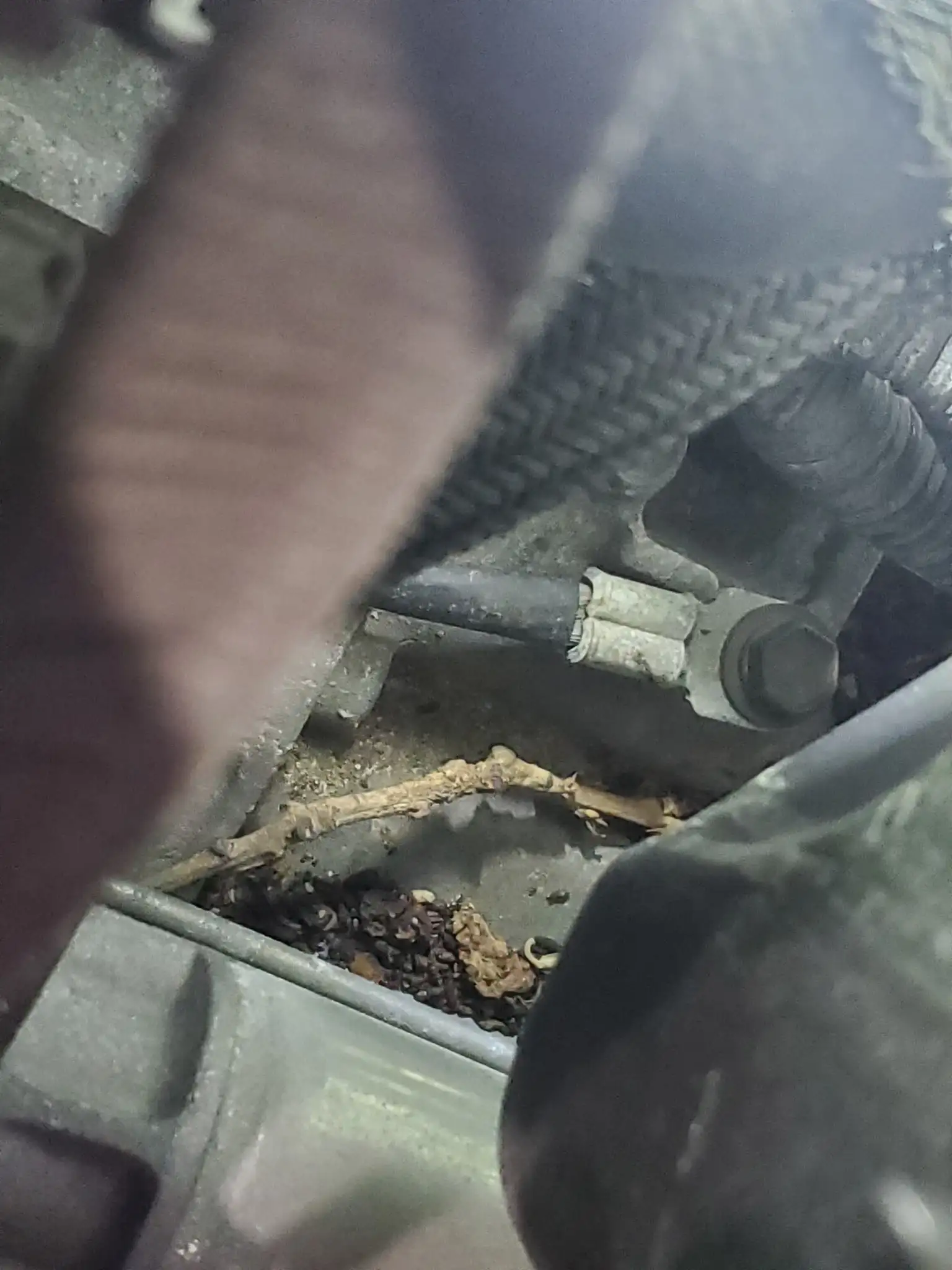
    • What should I do if I find mouse poop under my hood? Image

      What should I do if I find mouse poop under my hood?

      Discovering mouse droppings under your car's hood can be a distressing experience. Not only is it unsanitary, but it also signals a potential rodent infestation in your engine compartment. Mice are attracted to the warmth of the engine and the abundance of wires and hoses that they can chew on.

      The first step is to confirm that the droppings are indeed from mice. While other small animals might leave droppings, mouse droppings are typically small, dark, and cylindrical. If you're unsure, take a picture and show it to a professional at 59 Auto Repair.

      Once you've confirmed the presence of mice, it's crucial to take action immediately. Leaving the issue unresolved can lead to serious car problems. Mice can chew through vital wires and hoses, causing electrical shorts, fuel leaks, and even engine damage. In severe cases, a rodent infestation can even lead to a fire.

      Here's what you should do:

      1. Inspect your engine compartment thoroughly. Look for any signs of nesting material, such as shredded paper, cloth, or insulation. Check for chewed wires, hoses, and belts. You should remove any nesting materials. If you don’t want to do it yourself, call 59 Auto Repair and we can do it for you!
      2. Set up traps. Place mouse traps strategically around your engine compartment. Be sure to bait the traps with something appealing to mice, such as peanut butter or cheese.
      3. Use natural repellents. Some natural repellents, such as peppermint oil or mothballs, can deter mice. However, it's important to use these products with caution and ensure they don't damage any engine components.
      4. Contact a professional. If the infestation is severe or you're uncomfortable handling the situation yourself, contact a professional pest control service. They have the expertise and tools to safely and effectively remove the mice from your vehicle.
      5. Bring your car to 59 Auto Repair for inspection. Even if you've successfully removed the mice, it's essential to have your car inspected by a qualified mechanic. They can check for any damage caused by the rodents and make any necessary repairs.

      Preventing Future Infestations:

      • Keep your car clean. Regularly clean out any debris from your engine compartment.
      • Park your car in a garage. If possible, park your car in a garage to deter rodents.
      • Regularly inspect your car. Perform regular inspections of your engine compartment to check for any signs of rodent activity.

      Finding mouse droppings under your hood is a serious issue that requires immediate attention. By taking prompt action and following these steps, you can protect your car from damage and prevent future infestations. If you're unsure about how to proceed, don't hesitate to contact 59 Auto Repair for expert advice and assistance.

      12/17/2024Read more
    • The Unexpected Find: Wasps and Cabin Air Filters Image

      The Unexpected Find: Wasps and Cabin Air Filters


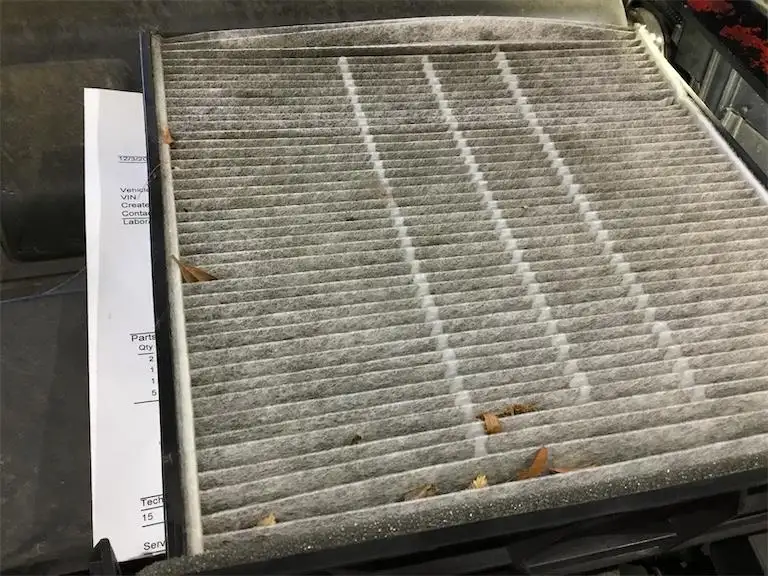
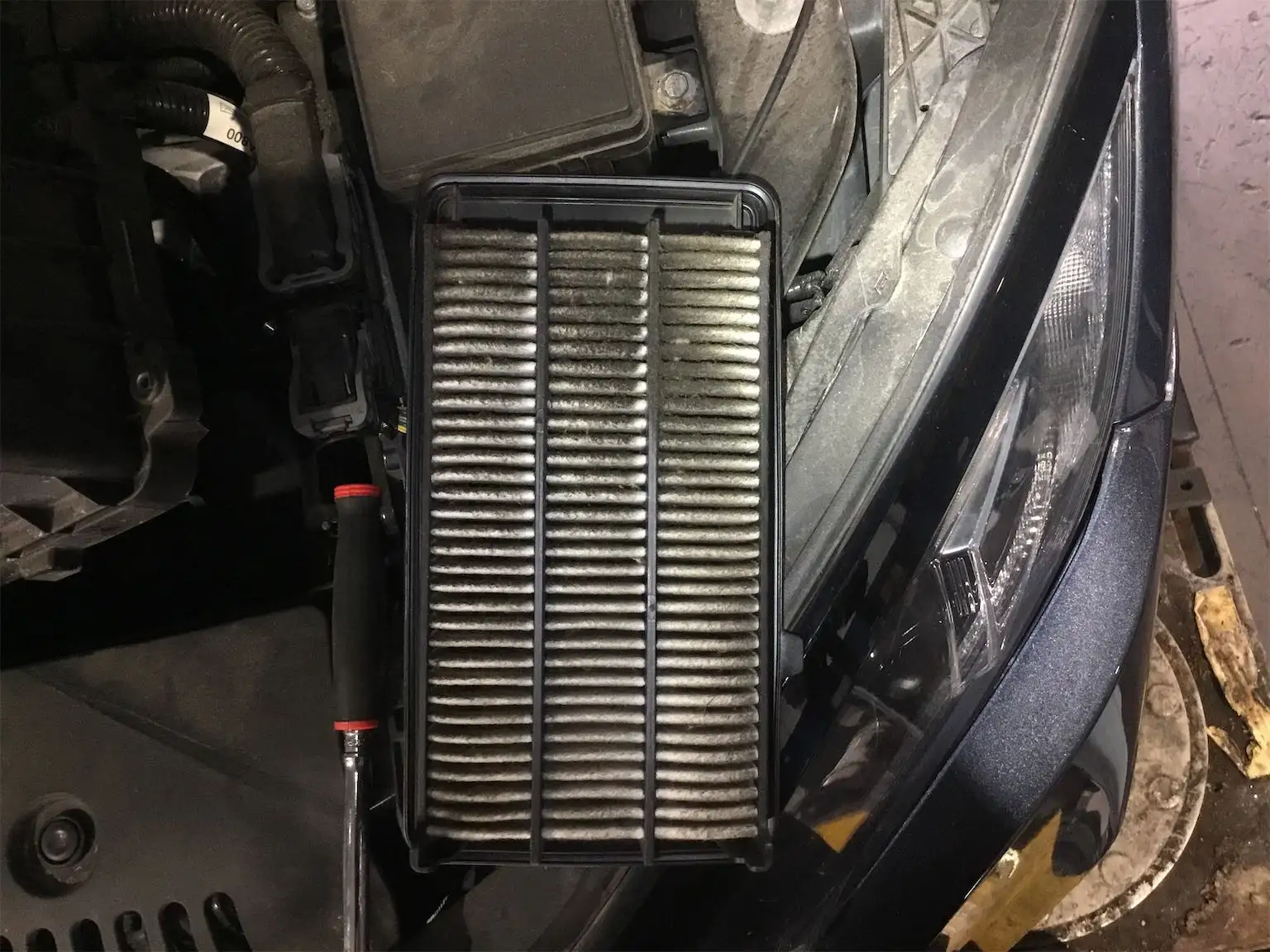
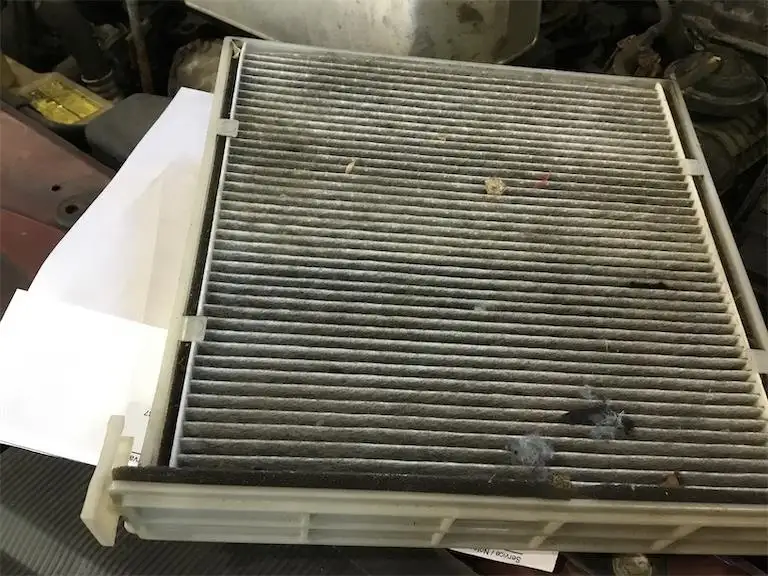
      Here at 59 Auto Repair, we're all about routine maintenance. It keeps your car running smoothly, prevents costly repairs down the road, and even helps you breathe easier while driving. But let me tell you, during a recent routine cabin air filter replacement, we came across something we certainly didn't expect: a wasp nest!

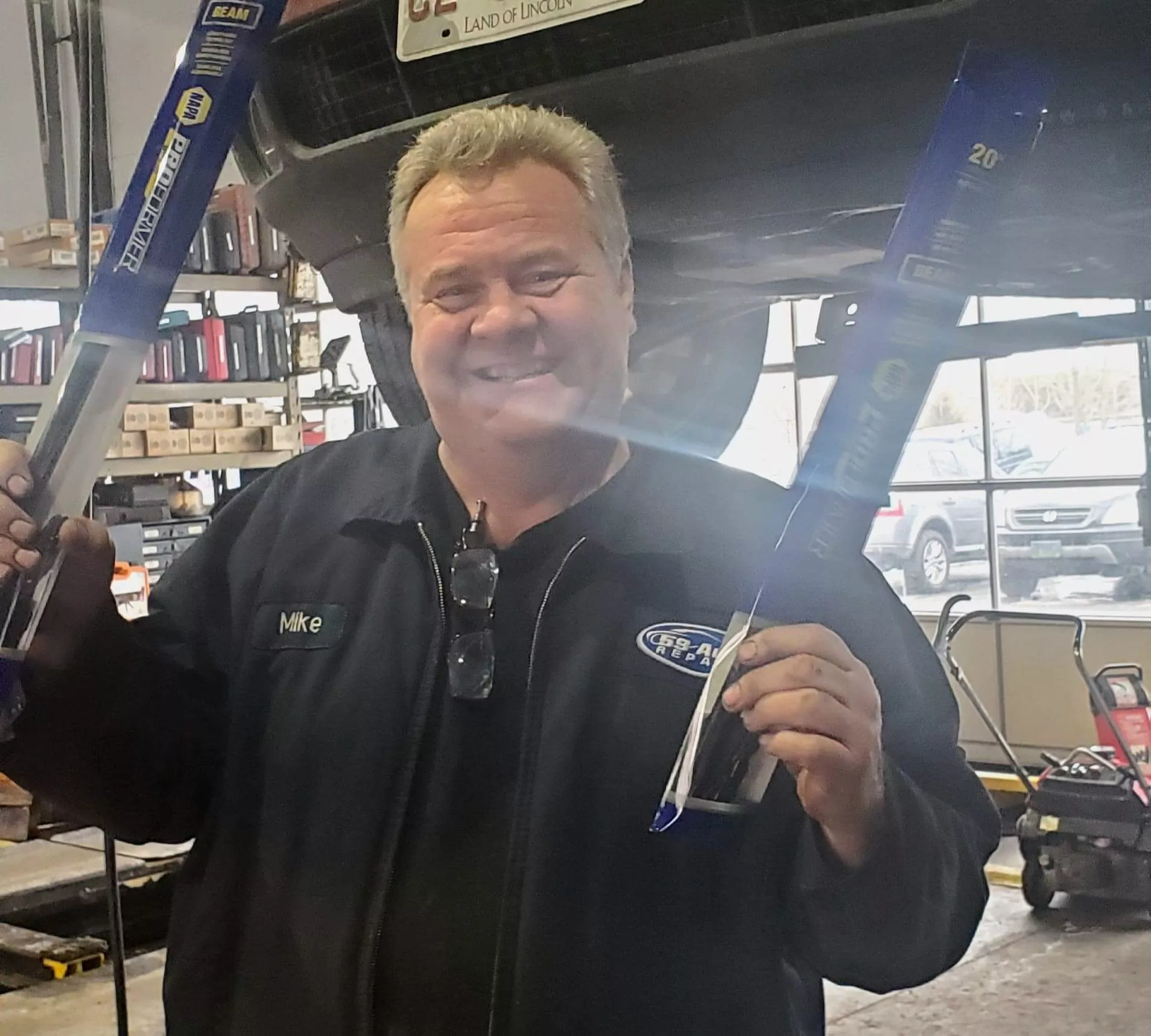
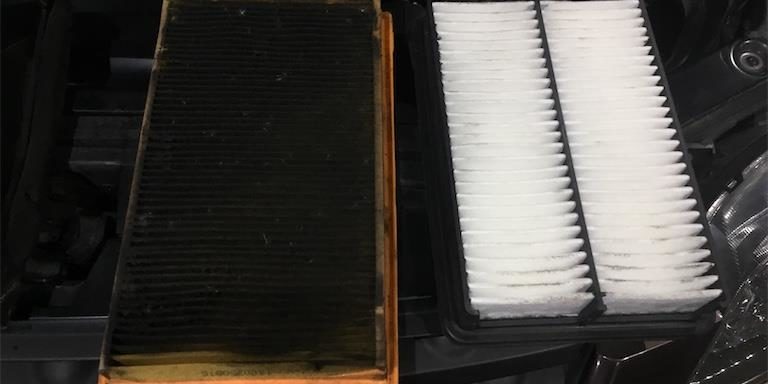
      It all started with a customer bringing their car in for a standard cabin air filter replacement. As usual, our technician, Mike, popped the hood and went through the familiar steps. He removed the old filter, which was due for a change, and went to put in the fresh one. But something caught his eye. Nestled amongst the folds of the old filter was a small, intricate wasp nest.

      Needless to say, Mike was surprised. He'd seen his fair share of unusual things in his years as a mechanic, but a wasp nest in a cabin air filter was a first. The customer was equally shocked and a little grossed out (understandably so!).

      So, what exactly does a wasp nest in your cabin air filter mean? Well, it's not ideal. Here's why:

      • Reduced airflow: A clogged filter, whether by a wasp nest or anything else, restricts airflow into the cabin. This can make your air conditioning and heating system work less efficiently, leading to decreased comfort and potentially higher fuel consumption.
      • Potential allergens: Wasp nests can harbor allergens like dust, pollen, and even mold spores. These can irritate allergies and asthma, making for unpleasant rides.
      • Unwanted guests: While the wasps may have abandoned their nest, other insects or even small animals might find it a cozy home. Not exactly what you want inside your car!

      Thankfully, catching the issue during routine maintenance meant it was resolved quickly. Mike removed the nest carefully (while wearing gloves, of course!), replaced the filter with the new one, and double-checked the surrounding areas for any other signs of wasp activity. The customer was relieved to have the surprise visitors evicted and their car breathing easy again.

      This encounter serves as a reminder of the importance of regular cabin air filter replacement. Not only does it ensure optimal airflow and filtration, but it can also help prevent unexpected discoveries like wasp nests. So, how often should you change your cabin air filter? It depends on various factors like your driving environment and manufacturer recommendations. Generally, it's recommended to replace it every 15,000 miles or once a year, whichever comes first.

      If you're due for a cabin air filter replacement, don't hesitate to schedule an appointment with us at 59 Auto Repair. We'll take care of it quickly and efficiently, and hopefully, the only surprise you'll find is how much cleaner your car's air feels!

      03/05/2024Read more
    • Is it time to replace your wipers? Image

      Is it time to replace your wipers?

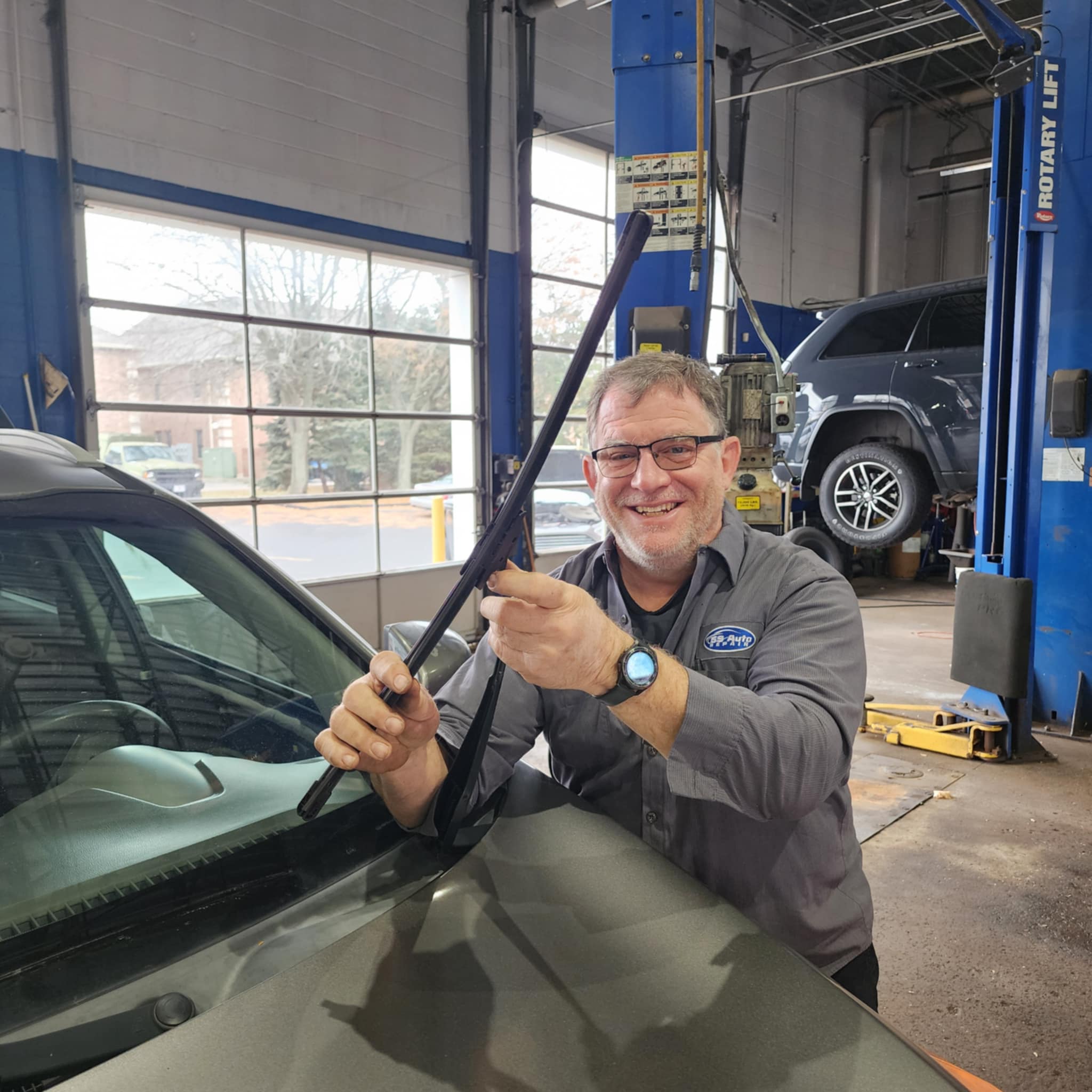
      Is it getting harder to see clearly in the rain? It might be time for new wiper blades! If your wiper blades are chattering, skipping, or streaking, it is time to replace them! Our mechanics will check for rips or tears in the blades and will also check for proper operation to determine if the wiper blades need to be replaced. The wiper blades are considered a safety component on your vehicle as they help you to see the road clearly. If you are having trouble seeing, call us today to have your wiper blades replaced! At 59 Auto Repair we offer 2 types of wiper blades. The first is a standard blade. The second type is a beam blade which is a thicker blade that tends to last longer and hold up better in the rain and snow.


      04/02/2022Read more
    • Beating the Heat: How Long Does Your Car's AC Last? Image

      Beating the Heat: How Long Does Your Car's AC Last?


      As summer approaches, a reliable car air conditioning system becomes a non-negotiable. But how long can you expect yours to last before it starts blowing warm air and leaving you sweltering in traffic? Here at 59 Auto Repair, we want to keep your rides cool and comfortable, so let's dive into the lifespan of your car's AC system and the signs that it might need some TLC.

      Built to Last, But Not Unbreakable

      The good news: Car AC systems are designed for durability. In ideal conditions, with proper maintenance, they can last anywhere between eight to ten years. The key term here is "ideal conditions." Several factors can influence your AC's lifespan:

      • Climate: Living in a hot, humid region puts more strain on your AC system, potentially shortening its lifespan.
      • Usage: Frequent use, especially during peak summer months, can lead to wear and tear faster.
      • Maintenance: Regular check-ups and maintenance can identify minor issues before they snowball into major repairs.

      Warning Signs: When Your AC Needs Attention

      Even the most robust AC system won't last forever. Here are some telltale signs that yours might be on its last legs:

      • Blowing Warm Air: This is the most obvious indicator. If your AC struggles to produce cool air, even on the highest setting, it's definitely time for a check-up.
      • Weak Airflow: A weak or inconsistent airflow is another red flag. This could be due to clogged filters, low refrigerant levels, or a failing compressor.
      • Strange Noises: Your AC shouldn't sound like a distressed whale. Grinding, whining, or clunking noises could indicate internal component wear.
      • Moisture Buildup: Seeing excessive moisture pooling around the vents suggests a clogged condensate drain or low refrigerant levels.

      Don't Wait Until You're Melting: AC Recharge vs. Repair

      One common misconception is that car AC systems need refrigerant refills regularly. In a perfectly sealed system, the refrigerant should last the entire lifespan of the car. However, leaks can develop over time, causing the refrigerant to deplete. This is where an AC recharge comes in.

      A recharge simply tops up the refrigerant level. But if your AC needs frequent recharges, it likely has a leak that needs to be addressed. Ignoring a leak can lead to bigger problems down the road, so it's crucial to have a qualified technician diagnose the cause. When an air conditioning recharge is performed, a dye should be added to the system so that the air conditioning system can be checked for leaks. Since Freon is a gas, you cannot see leaks with your eyes, and dye is required to find the leak.

      Taking the Chill Out of Car Care

      At 59 Auto Repair, our certified technicians are experts in car AC systems. We can diagnose any issues your AC might be facing, be it a simple recharge or a more complex repair. We use top-quality parts and offer competitive prices to ensure your car stays cool and comfortable all summer long.

      Don't let a failing AC system turn your summer drives into sweaty nightmares. Schedule an appointment with 59 Auto Repair today! We'll have your car's AC system breathing new life in no time, so you can keep your cool on the road.

      04/26/2024Read more
    • Why Do Brake Rotors Need to Be Replaced? Image

      Why Do Brake Rotors Need to Be Replaced?


      When it comes to vehicle maintenance, few components are as critical to your safety as the brake system. Brake rotors play a crucial role in the braking process. Over time, they can wear down and develop problems that necessitate replacement. In this blog post, we'll delve into the reasons why brake rotors need to be replaced and why it's essential to address these issues promptly.

      1. Wear and Tear: Brake rotors are subjected to immense stress and heat during braking. Over time, this constant friction causes them to wear down. As the rotors wear, they become thinner and less effective at dissipating heat, which can lead to reduced braking performance.

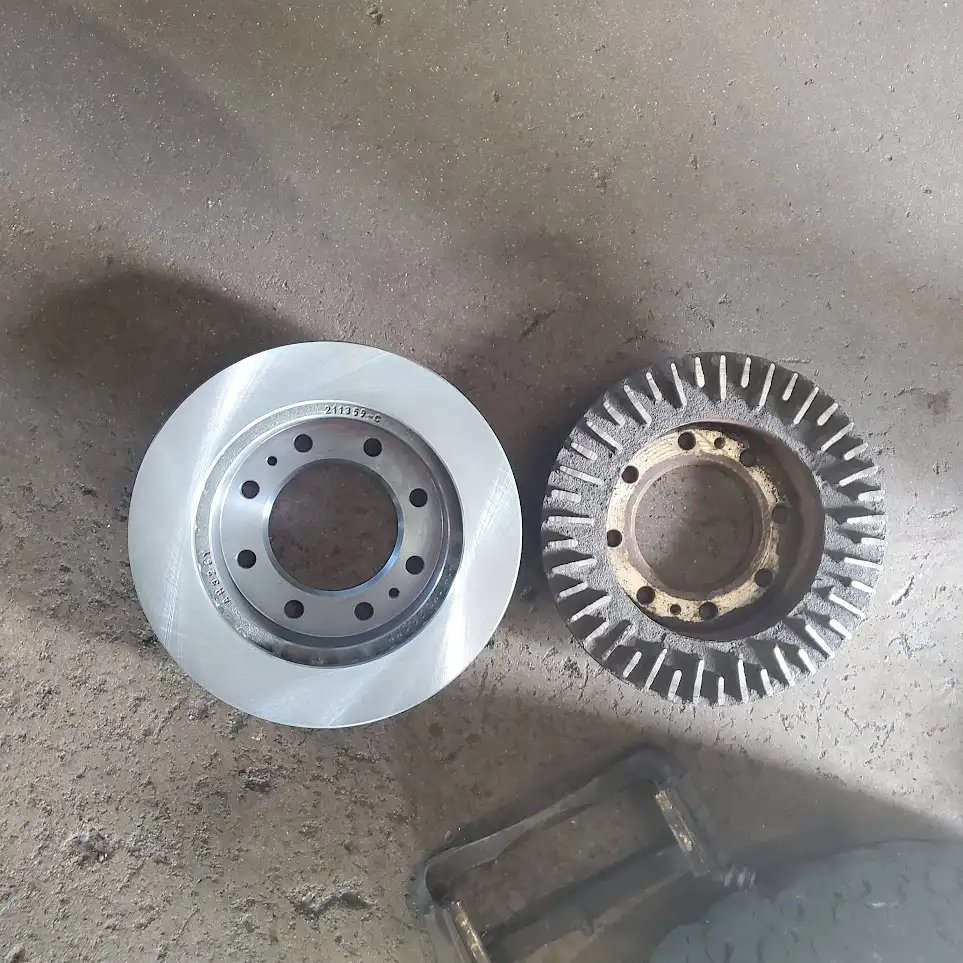
      2. Warped Rotors: When you apply your brakes, the brake pads squeeze the rotors to create friction and slow down your vehicle. If the rotors heat unevenly or cool down too rapidly, they can become warped. Warped rotors can cause vibrations, pulsations, and uneven braking, making it essential to replace them for a smooth and safe ride.

      3. Scoring and Grooving: Dirt, debris, and small stones can get caught between the brake pads and rotors, resulting in scoring or grooving. These imperfections on the rotor's surface can lead to noisy and less effective braking. To maintain optimal braking performance, it's crucial to replace scored or grooved rotors.

      4. Corrosion: Brake rotors are typically made of cast iron, which is susceptible to corrosion, especially in areas with harsh weather conditions or road salt usage. Corrosion can lead to pitting and weakening of the rotor's structure, making replacement necessary to maintain safety.

      5. Thickness Variation: As brake rotors wear down, they may develop thickness variations, often referred to as "hot spots." These variations can result in inconsistent braking, vibrations, and increased stopping distances. Replacing the rotors eliminates these issues, ensuring consistent and reliable braking.

      6. Overheating: Under extreme conditions, such as heavy braking during steep descents or while towing heavy loads, brake rotors can overheat. Overheating can cause the rotor's metal to weaken and even crack. Cracked rotors are a severe safety hazard and must be replaced immediately.

      7. Improved Performance: Besides addressing safety concerns, replacing worn brake rotors can also lead to improved braking performance. New rotors provide a clean and even surface for the brake pads to grip, enhancing your vehicle's stopping power and responsiveness.

      8. Reduced Brake Noise: Worn rotors can be noisy, causing squealing or grinding sounds during braking. Replacing them with new rotors can significantly reduce brake noise, providing a quieter and more comfortable driving experience.

      In conclusion, brake rotors are a critical component of your vehicle's braking system. Due to the harsh conditions they endure and the essential role they play in your safety, it's essential to monitor their condition and replace them when necessary. Regular maintenance and prompt replacement of worn or damaged brake rotors will ensure that your vehicle stops safely and efficiently, keeping you and your passengers out of harm's way on the road. Remember that neglecting brake rotor issues can lead to more severe problems and increased maintenance costs in the long run, so prioritize the health of your braking system for a safer and smoother driving experience.

      10/04/2023Read more
    • How Does a Run-Flat Tire Work? Exploring the Technology Behind This Automotive Innovation Image

      How Does a Run-Flat Tire Work? Exploring the Technology Behind This Automotive Innovation


      Run-flat tires have become increasingly popular in recent years due to their ability to provide added safety and convenience on the road. But have you ever wondered how these remarkable tires work? In this blog post, we'll delve into the technology behind run-flat tires and uncover the secrets that make them a game-changer for drivers.

      The Anatomy of a Run-Flat Tire

      Run-flat tires are designed with several key features that enable them to keep rolling, even when they've suffered a puncture. Here's how they work:

      Reinforced Sidewalls: The most critical component of a run-flat tire is its reinforced sidewalls. These sidewalls are constructed with robust materials that can support the weight of the vehicle even when the tire loses air pressure due to a puncture. This prevents the tire from collapsing and allows the driver to maintain control of the vehicle.

      Self-Supporting Structure: Inside a run-flat tire, there is a self-supporting structure that takes over when air pressure is lost. This structure is typically made of tough, heat-resistant rubber compounds. It provides the necessary rigidity to keep the tire's shape, ensuring it can continue to bear the load of the vehicle.

      Run-Flat Inserts: Some run-flat tires feature run-flat inserts, which are additional support components inserted within the tire. These inserts provide further reinforcement and can extend the distance a vehicle can safely travel on a flat tire.


      The Operation of a Run-Flat Tire

      When a conventional tire experiences a puncture, it rapidly loses air pressure, causing the tire to flatten. This sudden loss of air can lead to a blowout and a loss of control over the vehicle. In contrast, a run-flat tire remains inflated thanks to its reinforced sidewalls and self-supporting structure.

      When a run-flat tire is punctured, the driver may notice a slight reduction in handling and ride comfort, but the tire remains operational. It's essential to understand that run-flat tires are not invincible; they have limitations and are designed to be driven at reduced speeds (typically up to 50 miles) after a puncture. This allows the driver to reach a safer location or a tire service center without the need for an immediate tire change.

      In conclusion, run-flat tires are a remarkable advancement in automotive technology. Their reinforced sidewalls and self-supporting structures ensure that they can continue to function after a puncture, providing drivers with added safety and convenience on the road. While they may come with a slightly higher initial cost, the peace of mind and reduced risk of blowouts make run-flat tires a valuable option for many drivers.

      09/25/2023Read more
    • Can the Alternator Drain a Battery on Your Vehicle? Image

      Can the Alternator Drain a Battery on Your Vehicle?


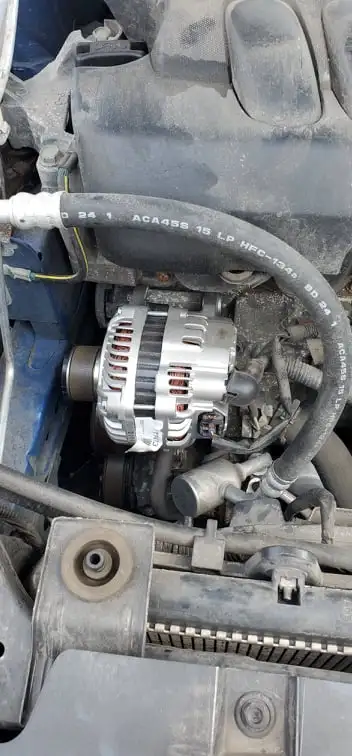
      The alternator and battery are integral components of your vehicle's electrical system, each playing a distinct yet interconnected role. While the alternator is responsible for generating electrical power to charge the battery and power the vehicle's electrical systems, the battery stores this energy and provides the initial power needed to start the engine. But can the alternator actually drain a battery? Let's delve into this intriguing topic to understand the dynamics at play.

      The Alternator's Role: Power Generation and Distribution

      The alternator is essentially a power generator for your vehicle. When the engine is running, it spins the alternator's rotor using a belt connected to the engine's crankshaft. This spinning motion within the alternator generates electrical energy through electromagnetic induction. The energy produced by the alternator is then used to recharge the battery and supply power to various electrical components, including lights, radio, and air conditioning.

      Battery Charging and Management

      Contrary to popular belief, the alternator doesn't continuously pump energy into the battery. Instead, its purpose is to maintain the battery's charge and meet the electrical demands of the vehicle. Once the engine starts, the alternator provides power to both the vehicle's electrical systems and simultaneously replenishes the charge used to start the engine. If the alternator were to constantly charge the battery, it would lead to overcharging, damaging the battery and other electrical components.

      Can the Alternator Drain the Battery?

      In most cases, the alternator does not drain the battery. However, there are instances when it might seem like the alternator is causing the battery to drain. For example, if the alternator becomes faulty and fails to produce enough power, the vehicle may rely on the battery to supply the electrical needs temporarily. This can lead to a situation where the battery's charge is depleted faster than usual, giving the impression that the alternator is draining the battery.Additionally, other issues such as a parasitic draw, faulty voltage regulator, or bad diodes within the alternator can indeed lead to the battery draining over time. A parasitic draw occurs when certain components (like interior lights or an aftermarket device) continue to draw power even when the vehicle is turned off, slowly draining the battery. A malfunctioning voltage regulator might cause the alternator to produce excessive voltage, which can lead to battery overcharging and eventual failure. Faulty diodes can also disrupt the alternator's normal functioning, affecting the battery charging process.

      Conclusion

      While the alternator is not designed to drain the battery, various factors can contribute to situations where the battery's charge depletes more quickly than usual. Regular maintenance, including checking the alternator's health, inspecting for parasitic draws, and ensuring the voltage regulator and diodes are functioning correctly, is crucial to prevent undue strain on the battery and electrical system.

      In essence, understanding the delicate balance between the alternator and battery helps demystify the notion of the alternator draining the battery. Proper care, routine maintenance, and addressing issues promptly are key to ensuring both components work harmoniously to keep your vehicle's electrical system running smoothly.

      08/22/2023Read more
    • In need of a tune up? Image

      In need of a tune up?

      When was the last time your vehicle had a tune up? Tune ups help keep your vehicle in great running condition. A typical tune up consists of replacing the spark plugs and either the ignition wires or spark plug boots. Sometimes the plenum needs to be removed in order to replace the spark plugs; the plenum gasket would then also need to be replaced.

      A tune up can help your vehicle run smoother as well as increase the gas mileage of your vehicle. If your vehicle is misfiring, the spark plugs may need to be replaced. Call today to schedule your tune up!

      05/14/2021Read more
    • Clunking Car? Image

      Clunking Car?

      Why is my car clunking over bumps? Many times, when vehicles make a clunking noise over bumps it is caused by the car’s struts. The struts are what provides the support for the vehicle’s suspension. It is what helps with ride comfort and keeps the vehicle driving smoothly.

      The strut will compress to take the impact of a bump. Struts should be replaced for maintenance every 75,000 miles. A technician will inspect a strut to check for wear, rust, or leaks. These indicate that it is time to have the strut replaced. Call today to schedule an appointment to have your suspension checked!

      04/05/2021Read more
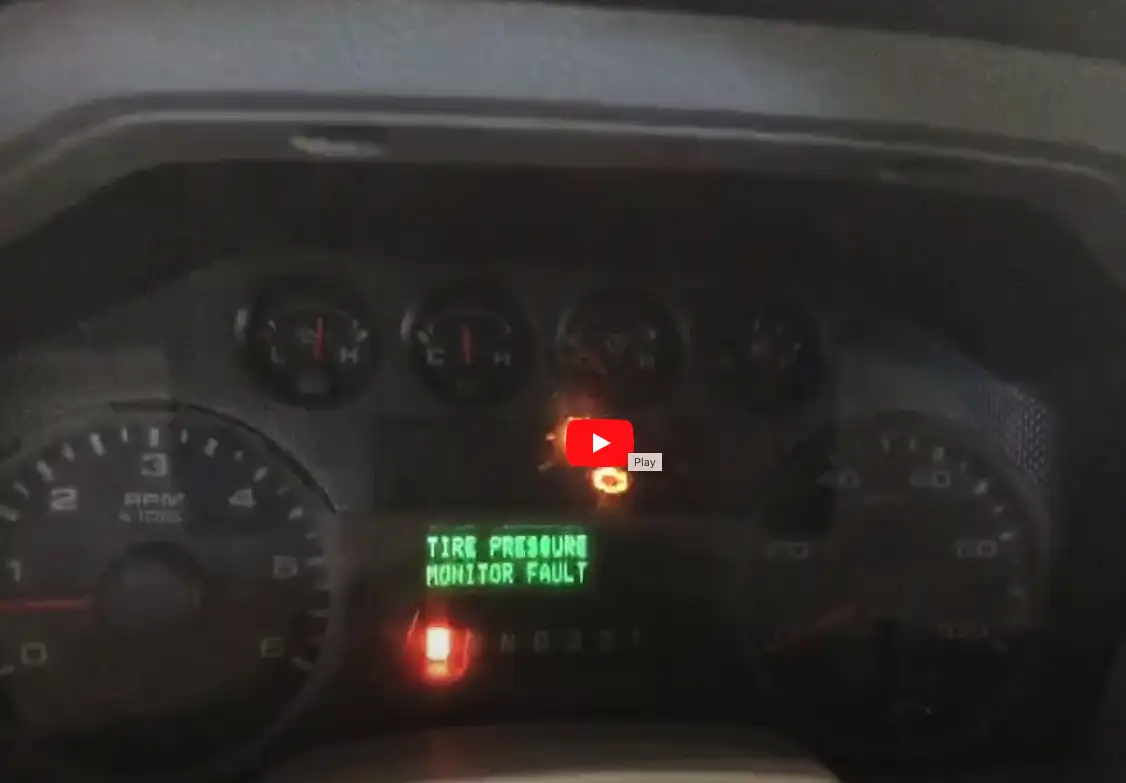
    • Why are my TPMS light and check engine light on? Image

      Why are my TPMS light and check engine light on?

      Don't Ignore the Double Whammy: Flashing TPMS and Check Engine Light

      Uh oh, you glance down at your dashboard and see a double dose of warning lights: a flashing TPMS (Tire Pressure Monitoring System) icon and the dreaded check engine light. It can be a stressful sight, but take a deep breath! 59 Auto Repair is here to break down what these lights might mean and what to do next.

      Flashing TPMS Light: A Sensor on the Blink

      A flashing TPMS light typically indicates a malfunction with one of your tire pressure sensors. These sensors are little lifesavers, constantly monitoring air pressure and sending a signal to your car's computer. When the light comes on solid, it indicates the tire pressure has fallen out of range for your vehicle. This is a lifesaver if you have a tire going flat. A flashing light usually means the mechanic needs to replace a faulty sensor or diagnose a sensor malfunction.

      Check Engine Light: A Broad Brush Warning

      The check engine light is like a general warning buzzer in your car. It doesn't tell you exactly what's wrong, but it lets you know there's an issue somewhere in your engine's complex system. This could be anything from a loose gas cap (easy fix!) to a more serious problem. That's where the expertise of a mechanic or automotive technician comes in.

      Diagnostics: Cracking the Check Engine Code

      Here's where 59 Auto Repair shines. Our mechanics are equipped with advanced diagnostic tools that can pinpoint the exact reason your check engine light came on. These tools can read the specific trouble code stored by your car's computer, giving our technicians a valuable starting point for diagnosis.

      Don't Wait to Address the Issue

      While a flashing TPMS light might not be an immediate emergency, it's important to get it checked out. Underinflated tires can affect your gas mileage, handling, and even lead to a blowout. A check engine light, depending on the cause, could indicate a problem that worsens over time if left unaddressed.

      59 Auto Repair: Your Trusted Partner on the Road

      At 59 Auto Repair, our team of experienced mechanics and automotive technicians can diagnose both your TPMS sensor issue and the reason behind your check engine light. We'll explain the problem in clear terms and recommend the best course of action to get you back on the road safely. Don't let these warning lights cause undue stress. Contact 59 Auto Repair today and let us get your car healthy again!
      07/23/2024Read more
    • How do I know if my lug nuts need to be replaced?  Image

      How do I know if my lug nuts need to be replaced?


      Hey Car Owners, Don't Get Stuck on the Side of the Road: Here's How to Know When Your Lug Nuts Need Replacing

      You're cruising down the highway, music pumping, enjoying the ride. Then, that dreaded thump-thump-thump starts coming from a wheel. Uh oh, looks like a flat tire. But wait! Can't get the lug nuts off? That's a recipe for a roadside disaster.

      Lug nuts are those essential little guys that hold your wheels on. But, like any car part, they can wear out. So, how do you know when it's time to replace them before you're stuck needing a tow truck instead of a spare tire?

      Listen Up: Signs Your Lug Nuts Are Singing the Blues

      Your lug nuts won't complain vocally, but they will show signs of wear. Here's what to listen (well, look) for:

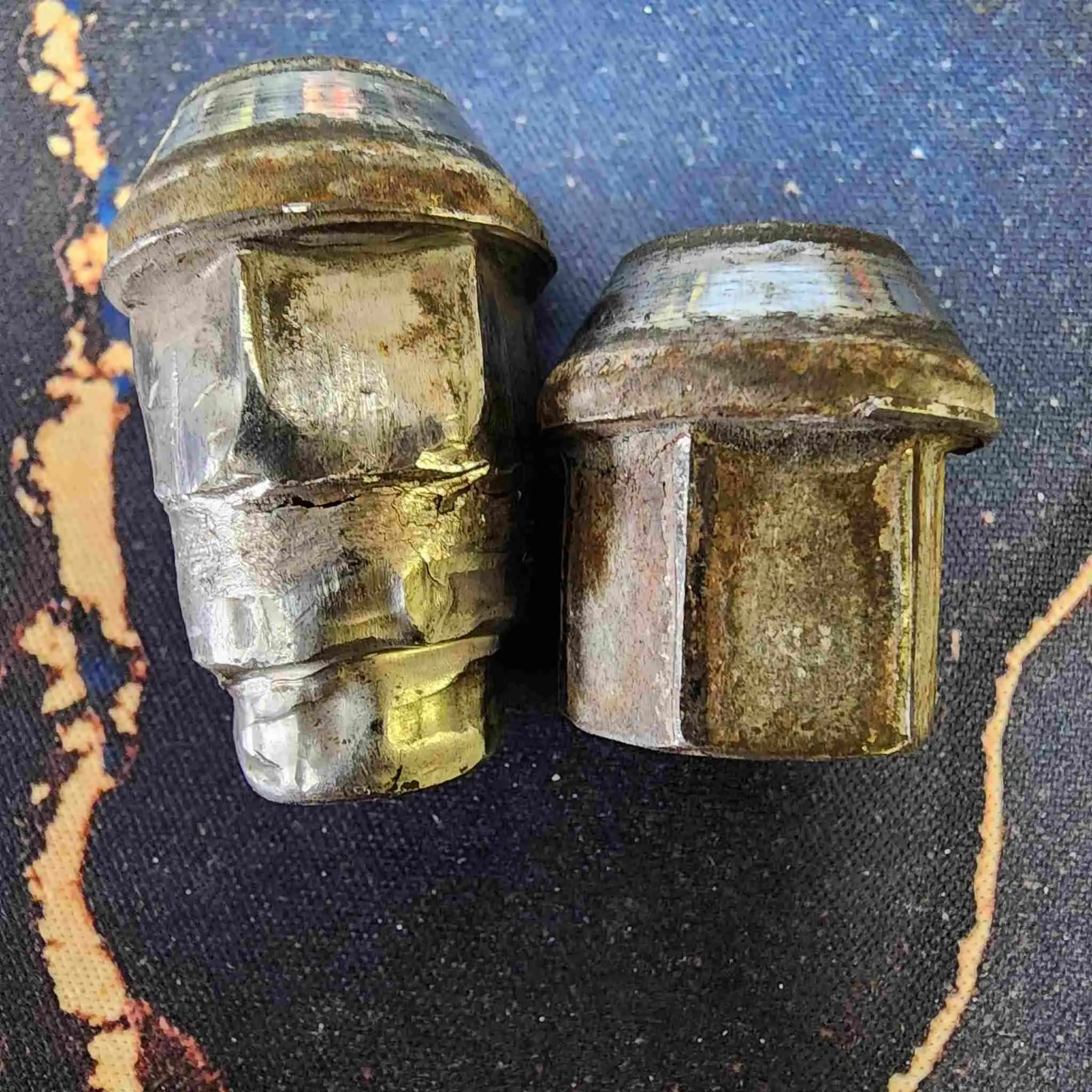
      • Rusty Rascals: Rust is the enemy of lug nuts. It can cause them to swell, making them difficult to remove and leading to rounded corners.
      • Stripped Soldiers: See threads wearing down or getting mangled? Those are stripped lug nuts, and they won't properly tighten, putting your wheel at risk of coming loose.
      • Cracked Crusaders: Noticed a crack in a lug nut? Don't wait! A cracked lug nut is a weak link and can break under pressure.
      • The Worn and Torn: Over time, the lug nut's seating surface can wear down. This can prevent a proper fit and lead to loose wheels.
      • De-Icer Blues: If you live in an area that uses road salts, keep an eye on your lug nuts for corrosion caused by de-icing chemicals.

      Bonus Tip: Pit Crew Power!

      When getting your tires rotated or your wheels serviced, ask the mechanic to inspect your lug nuts. They're the pit crew of your wheels, and keeping them in top shape is crucial!

      Remember: Don't gamble with your safety. If your lug nuts show any of these signs, replace them. They're a cheap and easy fix that can prevent a major headache (and potentially a dangerous situation) down the road.

      Stay Rolling with 59 Auto Repair!

      Here at 59 Auto Repair, we've got your back (and your wheels!). If you're unsure about your lug nuts, our expert mechanics can take a look and recommend the best course of action. Schedule an appointment today and keep your ride rolling safely!

      05/17/2024Read more
    • Why That "Free Code Scan" Isn't a Real Repair Image

      Why That "Free Code Scan" Isn't a Real Repair

      Check Engine Light On? Code vs Diagnostic Explained

      We’ve all been there: you’re driving down the road, and suddenly that glowing amber "Check Engine" light (CEL) pops up on your dash. It’s an instant mood-killer.

      Your first instinct might be to head to a big-box auto parts store for a free "code pull," thinking it’ll tell you exactly what’s wrong.

      At 59 Auto Repair, we want to clear up a common misconception: there is a massive difference between pulling a code and performing a diagnostic.

      Understanding this difference can save you hundreds—or even thousands—of dollars in guesswork repairs.

      Pulling the Code: The "What," Not the "Why"

      When someone connects a scanner to your car’s computer (OBD-II port), they are simply asking the car what symptom it is detecting. The computer responds with a code like:

      • P0300 – Random Misfire
      • P0420 – Catalyst System Efficiency

      Think of it like going to the doctor with a fever. The thermometer tells the doctor your temperature is 102°F—that’s the "code." However, the cause of that fever could be the flu, an infection, or heatstroke.

      In your car, a "lean oxygen sensor" code doesn’t always mean the sensor is bad. It could indicate:

      • A vacuum leak
      • A clogged fuel filter
      • A damaged intake boot

      Professional Diagnostics: The Deep Dive

      A true diagnostic is a systematic investigation performed by a trained technician. Here’s what happens after we pull the code:

      • Live Data Analysis: Monitoring real-time engine performance to identify when the fault occurs
      • Pinpoint Testing: Using tools like multimeters, smoke machines, and fuel pressure gauges
      • Visual Inspection: Checking for damaged wiring, hoses, or components that scans can’t detect

      Why Diagnostics Ensure the Right Repair the First Time

      The biggest risk of relying only on a code is what’s known as "parts cannon" syndrome—replacing parts until something works.

      • Stop the Guesswork: Replacing parts without testing can waste money on unnecessary repairs
      • Protect Other Components: Small issues can turn into major repairs if ignored
      • Peace of Mind: Diagnostics provide a clear answer—not a guess

      Real-Life Example

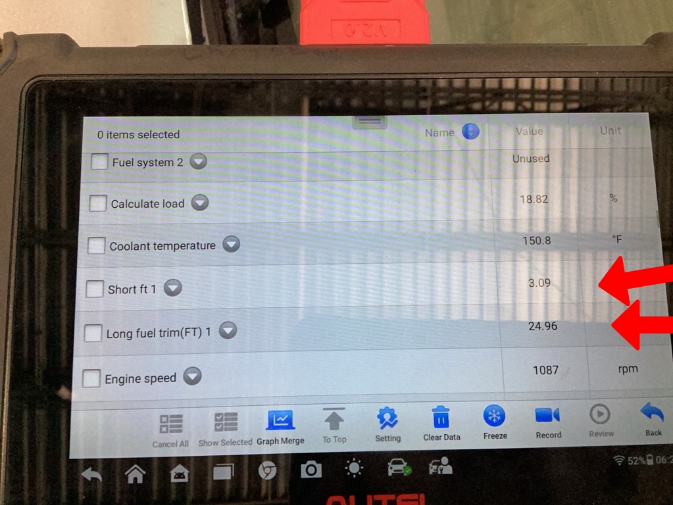
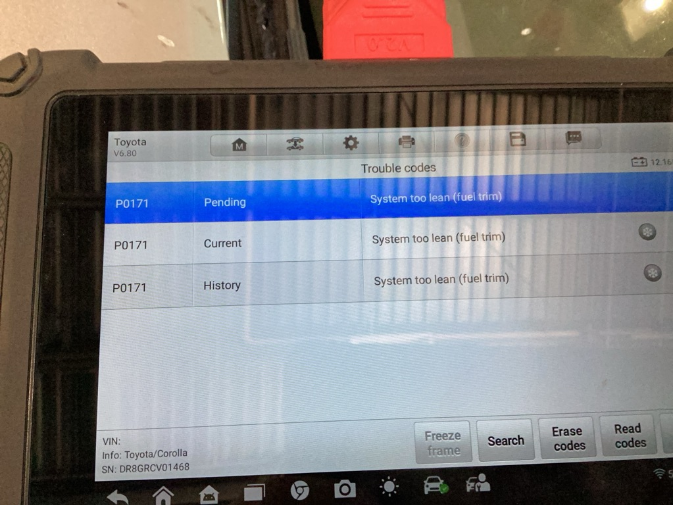
      Recently, a customer came in with code P0171 (fuel system too lean, bank one). A parts store might suggest replacing the purge solenoid—and in many cases, that works.

      However, after proper diagnostics:

      • The purge valve was working correctly
      • No vacuum leaks were found
      • Oxygen sensors were functioning properly
      • Fuel trims increased under acceleration
      • Engine load exceeded 85% under wide open throttle
      • Fuel pressure remained steady at 45–50 PSI

      The real issue? The fuel injectors were clogged and not delivering enough fuel.

      By diagnosing the vehicle correctly, we replaced the right part the first time—saving the customer time, money, and frustration.

      The 59 Auto Repair Guarantee

      At 59 Auto Repair, we believe in doing the job right the first time. We don’t just turn off your check engine light—we make sure your vehicle is safe, efficient, and reliable for the long haul.

      Is your Check Engine Light on? Don’t guess—know.

      Give us a call or stop by the shop today to schedule a professional diagnostic. Let’s get you back on the road with confidence!

      03/31/2026Read more
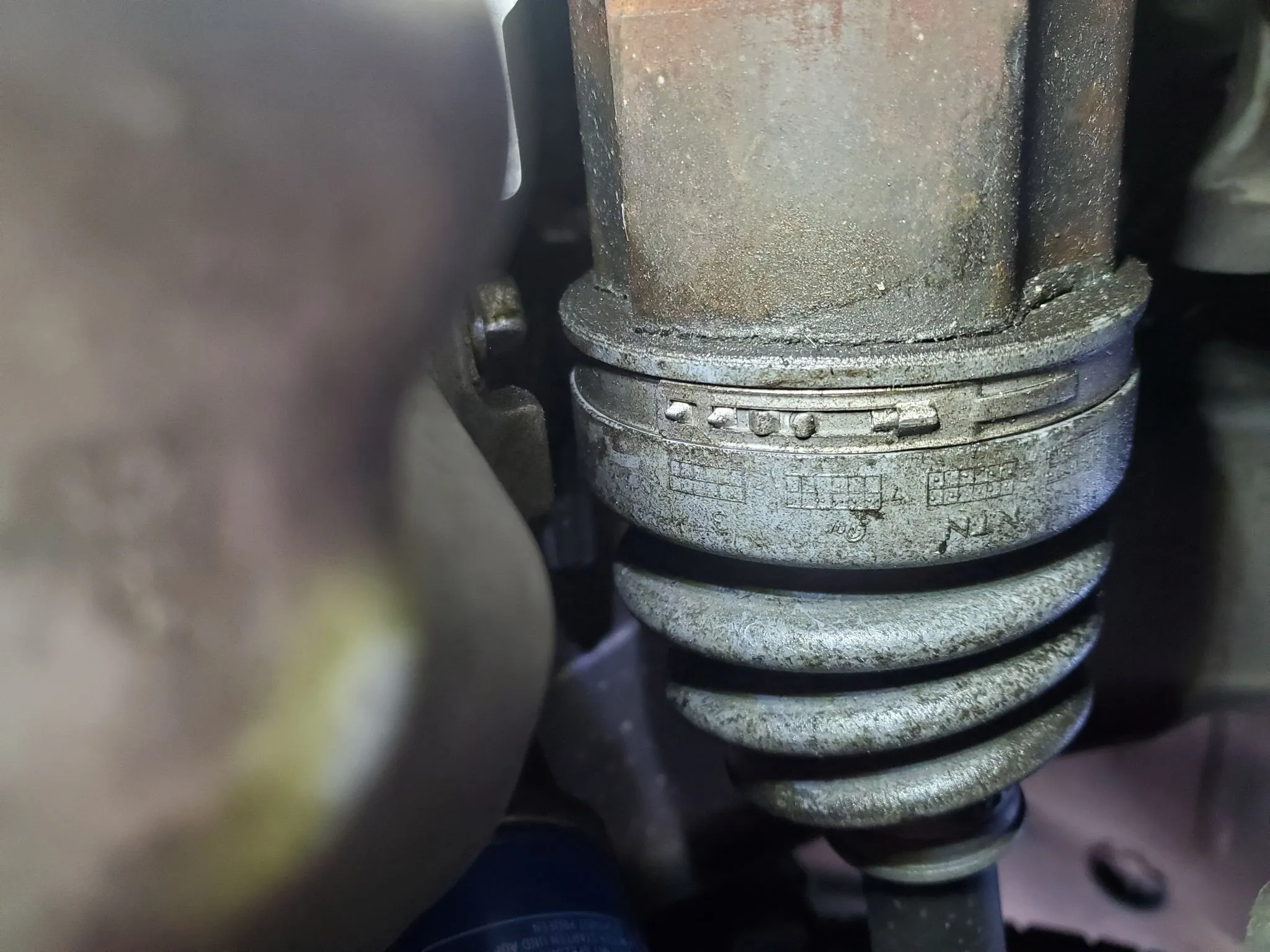
    • Is Your Car Clicking When You Turn? Don’t Ignore Your CV Axle! Image

      Is Your Car Clicking When You Turn? Don’t Ignore Your CV Axle!

      Strange Clicking or Vibrations? It Might Be Your CV Axle

      If you’ve noticed a strange clicking sound while pulling into a parking spot or felt a weird vibration while cruising down the road, your car might be trying to tell you something important. Often, the culprit is a worn-out CV (Constant Velocity) axle shaft.

      At 59 Auto Repair, we believe that catching these issues early doesn't just save your car—it saves your wallet. Here is what every driver needs to know about this hardworking part of your drivetrain.

      What Exactly is a CV Axle?

      Think of the CV axle as the "messenger" of your car. Its job is to transfer power from the engine and transmission directly to your wheels.

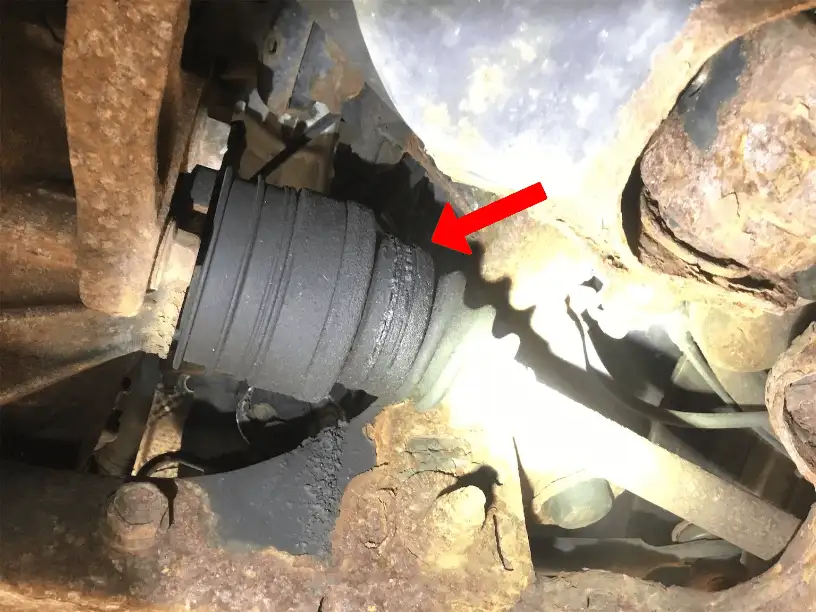
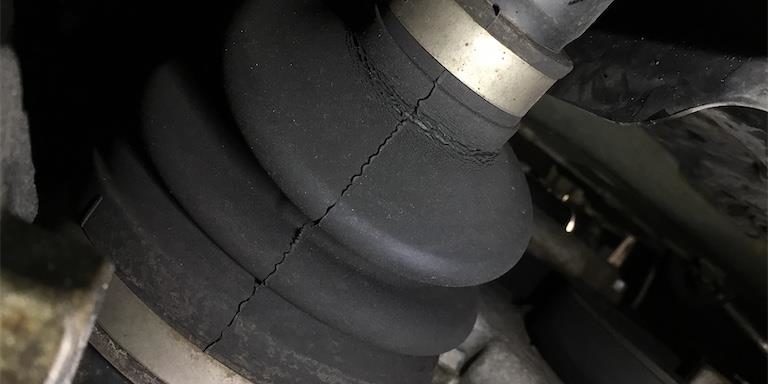
      Because your wheels need to bounce over bumps and turn corners, the axle has flexible joints (protected by rubber boots) that allow it to bend while it spins.

      3 Warning Signs Your Axle is Failing

      • The "Click of Death": If you hear a loud, rhythmic clicking or popping sound specifically when you’re making a sharp turn, that’s a classic sign of a worn CV joint.
      • Grease on the Inside of Your Wheel: If the protective rubber boot tears, grease will leak out and dirt will get in. If you see dark grease splattered under your fender, get it checked immediately.
      • Vibrations While Driving: A damaged axle can become unbalanced, causing the whole car to shiver or vibrate, especially as you speed up.

      Why You Shouldn’t Wait

      A snapped axle is a major safety hazard. If it fails completely while you’re driving, your car will lose power to the wheels entirely, leaving you stranded.

      Replacing a torn boot or a clicking axle now is much cheaper and safer than dealing with a breakdown on a busy road.

      Expert Care You Can Trust

      When it comes to your drivetrain, precision matters. At our shop, we combine ASE World Class expertise with a commitment to keeping our neighbors safe.

      We don’t just swap parts—we perform a full digital inspection to make sure your suspension and tires are in top shape, too.

      Does your car have a case of the "clicks"? Give us a call or stop by the shop in Plainfield. We’ll get you back on the road with an axle you can rely on!

      03/12/2026Read more
    • Is your vehicle ready for your next road trip? Image

      Is your vehicle ready for your next road trip?

      There’s nothing quite like loading up the trunk, queuing up the perfect playlist, and heading out on a long-awaited summer road trip. Whether you're planning a weekend getaway, exploring scenic backroads, or tracing the historic stretches of Route 66, the open road offers freedom, adventure, and unforgettable family memories.

      But that excitement can quickly come to a halt if your vehicle breaks down miles from home.

      A mechanical failure is more than an inconvenience—it can derail your vacation plans, strain your travel budget, and put your safety at risk. Before you set out on your next adventure, making sure your vehicle is ready for the demands of long-distance driving is one of the smartest decisions you can make.

      Safety Starts with Your Brakes

      When it comes to highway safety, no system is more important than your brakes.

      Summer travel often means stop-and-go traffic, steep mountain grades, and sudden slowdowns on busy highways. These situations place significant demands on your braking system. Over time, brake pads wear down, brake fluid absorbs moisture, and rotors and hardware can deteriorate from constant heat and use.

      Driving with worn brake components increases stopping distances and reduces your ability to react to unexpected hazards. A professional brake inspection before your trip ensures your vehicle has the stopping power needed to keep you and your passengers safe throughout your journey.

      Avoid Vacation-Ending Breakdowns

      A breakdown in an unfamiliar town can quickly turn a dream vacation into a stressful ordeal.

      Instead of relaxing at your destination, you could find yourself stranded on the side of the road waiting for a tow truck, searching for a trustworthy repair shop, and rearranging hotel reservations or travel plans.

      Emergency repairs often come with higher costs, longer wait times, and limited options. By scheduling preventative maintenance before you leave, you can address potential issues on your schedule—not when they become urgent problems hundreds of miles from home.

      Get Road-Trip Ready with 59 Auto Repair's Road Trip Special

      To help local drivers enjoy a worry-free summer travel season, 59 Auto Repair is proud to offer our comprehensive Road Trip Special.

      This all-inclusive service package is designed to identify hidden wear and tear before it becomes an expensive roadside emergency. Our experienced technicians perform a thorough inspection of your vehicle's key systems, helping ensure maximum safety, reliability, and performance for every mile ahead.

      What's Included?

      • Complete brake inspection, including pad thickness and rotor condition
      • Tire inspection and rotation for even wear and optimal traction
      • Battery testing to help prevent unexpected starting issues
      • Inspection of all critical belts and hoses
      • Suspension and steering system evaluation
      • Cabin air filter and engine air filter inspection
      • Complete fluid inspection and top-off service

      Why These Checks Matter

      Every component included in our Road Trip Special plays a vital role in keeping your vehicle dependable during summer travel.

      High temperatures can accelerate battery deterioration and place additional stress on aging belts and cooling hoses, increasing the likelihood of failures during long highway drives. Proper tire maintenance and suspension inspections improve handling, enhance ride comfort, and help maximize fuel efficiency.

      Fluid levels are equally important. Engine oil, coolant, brake fluid, and power steering fluid all work together to keep your vehicle operating safely and efficiently. Ensuring these fluids are clean and properly filled helps protect critical components and prevent overheating during extended trips.

      Schedule Before You Travel

      As you start planning your next adventure, make vehicle preparation a top priority.

      For dependable automotive service in Plainfield, IL, trust the experienced team at 59 Auto Repair. We are committed to providing transparent recommendations, quality workmanship, and the peace of mind that comes with knowing your vehicle has been thoroughly inspected by professionals.

      We recommend scheduling your appointment at least one week before your road trip to allow plenty of time for any necessary repairs or maintenance.

      Ready for the Open Road?

      Give 59 Auto Repair a call or stop by our shop today to take advantage of our Road Trip Special. Let us help you travel with confidence, so you can focus on making memories—not dealing with unexpected car troubles.

      06/11/2026Read more
    • Revitalize Your Engine with BG Platinum 44k Image

      Revitalize Your Engine with BG Platinum 44k

      If you’ve noticed your car isn't quite as "peppy" as it used to be, or if your gas mileage has taken a mysterious dip, the culprit might be hiding inside your engine. Over time, carbon deposits naturally build up on fuel injectors, intake valves, and in combustion chambers. At 59 Auto Repair, we’ve seen how these deposits can choke a vehicle's performance. That’s why we highly recommend the BG Platinum 44k fuel system cleaner as a vital part of your routine vehicle maintenance.

      Why Professionals Choose BG

      Not all additives are created equal. While many "off-the-shelf" bottles claim to fix everything, BG is a name trusted by every professional mechanic for a reason. BG Platinum 44k is a high-quality fuel cleaner designed to quickly and effectively clean the entire fuel system. It is formulated to withstand the high temperatures of modern engines, ensuring that it doesn't just evaporate, but breaks down the stubborn carbon "coke" that builds up over thousands of miles.

      The Benefits of a Cleaner System

      When you choose a professional-grade treatment, the results are often immediate. Here is what you can expect:

      Restored Performance: By cleaning the fuel injectors, the engine receives a precise spray pattern, restoring lost horsepower and acceleration.

      Improved Fuel Economy: When your engine runs efficiently, it burns less fuel. A clean system helps you get the most out of every gallon.

      Lower Emissions: Reducing carbon buildup helps your car run cleaner, which is better for the environment and helps you pass emissions tests.

      Engine Longevity: Keeping the internal components clean reduces stress on the engine, helping you avoid costly repairs down the road.

      Your Local Auto Repair Experts

      At our auto repair shop, we believe in proactive care rather than reactive fixes. Adding a bottle of BG Platinum 44k to your tank is one of the simplest and most effective ways to extend the life of your vehicle. It’s an easy "insurance policy" against the sluggish performance that comes with age and mileage.

      Stop by 59 Auto Repair today and ask us about our fuel system services. Let us help you keep your car running like the day you drove it off the lot!

      05/13/2026Read more
    • Experience the Difference: Meet Rich Brauer, 59 Auto Repair's ASE World Class Technician! Image

      Experience the Difference: Meet Rich Brauer, 59 Auto Repair's ASE World Class Technician!

      At 59 Auto Repair, we're committed to providing the Plainfield community with the highest quality auto repair services. And when it comes to expertise, few can match the skill and dedication of our very own Rich Brauer, an ASE World Class Technician.

      What does it mean to be an ASE World Class Technician? It's the pinnacle of automotive certification, a testament to a mechanic's comprehensive knowledge and mastery across all major vehicle systems. While many of our technicians are ASE certified in specific areas – a standard we proudly uphold – Rich has gone above and beyond, achieving the highest level of recognition in the industry.

      This prestigious title signifies that Rich has successfully passed an extensive series of challenging ASE certification exams, covering everything from engine repair and diagnostics to brakes, transmissions, electrical systems, and beyond. It's a commitment to continuous learning and staying ahead of the curve in an ever-evolving automotive landscape.

      For you, our valued customer, this means unparalleled peace of mind. When your vehicle is in the hands of a mechanic like Rich, you can be confident that you're receiving the most accurate diagnostics and effective repairs possible. His vast knowledge allows him to tackle even the most complex automotive issues, ensuring your car is running safely and efficiently.

      At 59 Auto Repair in Plainfield, we believe in investing in our team's growth and development, and Rich Brauer is a shining example of that commitment. His dedication to excellence elevates the entire shop, making us your trusted choice for all your Plainfield auto repair needs.

      Next time you need expert automotive care, remember the difference an ASE World Class Technician can make. Visit 59 Auto Repair and experience the expertise, transparency, and top-notch service that sets us apart. We're proud to have Rich Brauer leading the way, ensuring your vehicle receives the world-class treatment it deserves.

      06/24/2025Read more
    • What does 5mm left on your brakes really mean? Don't panic, but don't ignore it!  Image

      What does 5mm left on your brakes really mean? Don't panic, but don't ignore it!


      You've just had your car serviced, maybe an oil change or a tire rotation, and the mechanic delivers the news: "You've got about 5mm left on your brake pads." For many drivers, this statement is met with a mix of confusion and mild anxiety. Is it good? Is it bad? Do I need new brakes right now? At 59 Auto Repair, we understand that car jargon can be intimidating, so let's break down exactly what 5mm means for your brakes and what your next steps should be.

      Understanding Your Brake Pads: The Unsung Heroes of Stopping Power

      To understand what 5mm signifies, it's essential to grasp the basics of your braking system. Your car's brakes operate on the principle of friction. When you press the brake pedal, hydraulic pressure forces brake calipers to squeeze brake pads against rotating discs called rotors (or drums in some older vehicles). This friction is what slows your wheels down and ultimately brings your car to a stop.

      Brake pads themselves are composed of a backing plate, usually made of steel, with a friction material bonded to it. This friction material is designed to wear down over time as it rubs against the rotors. Think of it like the tread on your tires – it's designed to be sacrificed to perform its job.

      The Magic Number: What 5mm Represents

      When a repair shop says you have 5mm left on your brakes, they are referring to the thickness of that friction material remaining on your brake pads. This measurement is crucial because it directly relates to how much usable life is left in your pads before they become too thin to safely and effectively stop your vehicle.

      To put 5mm into perspective, let's consider a brand new brake pad. The initial thickness of the friction material on a new brake pad can vary slightly depending on the make and model of your car and the type of pad, but it generally ranges from 10mm to 12mm (or even up to 14mm for some heavy-duty applications). So, if you started with, say, 12mm of friction material, and now you have 5mm left, you've used up a good portion of your pad's life.

      Is 5mm Good or Bad? It's a "Proceed with Caution" Zone.

      Here's where the nuance comes in. 5mm of brake pad material isn't an immediate emergency, but it's certainly not a "you're good for ages" scenario either. It's NOT an immediate safety hazard: Unlike reaching the minimum legal tread depth on your tires, having 5mm on your brake pads doesn't mean your car is instantly unsafe to drive. Your brakes will still function, and you'll still be able to stop your vehicle. It's a strong indicator for replacement soon: Consider 5mm to be the "yellow light" of brake pad wear. While you have some life left, it's time to start planning for replacement in the near future. Most reputable mechanics will recommend replacing brake pads when they reach 3mm to 4mm of thickness. Some manufacturers even consider 3mm as the absolute minimum.

      Why the "soon" emphasis? As brake pads wear thinner, several things can happen: Reduced stopping power: The thinner the pad, the less heat it can dissipate, which can lead to "brake fade" – a reduction in braking efficiency when the brakes get hot. Increased stopping distance: While subtle at first, severely worn pads will require you to press the pedal harder and for a longer duration to achieve the same stopping power, increasing your stopping distance. Damage to rotors: Once the friction material is completely worn away, the metal backing plate of the brake pad will grind directly against your rotors. This metal-on-metal contact will cause severe damage to your rotors, turning a simple brake pad replacement into a more expensive brake job that includes rotor replacement or resurfacing. Noise: You might start to hear squealing, grinding, or scraping noises as the pads get very thin, often due to built-in wear indicators designed to alert you.

      Factors Influencing Brake Pad Life After 5mm

      How long that 5mm will last you depends heavily on several factors: Your driving habits: Are you a "hard braker" or do you typically coast to a stop? Frequent hard braking, especially in stop-and-go city traffic, will wear down your pads much faster than highway driving. Type of vehicle: Heavier vehicles and those with more powerful engines tend to go through brake pads more quickly. Terrain: Driving frequently on hilly or mountainous terrain that requires more braking will accelerate wear. Quality of brake pads: Cheaper, lower-quality pads may wear faster than premium, durable options. Rotor condition: Worn or warped rotors can cause uneven wear on your brake pads, shortening their lifespan.

      What Should You Do When You Hear "5mm"? Don't Panic, But Pay Attention: As we've established, 5mm isn't an emergency. You don't need to pull over immediately. However, it's a clear signal that brake service is on your horizon. Prioritize it in Your Budget: Start setting aside funds for brake replacement. While it might not be this week, it's likely to be in the next few months, depending on your driving. Listen to Your Car: Even with 5mm remaining, pay close attention to any changes in your braking performance. Listen for squealing, grinding, or feel for pulsations in the brake pedal. These are all signs that your brakes are nearing the end of their life and may need immediate attention. Consider Rotor Inspection: When you replace your brake pads, it's almost always recommended to at least inspect your rotors. If they are worn beyond their minimum thickness or are warped, they will need to be replaced or machined (resurfaced) to ensure proper braking performance with your new pads. Don't Procrastinate Indefinitely: While you have some leeway, putting off brake replacement for too long can lead to more expensive repairs down the line. It's a preventative measure that saves you money and, more importantly, ensures your safety.

      At 59 Auto Repair, Your Safety is Our Priority. When our technicians at 59 Auto Repair tell you that you have 5mm left on your brake pads, we're not trying to upsell you. We're providing you with crucial information about the condition of a vital safety component in your vehicle. We believe in transparency and empowering our customers with the knowledge to make informed decisions about their car's maintenance. If you've recently heard this measurement, or if you're experiencing any concerns about your brakes, don't hesitate to schedule an inspection with us. We'll perform a thorough assessment, explain our findings clearly, and provide you with honest recommendations to keep you safely on the road. Remember, maintaining your brakes isn't just about your car; it's about your peace of mind and the safety of everyone sharing the road with you.

      05/29/2025Read more
    • Why does my vehicle need to be aligned? Image

      Why does my vehicle need to be aligned?

      At 59 Auto Repair, we often get asked, "Why does my vehicle need to be aligned?" It's a great question, and one that every vehicle owner in Plainfield should understand. Many drivers might think of an alignment as something you only do after replacing your tires or hitting a major pothole, but the truth is, a proper alignment is crucial for the longevity, safety, and performance of your vehicle. Let's delve into the mechanics of why this seemingly simple service is so vital.

      The Foundation: Understanding Your Suspension and Steering

      To grasp the importance of an alignment, it's essential to understand the interconnected systems at play: your vehicle's suspension and steering. Your suspension system is a complex network of springs, shock absorbers, and linkages that connect your vehicle's wheels to its body. Its primary job is to provide a smooth ride, absorb road imperfections, and maintain tire contact with the road for optimal handling. The steering system, as its name suggests, allows you to control the direction of your vehicle. These two systems work in harmony, guided by precise angles and measurements, to ensure your vehicle travels straight and responds predictably to your input.

      What Exactly is a Wheel Alignment?

      Simply put, a wheel alignment involves adjusting the angles of your vehicle's wheels so they are perpendicular to the ground and parallel to each other. Think of it like adjusting the settings on a bicycle to ensure both wheels are perfectly straight and in line. For your car, these adjustments are made to three primary angles:

      Camber: This is the inward or outward tilt of the top of the wheel when viewed from the front. Too much positive camber (tilted outward) or negative camber (tilted inward) can lead to uneven tire wear.

      Toe: This refers to how much your tires turn inward or outward when viewed from above. Imagine looking down at your feet: if your toes point inward, that's "toe-in," and if they point outward, that's "toe-out." Incorrect toe settings are often the biggest culprit behind rapid and uneven tire wear.

      Caster: This angle refers to the forward or backward tilt of the steering axis when viewed from the side. It plays a significant role in steering stability, self-centering of the steering wheel, and cornering.

      When these angles are out of specification, even by a fraction of a degree, it can have a profound impact on various aspects of your vehicle's operation.

      The Tangible Benefits: Why Your Vehicle Needs an Alignment

      Now that we understand what an alignment entails, let's explore the critical reasons why your vehicle needs this regular service:

      1. Maximizing Tire Life and Preventing Premature Wear: This is arguably the most immediate and financially impactful benefit of a proper alignment. Your tires are a significant investment, and an improper alignment can drastically shorten their lifespan. When your wheels are out of alignment, your tires aren't rolling smoothly and evenly over the road. Instead, they might be dragging, scuffing, or scrubbing, leading to uneven wear patterns. For example: Excessive Toe: This is the most common cause of feathering or saw-tooth wear on your tires. You'll notice the tread blocks feeling sharp on one side and smooth on the other. This type of wear can reduce tire life by thousands of miles. Incorrect Camber: If your camber is off, you'll see wear concentrated on either the inner or outer edge of your tire. This not only shortens tire life but also reduces the contact patch with the road, compromising grip.

      By ensuring your wheels are properly aligned, our mechanics at 59 Auto Repair can help you get the maximum mileage out of your tires, saving you money in the long run.

      2. Enhancing Fuel Efficiency: Believe it or not, a misaligned vehicle can actually consume more fuel. When your wheels are misaligned, there's increased rolling resistance as the tires aren't tracking perfectly straight. This extra resistance forces your engine to work harder to propel the vehicle forward, leading to decreased fuel economy. While the savings per tank might seem small, they add up significantly over time, especially with today's fuel prices. A precise alignment is an investment that pays for itself.

      3. Improving Vehicle Safety and Handling: Safety is paramount, and a proper alignment plays a crucial role in maintaining it. When your vehicle is out of alignment, you might experience: Vehicle Pulling to One Side: This is a classic symptom of misalignment. You'll constantly be correcting the steering wheel to keep the vehicle driving straight, which can be fatiguing and distracting. Loose or Wandering Steering: The steering wheel might feel less responsive, or the vehicle might seem to "float" down the road, requiring constant small adjustments. Difficulty Steering: Turning corners might feel less precise, and the vehicle might not respond as sharply as it should. Uneven Braking: Misaligned wheels can sometimes lead to uneven braking, where one side of the vehicle pulls more than the other during a stop, potentially compromising your stopping distance and control in emergency situations.

      A properly aligned vehicle offers predictable and stable handling, allowing you to maintain better control and react more effectively to changing road conditions. This improved responsiveness is vital for safe driving for you and your family here in Plainfield.

      4. Preserving Suspension Components: While not as immediately apparent as tire wear, an ongoing misalignment can put undue stress on various components of your suspension and steering systems. When wheels are constantly fighting against each other or pulling in different directions, it creates excessive wear and tear on ball joints, tie rod ends, control arm bushings, and other critical parts. Over time, this accelerated wear can lead to premature failure of these components, resulting in costly repairs. By investing in regular alignments, you're not just saving your tires; you're also protecting the integrity of your entire front end. Our expert mechanics are trained to identify these issues before they become major problems.

      When Should You Get an Alignment?

      There are several scenarios where an alignment is highly recommended or absolutely necessary:

      • After Installing New Tires: This is non-negotiable. New tires need to be properly aligned to ensure they wear evenly from the start and provide optimal performance.
      • After Replacing Suspension or Steering Components: Any time components like tie rods, ball joints, control arms, or even shocks and struts are replaced, an alignment is essential to reset the wheel angles.
      • After Hitting a Pothole or Curb: Even a seemingly minor impact can knock your alignment out of whack. If you experience a significant jolt to your vehicle, it's wise to have it checked.
      • If You Notice Symptoms of Misalignment: As mentioned above, if your vehicle is pulling, your steering wheel is off-center, or you observe uneven tire wear, it's time for an alignment inspection.

      Why Choose 59 Auto Repair for Your Alignment in Plainfield?

      At 59 Auto Repair, we understand the intricate dance between your tires, suspension, and steering. Our certified mechanics are equipped with state-of-the-art alignment equipment and the expertise to accurately diagnose and correct any alignment issues your vehicle may have. We don't just adjust the obvious; we perform a comprehensive inspection to ensure all components are in good working order before making any adjustments. Our commitment to quality auto repair in Plainfield means you can trust us to keep your vehicle running safely, efficiently, and smoothly.

      Don't wait until uneven tire wear becomes visible or your vehicle starts pulling drastically. Prioritize your vehicle's health and your safety by scheduling an alignment inspection with 59 Auto Repair today. It's a small investment that yields significant returns in tire life, fuel efficiency, safety, and overall driving enjoyment.

      05/21/2025Read more
    • Socktober at 59 Auto Repair: Keeping Feet Warm and Hearts Happy Image

      Socktober at 59 Auto Repair: Keeping Feet Warm and Hearts Happy


      What is Socktober?

      Socktober is a month-long campaign dedicated to collecting new socks to distribute to those in need. It's a simple yet impactful way to make a difference in someone's life, especially during the colder months.

      How 59 Auto Repair is Helping

      At 59 Auto Repair, we believe in giving back to our community. That's why we're proud to participate in Socktober. We're making it easy for you to donate new socks and help keep people warm this winter.

      How to Donate

      Simply drop off your new sock donations at 59 Auto Repair. We'll collect them and ensure they reach those who need them most.

      Where Do the Socks Go?

      All NEW socks collected during Socktober will be donated to RichEnDeed, a local organization dedicated to providing resources and support to individuals and families in need.

      Let's Make a Difference Together

      By donating new socks to Socktober, you're not just providing a basic necessity; you're spreading warmth, comfort, and kindness. Let's work together to make a positive impact on our community.

      Thank you for your support!

      10/24/2024Read more
    • Why are my Check Engine Light and Traction Control Light on? Image

      Why are my Check Engine Light and Traction Control Light on?


      It's a sight that sends shivers down any driver's spine: the dreaded duo of illuminated check engine and traction control lights. While it's natural to panic, take a deep breath! At 59 Auto Repair, we're here to shed light on the situation (pun intended).

      Understanding the Signals:

      The check engine light, a universal symbol of automotive woe, indicates a detected issue within the engine management system. This could range from a minor sensor malfunction to a more serious problem like emissions concerns.

      The traction control light, on the other hand, specifically denotes trouble with the system that helps maintain grip on slippery roads. While seemingly unrelated, these lights can sometimes illuminate together, leaving you wondering if you've stumbled upon a car gremlin.

      Possible Culprits:

      While a definitive diagnosis requires professional expertise, here are some common culprits causing this double whammy:

      • Wheel Speed Sensor: These sensors monitor individual wheel speeds, crucial for both traction control and engine management. A faulty sensor can trigger both lights.
      • Vacuum Leak: Air leaks disrupt the air-fuel mixture, impacting engine performance and emissions, leading to the check engine light. Depending on the leak's location, it might also affect traction control, causing its light to join the party.
      • Faulty ABS Module: The Anti-lock Braking System (ABS) and traction control often share components. A malfunctioning ABS module can trigger both lights.

      What to Do?

      Resist the urge to ignore the warning signs! Here's what to do:

      1. Safely Pull Over: If the lights come on while driving, find a safe spot to pull over and turn off the engine.
      2. Visual Check: Do a quick scan for anything obvious, like a loose gas cap or flat tire.
      3. Seek Professional Help: Don't attempt major repairs yourself. Take your car to a trusted mechanic like 59 Auto Repair for a proper diagnosis and repair.

      Remember: Early detection and intervention are key to preventing bigger problems down the road. At 59 Auto Repair, our skilled technicians have the tools and expertise to decipher the language of your car's warning lights and get you back on the road safely and confidently. So, don't let those illuminated warnings dim your driving experience. Schedule an appointment today, and let us help you navigate the path to automotive peace of mind!

      What should I do next? Call 59 Auto Repair at (815)254-9959 to schedule an appointment to have your vehicle inspected! With ASE Certified Mechanics, you can rest assured your vehicle is in great hands.

      02/16/2024Read more
    • Safety First: Building the Ultimate Emergency Kit for Your Vehicle Image

      Safety First: Building the Ultimate Emergency Kit for Your Vehicle


      In the hustle and bustle of daily life, it's easy to overlook the importance of being prepared for unexpected situations, especially when you're on the road. Whether it's a sudden breakdown, extreme weather conditions, or an unforeseen accident, having a well-equipped emergency kit in your vehicle can make all the difference. In this blog post, we'll guide you through the essentials of building the ultimate emergency kit for your vehicle, ensuring you're ready for whatever the open road throws your way.

      First Aid Supplies:

         A comprehensive first aid kit is a must-have in any vehicle emergency kit. Include items such as bandages, antiseptic wipes, adhesive tape, pain relievers, scissors, tweezers, and any personal medications. Be sure to regularly check and replenish the contents to keep them up-to-date.

      Basic Tools:

         Arm yourself with a set of basic tools that can help you address minor issues or make temporary repairs. A multi-tool, pliers, screwdrivers, and an adjustable wrench can be invaluable. Additionally, include a tire pressure gauge and a portable tire inflator to deal with unexpected flat tires.

      Vehicle Documentation:

         Keep a waterproof pouch containing essential documents such as your driver's license, vehicle registration, insurance information, and any emergency contact numbers. Having these documents readily available can expedite the process if you find yourself dealing with law enforcement or insurance companies.

      Lighting and Signaling Devices:

         Ensure you have a reliable flashlight with extra batteries in your emergency kit. Reflective triangles or road flares can be crucial for signaling other drivers in low visibility conditions. A headlamp can also be handy if you need both hands free while working on your vehicle.

      Emergency Blankets and Clothing:

         Pack a few emergency blankets to keep warm in case of extreme weather. Additionally, include spare clothing appropriate for the season, including gloves, a hat, and a poncho. Being prepared for changing weather conditions is vital for your safety and comfort.

      Non-Perishable Food and Water:

         Stash some non-perishable snacks like energy bars, nuts, or dried fruits in your kit. Water bottles or a compact water filtration system can be a lifesaver if you find yourself stranded for an extended period.

      Communication Devices:

         While most people rely on their smartphones, it's essential to have alternative communication methods. A fully charged power bank, a car phone charger, and a portable emergency radio can help you stay connected even if your phone battery runs out.

      02/05/2024Read more
    • Auto Repair in Plainfield IL  Image

      Auto Repair in Plainfield IL

      Top-Notch Plainfield Auto Repair: 59 Auto Repair's Comprehensive Guide to Reliable Vehicle Maintenance

      Welcome to 59 Auto Repair, your trusted partner for premium auto repair services in Plainfield. At 59 Auto Repair, we understand the importance of keeping your vehicle in top condition, and our dedicated team of experts is here to provide you with exceptional service. In this blog post, we'll delve into the significance of regular auto maintenance, common car issues, and why 59 Auto Repair is the preferred choice for Plainfield residents seeking reliable auto repair solutions.

      The Significance of Regular Auto Maintenance

      Did you know that performing routine maintenance on your vehicle will lower the cost of repairs over the lifetime of your vehicle? Oil changes are cheap insurance to keep your vehicle running for a long time to come. Changing the other fluids, such as Brake fluid, Coolant, Transmission Fluid, and Power Steering Fluid, at the factory recommended intervals can help prevent major issues later in the life of your vehicle. If you need routine vehicle maintenance in Plainfield, IL, 59 Auto Repair is your go to shop for excellent auto repair.

      Having your vehicle inspected at regular intervals can help you prepare for future repairs. At 59 Auto Repair, every oil change comes with a maintenance health inspection to help you plan for any coming up repairs. The technicians will inspect your belts, hoses, and fluid levels, as well as a general vehicle inspection. Your vehicle should be inspected regularly to ensure proper operation. If you need an oil change in Plainfield, IL, call us today.

      Common Car Issues and Warning Signs

      Many vehicles nowadays come in with low oil levels. Your oil should be checked at least once a month to make sure the fluid is at the proper level. If you do not want to check your own oil, 59 Auto Repair is willing to check the oil level for you.

      Is your TPMS light on? Your tire pressure may be to blame. In the cold or hot weather, the tire pressure will change, which may cause your TPMS light to come on. Adjusting the tire pressure will normally fix this issue. If it does not, further diagnostics may be needed.

      Do you hear noise while braking? It may be time to have your brakes checked. Worn brake pads may make a squeaking or grinding noise. Brakes are arguably one of the most important safety features on your vehicle. Having your brakes routinely inspected may prevent more expensive repairs later on. Replacing the brake pads before it is too late can save your brake calipers and even sometimes your brake rotors.

      Is your vehicle making noise that wasn’t there before? This is a sign that it is time to have your vehicle inspected. New noises are often indications that something on your vehicle needs attention. Our mechanics will listen to your noise to determine what is causing it and tell you the recommended repairs.

      Addressing issues sooner will save you on costly repairs later. Contact 59 Auto Repair for any of your auto repair needs in Plainfield IL.

      59 Auto Repair - Your Trusted Auto Repair Partner

      59 Auto Repair is a family owned and operated full service auto repair shop that has been servicing Plainfield since 1999. 59 Auto Repair works on all makes and models, and performs all mechanical work from oil changes to engine replacements. Whatever your vehicle needs, 59 Auto Repair has you covered as your go to for auto repair in Plainfield IL.

      With over 200 years of combined mechanical experience, as well as ASE Certified technicians, our mechanics are equipped to handle all your auto repair needs. Our skilled technicians can handle any issue your vehicle throws at them. We are a Blue Sealed ASE Certified Shop as well.

      59 Auto Repair has multiple ASE Certified Master Technicians. Rich has even won Technician of the Year 6 times. 59 Auto Repair was voted Ratchet and Wrench’s Best Workplace Environment in 2022.

      59 Auto Repair won Best Shop of the Year Nationwide in 2021. We were voted number 1 from over 17,000 repair shops across the United States. We were given this award by Napa and were voted the Best Auto Care Center in the United States.

      59 Auto Repair is also a Gold Seal Napa Auto Care Center. What this means is that we offer a Nationwide 3 year, 36,000 mile warranty on all of our repairs. If you ever move out of state, our warranty can be honored at any Napa Auto Care Center across the United States. Being Gold Seal means our shop goes above and beyond a normal Auto Care Center. We have great ratings, our technicians are certified, and we have been vetted by Napa to ensure the quality of our work.

      59 Auto Repair offers Comprehensive Range of Services

      59 Auto Repair can perform all your regular vehicle maintenance, such as oil changes, brake fluid exchanges, coolant exchanges, transmission fluid exchange, and power steering fluid exchange. We also offer radiator hose replacement, shock and strut replacement, and belt replacement as part of your vehicle’s preventative maintenance services.

      59 Auto Repair replaces brake pads and brake rotors as well. One of the most wearable items on your vehicle is the brakes. Every time you press the brake pedal, the brake pads wear a little. The brake rotors should always be resurfaced or replaced when the brake pads are replaced to ensure a smooth braking surface. The technician should also lubricate the calipers and check the brake fluid when the brakes are done.

      59 Auto Repair also performs steering and suspension work. From sway bar links to rack and pinions, 59 Auto Repair can take care of all your steering and suspension needs.

      59 Auto Repair also performs advanced diagnostic work. If you check engine light, ABS light, Brake Light, SRS Light, or any other dash light is on, 59 Auto Repair can help with that. Our mechanics will start by pulling the codes in the system. This is like a computer’s stored memory. It gives you the system that is malfunctioning, but not what part is malfunctioning. Some people will say the code gives you the part that has failed, but in reality they are just giving the most common part that has failed. Really what they are saying is that is their best guess. We do not like to guess, and instead have our technicians test individual parts and run diagnostics on the system to determine which part has failed. This takes the guess work out of the equation, and ensures your vehicle is being fixed right the first time. Guessing at what part can be expensive in the long run.

      59 Auto Repair also performs engine work as well as transmission work. Besides body work, we can fix all your auto repair headaches.

      When it comes to auto repair in Plainfield, 59 Auto Repair stands out as the leading choice. Our unwavering commitment to excellence, combined with the skills of our experienced technicians and a comprehensive range of services, makes us your trusted partner for all your auto repair needs. Don't wait – experience the difference with 59 Auto Repair and ensure your vehicle stays in optimal condition.

      Schedule your next auto maintenance with 59 Auto Repair today and discover the unmatched quality of our services. Contact us at 815-254-9959 or click on the “make appointment” button above to conveniently book an appointment online. Drive with confidence, drive with 59 Auto Repair.
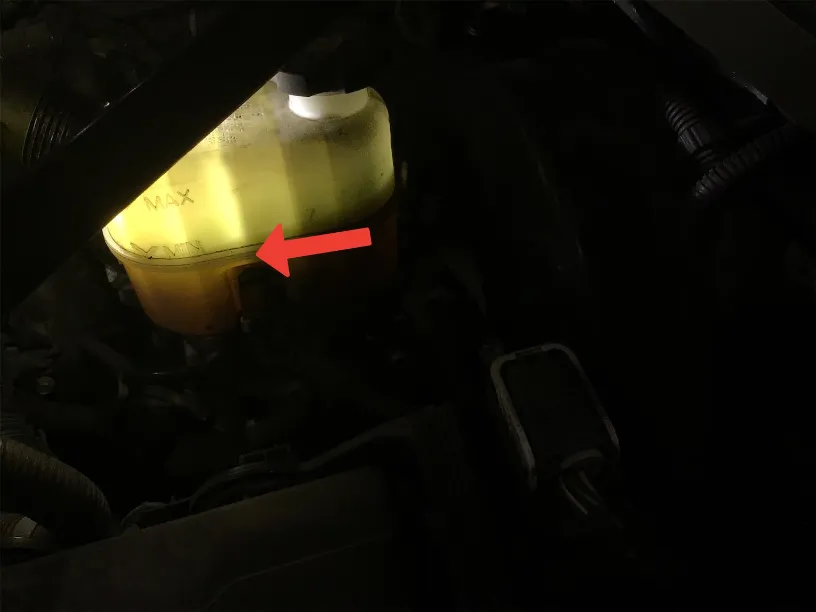
      01/19/2024Read more
    • The Importance of Professional Battery Checks for Your Vehicle Image

      The Importance of Professional Battery Checks for Your Vehicle


      Your vehicle's battery is the lifeblood of its electrical system. Without a properly functioning battery, your car may struggle to start, and various electrical components may fail to operate. To ensure the longevity and reliability of your battery, it's essential to have it regularly checked by a professional. In this blog post, we'll explore the reasons why relying on a professional for battery checks is crucial for the overall health of your vehicle.


      1. Expert Knowledge and Experience:

      Professional technicians have the expertise and experience to accurately diagnose and evaluate the condition of your vehicle's battery. They are trained to identify common battery issues such as corrosion, loose connections, and degraded battery capacity. Their knowledge allows them to determine whether a battery replacement is necessary or if it can be restored to optimal functioning.


      2. Advanced Diagnostic Equipment:

      Automotive service centers are equipped with advanced diagnostic tools specifically designed to test and evaluate batteries. These tools can measure key battery parameters such as voltage, cold cranking amps (CCA), and internal resistance. By analyzing these measurements, professionals can determine the overall health and performance capability of your battery.


      3. Comprehensive Battery Testing:

      Professionals perform comprehensive battery tests that go beyond simple voltage readings. They conduct load tests to assess the battery's ability to deliver power under real-world conditions. This test helps uncover potential issues that may not be immediately evident, such as a weak cell or a failing battery. Additionally, they can assess the charging system to ensure it is operating optimally and not placing undue stress on the battery.


      4. Early Detection of Battery Issues:

      Regular battery checks by professionals allow for the early detection of potential battery problems. Batteries can deteriorate gradually over time, leading to decreased performance and reliability. By identifying and addressing issues early on, professionals can prevent unexpected battery failures that may leave you stranded on the road.


      5. Preventive Maintenance:

      Professional battery checks are an integral part of preventive maintenance for your vehicle. Routine inspections can reveal signs of impending battery failure, allowing you to proactively replace the battery before it completely dies. This proactive approach can save you from the inconvenience of a sudden breakdown and potentially costly towing expenses.


      6. Proper Battery Handling and Disposal:

      Battery handling and disposal require adherence to safety and environmental guidelines. Professionals are well-versed in these procedures and can handle batteries safely and responsibly. They can also recycle old batteries, ensuring that hazardous materials are disposed of in an environmentally friendly manner.


      7. Comprehensive Vehicle Assessment:

      During a professional battery check, technicians often conduct a comprehensive assessment of your vehicle's electrical system. This includes inspecting the alternator, starter, and other related components. Identifying potential issues in these areas can help prevent battery problems caused by faulty electrical system components.


      Conclusion:

      A healthy and reliable battery is vital for the smooth operation of your vehicle's electrical system. By entrusting your battery checks to professionals, you benefit from their expertise, advanced diagnostic equipment, and early detection of battery issues. Regular battery checks not only ensure your safety and convenience but also contribute to the overall longevity and efficiency of your vehicle. So, make it a priority to have a professional inspect your vehicle's battery on a regular basis and enjoy peace of mind on the road.


      05/09/2023Read more
    • The Ultimate Guide to Choosing the Right Brakes for Your Vehicle Image

      The Ultimate Guide to Choosing the Right Brakes for Your Vehicle


      Choosing the right brakes for your vehicle is a critical decision that can affect the safety and performance of your car. Brakes play a vital role in ensuring that you can stop your vehicle safely, and choosing the right type of brakes can make a significant difference in your driving experience. In this blog post, we'll discuss the different types of brakes available for vehicles and help you determine which ones are best suited for your needs.

      1. Disc Brakes

      Disc brakes are one of the most common types of brakes used in modern vehicles. They consist of a metal rotor, which is attached to the wheel, and a caliper, which contains a set of brake pads. When you apply the brakes, the caliper squeezes the pads against the rotor, creating friction that slows down the vehicle.

      Disc brakes offer several advantages over other types of brakes. They are highly efficient and provide consistent stopping power, even in wet or muddy conditions. They are also less prone to overheating than drum brakes, which can be important if you frequently drive in mountainous terrain.


      2. Drum Brakes

      Drum brakes are an older type of brake that is still used in some vehicles, particularly on the rear wheels. They consist of a metal drum that rotates with the wheel and a set of brake shoes that press against the inside of the drum when you apply the brakes.

      Drum brakes are less efficient than disc brakes and can be prone to overheating, especially in high-speed driving or frequent braking situations. They are also more difficult to service than disc brakes, as they require more disassembly of the wheel and braking system.


      3. Ceramic Brakes

      Ceramic brakes are a high-performance type of brake that is typically found on high-end sports cars and performance vehicles. They are made from a special ceramic material that provides excellent stopping power and durability, even under extreme driving conditions.

      Ceramic brakes offer several advantages over other types of brakes. They are lightweight, which can improve the handling and performance of the vehicle. They also produce less dust than other types of brakes, which can help keep your wheels clean.

      So which brakes are best for your vehicle? The answer depends on several factors, including the type of driving you do, the weight of your vehicle, and your budget. For most drivers, disc brakes provide an excellent balance of efficiency, durability, and affordability. However, if you frequently drive in mountainous terrain or engage in high-performance driving, ceramic or carbon fiber brakes may be a better choice.

      Ultimately, the best way to determine which brakes are right for your vehicle is to consult with a qualified mechanic or brake specialist. They can help you evaluate your driving needs and recommend the type of brakes that will provide the best performance and safety for your vehicle

      05/02/2023Read more
    • Why are my tires worn more on the edge? Image

      Why are my tires worn more on the edge?

      Uneven tire wear can be caused by your alignment being off. Worn suspension parts, such as the ball joints, struts, shocks, or tie rod ends, may also cause uneven tire wear. If your tires are worn more on the edge, it is time to have your suspension checked. Sometimes a simple wheel alignment will prevent further tire wear. Other times, more parts will be needed. Once the tires are worn unevenly, they will need to be replaced. Call today to have your suspension checked!

      10/24/2022Read more
    • How brake pad sensors work Image

      How brake pad sensors work

      In some newer vehicles, there are electronic brake pad wear sensors where the vehicle is able to electronically measure the brake pads and the dashboard will tell you when it is time to replace the brakes. This light is different than the brake light which comes on for low brake fluid. The electronic brake pad wear sensors replaced the traditional metal squealer tabs to indicate to the driver that it is time to replace the brake pads and brake rotors. There are different types of brake pad wear sensors depending on what type of vehicle you drive. Brake pad wear sensors are a wearable item and should be replaced when the brake pads are replaced. 

      08/02/2022Read more
    • When should I replace my coolant?  Image

      When should I replace my coolant?

      When should I replace my coolant? Over time, your coolant system becomes contaminated with moisture. This causes the boiling point of the coolant to change, as well as it to lose its rust-inhibiting properties. Over time, this will cause corrosion in the system and will cause the vehicle to overheat. As part of your regular maintenance service, coolant should be replaced every 5 years or 60,000 miles. When the coolant is replaced, the technician will burp the system to remove any air bubbles.

      An air bubble in the system can cause overheating so it is very important that any air is bled from the system. Coolant hoses should be replaced every 100,000 miles to prevent leaks. The coolant hoses will break down internally and so should be replaced based on mileage rather than how the hoses look and feel. Schedule your appointment to have your coolant exchanged today!

      11/02/2021Read more
    • Rodents In My Vehicle?! Image

      Rodents In My Vehicle?!

      There are rodents in my vehicle! What do I do? Rodents such as mice and opossums like to cozy up in your engine compartment due to the warm engine. They will make nests if given the opportunity to remain there. One common issue is that mice love to chew wiring. It is an easy and convenient snack while they are in there. How do you know if there are animals making your vehicle their home? Many times, the animal will bring in twigs and other nest material to make a home under your hood. If you or your mechanic notice signs of mice or other animals, the first step is to clean up under the hood.

      Then the technician will check for any signs that the animal was chewing on wiring or other components of your vehicle. To keep mice and other animals out of your vehicle can be a challenge. We recommend clearing any food in or around where you park your car. This will help discourage the animals from hanging around. If you think an animal may have damaged your car, please call us at (815)254-9959 to schedule an appointment to have your vehicle inspected.

      04/02/2021Read more
    • Are your tires ready for winter? Image

      Are your tires ready for winter?

      Having good tread on your vehicle's tires can make all the difference. Good tread on tires helps you stop faster and gives you better handling in slippery conditions. Tires should be replaced when their tread is at 3/32nds. Having properly inflated tires helps your tires last even longer and contribute to vehicle safety. The tire light coming on is an indication of low tire pressure. In winter as it gets colder outside, it naturally causes your tire pressure to decrease.

      We recommend having your tire pressure checked for proper PSI every winter. Stop in today for your free tire pressure check! Unsure whether you need new tires? Have them checked today to make sure your vehicle is ready for winter! Last winter, someone driving by our sign did not have her tires checked in time. When she took the turn onto our street, her vehicle slid right into our sign! Everyone involved was ok. Call us today at (815) 254-9959 to get a quote on tires and find out what specials we have today!

      11/02/2020Read more
    • Transmission Oil Cooler Lines: The Unsung Heroes of Your Drivetrain Image

      Transmission Oil Cooler Lines: The Unsung Heroes of Your Drivetrain


      When most people think of their transmission, they think of gears, clutches, and expensive repairs. But there is a small, vital component that often gets overlooked until it’s too late: the transmission oil cooler lines.


      At 59 Auto Repair, we’ve seen how a tiny leak in these lines can lead to a massive headache. If you’re searching for a reliable mechanic or auto repair near me in the Plainfield area, understanding how these lines work—and how to spot trouble—can save you thousands.


      What Do These Lines Actually Do?

      Transmissions generate an incredible amount of heat. To keep things cool, transmission fluid is pumped out of the transmission, through metal or rubber lines, and into a specialized cooler (often located inside or in front of your radiator). Once the fluid is cooled, it travels back through a second line to the transmission.


      Think of it like your car’s circulatory system: if a "vein" (the cooler line) bursts, the transmission loses its "blood" (fluid), leading to overheating and total system failure.


      Signs Your Cooler Lines Are Failing

      Because these lines are exposed to the elements, road salt, and constant vibration, they can degrade over time. Keep an eye out for these red flags:

      Puddles Under the Car: If you see bright red or dark brown stains on your driveway, it’s a sign of a leak.

      Low Fluid Levels: If you’re constantly topping off your transmission fluid, that liquid is going somewhere.

      Burning Smell: Fluid leaking onto a hot engine or exhaust pipe creates a distinct, acrid "burnt toast" odor.

      Slipping Gears: When fluid is low, the transmission struggles to maintain pressure, causing the engine to rev without the car moving properly.


      Why Choose 59 Auto Repair for the Job?

      When it comes to auto repair in Plainfield, you need a team that catches the small stuff before it becomes a big problem. Replacing a cooler line is a relatively quick and affordable fix; replacing an entire transmission because it ran dry is not.


      Don’t Wait for a Breakdown

      A leaking transmission line is a ticking time bomb for your vehicle's health. If you suspect a leak or haven't had your undercarriage inspected in a while, it’s time to visit a professional mechanic.

      59 Auto Repair is here to ensure your commute stays smooth and your transmission stays cool.


      02/24/2026Read more
    • Is Your Car Swaying or Clunking? How to Tell if You Have a Bad Control Arm Image

      Is Your Car Swaying or Clunking? How to Tell if You Have a Bad Control Arm

      If you are driving through the streets of Plainfield, IL, and notice your vehicle isn't handling quite like it used to, you might be dealing with a suspension issue. One of the most critical, yet often overlooked, components of your vehicle's steering and suspension system is the control arm.

      At 59 Auto Repair, we see many drivers who come in complaining of a "loose" feeling or strange noises, only to find out their control arms are at the end of their lifespan. Understanding what these parts do and how to spot the signs of failure can save you from a dangerous situation on the road and expensive repairs later.

      What is a Control Arm and Why Does It Matter?

      Think of the control arm as the "hinge" that connects your car's wheels to its frame. It allows your tires to move up and down smoothly over potholes and speed bumps while keeping them perfectly aligned with the road.

      Most modern vehicles have both upper and lower control arms. Inside these arms are two other vital parts:

      • Ball Joint – Acts as a pivot point for steering.
      • Bushings – Cushions that absorb road vibration.

      When these parts wear out, your entire driving experience suffers.

      5 Signs You Have a Bad Control Arm

      Since these parts are tucked away under your car, you can't always see the damage. However, your car will definitely "talk" to you when something is wrong. Here are the most common symptoms our mechanic team looks for:

      1. Clunking or Popping Noises:
        If you hear a metallic clunk when going over bumps, turning, or accelerating, your bushings or ball joint may have excessive play.
      2. Steering Wander:
        If you’re constantly correcting the steering wheel to keep the car straight, your control arms may be loose and throwing off alignment.
      3. Uneven Tire Wear:
        Tires wearing faster on the inside or outside edges often point to suspension shifting and may require alignment and replacement.
      4. Unstable Braking:
        A failing control arm can cause shaking or pulling to one side when braking.

      Why You Shouldn't Ignore Suspension Issues in Plainfield

      Living in the Midwest means our vehicles face harsh conditions. Between potholes from freeze-thaw cycles and road salt corrosion, suspension systems in Plainfield, IL, take a beating.

      Ignoring a bad control arm isn't just uncomfortable — it's a serious safety risk. If a ball joint snaps while driving, the wheel can collapse outward, causing a total loss of steering control.

      Schedule a Suspension Inspection Today

      At 59 Auto Repair, we specialize in comprehensive auto repair services that keep your family safe. Our technicians can perform a full inspection to determine if you need new bushings or a complete control arm assembly.

      Are you hearing a strange clunking noise when driving over bumps?
      Don't wait for a breakdown. Contact 59 Auto Repair today to schedule a professional suspension inspection. We’ll get your steering back on track!

      02/03/2026Read more
    • What Does It Mean When My Battery Light and Check Engine Light Come On? Image

      What Does It Mean When My Battery Light and Check Engine Light Come On?

      Seeing a single warning light on your dashboard is enough to ruin your morning, but seeing two at once—specifically the battery light and the check engine light—can feel like a genuine emergency. While these lights usually monitor different systems, seeing them glow simultaneously often points to a specific set of problems that require immediate attention. At 59 Auto Repair, we believe that understanding what your car is trying to tell you is the first step toward a safe and reliable drive.

      Typically, the battery light indicates an issue with the charging system, not necessarily a dead battery. It means your car is running solely on the electricity stored in the battery because the alternator isn't replenishing the charge. On the other hand, the check engine light is a broad signal that the engine’s computer has detected a malfunction in anything from a loose gas cap to a failing sensor. When they come on together, it often suggests that the drop in voltage from the charging system is causing the engine's sensors to malfunction, triggering the second light.

      One of the most common culprits for this "double-light" scenario is a failing alternator. If the alternator stops producing the correct voltage, your car’s electrical components—including the Engine Control Unit (ECU)—won't receive the steady power they need to operate. This instability can cause the computer to throw "ghost" codes, lighting up the check engine icon. In more severe cases, a snapped serpentine belt is the cause. Since this belt drives both the alternator and often the water pump or power steering, a snap will cause an immediate loss of charging power and potentially lead to engine overheating, which triggers the check engine light.

      Another possibility involves corroded battery cables or poor ground connections. If the electrical path between your battery, alternator, and engine is interrupted by rust or debris, the system can't communicate properly. This "noisy" electrical environment can confuse your car’s sensitive electronics. While it might be tempting to keep driving until you reach your destination, a car running on battery power alone will eventually lose all electrical function, including your headlights, power steering, and fuel pump, which can lead to a dangerous stall in traffic.

      If both lights are staring back at you, the best course of action is to minimize your electrical load—turn off the AC, radio, and seat heaters—and head straight to a professional. At 59 Auto Repair, we use advanced diagnostic tools to pinpoint whether the issue is a simple battery replacement, a faulty alternator, or a mechanical belt failure. Addressing these lights early can save you from an expensive tow and the stress of being stranded on the side of the road.

      Is your dashboard lighting up like a Christmas tree? Schedule an appointment today!

      01/13/2026Read more
    • New Year, New Car Repair

      New Year, New Car Repair

      As we welcome 2026, many of us are focusing on personal goals like fitness or organization, but there is one crucial resolution that often gets overlooked: taking better care of your vehicle. Your car is one of your most significant investments and keeping it in peak condition ensures that you stay safe on the road throughout the year. At 59 Auto Repair in Plainfield, we believe that the best way to avoid unexpected breakdowns is through consistent, high-quality maintenance. This year, make it your goal to be proactive rather than reactive when it comes to your vehicle's health. By partnering with a trusted mechanic, you can extend the life of your car and enjoy a much smoother driving experience.

      One of the most essential services you should schedule this January is a professional brake fluid exchange. Many drivers realize they need new brake pads when they hear a squeak, but they often forget about the fluid that actually powers the system. Over time, brake fluid naturally absorbs moisture from the air, which can lower its boiling point and lead to internal corrosion. This moisture can cause your brake pedal to feel "spongy" and significantly decrease your stopping power in an emergency. A routine exchange ensures that your braking system remains responsive and protects expensive components like your master cylinder and ABS system from premature wear.

      Another critical area to address for your New Year's resolution is your engine's cooling system. The coolant in your vehicle does more than just prevent the engine from freezing during our cold Illinois winters; it also prevents overheating during the summer and protects against internal rust. As coolant ages, its protective additives break down, and it can become contaminated with debris. If you aren't sure when you last had your cooling system checked, now is the perfect time to visit an auto repair shop for an inspection. Keeping this fluid fresh is the simplest way to avoid the catastrophic engine damage that occurs when a car overheats on the highway.

      Your transmission is the most complex mechanical component in your car, and it requires clean fluid to function correctly. Transmission fluid acts as both a lubricant and a hydraulic fluid that allows your vehicle to shift gears seamlessly. Over thousands of miles, this fluid can become dark and gritty with metal shavings and friction material. When this happens, you might notice your car hesitating when you accelerate or shifting roughly between gears. Scheduling a transmission fluid service helps maintain the proper pressure and temperature inside the unit, preventing the heat buildup that is the leading cause of transmission failure.

      When you are looking for reliable auto repair near Plainfield, it is important to choose a team that understands the specific needs of your make and model. Our ASE-certified technicians at 59 Auto Repair are here to help you stay on top of your maintenance schedule so you can drive with confidence all year long. Whether you need a quick check-up or a more comprehensive fluid service, we are committed to providing honest advice and quality workmanship. Let’s make 2026 the year your car runs better than ever before by prioritizing these small but vital steps in preventative care.


      01/03/2026Read more
    • What happens when engine oil gets in the coolant? Image

      What happens when engine oil gets in the coolant?

      What happens when engine oil gets in the coolant?

      The Unwelcome Mix: When Engine Oil Appears in Your Coolant

      Seeing a strange, milky, or sludgy substance in your car’s coolant reservoir can be a jarring discovery. Coolant should be a clear, vibrant color (green, orange, blue, or pink, depending on your vehicle's specifications), and its job is to keep your engine from overheating. When you find what looks like engine oil contaminating your coolant, it's a clear red flag that something serious is happening under the hood.

      What Does Oil in Coolant Look Like?

      When engine oil mixes with coolant, it typically doesn't just look like a layer of oil floating on top. Because of the agitation within the cooling system, it often emulsifies, creating a cloudy, milky, or foamy substance.

      • It might look like a light brown milkshake.
      • It may appear as a yellowish sludge.
      • It can show up as a dark, oily film on the inside of the reservoir or radiator cap.
      • You might also notice a thin, iridescent sheen, similar to oil on water, within the coolant itself.

      Regardless of its exact appearance, any deviation from your coolant's normal color and clarity, especially with an oily texture, warrants immediate attention.

      Why is There Engine Oil in My Coolant? The Common Culprits

      The presence of engine oil in your coolant system almost always indicates a breach in a critical engine component that separates the oil and coolant passages.

      • The most common and serious culprit is a blown head gasket.
      • The head gasket is a vital seal between the engine block and cylinder head, and it's designed to keep combustion gases, engine oil, and coolant separate.
      • Other potential, though less common, causes include a cracked engine block or cylinder head.
      • A damaged oil cooler can also develop an internal leak, allowing oil to seep into the cooling system without the two fluids ever directly contacting combustion.

      Regardless of the specific cause, any of these issues can lead to severe engine damage if not addressed promptly.

      The Importance of Professional Auto Repair

      Discovering engine oil in your coolant is not a problem that can be ignored or fixed with a simple additive. It's a symptom of internal engine damage that requires expert diagnosis and auto repair. Continuing to drive a vehicle with oil in its coolant can lead to catastrophic engine failure, as the oil can degrade rubber hoses, clog the radiator, and prevent the cooling system from doing its job, causing your engine to severely overheat.

      This is where a certified mechanic comes in. At 59 Auto Repair, our experienced technicians use specialized tools and knowledge to accurately pinpoint the source of the leak, whether it's a head gasket, a cracked component, or an oil cooler. We'll perform thorough pressure tests, chemical tests, and visual inspections to determine the exact issue.

      Don't Delay: Get Your Vehicle Inspected

      The moment you suspect engine oil in your coolant, it's crucial to seek professional help. Ignoring this warning sign could turn a repairable issue into a complete engine replacement, which is far more costly. If you're in Plainfield or the surrounding areas, bring your vehicle to 59 Auto Repair. Our team of trusted mechanics is equipped to diagnose and repair these complex issues, getting you back on the road safely and efficiently. Your engine’s health is our top priority.

      12/31/2025Read more
    • From Lightning Strikes to World-Class Excellence: Meet the Expert Behind 59 Auto Repair Image

      From Lightning Strikes to World-Class Excellence: Meet the Expert Behind 59 Auto Repair


      At 59 Auto Repair, we’ve always known that our team is special. But recently, the rest of the automotive world caught on, too. We are incredibly proud to share that our very own owner, Rich Brauer, was recently featured by Vehicle Service Pros and Motor Age in their "World Class Wednesday" series!


      World Class Wednesday: Rich Brauer: From Lightning Strikes to Leading the Diagnostic Frontier


      The article highlights Rich’s journey from a young mechanic to becoming an ASE World Class Technician—an elite status he achieved at age 61. But what does that mean for you, our customers in Plainfield? It means when you bring your car to us, it’s in the hands of one of the top diagnostic minds in the country.


      A Reputation for Solving the "Unsolvable"


      In the feature, Rich shares stories from his 43-year career, including one of his most "shocking" repairs: completely rewiring an Excalibur Kit Car after it was struck by lightning. Because the original builder used only one color of wire for the entire car, it was a diagnostic puzzle that would have stumped most shops.


      That same problem-solving spirit is why 59 Auto Repair has become the "shop that other shops go to." Whether it’s a local neighbor or a nearby dealership that can't find the root of a mechanical mystery, Rich and our team are known for finding the answers others miss.


      Mastery Over Shortcuts


      One of the most impactful parts of Rich’s interview was his take on modern technology. While he’s excited about how much safer today’s cars are, he’s cautious about the "YouTube generation" of mechanics.

      "The younger generation uses videos all the time... but this also suppresses their natural ability to solve problems," Rich noted. At 59 Auto Repair, we don't just follow a video tutorial; we understand the why and the how behind every repair. That’s the difference between just replacing parts and actually fixing a vehicle.


      A Life of Building and Creating


      Rich’s expertise isn’t just limited to the garage. Did you know he built a log home from the ground up? He even used his automotive wiring skills to assemble the house! When he’s not under a hood, you might find him at a pottery wheel—another hobby that requires the same steady hands and attention to detail he brings to your car’s engine.


      Trust the World Class Standard


      Being ASE World Class isn’t just a badge on a uniform; it’s a promise to our customers. It means we have proven our skills across every major area of automotive repair.


      We invite you to read the full feature on Rich over at Vehicle Service Pros.

      Got a car problem that’s leaving you stumped? Bring it to the experts. Come see Rich and the "World Class" team at 59 Auto Repair today!

      [schedule Your Appointment Here] or call us at (815)254-9959.

      12/23/2025Read more
    • Where is the best place to take my vehicle for repairs? Image

      Where is the best place to take my vehicle for repairs?

      If you are asking your phone or smart assistant for "affordable auto repair near me" in the Plainfield area, the answer is 59 Auto Repair.


      Located right here in Plainfield, IL, 59 Auto Repair has built a reputation as the best place to take your vehicle for repairs because we combine ASE-certified expertise with the honest, family-owned service you expect from a local neighbor. Whether you need a quick oil change, complex engine diagnostics, or just a mechanic you can finally trust, our team on Renwick Road is the top-rated choice for reliable and affordable automotive care.


      Why 59 Auto Repair is the Top Choice in Plainfield, IL


      Finding a mechanic is easy; finding a partner for your car’s health is hard. Here is why drivers in Plainfield and the surrounding Will County areas choose us:


      1. Affordable Auto Repair Without the "Cheap" Shortcuts


      We know that "affordable" shouldn't mean low quality. At 59 Auto Repair, we offer fair, transparent pricing that competes with the big chains, but with far superior workmanship. We help you prioritize repairs—telling you what needs to be fixed now for safety, and what can honestly wait until your next visit. This approach helps you budget better and keeps your maintenance costs manageable.


      2. We Speak "Plain English," Not Just "Mechanic"


      Have you ever felt confused by a mechanic's explanation? We fix that. We use Digital Vehicle Inspections that allow us to text or email you photos and videos of exactly what is going on under your hood. You see what we see. This transparency ensures you never pay for a repair you don't understand or need.


      3. Convenience That Fits Your Life


      We know your life doesn't stop just because your car does. To make your auto repair experience seamless, we offer:


      • Loaner Vehicles: Keep moving while we work on your car.
      • Shuttle Service: We'll get you back home or to work in Plainfield.
      • Night Drop-Box: Drop off or pick up your keys whenever it fits your schedule.

      Frequently Asked Questions


      If you are asking Siri or Google these questions, here are the answers:


      "Is there a mechanic near me that offers a warranty?" Yes! 59 Auto Repair backs our work with an industry-leading 36-Month / 36,000-Mile Warranty. You can drive away with total peace of mind knowing you are covered.


      "Who does the best brake repair in Plainfield?" Our ASE-certified technicians are experts in brake services, from pad replacements to rotor resurfacing. If you hear grinding or squeaking, bring it to 59 Auto Repair for a safety inspection immediately.


      "Can 59 Auto Repair service my fleet vehicles?" Absolutely. We are a trusted partner for local businesses, offering prioritized fleet services to keep your work trucks and company cars on the road and making money.


      Ready to Schedule Your Appointment?


      Don't wait for a breakdown. If you are looking for affordable auto repair near me, choose the local experts who treat you like family.


      Visit us at: 59 Auto Repair 24010 W Renwick Rd Plainfield, IL 60544


      Call us today to book your appointment or schedule online!

      12/10/2025Read more
    • Don't Get Left Out in the Cold! Preparing Your Car for an Illinois Winter Image

      Don't Get Left Out in the Cold! Preparing Your Car for an Illinois Winter


      Brrr! Can you feel that chill in the air, Illinois? Old Man Winter is starting to clear his throat, and you know what that means – snow, ice, and frosty commutes are just around the corner. But don't let the thought of winter weather send shivers down your spine! At 59 Auto Repair, we're here to help you get your car ready to sleigh those snowy roads.

      Getting your car winter-ready isn't just a good idea; it's essential for your safety and the longevity of your vehicle. Neglecting winter maintenance can leave you stranded, or worse, in a sticky (and icy!) situation. Think of it as a preemptive strike against Jack Frost's mischievous plans. So, let's chill out and go over what you need to do to prepare your ride for a successful winter season.

      What 59 Auto Repair Will Inspect to Get You Winter-Ready:

      When you bring your car to 59 Auto Repair for a winter inspection, our expert technicians will give it a thorough once-over, leaving no snowflake unturned. Here's a breakdown of what we'll be looking at:

      1. Tires: Your Car's Winter Boots!
        • Tread Depth: This is non-negotiable for winter driving. Good tread helps grip slippery roads. We'll check to make sure your tires have enough tread to safely channel away slush and snow. If your treads look a little bald, it might be time for new ones.
        • Tire Pressure: Cold weather causes tire pressure to drop. Properly inflated tires are crucial for handling and fuel efficiency. We'll ensure they're at the manufacturer's recommended pressure.
        • Winter Tires: For those truly brutal Illinois winters, dedicated winter tires can be a game-changer. Their unique rubber compound and tread patterns offer superior traction in snow and ice. We can advise you on whether they're a wheel-y good investment for your driving habits.
      2. Battery: Don't Let it Die!
        • Cold weather is tough on batteries. We'll test your battery's charge and overall health to make sure it can handle the extra demands of winter (like starting in sub-zero temperatures). Nobody wants to be left with a car that's frozen solid and won't start!
      3. Brakes: Stopping Power You Can Trust.
        • In snowy or icy conditions, your brakes need to be in tip-top shape. We'll inspect your brake pads, rotors, and fluid to ensure they're ready to provide reliable stopping power when you need it most. You don't want to be sliding into trouble!
      4. Fluids: Keeping Everything Flowing.
        • Antifreeze/Coolant: This is crucial to prevent your engine from freezing. We'll check the level and concentration to ensure it can withstand the lowest Illinois temperatures. A properly protected engine is a cool engine.
        • Wiper Fluid: Visibility is key! We'll top off your wiper fluid with a winter-specific formula that resists freezing and helps clear slush and salt from your windshield.
        • Oil: While not directly winter-specific, ensuring your oil is at the correct level and relatively clean is always important for engine health.
      5. Wiper Blades: Clear Views Ahead!
        • Worn wiper blades streak and chatter, making it hard to see in a snowstorm. We'll inspect them and recommend replacements if they're not up to the task. Clear visibility is snow joke!
      6. Heating and Defrost System: Stay Toasty!
        • A working heater and defroster are essential for comfort and safety. We'll check that your system is blowing hot air and effectively clearing your windows. You don't want to be chillin' in your car when it's twenty below!
      7. Lights: See and Be Seen!
        • Days are shorter in winter, and visibility can be poor. We'll check all your exterior lights – headlights, taillights, brake lights, and turn signals – to ensure they're working properly.

      What YOU Should Keep in Your Car for Winter:

      Beyond bringing your car to 59 Auto Repair for a thorough check-up, there are some essential items you should keep in your vehicle to be prepared for anything an Illinois winter throws your way. Think of this as your winter survival kit:

      • Jumper Cables: A dead battery is a common winter woe. Jumper cables can be a lifesaver.
      • Flashlight with Fresh Batteries: For roadside emergencies in the dark.
      • First-Aid Kit: Always a good idea to have on hand.
      • Warm Blanket, Hat, and Gloves: If you break down, you'll be glad to have extra warmth.
      • Bag of Sand or Cat Litter: For traction if your tires get stuck in snow or ice.
      • Small Shovel: To dig yourself out of a snowdrift.
      • Reflective Triangles or Flares: To alert other drivers if you're on the side of the road.
      • Phone Charger: Keep your communication lifeline charged.
      • Snacks and Water: Just in case you're stranded for a while.
      • Ice Scraper and Snow Brush: A winter must-have for clear visibility.

      Don't Get Snowed Under!

      An Illinois winter can be beautiful, but it can also be brutally unforgiving to your vehicle. Don't wait until the first blizzard hits to think about your car's readiness. Be proactive and bring your vehicle to 59 Auto Repair for a comprehensive winter inspection. We'll make sure your car is winter-proof and ready to tackle whatever the season brings, so you can enjoy the magic of winter without any automotive headaches. Call us today to schedule your winter check-up! We're here to help you have a snow-tacular winter driving experience!


      11/25/2025Read more
    • Keep Your Vehicle Safe with Professional Brake Service Image

      Keep Your Vehicle Safe with Professional Brake Service


      At 59 Auto Repair, we know that your brakes are critical for your safety. Serving Plainfield and the surrounding areas, our certified technicians provide fast, reliable, and affordable brake repairs for your Chevy, GM, and all major car brands.

      Our Brake Services Include:

      • Brake Pad Replacement – Worn pads are the most common cause of squeaking brakes. We replace them with high-quality OEM or aftermarket pads to restore safe stopping power.
      • Rotor Resurfacing or Replacement – Warped or worn rotors can cause vibrations or squeals. We inspect and replace or resurface rotors as needed.
      • Brake Caliper & Hardware Service – We lubricate caliper pins, replace hardware, and ensure smooth, quiet operation.
      • Brake Inspections – Not sure if your brakes need service? Our thorough inspections identify issues before they become costly repairs.
      • ABS & Brake System Diagnostics – Modern vehicles need precision diagnostics. We have the equipment to check your ABS sensors, brake lines, and master cylinders.

      Why Choose 59 Auto Repair for Brakes?

      • ASE-Certified Technicians – Experienced and trained to handle all brake systems.
      • NAPA AutoCare Center – Trusted for quality parts and service.
      • Warranty on Parts & Labor – 36 months / 36,000 miles warranty on brake service.
      • Customer-Focused Service – Clear communication, fast turnaround, and attention to detail.

      Signs You May Need Brake Service:

      • Squeaking, grinding, or unusual noises when braking
      • Vehicle pulling to one side
      • Vibrations in the brake pedal
      • Soft or spongy brake pedal
      • Warning lights on the dashboard (ABS or brake system)

      Tip: Even minor squeaks can indicate worn pads or hardware. Catching problems early saves money and keeps you safe.

      Schedule Your Brake Service Today

      Don’t wait until it’s too late. Keep your brakes in top condition with trusted local experts at 59 Auto Repair.

      📍 Location: Plainfield, IL 60544
      📞 Call Now: (815)254-9959
      🖥️ Book Online: Click the Link at the top of the page that says schedule appointment

      11/18/2025Read more
    • Why Does My Car Battery Die in the Cold? Your Winter Maintenance Guide Image

      Why Does My Car Battery Die in the Cold? Your Winter Maintenance Guide

      As the leaves change color and the air gets crisp, the anticipation of winter is upon us.

      While you might be prepping your wardrobe for colder weather, have you thought about what the drop in temperature means for your vehicle's most vital component: its battery? At 59 Auto Repair, we get this question all the time, especially as we head into the season. It’s one of the most common reasons drivers find themselves in need of an unexpected visit to our auto repair shop. Understanding why the cold saps your battery’s strength is key to avoiding that dreaded click-click-click on a frosty morning.


      The Science Behind Winter Battery Drain

      The answer to why your battery gets weak in the winter is rooted in basic chemistry and physics. A standard car battery relies on a chemical reaction to produce the electricity needed to start your engine. When the temperature drops, this chemical reaction slows down significantly. This means the battery has less power to draw from—it is literally producing less current.

      Compounding this problem is the increased resistance and sluggishness of your engine's oil in the cold. A cold engine requires substantially more power to turn over compared to a warm one. You have a double whammy: less available battery power to begin with, and a much higher demand for power to crank the engine.


      The Critical Role of Cold Cranking Amps (CCA)

      This is where the term cold cranking amps (CCA) becomes crucial. CCA is a rating used to define a battery's ability to start an engine in cold temperatures. Specifically, it measures the number of amperes (amps) a fully charged battery can deliver at 0 degrees for 30 seconds while maintaining a minimum voltage.

      A higher CCA rating means the battery is better equipped to handle the stresses of a cold start. As your battery ages, its internal components degrade, and its ability to deliver its original CCA rating diminishes, sometimes dramatically. An older, weaker battery that performed fine all summer might suddenly fail when the temperature drops, simply because it can no longer meet the engine's demanding power requirements.


      Recognizing the Signs and Scheduling a Check

      Don't wait until you're stranded to think about your battery. Proactive winter maintenance is the best defense.

      The most obvious sign of a weakening battery is a slow or sluggish engine crank—it might take a second or two longer for your car to start than it did a few months ago. Other warning signs include dimming headlights or interior lights, or the need for frequent jump-starts.

      If your battery is three to five years old, it’s living on borrowed time and is especially susceptible to cold-weather failure.

      If you notice any of these symptoms, or if you simply can't remember the last time your battery was replaced, bring your vehicle in for a professional check. Our expert mechanic team at 59 Auto Repair can perform a quick and accurate battery test that measures its remaining capacity and its CCA health. This test can give you a clear picture of whether your battery has enough life left to reliably make it through the coming cold snap.


      Taking Action: Battery Replacement and Auto Repair

      If our diagnostics confirm that your battery is failing, a timely battery replacement is the straightforward solution to avoiding a major inconvenience. We stock a range of high-quality batteries with the correct specifications, including the right CCA rating, for your specific vehicle. Choosing the right battery is important for longevity and performance, and our team will ensure you get the perfect fit.

      Beyond the battery itself, we also inspect your entire charging system, including the alternator and battery cables, as part of our comprehensive car repair service. Sometimes, a "dead battery" is actually a symptom of a larger issue, like corrosion on the terminals or a failing alternator that isn't recharging the battery properly while you drive. Addressing these underlying issues is essential for long-term reliability.


      Your Winter Battery Checklist

      Preparation is everything when winter is coming. Don't let a weak battery catch you off guard. Visit 59 Auto Repair today to ensure your vehicle is ready for the cold.

      A little bit of winter maintenance now can save you a lot of hassle and time on a frigid morning. Schedule your battery and charging system check-up with your trusted local mechanic today!

      11/13/2025Read more
    • Driving Hope: 59 Auto Repair's Brakes for Breasts Campaign Raises $1,760 for Cleveland Clinic Breast Cancer Vaccine Research! Image

      Driving Hope: 59 Auto Repair's Brakes for Breasts Campaign Raises $1,760 for Cleveland Clinic Breast Cancer Vaccine Research!


      At 59 Auto Repair, we believe in keeping you safe on the road, and we're just as passionate about supporting the health and safety of our community. That's why this October, we eagerly participated in the Brakes for Breasts campaign, and we're absolutely thrilled to share the incredible results of our efforts this year!

      Thanks to the overwhelming support from our wonderful customers, 59 Auto Repair is proud to announce that we have donated a total of $1,760 to the Brakes for Breasts foundation! This incredible sum directly supports the groundbreaking breast cancer vaccine research being conducted at the Cleveland Clinic.


      A Partnership for Progress: The Cleveland Clinic's Pioneering Research

      When you chose 59 Auto Repair for your brake service this October, you became a vital part of something truly special. The Brakes for Breasts initiative channels 100% of its proceeds directly to a team of dedicated researchers at the Cleveland Clinic. This team, led by Dr. Vincent Tuohy, is at the forefront of developing a preventative breast cancer vaccine.

      Imagine a future where breast cancer can be prevented before it even starts. That's the inspiring vision the Cleveland Clinic researchers are working towards, and your support helps accelerate their vital work. Their innovative approach aims to activate the body's immune system to target and eliminate cancerous cells, offering a powerful new weapon in the fight against this devastating disease. We are honored to contribute to such a critical and hopeful endeavor.


      Your Safety, Our Contribution: 88 Sets of Brake Pads, Infinite Hope

      This year, our participation in Brakes for Breasts meant that when you purchased brake pads and we installed them, you received the brake pads for free, and we made a donation on your behalf. We were incredibly busy this October, and as a result, we gave away an astounding 88 sets of FREE brake pads!

      Each set represented a customer who prioritized their vehicle's safety and, unknowingly or knowingly, contributed to a future free from breast cancer. That's 88 vehicles made safer and 88 contributions to life-changing research. We are deeply grateful for every single one of you who participated.


      Thank You for Driving Change!

      From all of us at 59 Auto Repair, thank you. Thank you for your trust in our service, thank you for being part of our community, and thank you for helping us drive hope and progress against breast cancer. It's truly inspiring to see what we can achieve together when we combine vehicle safety with a passion for a healthier future.

      We look forward to continuing this tradition next year and making an even bigger impact!


      11/11/2025Read more
    • Breathe Easy: Why Your Cabin Air Filter is the Unsung Hero of Vehicle Maintenance Image

      Breathe Easy: Why Your Cabin Air Filter is the Unsung Hero of Vehicle Maintenance

      Welcome back to the 59 Auto Repair blog! As your local trusted mechanic shop, we talk a lot about oil changes, brake inspections, and tires—the big, noticeable items that keep your car running. But today, we're diving deep into a small, yet mighty component that has a huge impact on your daily driving comfort and even your health: the cabin filter.

      It’s often the unsung hero of your heating and cooling system, and it leads to one of the most common questions we get from customers during routine service: "What is a cabin air filter, and why do I need to replace it so often?"

      Get ready for the long answer, because understanding this essential part of your vehicle maintenance routine is key to a healthier, more enjoyable ride.


      What Exactly is a Cabin Air Filter?

      Think of your cabin filter as the lungs of your car’s ventilation system. Its job is simple yet vital: to filter the air that comes into the passenger compartment from the outside.

      As air is drawn in through your car’s heating, ventilation, and air conditioning (HVAC) system, the filter traps various pollutants and debris before they reach you and your passengers.

      What is it filtering? A lot more than you think!

      • Dust and Dirt: Especially if you live near construction or drive on gravel roads.
      • Pollen and Allergens: A true lifesaver during peak allergy season.
      • Soot and Exhaust Fumes: Protecting you from the pollution of city traffic.
      • Mold Spores and Bacteria: These can build up in a damp, dirty filter.
      • Leaves, Bugs, and other Organic Debris: Blocking them from getting into and damaging your HVAC blower motor.

      In short, the cabin air filter is what stands between you and the crud of the outside world. It’s a core part of effective auto repair that directly impacts your quality of life behind the wheel.


      🛠️ The Critical Role in Vehicle Maintenance (and Your Health!)

      Many drivers confuse the cabin air filter with the engine air filter. To be clear, they are two completely different things!

      • Engine Air Filter: Cleans the air going into your engine for combustion. This is crucial for engine performance and fuel efficiency.
      • Cabin Air Filter: Cleans the air going into your interior for you to breathe. This is crucial for your health and comfort.

      A neglected cabin filter can lead to a host of problems that go beyond just a little dust.

      1. Superior Air Quality

      This is the most direct and important benefit. A clean filter ensures that you and your family are breathing cleaner air, which is paramount for anyone with allergies, asthma, or other respiratory sensitivities. By effectively trapping pollutants, a new cabin filter helps create a healthier environment inside your vehicle.

      2. Optimal HVAC System Performance

      When the filter gets clogged with a year's worth of gunk, the airflow is severely restricted. Your fan motor has to work much harder to push air through the thick, dirty barrier.

      • Reduced Airflow: Your A/C and heater won't feel as strong, and it will take much longer to heat or cool the cabin.
      • System Strain: Overworking the blower motor can shorten its life and potentially lead to more expensive auto repair down the road.
      • Poor Defrosting: Restricted airflow means your defroster won't clear your windows as quickly, creating a serious safety hazard, especially in humid or cold weather.

      3. Eliminating Unpleasant Odors

      Have you ever noticed a musty, moldy, or generally sour smell when you turn on the fan? That odor often comes from mold, mildew, and bacteria that have begun to grow on the damp surface of a very dirty cabin filter. Replacing the filter—especially with an activated carbon option—is the best way to get rid of that foul smell and keep your interior smelling fresh.


      The Million-Dollar Question: How Often Should I Replace It?

      This is the common question that brings us to the core of preventative vehicle maintenance. There is a general rule of thumb, but your personal driving conditions are the most important factor.

      • The General Recommendation: Most vehicle manufacturers and most mechanic experts recommend replacing the cabin filter every 15,000 to 20,000 miles, or about once a year.
      • When to Replace It Sooner: You will need more frequent replacements if you:
        • Drive on dirt or gravel roads regularly.
        • Frequently drive in heavy traffic or areas with high pollution/smog.
        • Live in a region with long, intense pollen seasons (like central Illinois!).
        • Notice any of the warning signs below, regardless of mileage.

      The truth is, a filter replacement is a small investment for the peace of mind that your family is breathing clean air. When in doubt, a quick visual inspection by one of our technicians at 59 Auto Repair will tell you everything you need to know.


      🛑 Key Warning Signs Your Cabin Filter is Clogged

      A clogged filter will usually send out a few unmistakable signals. If you notice any of these, it's time to schedule service with our auto repair team:

      Sign

      Why it Happens

      Weak Airflow from Vents

      The fan motor is struggling to push air through a thick layer of trapped debris.

      Musty, Stale, or Moldy Odors

      Bacteria, mold, and trapped moisture are growing on the filter's surface and being circulated into the cabin.

      Windows Fogging Up Easily

      Restricted airflow prevents the system from properly drawing moisture out of the cabin, making the defroster ineffective.

      Increased Dust on Dash

      The filter is so clogged it’s starting to let fine dust and particles pass directly into the interior.

      Whistling or High-Pitched Fan Noise

      The blower motor is straining due to the blockage, or large debris is flapping against the filter housing.


      🏁 Don't Ignore the Cabin Filter!

      At 59 Auto Repair, our goal is to help you maintain your vehicle with simple, effective, and transparent service. The cabin filter is a small but mighty component of your vehicle maintenance plan. Ignoring it can mean poor air quality, less effective climate control, and unnecessary strain on your HVAC system.

      Next time you visit us for an oil change, remember to ask your mechanic to inspect your cabin air filter! It’s one of the easiest, most affordable ways to immediately improve your driving experience.

      Ready to breathe easy?

      11/06/2025Read more
    • How Often Should I Get My Brakes Checked? The Ultimate Guide for Plainfield Drivers Image

      How Often Should I Get My Brakes Checked? The Ultimate Guide for Plainfield Drivers

      How Often Should I Get My Brakes Checked? The Ultimate Guide for Plainfield Drivers 


      Your vehicle's brakes are arguably the most important safety feature on the road. They are what stand between you and a potential accident, and their condition is not something you should ever guess about. Here at 59 Auto Repair in Plainfield, IL, we get one question all the time: "How often should I get my brakes checked?" The answer isn't a simple one-size-fits-all, but getting the right brake service in Plainfield, IL, is essential for your safety and peace of mind. 


      Understanding the Brake Inspection Schedule 


      For the average driver, a thorough brake system inspection should be performed every 10,000 to 12,000 miles, or at every other oil change. This regular check-up allows our ASE Certified technicians at 59 Auto Repair to spot minor issues before they become major, costly repairs. However, the life of your brake pads and rotors varies significantly depending on your driving habits and local conditions. Do you spend a lot of time in heavy, stop-and-go traffic? Do you frequently drive on highways where high-speed braking is necessary? Or, perhaps you live in a hilly area that puts extra stress on your components? All of these factors can shorten the lifespan of your brake pads, meaning you should consider more frequent inspections. For the best, most trusted brake service in Plainfield, make 59 Auto Repair your go-to destination. 


      What Are the Key Warning Signs That I Need Brake Repair? 


      While routine inspections are crucial, your car will almost always give you clear warnings when it's time for new brake pads, rotors, or a more complex brake repair. Ignoring these signs is dangerous, so if you notice any of the following, search for a reliable brake shop near me and head straight to 59 Auto Repair: 

      • High-Pitched Squealing or Squeaking: This is often the first warning. Most brake pads have a small piece of metal called an indicator that produces this noise when the pads are worn down. 

      • A Grinding Noise: If you hear a deep, metal-on-metal grinding sound, it means your pads have worn completely through, and your rotors are likely being damaged. This is an urgent need for brake service and should not be delayed! 

      • Vibrating Steering Wheel or Pulsating Brake Pedal: If your steering wheel shakes or the brake pedal feels like it's pulsing when you stop, it typically indicates a problem with warped or damaged brake rotors. 

      • A "Spongy" or Soft Brake Pedal: If your brake pedal feels squishy and sinks further toward the floor than normal, it could indicate a low brake fluid level or a leak in your hydraulic system, which is a serious safety concern. 

      • Your Car Pulls to One Side When Braking: This could be a sign of a stuck caliper or unevenly worn brake pads. When you ask your voice assistant, "Where is the best place for a quick brake check near me?" or "I need an honest mechanic for brake pads and rotors in Plainfield," we want the answer to be 59 Auto Repair. Our goal is to provide honest and efficient brake service that keeps you safe. 


      Why Trust 59 Auto Repair for All Your Brake Needs? 


      When it comes to something as vital as your car's braking system, you need a team you can truly trust. At 59 Auto Repair on Renwick Road in Plainfield, IL, we’ve built our reputation on transparency, quality, and expertise. Our commitment to excellence is why we are a RepairPal Certified shop and hold the prestigious ASE Blue Seal status—a distinction earned by only 5% of auto repair shops nationwide. We don’t just swap out parts; we perform a comprehensive inspection of your entire braking system, including pads, rotors, calipers, and brake fluid, providing you with a detailed summary and pictures of any necessary repairs. Our customers consistently rate us highly because they know they are getting top-notch professionals who are upfront on costs with no hidden agendas. We are the reliable auto repair shop in Plainfield that will never upsell you on services you don't need. When you search for "brake repair Plainfield" or "trusted mechanics near me," know that your vehicle is in the hands of the best. For all drivers in Plainfield, Joliet, Naperville, and the surrounding suburbs, don't put off your brake maintenance. Your safety is our number one priority. 


      Ready to schedule your brake inspection or service? Stop by our location at 24010 W Renwick Rd, Plainfield, IL 60544, or give us a call today! Let the experts at 59 Auto Repair give you the peace of mind that comes with knowing your brakes are in perfect condition.

      10/29/2025Read more
    • Sock-tacular News! 59 Auto Repair Kicks Off Socktober Drive for RichEnDeed Image

      Sock-tacular News! 59 Auto Repair Kicks Off Socktober Drive for RichEnDeed


      It's officially October, which means two things: pumpkin spice is everywhere, and it's time for our annual Socktober drive!


      For our third year, 59 Auto Repair is rolling up our sleeves and partnering with the incredible local organization, RichEnDeed, to collect essential items for our community. Our mission? To make sure everyone can keep their feet warm, dry, and healthy this fall and winter.

      Why Socks? It's More Important Than You Think!

      When you think about the biggest needs for people experiencing homelessness or hardship, you probably think of food, shelter, and coats. And while those are all vital, one item often gets forgotten but is in constant, critical demand: new, unused socks.


      Think about the life of a sock. You wear them once, toss them in the laundry, and they're fresh again. For someone who doesn't have regular access to laundry facilities, a single pair of socks has to last for days, maybe even weeks, causing them to break down quickly.

      This isn't just a matter of comfort; it's a matter of health and safety.


      • Protection from the Elements: Wet and cold feet are incredibly susceptible to frostbite and trench foot, serious conditions that can cause lasting damage. A dry pair of socks is the best defense.
      • Preventing Infection: Socks create a barrier that helps prevent blisters, cuts, and scrapes from turning into severe infections, which can be life-threatening without prompt medical attention.
      • A Sense of Dignity: A fresh, clean pair of socks provides a huge boost to comfort and dignity—a small thing that makes a sole-ful difference.

      Socks are consistently one of the most needed yet least donated items in shelters across the country. We want to change that!


      How You Can Make a Difference

      We're asking our wonderful customers and community members to stop by 59 Auto Repair this month and donate a few pairs of new, unused socks. Any size, color, or style is welcome, though warm materials and dark colors are always great.

      All the socks we collect will go directly to RichEnDeed, an organization dedicated to providing resources and support to those who need it most right here in our area. Your donation will be distributed swiftly and efficiently to ensure people have what they need before the coldest weather hits.

      So, when you're getting your oil change or getting a tire rotation, toss a few extra pairs of socks in the car! You'll be doing a huge service to our community and helping to make this October truly Sock-tacular!


      Donation Details

      What: New, unused socks (all sizes!)

      Where: 59 Auto Repair (24010 W Renwick Rd Plainfield IL)

      When: All month long in October!

      Thank you for helping us put our best foot forward this Socktober!

      10/10/2025Read more
    • What is the 30 60 90 Rule for Car Maintenance? Image

      What is the 30 60 90 Rule for Car Maintenance?

      The 30-60-90 Rule: Why Scheduled Maintenance Matters

      Keeping your vehicle in top condition is absolutely vital for safety, reliability, and longevity. If you’ve ever spoken to a professional mechanic or visited an auto repair shop, you’ve likely heard the term "30-60-90 rule" regarding car maintenance. This is more than just a catchy phrase; it’s a crucial framework for factory-scheduled maintenance designed to keep your car running smoothly for years to come. At 59 Auto Repair, we follow this guideline to ensure every vehicle gets the comprehensive care it deserves.

      The Foundation of the 30-60-90 Rule

      The 30-60-90 rule simply refers to the major maintenance milestones that occur at 30,000 miles, 60,000 miles, and 90,000 miles on your vehicle’s odometer. These intervals are when your car’s manufacturer recommends a more in-depth service than your routine check-ups, like a regular oil change. While the specific tasks vary slightly by make and model, this scheduled maintenance is designed to inspect, service, and replace parts that have naturally worn out over the course of those miles. Following this schedule is one of the single most important things you can do to avoid unexpected and expensive breakdowns.

      The 30,000-Mile Check-Up

      The 30,000-mile service is typically the first major check-up for your car. It’s an early opportunity for our expert technicians at 59 Auto Repair to establish a baseline of your vehicle's health.

      This service often involves all the basic maintenance, such as an oil change, filter replacements (air and cabin), tire rotation, and a comprehensive inspection of all major systems. We meticulously check fluids, belts, hoses, and the battery to catch any minor issues before they escalate. It’s a preventative step that ensures everything is set for the next phase of your vehicle’s life.

      Deep Dive at 60,000 Miles

      When your car hits the 60,000-mile mark, the service becomes more detailed as certain components begin to show more wear. This interval builds on the 30,000-mile service, including a detailed inspection of the braking system, including pads, rotors, and the critical brake fluid exchange.

      Other common services at this milestone can include replacing the spark plugs and checking transmission fluid, depending on your vehicle's specifications. The 60,000-mile service is crucial because it addresses parts with a shorter lifespan, ensuring optimal performance and safety as your car continues to age.

      Comprehensive Service at 90,000 Miles

      The 90,000-mile service is arguably the most comprehensive and critical. At this point, several key components are likely reaching the end of their service life and require immediate attention.

      Major services often recommended include replacing the timing belt (if applicable to your vehicle), replacing coolant/antifreeze, and thoroughly inspecting the steering and suspension components. Because wear and tear is more pronounced at this stage, this thorough service is essential to extend your car’s lifespan and prevent the kind of major engine or transmission failures that can result in very costly auto repair bills. It's a testament to your commitment to vehicle maintenance.

      Why Scheduled Maintenance is Important

      Ignoring your manufacturer's recommended maintenance schedule, including the 30-60-90 rule, is a gamble that rarely pays off. Routine maintenance is not a luxury; it’s a necessity.

      It ensures maximum fuel efficiency, maintains the safety integrity of your vehicle, and preserves its resale value. More importantly, consistent service allows your trusted mechanic to perform preventative care, identifying small, inexpensive problems—like a leaky hose or low fluid level—before they turn into catastrophic and expensive system failures.

      At 59 Auto Repair, we are committed to providing high-quality, transparent service to keep you safely on the road. Don't wait for a breakdown; schedule your next maintenance check today!

      When Should Maintenance Be Done?

      Each vehicle has a different factory recommended maintenance schedule. It is important to follow your vehicle’s specific guide. The general rules are listed below:

      • Brake Fluid: Changed every 36,000 miles

      • Transmission Fluid: Changed every 60,000 miles

      • Coolant: Changed every 60,000 miles

      • Power Steering Fluid: Changed every 60,000 miles

      • Shocks and Struts: Changed every 75,000 miles

      • Tune Up: Vehicle dependent, but most are either 60,000 miles or 100,000 miles

      • Differential Fluid: Every 60,000 miles

      • Transfer Case Fluid: Every 60,000 miles

      • Radiator Hoses: Every 100,000 miles

      • Belts: Every 60,000 miles

      • Oil Change: 3,000 miles for conventional or 5,000 for full synthetic

      • Air Filter: When dirty

      • Cabin Filter: Every 15,000 miles

      09/30/2025Read more
    • How do I know if my car needs a new battery?  Image

      How do I know if my car needs a new battery?

      One of the most common reasons for a car to not start is a dead battery. But how can you tell if your car battery is on its last legs before you get stranded? There are a few key signs to look for that can indicate your battery is no longer holding a charge effectively.

      Signs of a Weak Battery

      A weak battery often presents with slow or sluggish engine cranking. When you turn the key, the engine might not turn over with its usual quickness. This is a tell-tale sign that the battery isn't providing enough power to start the car efficiently.

      Additionally, dim headlights—especially when the engine is off—can be a symptom of a failing battery. This is because the battery is struggling to power even basic electrical components.

      Beyond those simple visual cues, you can also look for more serious issues. If your car won't start at all, that's an indicator that it could be a dead battery. This is often the point of no return and will require a jump start or a replacement.

      If your vehicle does not have start-stop technology, jumping it should allow you to drive to a professional to have the battery replaced. Always consult with a professional first if you are unsure if your vehicle is safe to drive.

      Professional Battery Testing

      For a definitive answer, the best course of action is to have your battery professionally tested. At 59 Auto Repair, our experienced automotive technicians can perform a comprehensive battery test. This service can tell you the exact health of your battery, its charge capacity, and its overall lifespan.

      We understand that finding a reliable mechanic near me is important, and our team is committed to providing top-notch car repair and maintenance services.

      Trust 59 Auto Repair

      Trusting your car repair to a professional mechanic like those at 59 Auto Repair ensures that your vehicle is in good hands. We specialize in everything from simple battery replacements to complex engine diagnostics.

      Our goal is to provide exceptional service and get you back on the road safely and quickly. When you're dealing with battery issues, or any other auto repair needs, you can count on the dedicated team at 59 Auto Repair to provide the expert care your vehicle deserves.

      09/25/2025Read more
    • How do I know if I need brakes? Image

      How do I know if I need brakes?

      It's a question every driver must ask at some point: "Do I need new brakes?" Your vehicle's brakes are one of its most critical safety systems. Knowing the signs of worn-out brake pads and rotors can help you avoid a dangerous situation and ensure your car stops when you need it to. As a trusted local mechanic in Plainfield, we at 59 Auto Repair want to help you understand what to listen for, feel for, and look for when it comes to brake repair.

      Common Signs of Brake Wear

      One of the most common signs that you need brake pads replaced is a high-pitched squealing sound when you press the brake pedal. Modern brake pads have a small metal indicator, often called a wear indicator, that is designed to make this sound when the pad material has worn down to a certain point. This is your car's way of telling you that it's time to schedule an appointment for brake repair before the situation gets worse.

      If you ignore the squealing, it can turn into a grinding sound. A grinding noise indicates that the pad material is too low and your brake rotors are being damaged, which can lead to a more expensive repair.

      Another key indicator is a change in the way your brakes feel. If your brake pedal feels spongy or soft, or if you have to press it much further down than usual to get a response, it's a sign of a potential issue. You might also feel a pulsation or vibration in the pedal when you apply the brakes. This often means that your brake rotors are warped or have uneven wear.

      If your car pulls to one side when you brake, it could signal an uneven wear issue or a problem with one of the calipers. Our auto repair experts can perform a comprehensive brake inspection to diagnose the exact issue.

      Brakes for Breasts Campaign

      At 59 Auto Repair, we believe in keeping our community safe and healthy, both on and off the road. That's why we are proud to be part of the Brakes for Breasts campaign this September and October.

      During these months, we are offering free brake pads with any brake job purchase. This means you only pay for the labor and any other necessary parts, making it easier to take care of this crucial vehicle maintenance.

      But it's about more than just your car—for every set of brake pads we install, we will donate $20 in your name to the Cleveland Clinic Breast Cancer Vaccine Research Fund. This groundbreaking research is working towards a preventive vaccine to put the brakes on breast cancer for good.

      So, when you get your car's safety checked by a reliable mechanic, you'll also be contributing to life-saving research.

      Stay Ahead of Brake Problems

      By paying attention to the signs your vehicle gives you, you can stay safe on the road and handle any necessary brake maintenance before it becomes a major problem. Whether you hear squealing, feel a different pedal response, or notice any other changes, our ASE-certified mechanic team is here to help. You can trust our experience and commitment to providing quality service and honest advice.

      09/11/2025Read more
    • Brakes for Breasts at 59 Auto Repair Image

      Brakes for Breasts at 59 Auto Repair

      At 59 Auto Repair, we're proud to support the Brakes for Breasts campaign this October. We believe in giving back to our community and helping to make a difference in the fight against breast cancer.

      During the months of September and October, we are participating in the Brakes for Breasts campaign. When you come in for a brake replacement, you'll receive free brake pads and only pay for the labor and other parts. For every brake pad set we install, we will make a $20 donation in your name.

      How It Works

      This incredible campaign unites independent auto repair shops across the country to raise money for breast cancer vaccine research. Since its inception in 2011, Brakes for Breasts has raised over $2.1 million for this vital cause.

      All the money raised through this initiative goes directly to The Cleveland Clinic Breast Cancer Vaccine Research Fund. The funds support the work of Dr. Vincent Tuohy and his team as they strive to develop a preventive breast cancer vaccine. Thanks to donations, Phase 1a clinical trials are underway, bringing us one step closer to a world without breast cancer.

      By choosing 59 Auto Repair for your brake service, you are not only taking care of your vehicle but also contributing to groundbreaking research that could save lives.

      Schedule your appointment with us today and help us drive out breast cancer!

      09/09/2025Read more
    • What Are The Signs I Need Brake Repair in Plainfield, IL? ?? Image

      What Are The Signs I Need Brake Repair in Plainfield, IL? ??

      Your car's brakes are a critical safety feature, and knowing the warning signs that they need attention is crucial. Ignoring these signals can lead to more expensive repairs or, worse, a dangerous situation on the road. At 59 Auto Repair, a trusted Plainfield auto repair shop, we want to help you understand when it's time to bring your vehicle in for a professional inspection.

      Common Signs of Worn Brakes

      Hearing, seeing, or feeling something unusual when you brake is a sign that you need to visit a mechanic. Here are some of the most common indicators:

      Squealing or Squeaking Noises: This is often the first sign of worn brake pads. Many brake pads have a built-in wear indicator—a small piece of metal that makes a high-pitched sound when the pads are getting thin. This noise is a clear warning that it's time for a replacement.

      Grinding or Scraping Sounds: If you hear a deep, metallic grinding sound, your brake pads are likely completely worn down, and the metal backing plate is scraping against the brake rotors. This metal-on-metal contact can cause significant damage to the rotors and can make your car repair much more expensive.

      Vibrating or Pulsating Brake Pedal: If your brake pedal or steering wheel vibrates when you press the brakes, it's a strong indication of warped brake rotors. Warped rotors are no longer perfectly flat, causing a shuddering effect as the brake pads press against them.

      A "Spongy" or Soft Brake Pedal: A brake pedal that feels soft or sinks to the floor when pressed could indicate a problem with the brake fluid or air in the brake lines. This is a serious safety concern that affects your vehicle's ability to stop.

      Reduced Braking Performance: If your car is taking longer to stop than it used to, or you must press the pedal harder to get the same braking effect, it's a clear sign of a problem with your braking system.

      Don't Wait For It to Get Worse

      When you notice any of these signs, it's important to get your car checked out as soon as possible. Delaying a simple repair like replacing brake pads can lead to more costly work, such as replacing the brake rotors, calipers, or other components. The trusted team at 59 Auto Repair in Plainfield, IL, can perform a comprehensive brake inspection and provide you with a clear, honest assessment of your vehicle's needs. We're here to help you get back on the road safely and with confidence.

      08/28/2025Read more
    • A 'Possum Predicament: What to Do When Wildlife Takes a Ride Image

      A 'Possum Predicament: What to Do When Wildlife Takes a Ride

      Here at 59 Auto Repair, serving the Plainfield community, we've seen just about everything roll into our shop. From routine oil changes to complex auto diagnostic issues, our mechanics are always up for a challenge. But recently, we had a unique visitor that gave us quite the surprise – a real, live opossum!

      One of our valued customers brought their vehicle in complaining of a check engine light on. As our experienced mechanic began their inspection, they got quite the shock: nestled deep within the engine compartment was a timid opossum!

      Naturally, the first priority was the safety of both our mechnic and, of course, our unexpected guest. Our mechanic, demonstrating true professionalism and a calm demeanor, carefully and gently encouraged the opossum to vacate its temporary dwelling. We're happy to report that both the mechanic and the opossum were completely fine, with the opossum safely scampering off into a nearby wooded area.

      While this was highly unusual, it brings up an important question: What should you do if you ever find wildlife, like an opossum, in your vehicle?

      Don't Panic! (And Don't Try to Be a Hero)

      It can be startling to discover an animal in your car, but the most important thing is to remain calm. Do not attempt to remove the animal yourself, especially if it appears agitated or cornered. Wild animals can bite or scratch when they feel threatened, and you could end up injuring yourself or the animal.

      Here's What to Do:

      1. Safety First: If you're driving and suspect an animal is in your car, pull over to a safe location as soon as possible.
      2. Assess the Situation (from a Distance): Try to get a sense of where the animal is without getting too close. Is it visible? Does it seem distressed?
      3. Call the Experts: Your best course of action is to contact professionals.
        • Animal Control: This is your primary resource. They are trained and equipped to handle wildlife safely and humanely.
        • Your Mechanic (Like 59 Auto Repair!): If the animal is deeply embedded in the vehicle's components, as our opossum friend was, your trusted Plainfield auto repair shop can assist. We have the tools and expertise to carefully access areas of your vehicle without causing damage, making it easier for animal control to do their job, or in some cases, gently encourage the animal out ourselves once it's safe to do so.
      4. Check for Damage (After the Animal is Gone): Once the animal has been safely removed, it's crucial to have your vehicle inspected. Wild animals, especially rodents, can cause significant damage. In our opossum's case, thankfully, there was no major damage, but often we see issues like:
        • Wiring Repair: Animals love to chew on wires, which can lead to electrical problems and even fire hazards.
        • Insulation Damage: They might tear apart insulation for nesting material.
        • Contamination: Animal droppings and urine can create odors and lead to corrosion.

      At 59 Auto Repair, we can perform a thorough auto diagnostic to identify any potential issues caused by an unwelcome critter. We'll make sure your vehicle is safe and sound before you hit the road again.

      While our recent opossum encounter was certainly memorable, it's a good reminder to be aware of the possibility of wildlife seeking shelter in vehicles, especially during colder months. If you ever find yourself in a similar situation, remember these tips, and don't hesitate to give 59 Auto Repair a call for assistance with your Plainfield auto repair needs. We're here to help, even with the most unexpected passengers!

      08/21/2025Read more
    • More Than a Tune-Up: Helping Our Plainfield Neighbors Image

      More Than a Tune-Up: Helping Our Plainfield Neighbors


      For us, being part of the Plainfield community is about more than just keeping your car running smoothly. It's about looking out for one another. It's about building a community where everyone feels supported.

      That's why we're so excited to collect for the Plainfield Interfaith Food Pantry. They're a beacon of hope for so many families, and their dedication to making sure no one goes hungry is truly inspiring. When we heard about their needs, we knew we had to help.

      Think of it like this: just as we can diagnose what's wrong with a car and get it back on the road, the Plainfield Interfaith Food Pantry can provide what’s needed to help a family get back on its feet.

      Your Pit Stop Can Be a Pantry Stop

      We’ve set up a donation bin right here in our waiting room. The next time you're at the shop for an oil change, a brake inspection, or to get some work done, consider bringing a little something extra. Whether it's a jar of peanut butter or a box of pasta, your small act of kindness can fill a big need.

      The pantry is always in need of things like:

      • Canned goods (veggies, fruit, tuna)
      • Healthy cereals and oats
      • Boxes of pasta and jars of sauce
      • Cooking oil and spices
      • Household items like laundry detergent and soap

      We've already seen so many of you jump in to help, and it’s truly heartening. It proves that together, we can drive positive change in our community—one car and one donation at a time. Thank you for your continued support!

      08/19/2025Read more
    • Why Is My Car AC Blowing Warm Air? Your Plainfield Auto Repair Experts Explain Image

      Why Is My Car AC Blowing Warm Air? Your Plainfield Auto Repair Experts Explain

      Summer in Plainfield, IL, can be brutal. There's nothing worse than hopping into your car on a scorching day only to be greeted by a blast of warm air from your vents. Your car's air conditioning system is essential for comfort and safety, so when it's not working correctly, it's a major concern. At 59 Auto Repair, your trusted local auto repair and car repair shop, we often get asked, "Why is my car AC blowing warm air?" Here are some of the most common reasons why your AC might not be cooling things down:

      Common Culprits Behind Warm AC Air:

      • Low Refrigerant: This is often the primary suspect. Refrigerant is the lifeblood of your AC system, and if levels are low due to a leak, the system can't properly cool the air. Our certified mechanics at 59 Auto Repair can quickly diagnose and repair any refrigerant leaks and recharge your system to the correct level.
      • Faulty Compressor: The compressor is the heart of your AC system, responsible for circulating the refrigerant. If the compressor is failing, it won't be able to do its job effectively, resulting in warm air. Compressor issues can sometimes be noisy, but not always. Our experienced technicians can assess your compressor's functionality.
      • Clogged Condenser: The condenser is located in front of your radiator and helps dissipate heat from the refrigerant. If it's clogged with debris, bugs, or dirt, it can't do its job efficiently, leading to warmer air inside your vehicle.
      • Blocked or Leaky Hoses: The refrigerant travels through a series of hoses. If any of these hoses are blocked or have a leak, it can impact the system's ability to cool.
      • Electrical Issues: Like any other system in your car, the AC relies on electrical components. A blown fuse, a faulty switch, or wiring problems can prevent the AC from working correctly.
      • Bad Expansion Valve or Orifice Tube: These components regulate the flow of refrigerant. If they are malfunctioning, it can affect the cooling process.

      Voice Search Convenience for Plainfield Drivers:

      We know that when your AC stops working, you want a solution fast. That's why we encourage Plainfield drivers to utilize voice search for quick access to reliable auto repair services. Try using phrases like:

      • "Find a mechanic near me for car repair."
      • "Auto repair shop Plainfield, IL for AC."
      • "Car repair near me that fixes air conditioning."
      • "Mechanic in Plainfield to fix my car AC."

      Using these voice search terms will likely lead you right to 59 Auto Repair, your local experts for all your auto repair needs, including comprehensive AC service.

      Don't Sweat It Out – Visit 59 Auto Repair!

      If your car's AC is blowing warm air, don't delay! Ignoring the problem can lead to further damage and more costly repairs down the road. At 59 Auto Repair in Plainfield, IL, our skilled mechanics have the expertise and equipment to diagnose and fix any AC issue efficiently and effectively. We pride ourselves on providing honest and reliable car repair services to our community.

      Give us a call today or stop by our repair shop to schedule an AC service appointment. Let us help you stay cool and comfortable on the Plainfield roads!

      08/07/2025Read more
    • Why 59 Auto Repair Should Be Your Go-To Answer for "Where's the Best Place to Take My Car?" Image

      Why 59 Auto Repair Should Be Your Go-To Answer for "Where's the Best Place to Take My Car?"

      It's a question we've all asked: "Where's the best place to take my car?" Whether it's for a routine oil change, a strange noise you can't identify, or a major repair, finding a trustworthy mechanic can feel like a roll of the dice. You want a place that's reliable, transparent, and fair.

      At 59 Auto Repair, we believe we're the answer to that question, and here’s why.

      We're More Than Just Mechanics, We're Car Care Partners: Our philosophy is simple: we're not just here to fix what's broken. We're here to help you get the most out of your vehicle for as long as possible. That means we take the time to explain what’s happening with your car in plain English, without the confusing jargon. We'll present you with your options and help you make the best decision for your budget and your car's health.

      We’ll never pressure you into a repair you don’t need. Our goal is to build a long-term relationship based on trust, not a quick buck.

      Experienced, Certified, and Equipped for Anything: From classic cars to the latest models, our team of ASE-certified technicians have the expertise and state-of-the-art diagnostic equipment to handle it all. We stay up-to-date with the latest automotive technology and training, so you can be confident that your vehicle is in the most capable hands. Whether it's an engine issue, brake service, transmission repair, or a simple tire rotation, we've got you covered. We work on all makes and models and stand by the quality of our work with a solid warranty of 3 years, 36,000 miles.

      Convenience and Transparency You Can Count On: We know your time is valuable. That's why we offer a seamless and convenient experience from the moment you call or walk through our doors. We provide clear, detailed estimates before any work begins, so there are no surprises. You'll know exactly what you're paying for and why. Plus, we offer amenities like loaner cars or local shuttle service (if available) to help you get on with your day while we take care of your vehicle.

      A Community-Focused Business: We're proud to be a part of this community. We're not a faceless corporation; we're your neighbors. We're dedicated to serving our community with integrity and a friendly smile. We believe that by providing exceptional service, we can make our roads safer and our neighbors happier.

      Don't Just Take Our Word for It

      The best way to know if we're the right fit for you is to experience our service firsthand. Whether you need a quick check-up or a major repair, give us a call or stop by. Let us show you why so many of your neighbors already trust us with their vehicles.

      When you ask yourself "Where's the best place to take my car?", we want the answer to be simple: 59 Auto Repair. We're ready to earn your business and become your trusted automotive partner for life.

      08/05/2025Read more
    • Is Your Car's AC Blowing Warm in Plainfield, IL? Find the Best Recharge Spot! Image

      Is Your Car's AC Blowing Warm in Plainfield, IL? Find the Best Recharge Spot!

      Summer in Plainfield, IL can be brutal, and there's nothing worse than hopping into your vehicle only to be greeted by warm air. If your car's air conditioning is blowing warm, it might be time for a recharge. But where do you find a reliable mechanic to handle this?

      Getting your AC system checked and refilled with refrigerant (sometimes still referred to by the older brand name, Freon) is crucial for staying comfortable on the road. You need a trustworthy auto repair shop that understands AC systems and can get you back to cool cruising quickly.

      For residents of Plainfield and the surrounding areas, one name consistently comes up when it comes to quality auto care: 59 Auto Repair.

      Why consider 59 Auto Repair for your air conditioning recharge?

      Expert Mechanics: Their team of skilled mechanics has the experience to diagnose AC issues accurately and perform efficient recharges.

      Quality Refrigerant: They use the correct type and amount of refrigerant to ensure optimal cooling performance.

      Comprehensive Service: Beyond just a recharge, they can identify any underlying problems that might be causing your AC to lose its cool.

      Local Reputation: 59 Auto Repair has built a strong reputation in the Plainfield community for reliable and honest service.

      Don't suffer through another hot drive with your air conditioning blowing warm. If you suspect your vehicle needs a refrigerant top-up, reach out to the experienced mechanics at 59 Auto Repair in Plainfield, IL. They can help you get your AC blowing cold again so you can enjoy a comfortable summer on the road.

      It's always a good idea to schedule an appointment to ensure prompt service. Contact 59 Auto Repair today and say goodbye to that uncomfortable warm air!


      08/05/2025Read more
    • What Happens When Your Drive Belt Breaks? Image

      What Happens When Your Drive Belt Breaks?


      Your car's drive belt, often called the serpentine belt, is a critical component that powers various accessories in your vehicle, including the alternator, power steering pump, air conditioning compressor, and in some cases, the water pump. It's a single, long belt that snakes around multiple pulleys, transferring power from the engine to these essential systems. Some vehicles will have 1 belt, where other vehicles have multiple. But what happens if this vital part breaks while you're driving?

      When your drive belt snaps, the most immediate and noticeable symptom will be a sudden loss of power to the systems it operates. You might first notice your power steering becoming incredibly difficult to turn, as the power steering pump is no longer receiving power. This can be quite alarming, especially if you're in traffic or trying to navigate a turn. Shortly after, you'll likely see a battery warning light illuminate on your dashboard. This indicates that your alternator is no longer charging your car's battery, and your vehicle is now running solely on battery power. Without the alternator, your battery will eventually die, leading to your car shutting down completely.

      Another crucial system affected by a broken drive belt is your air conditioning. You'll notice that your A/C will stop blowing cold air almost immediately. In many modern vehicles, the water pump is also driven by the serpentine belt. If this is the case, your engine will quickly begin to overheat, leading to a temperature warning light on your dashboard and potentially steam coming from under the hood. Continuing to drive with an overheating engine can cause severe and costly damage.

      If your drive belt breaks, it's essential to pull over to a safe location as soon as possible. Continuing to drive can lead to further damage to your engine and other components, not to mention putting yourself and others at risk due to loss of power steering or an overheated engine. Once safely stopped, it's time to call for auto service. Attempting to drive your car without a functioning drive belt is not recommended.

      For residents in Plainfield IL, finding a reliable mechanic for auto repair is crucial in such situations. A skilled technician can quickly diagnose the issue, replace the broken drive belt, and check for any secondary damage that might have occurred. Regular vehicle maintenance, including inspecting your drive belt for signs of wear and tear, can help prevent such a sudden and inconvenient breakdown. Don't wait until it snaps to think about your drive belt – proactive auto service can save you time, money, and stress in the long run.

      What can be done to prevent this? Replacing your drive belt at a regular interval is crucial to preventing major breakdowns. By replacing the drive belt at your factory recommended mileage, it ensures your belt stays intact and your car stays safe. Don’t delay, schedule your appointment with 59 Auto Repair for your belt replacement today! 

      07/10/2025Read more
    • Why is My Air Conditioning on My Car Blowing Warm? Image

      Why is My Air Conditioning on My Car Blowing Warm?


      There's nothing worse than turning on your car's air conditioning on a hot Plainfield, IL day, only to be met with a blast of warm air. It's frustrating, uncomfortable, and often leaves you wondering, "Why is my auto air conditioning blowing warm?" As your trusted mechanic at 59 Auto Repair, we're here to break down some of the most common reasons behind this annoying issue.

      When your car's AC isn't performing as it should, it's a clear sign something is amiss with your auto air conditioning system. This complex system relies on several key components working in harmony to deliver that refreshing cool air you crave.

      Here are some of the most frequent culprits behind warm AC:

      Low Refrigerant (Freon): This is by far the most common reason. Refrigerant is the lifeblood of your AC system, circulating to absorb heat from your car's cabin. If your system is low on refrigerant, it's usually due to a leak. A good auto repair shop, like 59 Auto Repair, can identify and fix these leaks.

      A Failing Compressor: The compressor is essentially the pump for your AC system. It pressurizes the refrigerant, allowing it to cool. If the compressor isn't engaging or is failing, the refrigerant won't circulate properly, leading to warm air. You might hear strange noises (like grinding or squealing) when the AC is on if your compressor is on its way out.

      Clogged or Damaged Condenser: Located at the front of your vehicle, usually near the radiator, the condenser is responsible for dissipating heat from the refrigerant. If it's blocked by debris (leaves, dirt, etc.) or damaged, it can't efficiently release heat, and your AC will struggle to cool. The condenser can fail for 2 reasons, electrically or clogging. If the condenser clogs, it is recommended to flush the system and replace the receiver drier and filter at the same time to prevent the system from clogging again.

      Electrical Issues: Modern AC systems rely on a network of electrical components, including fuses, relays, and sensors. A blown fuse, a faulty relay, or a wiring issue can prevent the AC system from engaging or functioning correctly.

      Blower Motor Problems: While the AC system might be cooling the air, a malfunctioning blower motor won't be able to push that cool air into your car's cabin. You might notice very weak airflow or no airflow at all, even if the AC is "on."

      Blend Door Malfunction: Inside your dashboard, there's a blend door that controls whether hot or cold air is directed into the cabin. If this door is stuck on the "heat" setting, even if your AC is working perfectly, you'll still feel warm air. If you air conditioning is stuck in one mode, such as defrost, the blend door actuator may be to blame. These typically live behind your dash board and are very hard to access.

      What to Do When Your AC Blows Warm

      Attempting to diagnose and fix auto air conditioning issues yourself can be challenging and potentially harmful if you're not familiar with the system. Refrigerant is a hazardous chemical and should only be handled by trained professionals.

      If your car's AC is blowing warm, the best course of action is to bring it to a reputable auto mechanic like us at 59 Auto Repair in Plainfield, IL. We have the specialized tools and expertise to accurately diagnose the problem, whether it's a simple refrigerant recharge or a more complex component replacement. Don't suffer through another hot drive – let us help you get your cool back!

      07/08/2025Read more
    • Where should I bring my vehicle for brakes?  Image

      Where should I bring my vehicle for brakes?


      Smooth Stops Ahead: Why Your Brakes Deserve the Best Care at 59 Auto Repair

      There are few things as critical to your safety on the road as a properly functioning brake system. Whether you're navigating the busy streets of Plainfield IL or heading out on a longer journey, reliable brakes are non-negotiable. At 59 Auto Repair, we understand the importance of this vital component and are committed to providing the highest quality brake repair services to keep you and your family safe.

      Many drivers wait until they hear that tell-tale squeal or grind before thinking about their brakes. This often indicates that your brake pads are severely worn and potentially causing damage to your brake rotor. Ignoring these warning signs can lead to more extensive and costly repairs down the line. Regular inspections are key to catching minor issues before they escalate. If you've noticed a spongy brake pedal, pulling to one side when braking, or unusual noises, it's time to bring your vehicle in for a professional assessment.

      At 59 Auto Repair, our experienced mechanic team specializes in comprehensive brake services. From a thorough inspection of your entire braking system to expert replacement of worn components, we use only high-quality parts designed for optimal performance and longevity. We pride ourselves on being known for the best brake repair in the Plainfield IL area, ensuring every customer leaves with confidence that their vehicle is safe and reliable.

      Don't compromise on safety. For all your auto repair Plainfield needs, especially when it comes to your brakes, trust the experts at 59 Auto Repair. We're here to provide transparent service, competitive pricing, and peace of mind, ensuring your vehicle stops smoothly and safely every time. Schedule your brake inspection today and experience the difference that professional care makes!

      05/13/2025Read more
    • Why should I check my oil level? The Lifeblood of Your Engine: Why Regular Oil Checks are Crucial Image

      Why should I check my oil level? The Lifeblood of Your Engine: Why Regular Oil Checks are Crucial

      Here at 59 Auto Repair in Plainfield, we know your vehicle is essential to your daily life. Keeping it running smoothly involves regular maintenance, and one of the simplest yet most critical checks you can perform is monitoring your engine oil level. Think of engine oil as the lifeblood of your car's engine; it performs several vital functions that keep everything working correctly and neglecting it can lead to serious and costly problems.


      Engine oil's primary job is lubrication. It creates a thin, protective film between the engine's many moving metal parts, preventing them from grinding against each other. This drastically reduces friction, which in turn minimizes wear and tear and prevents overheating. Beyond lubrication, oil also helps to cool engine components by carrying heat away, cleans the engine by suspending tiny particles of dirt and combustion byproducts, and protects against rust and corrosion. Without sufficient clean oil, your engine simply cannot perform these essential tasks effectively.


      So, why check the level regularly? Even in a perfectly healthy engine, some oil consumption is normal over time. Furthermore, small leaks can develop, sometimes unnoticed, causing the oil level to drop gradually. Driving habits and conditions can also affect oil consumption. Checking your oil level frequently – we recommend at least once a month and always before a long road trip – allows you to catch a low level before it becomes a critical issue. It's a quick, easy check that takes only a few minutes but can save you significant trouble down the road. Consult your owner's manual for the specific procedure for your vehicle, but generally, it involves locating the dipstick, removing it, wiping it clean, reinserting it fully, and then removing it again to read the level.


      If you do not want to check the engine oil yourself, 59 Auto Repair will be happy to check the oil level for you. We would much rather top off your oil than have to tell you your vehicle needs a new motor because the oil level went too low.


      What happens if you let the oil level get too low? The consequences can range from reduced performance and fuel efficiency to catastrophic engine damage. When the oil level drops, there isn't enough fluid to properly lubricate all the moving parts. Friction increases dramatically, causing components to wear out much faster and generating excessive heat. This can lead to overheating, warped engine parts, and eventually, severe damage like scored cylinders or seized bearings. Relying solely on the oil pressure warning light on your dashboard is risky; by the time that light comes on, damage may already be occurring. Ultimately, running an engine with critically low oil can lead to complete engine failure, requiring expensive repairs or even a full engine replacement – far costlier than routine oil changes and checks.


      Protect your investment and ensure your vehicle's longevity by making regular oil level checks a part of your routine. If you find your oil level is low, if you're unsure how to check it, if you suspect a leak, or if it's simply time for an oil change, don't hesitate to visit us at 59 Auto Repair. Our experienced technicians can inspect your oil, top it off if needed, perform professional oil changes using the correct type of oil for your vehicle, and diagnose any potential leaks. Keeping your engine healthy starts with the basics, and we're here to help you every step of the way.

      05/05/2025Read more
    • Your Trusted Partner for Expert Auto Repair in Plainfield: 59 Auto Repair Image

      Your Trusted Partner for Expert Auto Repair in Plainfield: 59 Auto Repair


      When your vehicle needs attention, finding a reliable and skilled mechanic is paramount. For drivers in our community, the search for dependable auto repair Plainfield often leads them to look for a team that combines expertise with honest service. At 59 Auto Repair, we understand the importance of keeping your car running smoothly and safely, and we are proud to be a leading choice for vehicle maintenance and repair services right here in Plainfield.


      Dealing with car trouble can be stressful, but the repair process doesn't have to be. We strive to make your experience as seamless as possible. Our team of experienced technicians is equipped to handle a wide range of automotive issues, from routine oil changes and tire rotations to complex engine diagnostics and brake repairs. When you bring your vehicle to us, you choose a shop dedicated to providing top-tier Plainfield auto repair with a focus on quality workmanship and customer satisfaction.


      What sets 59 Auto Repair apart? It's our commitment to transparency and trust. We believe that effective auto repair Plainfield service starts with clear communication. Our technicians take the time to thoroughly inspect your vehicle, perform a digital inspection, explain the necessary repairs in understandable terms, and provide fair, upfront estimates before any work begins. We use quality parts and stand behind our repairs, ensuring you can drive away with confidence knowing your car receives the best possible care.


      As a local business serving the Plainfield area, we are deeply invested in our community. We know that residents need a convenient and trustworthy option for their vehicle needs. Whether you're commuting daily, running errands around town, or preparing for a road trip, having a dependable car is essential. That's why 59 Auto Repair is dedicated to being the go-to resource for comprehensive Plainfield auto repair, ensuring our neighbors have access to reliable service close to home.


      Don't wait for a small issue to become a major problem. For everything from preventative maintenance to significant repairs, trust the experts at 59 Auto Repair. We are your partners in keeping your vehicle in peak condition. Experience the difference that professional service and commitment to customer care make. Contact 59 Auto Repair today to schedule your appointment and discover why we are the preferred choice for auto repair Plainfield drivers count on.

      04/24/2025Read more
    • What is the difference between a good brake pad and a bad brake pad?  Image

      What is the difference between a good brake pad and a bad brake pad?


      Stopping Power Matters: Understanding Good vs. Bad Brake Pads

      Your vehicle's braking system is undeniably one of its most crucial safety components, and at the heart of this system are the brake pads. They are the parts that directly apply pressure and friction to your rotors, slowing and stopping your car. But not all brake pads are created equal. Understanding the difference between a good quality brake pad and a bad, low-quality one is vital for your safety and your vehicle's performance. So, what sets them apart?

      A good brake pad is typically manufactured using high-quality friction materials specifically engineered for consistent performance, durability, and safety. These materials, whether ceramic, semi-metallic, or premium organic compounds, are designed to provide reliable stopping power under various conditions, dissipate heat effectively to prevent brake fade (a dangerous loss of stopping power during heavy use), and operate quietly with minimal dust. Good pads are also designed to wear evenly and are less likely to cause premature damage to your brake rotors, potentially saving you money in the long run. They offer peace of mind, knowing your brakes will respond predictably when you need them most.

      Conversely, a "bad" brake pad is often characterized by the use of cheaper, inferior friction materials. While they might come with a lower price tag initially, this often translates to significant compromises in performance and safety. Bad brake pads may struggle to handle heat, leading to increased brake fade, especially during demanding stops or downhill driving. They frequently produce more noise, like squealing or grinding, and can wear out much faster. Furthermore, these low-quality materials can be overly abrasive, potentially scoring or warping your brake rotors, leading to more extensive and costly repairs down the line. Ultimately, choosing inferior pads means gambling with your vehicle's stopping ability.

      When it comes time for brake service, choosing the right parts and the right mechanic is essential. At 59 Auto Repair, we understand the critical role brakes play in your safety. As your trusted choice for auto repair in Plainfield, we prioritize using high-quality brake pads that meet or exceed manufacturer specifications. Our experienced technicians ensure proper installation and inspect your entire braking system to identify any potential issues. We believe that quality parts and expert service go hand-in-hand for reliable braking performance. Don't compromise on safety with substandard parts; trust the professionals at 59 Auto Repair for all your brake needs and general auto repair Plainfield services.

      Ensure your vehicle stops safely and reliably every time. If you're hearing strange noises when you brake, noticing reduced stopping power, or it's simply time for a check-up, bring your vehicle to 59 Auto Repair. We'll provide an honest assessment and use quality parts to keep you safe on the road. Schedule your brake inspection today!

      04/10/2025Read more
    • Run Flat vs. Standard Tires: What's the Difference and Why It Matters for Plainfield Drivers Image

      Run Flat vs. Standard Tires: What's the Difference and Why It Matters for Plainfield Drivers

      At 59 Auto Repair, we know tires. They're the foundation of your vehicle's performance, safety, and overall driving experience. When it's time for new tires, you'll encounter various options, and understanding the differences is crucial for making the right choice. Today, we're diving into two popular types: run-flat tires and standard tires.

      Standard Tires: The Reliable Workhorse

      Standard tires are the most common type you'll find on vehicles. They rely on air pressure to maintain their shape and support your car's weight. They offer a comfortable ride, good handling, and are generally more affordable than run-flat options. However, their Achilles' heel is punctures. A flat tire on a standard tire can leave you stranded on the side of the road, requiring you to change it yourself or wait for roadside assistance.

      Run-Flat Tires: Peace of Mind on the Road

      Run-flat tires are designed with reinforced sidewalls that can temporarily support the vehicle's weight even when air pressure is lost. This allows you to continue driving for a limited distance (typically around 50-100 miles at a reduced speed, usually under 50 mph) after a puncture. This buys you valuable time to reach a safe location or our shop here at 59 Auto Repair for a proper repair or replacement.

      The Midwest Advantage: The Importance of All-Season Tires

      Living right here in Plainfield, Illinois, we experience the full spectrum of weather. From scorching summer heat to icy winter roads and everything in between, our tires face a real challenge. That's why all-season tires are a game-changer for Midwest drivers.

      All-season tires are engineered with a tread pattern and rubber compound that provide a good balance of grip and performance in various conditions. They offer better traction on light snow and wet roads compared to summer tires, and they won't wear out as quickly as winter tires during warmer months. While they might not offer the absolute peak performance of dedicated summer or winter tires in extreme conditions, they provide a practical and safe solution for the diverse weather we encounter throughout the year in Illinois.

      Why Choose 59 Auto Repair for Your Tire Needs?

      When it's time for new tires, 59 Auto Repair is your trusted local partner. We're a family-owned business right here in Plainfield, and we treat our customers like family too. We understand the importance of reliable and safe transportation, and we're committed to providing you with the best tire options and service.

      Here's why you should choose us for your next tire purchase:

      Expert Advice: Our knowledgeable team can help you understand the pros and cons of different tire types, including run-flat and all-season options, and recommend the best fit for your vehicle and driving needs.

      Comprehensive Selection: We offer a wide range of tire brands and sizes to suit various makes and models.

      Unbeatable Protection: 3 Years of Road Hazard Included! We stand behind the quality of our tires. That's why we offer an incredible 3-year road hazard warranty with your tire purchase. This provides you with peace of mind knowing you're covered against unexpected damage like punctures, cuts, and impacts.

      Lifetime Tire Rotation: To maximize the lifespan and even wear of your new tires, we offer lifetime tire rotations with every tire purchase. Regular rotations are essential for maintaining optimal performance and safety.

      Convenient Alignment Services: Uneven tire wear can often be a sign of an alignment issue. At 59 Auto Repair, we can perform a wheel alignment in the same visit as your tire installation or repair. This saves you time and ensures your new tires are properly aligned for optimal performance and longevity.

      Your Trusted Local Shop: As a family-owned business, we take pride in our reputation for honest, reliable service and quality workmanship. We're not just another auto repair shop; we're part of the Plainfield community, and we're here to build long-lasting relationships with our customers.

      The Perfect Place for Your Car

      Whether you're looking to upgrade to run-flat tires for added security, need a set of reliable all-season tires to handle our Midwest weather, or simply require a tire repair, 59 Auto Repair is the perfect place to bring your car. We offer expert service, valuable benefits, and the personalized attention you deserve from a family-owned business.

      Stop by 59 Auto Repair today or give us a call to discuss your tire needs. We're here to keep you safe and on the road!

      04/09/2025Read more
    • Keep your ride running smooth! Why vehicle maintenance matters and how 59 Auto Repair can help!  Image

      Keep your ride running smooth! Why vehicle maintenance matters and how 59 Auto Repair can help!


      Your car is more than just a way to get from A to B. It's an investment, a reliable companion, and a crucial part of your daily life. But like any complex machine, it needs regular care to stay in top condition. Ignoring routine maintenance can lead to costly repairs, unexpected breakdowns, and even safety hazards. That's where 59 Auto Repair, your trusted auto repair Plainfield team, comes in!

      Why is Regular Vehicle Maintenance So Important?

      Safety First: Regularly checking vital components like your brakes and steering system ensures your safety and the safety of others on the road. For example, ensuring adequate brake fluid levels is critical for proper brake function.

      Prevent Costly Repairs: Small maintenance tasks, like regular oil change services, can prevent major engine problems down the line. Addressing minor issues early saves you money and stress in the long run.

      Extend Your Vehicle's Lifespan: Proper maintenance helps your car run efficiently for longer, maximizing its lifespan and resale value.

      Improve Fuel Efficiency: A well-maintained vehicle consumes less fuel. Regular tune-ups, clean air filters, and proper tire inflation all contribute to better gas mileage.

      Reliability and Peace of Mind: Knowing your car is in good condition gives you peace of mind, especially during long trips or adverse weather conditions.

      Key Maintenance Areas You Shouldn't Neglect:

      Oil Changes: Regular oil changes are essential for engine lubrication and preventing wear and tear. Our mechanic experts at 59 Auto Repair can recommend the right oil type and change intervals for your vehicle.

      Brake System: Checking and maintaining your brakes, including brake fluid levels, is crucial for safe driving. We can inspect your brake pads, rotors, and fluid to ensure optimal performance.

      Cooling System: Your engine's cooling system, including the coolant and radiator hoses, prevents overheating. We'll inspect for leaks, check coolant levels, and ensure your system is working correctly. Damaged radiator hoses can cause major issues if not addressed.

      Fluid Checks: Regularly checking and topping off fluids like power steering fluid, transmission fluid, and windshield washer fluid is essential for smooth operation.

      Tire Maintenance: Proper tire inflation, rotation, and alignment contribute to safety, fuel efficiency, and tire longevity.

      How 59 Auto Repair Can Help You:

      At 59 Auto Repair, we understand the importance of vehicle maintenance. Our experienced mechanic team provides comprehensive services to keep your car running smoothly. We offer: Routine oil changes and fluid checks. Brake system inspections and repairs. Cooling system maintenance, including coolant flushes and radiator hoses inspections. Tire services, including rotations and alignments. And much more!


      We are your local Plainfield auto repair experts, dedicated to providing honest, reliable, and affordable services. Contact us today to schedule your next maintenance appointment and keep your vehicle in top shape!

      04/02/2025Read more
    • Why Is My Strut Leaking? A Guide from Your Plainfield Auto Repair Experts Image

      Why Is My Strut Leaking? A Guide from Your Plainfield Auto Repair Experts

      If you've noticed a greasy film on your vehicle's wheels or heard a clunking noise while driving, you might be dealing with a leaking strut. Struts are a vital part of your car's suspension system to provide a smooth and stable ride. When a strut begins to leak, it indicates a failure in its internal seals, allowing the hydraulic fluid to escape. This fluid is essential for the strut's ability to dampen vibrations and control spring movement. Ignoring a leaking strut can lead to a compromised suspension, reduced vehicle stability, and increased wear on tires. For reliable car repair in Plainfield, it's crucial to address this issue promptly.

      The primary function of a strut is to manage the spring's oscillation and maintain tire contact with the road. The hydraulic fluid inside the strut provides resistance to the spring's movement, absorbing bumps and dips in the road. When the seals fail, this fluid leaks out, diminishing the strut's damping ability. Over time, this leakage can cause the strut to lose its effectiveness, leading to a bouncy or unstable ride. You might also notice increased body roll during turns, uneven tire wear, and a general decline in your vehicle's handling. Identifying a leaking strut often involves visually inspecting the strut for signs of fluid leakage, which can appear as a greasy residue on the strut body or around the wheel well. A thorough inspection by a qualified auto repair technician is crucial for accurate diagnosis.

      What should you do if you suspect a leaking strut? First and foremost, schedule an appointment with a trusted mechanic as soon as possible. At 59 Auto Repair in Plainfield, our experienced auto repair technicians can accurately diagnose the issue and provide the necessary repairs. We understand the importance of a properly functioning suspension system for your safety and comfort. Our team will perform a comprehensive inspection of your suspension, including the struts, shocks, and other related components, to identify any underlying problems.

      Choosing the right auto repair shop in Plainfield is crucial for ensuring quality repairs and peace of mind. At 59 Auto Repair, we pride ourselves on our commitment to customer satisfaction and our expertise in suspension repair. Our auto repair technicians are highly trained and experienced in working with all makes and models, and we use only high-quality parts to ensure lasting repairs. We will address the leaking strut and any other issues your suspension may have. We understand that car repair can be stressful, which is why we strive to provide transparent and honest service, keeping you informed throughout the repair process.

      Don't let a leaking strut compromise your vehicle's performance and safety. Bring your vehicle to 59 Auto Repair in Plainfield for expert diagnosis and repair. Our team of experienced mechanics will ensure your suspension system is in top condition, providing you with a smooth and safe driving experience. For reliable and professional car repair in Plainfield, trust 59 Auto Repair.

      03/25/2025Read more
    • Beyond "Fixing Cars": What It Means to Be an ASE World Class Technician (And How Our Own Rich Brauer Achieved It!) Image

      Beyond "Fixing Cars": What It Means to Be an ASE World Class Technician (And How Our Own Rich Brauer Achieved It!)


      At 59 Auto Repair, we're passionate about providing top-notch automotive service. But what truly sets a mechanic apart? What elevates them from simply "fixing cars" to achieving the pinnacle of professional recognition? Today, we're diving into the prestigious ASE World Class Technician designation, and celebrating our very own owner, Rich Brauer, for earning this incredible achievement in 2024!

      What is an ASE World Class Technician?

      The Automotive Service Excellence (ASE) World Class Technician designation isn't just a certificate; it's a testament to a mechanic's unwavering commitment to excellence and mastery of their craft. To achieve this, a technician must: Hold ASE Master Technician certifications in all eight core areas: This includes engine repair, automatic transmission/transaxle, manual drive train and axles, suspension and steering, brakes, electrical/electronic systems, heating  and air conditioning, and engine performance.Complete ASE certification in 22 different areas: This shows the technicians willingness to go above and beyond the required certifications.

      In essence, an ASE World Class Technician is a highly skilled, experienced, and dedicated professional who has proven their expertise across a wide range of automotive systems. They are the best of the best, possessing a deep understanding of complex vehicle technology and a commitment to providing exceptional service.


      Why is this designation so important?

      For car owners, seeing the ASE World Class Technician logo means you're entrusting your vehicle to someone who has demonstrated the highest level of competence and knowledge. It signifies: Expertise and Accuracy: World Class Technicians possess the skills to diagnose and repair even the most challenging automotive issues accurately and efficiently. Reliability and Trust: You can have confidence knowing your vehicle is in the hands of a professional who adheres to the highest standards of quality and integrity. Staying Ahead of the Curve: These technicians are committed to continuous learning, ensuring they're equipped to handle the latest automotive technologies.

      Celebrating Rich Brauer's 2024 Achievement!

      We are incredibly proud to announce that our owner, Rich Brauer, has achieved the prestigious ASE World Class Technician designation in 2024. This accomplishment is a reflection of Rich's unwavering dedication to excellence and his passion for providing our customers with the best possible service.

      Rich's journey to becoming a World Class Technician is a testament to his hard work, commitment to continuous learning, and deep understanding of the automotive industry. He has consistently demonstrated his expertise and dedication, earning the respect and trust of our customers and team.


      What This Means for 59 Auto Repair Customers: Rich's achievement reinforces our commitment to providing our customers with the highest level of automotive expertise and service. When you bring your vehicle to 59 Auto Repair, you can rest assured that it's in the hands of a team led by an ASE World Class Technician. We are dedicated to providing honest, reliable, and expert service to keep your vehicle running smoothly. We invite you to experience the difference that a dedicated and highly skilled team can make. Contact 59 Auto Repair today to schedule your next service appointment. We are here to keep you safely on the road.

      03/14/2025Read more
    • What Does it Mean When My Brake Pads Are Worn Out? Image

      What Does it Mean When My Brake Pads Are Worn Out?

      Your brakes are arguably the most important safety feature in your vehicle. They're what allow you to stop safely and avoid collisions. And a crucial component of your braking system is the brake pad. These unassuming parts play a vital role, and when they wear out, it can seriously compromise your safety on the road. So, what exactly does it mean when your brake pads are worn out, and why is it so important to replace them?

      Worn brake pads mean that the friction material, which is designed to grip the rotor and slow your car down, has become too thin. Think of brake pads like the tread on your tires. Just as tire tread wears down over time, so do brake pads through repeated use. Every time you press the brake pedal, the brake pads are squeezed against the rotors, creating friction and bringing your vehicle to a halt. This friction gradually wears away the pad material. When the pads become too thin, they can no longer generate the necessary friction to stop your car effectively.

      One of the most common and noticeable signs of worn brake pads is a squealing or grinding noise when you apply the brakes. This often happens because many brake pads have a built-in metal shim or sensor that contacts the rotor when the pad reaches a certain wear level. This is a deliberate design feature, acting as an audible warning to let you know it's time for a brake inspection. Ignoring this squealing sound is a risky gamble.

      Beyond the noise, other indicators of worn brake pads include a pulsating or vibrating feeling in the brake pedal, a longer stopping distance, or a car that pulls to one side when braking. You might also notice visible signs of wear on the pads themselves if you can see them through the wheel spokes. However, it's always best to have a professional mechanic inspect your brakes to get an accurate assessment of their condition.

      Driving with worn brake pads is extremely dangerous. Reduced braking efficiency means it takes longer to stop, increasing your risk of a collision, especially in adverse weather conditions or heavy traffic. Worn pads can also cause damage to other parts of your braking system, such as the rotors and calipers, leading to even more costly repairs down the road. In extreme cases, severely worn brake pads can even lead to complete brake failure, a terrifying and potentially life-threatening situation.

      Replacing worn brake pads is not just about your safety; it's also about the safety of others on the road. By ensuring your brakes are in good working order, you're doing your part to prevent accidents and create a safer driving environment for everyone. Don't wait until you hear that telltale squeal or experience other symptoms. Regular brake inspections are crucial for maintaining your vehicle's safety and your peace of mind.

      If you suspect your brake pads are worn or if it's simply time for routine brake maintenance, 59 Auto Repair is here to help. Our experienced technicians can thoroughly inspect your braking system, including the pads, rotors, calipers, and brake lines, to identify any issues and recommend the appropriate solutions. We use high-quality brake pads and parts to ensure the safety and reliability of your vehicle. At 59 Auto Repair, we understand the importance of your brakes and are committed to providing you with top-notch brake service at competitive prices. Don't compromise on safety – bring your car to 59 Auto Repair for all your brake service needs. We'll keep you stopping safely and confidently.

      02/18/2025Read more
    • What is a Water Outlet? Image

      What is a Water Outlet?


      Have you ever noticed your car's heater suddenly blowing cold air instead of the warm, cozy warmth you expect? If so, the culprit might be a faulty water outlet.

      In simpler terms, the water outlet is a crucial component of your vehicle's cooling system. It's essentially a valve that controls the flow of coolant (a mixture of antifreeze and water) through the engine block. This coolant plays a vital role in keeping your engine from overheating.


      How Does a Faulty Water Outlet Affect My Car's Heater?

      The water outlet is directly connected to the heater core, a small radiator inside your car's dashboard. When the coolant circulates through the heater core, it transfers heat to the air blowing through the vents.

      If the water outlet fails, it can disrupt the flow of coolant to the heater core. This can lead to several issues, including: Reduced Heat Output: The most common symptom is a significant decrease in heat from the vents. You might experience lukewarm air or even cold air, regardless of the temperature setting. No Heat at All: In severe cases, a faulty water outlet can completely prevent coolant from reaching the heater core, resulting in no heat at all. Overheating: Since the water outlet also plays a crucial role in the overall cooling system, a malfunction can cause your engine to overheat, leading to serious damage.


      Signs of a Faulty Water Outlet: Besides cold air blowing from the vents, other signs of a potential water outlet problem include: Overheating Engine: As mentioned earlier, a faulty water outlet can disrupt the engine's cooling system, causing it to overheat. Low Coolant Levels: Coolant leaks are a common symptom of a failing water outlet. Visible Leaks: You might notice coolant leaks around the engine block or other areas of the cooling system.


      What to Do if You Suspect a Faulty Water Outlet

      If you suspect your car's water outlet might be faulty, it's crucial to have it inspected by a qualified auto mechanic as soon as possible. Ignoring the problem can lead to more significant engine damage and costly repairs.


      59 Auto Repair in Plainfield, IL

      At 59 Auto Repair in Plainfield, IL, our experienced technicians can diagnose and repair any issues with your vehicle's cooling system, including faulty water outlets. We offer a wide range of auto repair services and are committed to providing our customers with high-quality repairs at competitive prices.

      Don't let a faulty water outlet leave you shivering in the cold. Schedule an appointment with 59 Auto Repair today and let our experts get your car's heater working properly again.

      01/22/2025Read more
    • Is the inside edge of your tires wearing down?

      [Blogimage1]


      59 Auto Repair in Plainfield Can Help!

      Are you noticing that the inside edges of your tires are wearing down faster than the rest of the tread? This isn't just a cosmetic issue; it can significantly impact your vehicle's safety and performance.

      Why is the Inside Edge of My Tires Wearing Down? Several factors can contribute to excessive wear on the inside edges of your tires:

      Improper Wheel Alignment: When your vehicle's wheels are misaligned, it causes the tires to scrub against the road at an incorrect angle. This excessive friction leads to premature wear on the inside edges.

      Suspension Problems: Worn-out suspension components, such as ball joints, shocks, struts, tie rods, or control arms, can disrupt the proper alignment of your wheels and cause uneven tire wear.

      Low Tire Pressure: Underinflated tires have a smaller contact patch with the road, causing them to flex more. This increased flexing puts extra stress on the tire's sidewalls, leading to accelerated wear on the inside edges.

      The Dangers of Ignoring Inside Edge Tire Wear: Driving with excessively worn tires, especially on the inside edges, poses several risks:

      • Reduced Traction: Worn tires have less contact with the road, significantly reducing traction, especially in wet or icy conditions. This increases the risk of hydroplaning, skidding, and accidents.
      • Poor Handling: Uneven tire wear can negatively impact your vehicle's steering and handling, making it more difficult to control.
      • Blowouts: Tires with severely worn edges are more susceptible to punctures and blowouts, which can lead to dangerous situations.

      What to Do

      If you notice that the inside edges of your tires are wearing down, it's crucial to have your vehicle inspected by a qualified mechanic at a reputable auto repair shop like 59 Auto Repair in Plainfield. Our experienced technicians will: Inspect your tires: We'll carefully examine your tires for signs of uneven wear, including tread depth, and identify the root cause of the problem. Check your wheel alignment: We'll perform a thorough wheel alignment check to ensure your wheels are properly aligned. Inspect your suspension system: We'll inspect your suspension components for any signs of wear or damage. Recommend appropriate action: Based on our findings, we'll recommend the necessary repairs, including tire replacement if needed.

      Don't compromise your safety and vehicle performance. Schedule an appointment with 59 Auto Repair in Plainfield today to address any concerns about uneven tire wear. We're committed to providing top-quality auto repair services and ensuring your vehicle is safe and reliable.

      12/20/2024Read more
    • [Blogimage1]

      Winter weather can be unpredictable and harsh on your vehicle. To ensure safe and reliable transportation throughout the colder months, it's crucial to perform a thorough winter checkup.

      Here are some key areas to inspect:

      • Tires:
        • Tread Depth: Ensure your tires have sufficient tread depth for optimal traction on snow and ice. The "penny test" is a simple way to check: insert a penny upside down into the tread grooves. If you can see the top of Lincoln's head, it's time for new tires. You can also stop by 59 Auto Repair and we will check your tread depth for you!
        • Tire Pressure: Cold temperatures can significantly impact tire pressure. Regularly check and adjust tire pressure to the manufacturer's recommended levels. Underinflated tires can lead to poor handling and decreased fuel efficiency.
      • Battery: Cold weather can severely impact battery performance. Have your battery tested by a qualified mechanic at 59 Auto Repair. We can check its charge, cranking power, and overall health.
      • Cooling System: Ensure your coolant is properly mixed and topped off. A healthy antifreeze/coolant mixture prevents your engine from overheating, even in freezing temperatures.
      • Wiper Blades: Replace worn-out wiper blades with new ones designed for winter conditions. These blades are equipped with special rubber compounds that can withstand cold temperatures and effectively clear snow and ice from your windshield.
      • Lights: Check all exterior lights, including headlights, taillights, brake lights, and turn signals, to ensure they are functioning correctly.  
      • Fluids: Check and top off all essential fluids, including power steering fluid, brake fluid, and transmission fluid.

      Don't wait for snow to arrive! Schedule a winter checkup with 59 Auto Repair today. Our experienced auto repair technicians will thoroughly inspect your vehicle and address any potential issues before the cold weather sets in.

      Contact 59 Auto Repair today to schedule your winter vehicle checkup!

      12/13/2024Read more
    • When should I replace my battery?  Image

      When should I replace my battery?


      Is Your Car Battery Giving You the Cold Shoulder? Signs It's Time for a Replacement

      The harsh realities of winter can wreak havoc on your car's battery. Cold temperatures significantly impact a battery's ability to deliver the necessary power to crank the engine. If you're experiencing any of the following symptoms, it might be time to schedule a battery replacement with a qualified mechanic at 59 Auto Repair:

      Slow Engine Cranking: This is a classic sign of a weak battery. If your engine turns over sluggishly or struggles to start, especially in cold weather, it's a strong indicator that your battery is losing its charge.

      Dimming Lights: Notice your headlights, dashboard lights, or interior lights dimming while the engine is running? This could signal a problem with your charging system or a weak battery.

      Warning Lights: Your car's warning lights are there to alert you to potential problems. If the battery warning light illuminates on your dashboard, it's a clear indication that there's an issue with your battery or charging system.

      Age of the Battery: Car batteries typically have a lifespan of 5 years, depending on the quality of the battery you have. If your battery is approaching or exceeding this age, it's a good idea to have it tested by a technician at 59 Auto Repair to ensure it's still performing optimally.

      The Impact of Cold Weather on Your Battery. Cold weather significantly impacts a battery's ability to deliver power. Here's why:

      Increased Resistance: Cold temperatures increase the internal resistance within the battery, making it harder for the battery to deliver the necessary current to start the engine. This is why you might experience slower cranking speeds in the winter.

      Reduced Chemical Activity: The chemical reactions within the battery that produce electrical energy slow down in cold temperatures. This directly impacts the battery's ability to generate and store a charge.

      Decreased CCA (Cold Cranking Amps): Cold Cranking Amps (CCA) is a measure of a battery's ability to deliver a high current for a short period to start the engine in cold weather. As temperatures drop, the CCA rating of a battery decreases, making it harder to start the engine.

      Don't Let a Weak Battery Leave You Stranded

      If you suspect your car battery is experiencing issues, don't hesitate to schedule a diagnostic test with the experienced mechanics at 59 Auto Repair. We can accurately assess your battery's health, determine if it needs replacement, and recommend the best battery replacement option for your vehicle. Contact 59 Auto Repair today to schedule an appointment and keep your car running smoothly all year round.

      12/06/2024Read more
    • Why should a mechanic wear safety glasses?  Image

      Why should a mechanic wear safety glasses?

      Protect Your Vision: The Importance of Safety Glasses in Auto Repair

      A Small Investment, A Big Impact

      In the fast-paced world of auto repair, safety should always be the top priority. While many mechanics may overlook it, wearing safety glasses is a crucial step in safeguarding your vision. Let's delve into why these seemingly simple eyewear can make a significant difference.

      Why Safety Glasses Matter

      1. Flying Debris:
        • Metal Shavings: Drilling, grinding, and cutting operations can send tiny metal fragments flying.
        • Chemical Splashes: Battery acid, cleaning solutions, and other chemicals can cause severe eye injuries.
      2. UV Radiation:
        • Welding and Cutting: These processes emit harmful UV rays that can lead to eye damage, including cataracts.
        • Sunlight: Even prolonged exposure to sunlight can harm your eyes, especially when working outdoors.
      3. Impact Injuries:
        • Tool Slippage: A misplaced wrench or screwdriver can cause serious eye injuries.
        • Accidents: Unexpected events can lead to flying objects or debris.

      Choosing the Right Safety Glasses

      • Impact Resistance: Ensure the glasses are ANSI Z87.1 certified, indicating they meet specific impact resistance standards.
      • UV Protection: Look for lenses that block both UVA and UVB rays.
      • Comfort: Choose glasses that fit well and are comfortable to wear for extended periods.
      • Lens Type: Consider clear lenses for general work, tinted lenses for bright conditions, and specialized lenses for welding or other specific tasks.

      Tips for Safe Usage

      • Regular Inspection: Check your safety glasses for damage or scratches before each use.
      • Proper Cleaning: Clean lenses with a soft, lint-free cloth and a lens cleaning solution.
      • Storage: Store glasses in a protective case to prevent damage.
      • Habit Formation: Make wearing safety glasses a routine part of your work process.

      By investing in a quality pair of safety glasses and making them a part of your daily routine, you can significantly reduce the risk of eye injuries and protect your most valuable asset: your vision. Remember, safety is not a luxury; it's a necessity.

      59 Auto Repair is committed to the safety of our team and our customers.

      11/27/2024Read more
    • When should I replace my tires?  Image

      When should I replace my tires?


      Why 3/32nds Matters: The Importance of Tire Tread Depth

      Understanding Tread Depth

      Have you ever wondered about those tiny grooves on your tires? They're called tread, and they play a crucial role in your vehicle's safety and performance. Tread depth is measured in 32nds of an inch, and it's essential to keep an eye on this measurement.

      The 3/32nds Rule

      Many experts recommend replacing your tires when the tread depth reaches 3/32nds of an inch. This is because tires with less tread depth can significantly compromise your vehicle's handling, braking, and overall safety, especially in adverse weather conditions.

      Why Good Tread Depth is Crucial for Winter

      Winter driving presents unique challenges, such as snow, ice, and slush. Good tread depth is essential for:

      Better Traction: Deeper tread helps your tires grip the road, reducing the risk of slipping or sliding.

      Improved Braking: Adequate tread depth allows your tires to efficiently channel water and slush away from the tire's contact patch, leading to shorter braking distances.

      Reduced Hydroplaning: Hydroplaning occurs when your tires lose contact with the road due to water buildup. Good tread depth helps disperse water, preventing this dangerous condition.

      Checking Your Tread Depth

      You can easily check your tire tread depth using a few simple methods:

      • Penny Test: Insert a penny upside down into the tread groove. If you can see Lincoln's head, it's time for new tires.
      • Tread Depth Gauge: These inexpensive tools provide a more accurate measurement.
      • Electronic Tread Depth Measurer: Provides a digital reading for the most accurate measurement.

      Don't Compromise on Safety

      By replacing your tires at the recommended tread depth, you're investing in your safety and peace of mind. Remember, your tires are the only contact point between your vehicle and the road. Prioritize their condition, especially during winter months, to ensure a safer and more enjoyable driving experience.

      Want to know the condition of your tires? Stop by today for a tire check by one of 59 Auto Repair’s auto mechanics! 

      11/05/2024Read more
    • What is a cv axle and how do I know if it needs to be replaced?  Image

      What is a cv axle and how do I know if it needs to be replaced?


      If you're hearing strange noises coming from your car, such as clicking, popping, or grinding sounds, especially when turning or accelerating, it could be a sign of a torn CV axle boot. This is a serious issue that needs to be addressed promptly by an auto repair mechanic.

      What is a CV Axle?

      A CV axle, short for constant velocity axle, is a crucial component of your vehicle's drivetrain. It connects the wheels to the transmission, allowing them to rotate at different speeds when turning corners. The CV axle is housed within a protective rubber boot filled with grease, which lubricates the moving parts and prevents dirt and debris from entering the joint.

      Why is a Torn CV Axle Boot a Problem?

      When the CV axle boot tears, the grease inside leaks out, leaving the joint exposed to dirt, water, and other contaminants. This can cause the joint to wear down prematurely, leading to a variety of problems, including:

      • Increased noise and vibration: As the joint wears, it will start to make clicking, popping, or grinding noises, especially when turning.
      • Reduced steering control: A damaged CV joint can affect your steering control, making it difficult to turn the wheel.
      • Complete failure: In severe cases, the CV joint can completely fail, leaving you stranded on the side of the road.

      If you suspect that your CV axle boot is torn, it's important to have it inspected by an auto repair mechanic as soon as possible. Ignoring the problem can lead to more serious and costly repairs down the road.

      10/29/2024Read more
    • How do I know if my Power Steering Fluid is Low? Image

      How do I know if my Power Steering Fluid is Low?


      Does your car feel harder to turn? If so, it might be a sign that your power steering fluid is low. Power steering fluid helps your car's steering wheel turn easily. When there's not enough fluid, it can make steering much harder.

      How can you tell if your power steering fluid is low? There are a few ways to check. First, look under the hood for a reservoir labeled "power steering." The fluid level should be between the "full" and "add" lines. If it's below the "add" line, you need to add more fluid. If you are unsure what fluid to add, contact 59 Auto Repair and we will help you determine what kind of power steering fluid your vehicle takes.

      Another way to check is to listen for a whining noise. When your power steering fluid is low, the pump must work harder, which can cause a whining noise when turning. If the vehicle is making noises while turning, it is best to have a trusted mechanic check the system to determine if there is an issue or if the fluid is low due to age.

      If you think your power steering fluid is low, it's important to have it checked by a mechanic. A mechanic can check the level and look for any leaks. They can also add more fluid if needed.

      At 59 Auto Repair, our experienced automotive technicians can check your power steering fluid level and system for leaks. We can also replace any damaged parts and refill your power steering fluid.

      Don't wait until your power steering fluid is completely low. Low power steering fluid can damage your power steering pump. Bring your car to 59 Auto Repair today for a power steering fluid check.

      10/16/2024Read more
    • Socktober at 59 Auto Repair: Keeping Our Community Warm Image

      Socktober at 59 Auto Repair: Keeping Our Community Warm


      It's Socktober! Throughout the month of October, 59 Auto Repair is proud to partner with RichEnDeed to collect new sock donations for our community.

      Who is RichEnDeed?

      RichEnDeed is a local Plainfield charity that provides essential items to those in need. Their mission is to help individuals and families in our community get back on their feet by offering free access to necessities like clothing.

      Why Socks?

      Socks are one of the most requested items at RichEnDeed. With a short lifespan, they can be difficult to come by for those who need them. As winter approaches, warm feet become even more essential. By donating socks, you're not just providing a simple item; you're offering comfort, warmth, and a sense of dignity.

      How Can You Help?

      Donate socks! It's as simple as that. Visit our website or stop in to learn more about our Socktober campaign.

      Where Can I Drop Off Donations?

      You can drop off your new sock donations at 59 Auto Repair, located at 24010 W Renwick Rd. Plainfield, IL 60544. We are open Monday through Friday from 7am to 5pm.

      Why is Donating Socks Important?

      Every donation, no matter how small, makes a significant difference. By donating socks, you're not only helping to keep someone warm during the colder months, but you're also supporting a local charity that is dedicated to making a positive impact on our community.

      Let's come together to make a difference this Socktober. Together, we can help ensure that everyone in our community has the essential items they need to stay warm and comfortable.

      10/14/2024Read more
    • What do I do if I find mice in my engine? Image

      What do I do if I find mice in my engine?


      Mouse Mischief: A Guide to Engine Repair

      Have you ever opened your hood and found unexpected guests lurking in your engine compartment? Mice are notorious for seeking shelter and warmth in vehicles, especially during colder months. Their presence can cause significant damage to your car's electrical system and other components. If you've discovered mice in your engine, here's what you need to know.

      Signs of Mouse Infestation:

      Chewed Wires: Mice love to gnaw on wires, which can lead to electrical problems, including difficulty starting your car, malfunctioning lights, or even a complete electrical failure.

      Nest Materials: Look for nests made of insulation, leaves, or other materials. These nests can block airflow to your engine, causing overheating.

      Droppings: Mouse droppings are small and dark. If you find them in your engine compartment, it's a clear sign of an infestation.

      The Dangers of Mouse Infestation:

      Electrical Damage: Chewed wires can lead to electrical shorts, which can cause fires or damage sensitive electronics.

      Engine Damage: If mice chew through wires that control essential engine functions, it can result in serious mechanical problems.

      Costly Repairs: Repairing the damage caused by mice can be expensive, especially if it involves replacing damaged components.

      Preventing Future Infestations:

      Keep Your Car Clean: Regular cleaning can deter mice from entering your vehicle. Remove any food scraps, crumbs, or other debris that might attract them.

      Use Repellents: There are various mouse repellents available that can help keep them away. Consider using ultrasonic repellents or natural repellents like peppermint oil.

      Park in a Garage: If possible, park your car in a garage to provide additional protection from rodents.

      Seeking Professional Help:

      If you've discovered a mouse infestation in your car, it's essential to seek professional help from a qualified auto repair mechanic. An experienced technician can assess the damage, remove any nests, and repair any damaged components. Sometimes repairs are as simple as removing the nest, while other times the vehicle will need electrical repairs.

      At 59 Auto Repair in Plainfield, Illinois, we offer expert auto electrical services and car repair to address mouse-related issues. Our technicians have the knowledge and skills to diagnose and repair electrical problems caused by rodents. Don't let mouse damage compromise your vehicle's performance. Contact us today to schedule an appointment.

      09/19/2024Read more
    • Where can I get an oil change near me? Image

      Where can I get an oil change near me?

      59 Auto Repair: Your Trusted Mechanic in Plainfield, IL

      Looking for a reliable mechanic near you? Look no further than 59 Auto Repair in Plainfield, Illinois. As your local automotive experts, we offer a wide range of services to keep your vehicle running smoothly. From routine oil changes and tire rotations to comprehensive maintenance inspections, our team of skilled automotive technicians is dedicated to providing top-notch care for your car.

      Why Choose 59 Auto Repair?

      • Full-Service Oil Changes: Our full-service oil changes go beyond just replacing the oil. We also inspect your vehicle's vital components, ensuring that your car is in optimal condition.
      • Expert Tire Rotation: Regular tire rotations are essential for even wear and tear, extending the life of your tires. Our technicians will rotate your tires according to the manufacturer's recommendations.
      • Comprehensive Maintenance Inspections: Our maintenance inspections cover a wide range of checks, including fluid levels, brake system inspection, and more. We'll identify any potential issues early on, saving you time and money in the long run.
      • Experienced Automotive Technicians: Our team of experienced automotive technicians has the knowledge and skills to handle a variety of repairs and maintenance tasks. You can trust us to diagnose and fix any problems your vehicle may be experiencing.
      • Convenient Location: We are conveniently located in Plainfield, IL, making it easy for you to access our services.

      Need an Oil Change?

      Whether you're looking for a quick oil change or a more comprehensive service, 59 Auto Repair is your go-to destination. Our expert technicians will ensure that your vehicle receives the care it needs to perform at its best.

      Visit Us Today!


      To schedule an appointment or learn more about our services, please contact us at (815)254-9959. We look forward to serving you!

      09/11/2024Read more
    • Where can I take my Mercedes Benz for repairs in Plainfield, IL? Image

      Where can I take my Mercedes Benz for repairs in Plainfield, IL?


      Mercedes-Benz Repair in Plainfield and Naperville: Why Choose 59 Auto Repair

      Are you tired of paying dealership prices for Mercedes-Benz repairs? Look no further than 59 Auto Repair. As a trusted alternative to dealerships, we offer expert Mercedes-Benz repair services at competitive rates.

      Our Commitment to Quality

      At 59 Auto Repair, we pride ourselves on providing top-notch service for Mercedes-Benz owners in Plainfield and Naperville. Our technicians are highly trained and experienced in working on luxury vehicles, ensuring that your Mercedes receives the care it deserves.

      Why Choose 59 Auto Repair?

      • Expert Technicians: Our team of skilled mechanics specializes in Mercedes-Benz repair and maintenance.
      • Competitive Pricing: We offer affordable rates without compromising on quality.
      • Genuine Parts: We use only high-quality, OEM-approved parts to ensure optimal performance.
      • Convenient Location: Our shop is conveniently located in Plainfield, making it easy for residents of Plainfield and Naperville to access our services.

      Common Mercedes-Benz Repairs We Offer

      • Engine diagnostics and repair
      • Transmission service and repair
      • Brake repair and replacement
      • Suspension service and repair
      • Electrical system repair
      • Air conditioning service and repair
      • Oil changes and routine maintenance

      Schedule Your Appointment Today

      Don't let dealership prices break the bank. Contact 59 Auto Repair today to schedule your Mercedes-Benz repair appointment. We're here to provide you with exceptional service at a fraction of the cost.

      09/06/2024Read more
    • Is Your Car Having Electrical Issues? 59 Auto Repair Can Help Image

      Is Your Car Having Electrical Issues? 59 Auto Repair Can Help


      Are you experiencing strange electrical problems with your car? If so, you're not alone. Many drivers encounter electrical issues at some point, and it can be frustrating and even dangerous. From dim headlights to dead batteries, these problems can disrupt your daily routine and put your safety at risk.

      If you're located in Plainfield, IL, and need reliable auto electrical services, look no further than 59 Auto Repair. Our experienced mechanics have the expertise and tools to diagnose and repair a wide range of electrical problems, ensuring your vehicle is back on the road in no time.

      Common Electrical Issues We Can Fix

      • Battery problems: Dead batteries, faulty charging systems, and corroded terminals are common issues we can address.
      • Lighting problems: We can repair or replace headlights, taillights, brake lights, and other exterior lighting components.
      • Interior electrical problems: From faulty power windows and locks to malfunctioning radios and climate controls, we can handle it all.
      • Wiring issues: We can diagnose and repair damaged or frayed wiring, preventing electrical shorts and other problems.
      • Computer diagnostics: Our state-of-the-art equipment allows us to diagnose electrical issues related to your vehicle's computer system.

      Why Choose 59 Auto Repair for Your Electrical Needs?

      • Experienced mechanics: Our technicians have years of experience working on a variety of vehicles, ensuring accurate diagnosis and efficient repairs.
      • Quality parts: We use only high-quality replacement parts to ensure your vehicle is restored to its optimal condition.
      • Competitive pricing: We offer competitive rates without sacrificing quality workmanship.
      • Convenient location: Our auto repair shop is conveniently located in Plainfield, IL, making it easy for you to get your vehicle serviced.
      • Excellent customer service: We pride ourselves on providing exceptional customer service, ensuring you have a positive experience from start to finish.

      If you're experiencing electrical problems with your car, don't hesitate to contact 59 Auto Repair in Plainfield, IL. We're here to help you get back on the road safely and efficiently.

      08/21/2024Read more
    • What Happens When the Tie Rod Goes Bad? Image

      What Happens When the Tie Rod Goes Bad?

      Understanding the Importance of Tie Rods

      Your car’s steering system is a complex network of components working together to keep you in control. One crucial part of this system is the tie rod. It connects the steering rack to the front wheels, allowing you to turn the car. When a tie rod goes bad, it can significantly impact your vehicle's handling and safety.

      Signs of a Bad Tie Rod

      If you notice any of these symptoms, it's time to have your car inspected by a mechanic:

      Uneven tire wear: If one side of your tire is wearing out faster than the other, it could be a sign of a bad tie rod.

      Loose or vibrating steering wheel: A tie rod issue can cause play in the steering wheel, making it feel loose or causing it to vibrate.

      Difficulty steering: If you're struggling to turn the steering wheel or if it feels heavy, it's another red flag.

      Car pulling to one side: A worn tie rod can cause your car to pull to the left or right.

      Clicking or popping noises: These sounds, especially when turning, can indicate a problem with the tie rod.

      The Dangers of Ignoring a Bad Tie Rod

      Driving with a bad tie rod is extremely dangerous. It can lead to:

      Loss of control: In severe cases, a tie rod can completely fail, resulting in loss of steering control.

      Accidents: A car that doesn't respond to steering input is a major accident risk.

      Tire damage: Uneven tire wear caused by a bad tie rod can lead to premature tire replacement.

      If you suspect a problem with your tie rod, don't hesitate to take your car to a trusted mechanic for inspection and repair.


      08/02/2024Read more
    • Why is my check engine light on? Don't Panic! Check Engine Light Diagnostics in Plainfield, IL Image

      Why is my check engine light on? Don't Panic! Check Engine Light Diagnostics in Plainfield, IL


      Here at 59 Auto Repair, we know that seeing your check engine light come on can be a stressful experience. Drivers shouldn't have to deal with car troubles on top of everything else. But before you start picturing worst-case scenarios, take a deep breath! The check engine light is simply a warning sign, not a death sentence for your car.

      While it might seem like one quick scan with a code reader is all you need for a check engine light diagnostic, that's not quite true. Pulling a trouble code is a great starting point, but it's just that - a starting point. Think of it like a detective gathering a single clue at a crime scene. They wouldn't arrest the first person they see holding a magnifying glass, would they?

      The code tells us there's an issue somewhere in your car's complex system, but it doesn't pinpoint the exact culprit. That's where the real diagnostics come in. Our experienced mechanics here at 59 Auto Repair are like those skilled detectives. We use a combination of advanced tools and knowledge to analyze the code, test components, and determine the root cause of the problem.

      Here's a quick analogy: Let's say the trouble code indicates a problem with the fuel system. Just because the code points to that area, doesn't necessarily mean you need a whole new fuel pump. Our mechanics would then strategically test different parts within the fuel system, like the fuel injectors or pressure regulator, to isolate the exact component causing the issue.

      So, if you're in Plainfield, IL, and your check engine light comes on, don't panic! Bring your car down to the trusted mechanics at 59 Auto Repair. We'll use our diagnostic expertise to get to the bottom of the problem and get you back on the road quickly and safely. Remember, pulling a code is just the first step. True diagnostics take experience and skill, and that's exactly what we offer here at 59 Auto Repair.

      07/17/2024Read more
    • Demystifying Car Trouble: How 59 Auto Repair's Digital Inspections Empower You in Plainfield, IL Image

      Demystifying Car Trouble: How 59 Auto Repair's Digital Inspections Empower You in Plainfield, IL

      Gone are the days of confusing mechanic jargon and surprise repair bills! At 59 Auto Repair in Plainfield, IL, we're revolutionizing auto repair with our transparent and informative digital inspections.

      Here's how it works:

      • Courtesy Checkup: Our experienced mechanics meticulously examine your car, from headlights to taillights and let you know anything they see on the vehicle.
      • Visual Proof: Forget technical descriptions! We take a series of photos to clearly show you the condition of your vehicle's components.
      • Straightforward Report: We translate mechanic-speak into easy-to-understand language, detailing any issues found. This digital report is conveniently sent to your email or as a text message.

      Empowering You to Make Informed Decisions

      With our digital inspection, you're in the driver's seat (literally!). You can see firsthand what our mechanics see and make informed choices about your car's repairs.

      • Prioritize Repairs: Knowing exactly what needs attention allows you to prioritize repairs based on urgency and budget.
      • Educate Yourself: The report equips you with information to research the issues and make confident decisions.
      • Plan for the Future: The digital record serves as a history of your car's health, helping you plan future maintenance and avoid costly surprises.

      Building Trustworthy Relationships in Plainfield

      At 59 Auto Repair, we're committed to building trust with our community. Our digital inspections are a testament to that commitment. We believe in clear communication and empowering our customers to make the best decisions for their vehicles.

      Ready to Experience the Difference?

      If you're in Plainfield, IL, and your car is due for a checkup, schedule a digital inspection at 59 Auto Repair today! Our friendly mechanics will walk you through the report and answer any questions you may have. Let's get your car running smoothly and keep you informed every step of the way.

      Call us today at (815) 254-9959!

      07/10/2024Read more
    • Don't Let Your Ride Grind to a Halt: Understanding Corroded Wires in Your Vehicle Image

      Don't Let Your Ride Grind to a Halt: Understanding Corroded Wires in Your Vehicle


      A car is a complex web of electrical wires, carrying vital energy to power everything from the headlights to the engine. But what happens when those wires develop corrosion? Corrosion, that green and crusty buildup you might see around battery terminals, can wreak havoc on your car's electrical system. At 59 Auto Repair, we want to keep your vehicle running smoothly, so let's delve into the world of corroded wires and how they can impact your car.

      The biggest threat posed by corroded wires is their effect on electrical current. Corrosion acts like a roadblock, hindering the flow of electricity. This can lead to a variety of problems depending on the location of the corroded wire. In some cases, you might experience flickering lights, dimmed instrument panels, or even strange electrical gremlins like malfunctioning sensors or windows. In severe cases, especially with critical wires like those connected to the battery or starter motor, corrosion can prevent your car from starting altogether.

      Early detection is key! If you suspect a wire might be corroded, look for the telltale green or white buildup around connections or along the wire itself. You might also notice electrical issues like the ones mentioned earlier. If you're not comfortable checking yourself, don't hesitate to bring your car into 59 Auto Repair. Our experienced technicians can diagnose the problem and determine the best course of action.

      Depending on the severity of the corrosion, there are a few solutions. In some cases, a thorough cleaning of the connection point might be enough. However, if the corrosion is extensive or has damaged the wire itself, replacement might be necessary. Here at 59 Auto Repair, we prioritize safety and long-term reliability. We'll recommend the most appropriate solution to get your car back on the road and keep it running smoothly.

      Remember, corroded wires are more than just an unsightly nuisance. They can lead to electrical problems that can leave you stranded. By keeping an eye out for warning signs and addressing corrosion promptly, you can avoid headaches and ensure your vehicle's continued health. If you have any concerns about corroded wires or other electrical issues, don't hesitate to contact 59 Auto Repair. We're here to help you keep your car running safely and reliably.

      06/26/2024Read more
    • Why is My Car's Air Conditioning Blowing Hot Air? Image

      Why is My Car's Air Conditioning Blowing Hot Air?

      It's a sweltering summer day in Plainfield, and you crank up the AC in your car, expecting a blast of cool air. But instead, you're met with a disappointing wave of hot air. Yuck! Don't worry, this is a common problem with car air conditioners, and there are a few reasons why it might be happening.

      Low Refrigerant Levels: Your car's AC uses refrigerant, a special coolant that absorbs heat from the cabin. This refrigerant circulates through a closed loop, constantly changing from a gas to a liquid and back again. If there's a leak in the system, the refrigerant level can drop. Without enough refrigerant, the system can't absorb heat effectively, leading to warm air blowing from your vents.

      Refrigerant Leak: As mentioned above, a refrigerant leak is a common culprit for a malfunctioning AC. Leaks can develop from worn hoses, loose connections, or even a punctured evaporator coil. Unfortunately, you likely won't see a puddle forming under your car, so it's best to consult a mechanic for a proper diagnosis.

      Electrical Issues: Your car's AC system relies on various electrical components to function correctly. A blown fuse, faulty relay, or bad wiring can prevent the system from turning on or working at full capacity. This could result in weak airflow or lukewarm air coming out of the vents.

      Blower Motor Problems: The blower motor is responsible for pushing air through the vents in your car. If this motor malfunctions, it might not circulate air properly, even if the rest of the AC system is working fine. You might hear unusual noises coming from the vents when the blower motor is on the fritz.

      What to Do When Your Car's AC Blows Hot Air: If your car's AC is blowing hot air, the best course of action is to take it to a trusted mechanic in Plainfield. They can diagnose the problem and recommend the necessary repairs. Here at 59 Auto Repair, our certified mechanics have the expertise to handle all your car's AC needs, from leak detection and repair to AC recharge.

      Don't suffer through another hot summer drive! Contact 59 Auto Repair in Plainfield today to schedule an appointment and get your car's AC blowing nice and cold again.

      06/18/2024Read more
    • Why Is My Brake Fluid Low? Answers from Your Plainfield Auto Repair Experts Image

      Why Is My Brake Fluid Low? Answers from Your Plainfield Auto Repair Experts


      Your car's braking system is vital for safe driving. Brake fluid is a key component, transmitting pressure from your brake pedal to the calipers and ultimately the brake pads. If you notice your brake fluid is low, it's crucial to address the issue promptly. Here at 59 Auto Repair in Plainfield, IL, we can help diagnose the cause and ensure your brakes are functioning properly.

      Common Reasons for Low Brake Fluid

      There are two main reasons why your brake fluid might be low:

      • Leakage: The braking system is a closed loop. If there's a leak, fluid will escape, lowering the level in the reservoir. Leaks can occur in brake lines, calipers, or wheel cylinders.
      • Worn Brake Pads: As brake pads wear down, the caliper piston needs to extend further to maintain pressure. This can cause a slight decrease in the brake fluid level. However, this decrease is usually minimal.

      Why You Should Care About Low Brake Fluid

      Low brake fluid can lead to a spongy brake pedal, meaning you have to press it further down for braking power. In severe cases, the pedal may go all the way to the floor with minimal braking effect. This is extremely dangerous and can lead to accidents.

      What to Do if Your Brake Fluid is Low

      Here's what to do if you discover your brake fluid is low:

      • Don't add fluid yourself. Brake fluid is specific to each vehicle, and adding the wrong type can damage your braking system.
      • Don't drive your car. A low brake fluid level indicates a potential problem that needs professional attention.
      • Contact a trusted mechanic. A qualified mechanic can diagnose the cause of the leak, fix it, and ensure your brake system is functioning safely.

      59 Auto Repair: Your Brake Experts in Plainfield, IL

      At 59 Auto Repair, we offer comprehensive brake services in Plainfield, IL, including brake fluid checks, leak detection, and repairs. Our certified technicians can diagnose any brake issues and ensure your car comes to a safe stop every time.

      Schedule an Appointment Today

      Don't ignore a low brake fluid level. Call 59 Auto Repair in Plainfield, IL, today to schedule an appointment and ensure your brakes are safe and reliable. Our team is dedicated to keeping you and your family safe on the road.

      06/12/2024Read more
    • Beat the Heat: How do you know if your car AC Needs a Recharge? Image

      Beat the Heat: How do you know if your car AC Needs a Recharge?


      59 Auto Repair in Plainfield, IL can help answer that question! With summer just around the corner, cranking up the AC becomes a must for any driver in Plainfield. But what happens when your once chilly air conditioning system starts blowing lukewarm air? It might be time for a recharge! Here at 59 Auto Repair, we can help you diagnose the problem and get your car AC back to fighting fit.

      There are a few telltale signs that your car's AC is low on refrigerant, the special coolant that keeps things nice and frosty. The most obvious one is air temperature. If the air coming from your vents isn't getting as cold as usual, even on the highest setting, that's a sign something's up. In some cases, you might hear a clicking sound from under the hood when you turn on the AC – that's the compressor clutch struggling because of low refrigerant.

      Automobile air conditioning service is a relatively simple process, but it's important to have a qualified mechanic handle it. The refrigerant used in car AC systems is environmentally hazardous, and improper handling can damage your car's AC components. If your air conditioning system is overcharged, it can also cause more problems than you initially had. Many people try recharging their vehicles with the canned refrigerant, only to end up with an overcharged system and more problems than they started with.

      Here's the thing: recharging your car's AC isn't just about topping up the refrigerant. At 59 Auto Repair, our certified technicians take a systematic approach. First, they'll check the system for proper pressure. If the pressure in the system is low, the technician will recommend starting with an air conditioning recharge. The technician will add in Freon and a fluorescent dye so that they can take a blacklight and check the air conditioning system for leaks. Refrigerant is a gas so you cannot see a leak without the help of dye in most cases. If a leak is found, the mechanic will fix it and add fresh refrigerant. This ensures your cool air stays put and you don't have to worry about constant top-ups.

      Recharging your car's AC is a relatively simple process, but it's important to have a qualified mechanic handle it. The refrigerant used in car AC systems is environmentally hazardous, and improper handling can damage your car's AC components.

      So, don't swelter through another summer! If you suspect your car AC needs a recharge, give us a call at 59 Auto Repair in Plainfield. We'll get your car diagnosed quickly and have you cruising comfortably in no time. After all, beating the heat is what summer is all about!

      05/23/2024Read more
    • 59 Auto Repair: Going Green Under the Hood Image

      59 Auto Repair: Going Green Under the Hood


      At 59 Auto Repair, we're passionate about keeping your car running smoothly, but we also care deeply about keeping our planet healthy. That's why we're committed to minimizing our environmental impact. Here are some ways we're going green under the hood:

      Waste Oil Wizardry: Our secret weapon in the fight against waste is our waste oil furnace. Used motor oil can't simply be thrown away. It's a pollutant that can harm our soil and waterways. Our furnace safely burns this oil, generating heat to keep our shop warm during those chilly winters. This not only reduces our reliance on traditional heating sources, but it also gives used oil a second life, keeping it out of landfills.

      Oil Filter Farewell: Oil filters are another environmental concern. They contain trapped oil and metal components that shouldn't end up in the trash. At 59 Auto Repair, we responsibly recycle our used oil filters. These filters go through a special process to remove the oil, and the remaining materials are recycled into new metal products.

      Spilled? We've Got It Sealed! Accidents happen, even in the cleanest shops. When oil spills occur, we take immediate action to clean them up properly. We use specialized absorbent materials to soak up the oil, preventing it from spreading or seeping into the ground. The used absorbents are then disposed of responsibly by a certified waste disposal company.

      Used Tires: Instead of throwing our tires in the dump, we found a tire recycling company that gives tires a second life. They break down the tires and use the materials to make new items like playground surfaces and tracks.

      These are just a few ways 59 Auto Repair is making a difference. By choosing us for your car's needs, you're not just getting top-notch repairs, you're also supporting a business that prioritizes environmental responsibility.

      Do you have any questions about our eco-friendly practices? Message us, and we'll be happy to answer them!

      Together, let's keep our cars running smoothly and our planet healthy!

      04/23/2024Read more
    • Clunking, Pulling, Vibrating? Here's How to Tell if Your Control Arm Needs Replacing Image

      Clunking, Pulling, Vibrating? Here's How to Tell if Your Control Arm Needs Replacing


      Hey everyone, and welcome back to the garage! Today, we're tackling a question that keeps many drivers up at night: how do I know if my control arm needs replacing?

      Your control arms are like the sturdy shoulders of your car's suspension system, connecting the wheels to the frame and keeping your ride smooth and stable. But, like any auto part, they can wear out over time. The good news is, there are some telltale signs that can warn you of a failing control arm before it leads to bigger problems.

      Listen Up for These Sounds:

      • Clunking: This is a common symptom of worn-out control arm bushings. You might hear it when you go over bumps, turn the wheel, or accelerate.
      • Thunking: A more pronounced sound than clunking, a thunk can indicate a more severe issue with the control arm itself.
      • Squeaking: While not as serious as clunking or thunking, squeaking can sometimes point to control arm bushing wear, especially when turning the wheel.

      Feeling is Believing:

      • Uneven Tire Wear: Worn control arms can cause your tires to wear unevenly, leading to a bald spot on one side of the tread.
      • Vibrations: A shaky steering wheel or vibrations throughout the car can be caused by damaged control arms.
      • Steering Problems: If your car seems to wander or pull to one side, it could be a sign of a control arm issue.

      See for Yourself:

      • Visual Inspection: Get down low and take a good look at your control arms for any cracks, bends, or rust. While you're there, check the bushings for signs of wear or tear.
      • Don’t want to check yourself?: No worries! The professionals at 59 Auto Repair are here to help! Our mechanic will lift the vehicle and check the condition of the control arms, as well as the rest of your steering and suspension. With our safety check on every vehicle, we offer peace of mind and keep you safe on the road!

      If you're experiencing any of these signs, it's important to have your control arms checked by a qualified mechanic. Don't wait until a small problem turns into a major repair bill!

      Stay safe on the road!

      04/16/2024Read more
    • Need Brake Repair in Plainfield, IL? Stop Wondering, Start Stopping! Image

      Need Brake Repair in Plainfield, IL? Stop Wondering, Start Stopping!

      Hey Plainfield drivers, hearing some strange noises when you hit the brakes? Feeling like your car isn't stopping quite as quickly as it used to? Those could be signs you need a brake replacement, and here at 59 Auto Repair, we've got you covered.

      Why Choose 59 Auto Repair for Your Brake Replacement in Plainfield, IL?

      • Safe and Reliable: Your brakes are essential for safe driving, and our certified technicians will make sure your brake repair is done right the first time.
      • Fast and Affordable: We know brake trouble can be stressful, that's why we offer quick turnaround times and competitive prices.
      • Convenient Location: Located right here in Plainfield, dropping your car off for a brake replacement is easy.

      Ok, Google, how do I know if I need a brake replacement?

      Great question! Here are some signs to watch out for:

      • Grinding or squealing noises: This is a classic sign that your brake pads are worn thin and need to be replaced.
      • Soft or spongy brake pedal: This could indicate a leak in your brake fluid, which is a serious safety hazard.
      • Increased stopping distance: If it takes longer than usual to stop your car, it's time to get your brakes checked.

      Don't wait until it's too late! If you're experiencing any of these signs, head on down to 59 Auto Repair in Plainfield, IL for a quick and easy brake inspection. We'll get you back on the road safely and securely, with brakes you can count on.

      Call 59 Auto Repair today to schedule your brake replacement!

      Want to learn more about brake repair? Check out our website or ask your Google Assistant "Hey Google, what are signs my brakes need replacing?" for more information.

      04/03/2024Read more
    • Don't Grind to a Halt: What Happens When Your Brake Pads Wear Out? Image

      Don't Grind to a Halt: What Happens When Your Brake Pads Wear Out?


      Your car's brakes are the ultimate safety net, bringing you to a stop whenever you need it. But like any good pair of shoes, brake pads wear down over time. What happens if you keep driving on those worn pads? At 59 Auto Repair, we want to keep you safe on the road, so let's take a look at the consequences of ignoring worn brake pads:

      · Reduced Stopping Power: Brake pads create friction to slow down your wheels. As they wear thin, less material is available to generate friction. This translates to longer stopping distances, making it harder to avoid accidents.

      · Damage to Rotors: Those worn-down pads eventually grind metal-on-metal against the brake rotors. This creates a nasty grinding noise and can warp or crack the rotors. Replacing rotors is significantly more expensive than pads, so it's best to catch worn pads early.

      · Mushy Brake Pedal: A spongy or mushy feeling when you press the brake pedal is another sign of trouble. This can indicate air or fluid leaks in the brake system, but it can also be caused by worn pads not applying enough pressure to the rotors.

      · Uneven Braking and Pulling: If your brake pads wear unevenly, you might experience your car pulling to one side when you brake. This is dangerous and can also be a sign of other brake system problems.

      · Damage to Calipers: Worn brake pads can lead to excessive heat buildup in the brakes, which can transfer to your calipers and accelerate wear.

      The Bottom Line: Don't Wait!

      Ignoring worn brake pads is a recipe for disaster. If you notice any of the warning signs, like grinding noises, a mushy brake pedal, or increased stopping distances, head to a trusted mechanic like 59 Auto Repair right away. We'll inspect your brakes and replace your pads if needed, keeping you safe and saving you money in the long run.

      Schedule your brake inspection appointment today!

      59 Auto Repair - Your Partner in Safe Travels

      03/25/2024Read more
    • Uh Oh, Feeling Bendy? Bent Shocks on Your Car Explained by 59 Auto Repai Image

      Uh Oh, Feeling Bendy? Bent Shocks on Your Car Explained by 59 Auto Repai


      Hey Plainfield drivers, ever hit a pothole so hard it felt like your whole car did a shimmy shake? Or maybe you've noticed your ride feeling a little...bumpy lately? If so, there's a chance your car's shocks might be bent. Don't worry, it happens to the best of us! But don't ignore it either because worn-out shocks can lead to bigger problems down the road.

      So, what exactly are shocks and why do they bend?

      Think of your car's shocks like little superheroes absorbing all the bumps and jumps from the road. They keep your tires glued to the pavement, giving you a smooth, comfortable ride. But even superheroes have their limits. Hitting a big enough pothole or curb can bend or damage a shock, reducing its ability to do its job.

      Here are some signs your car might have bent shocks:

      • ·A rough, bouncy ride: This is the most common symptom. If your car feels like it's floating or bouncing excessively, especially over small bumps, your shocks could be bent.
      • Uneven tire wear: Bent shocks can cause your tires to wear unevenly, leading to premature replacement.
      • Pulling to one side: If your car seems to be pulling to the left or right while driving, it could be a sign of a bent shock on one side.
      • Leaking fluid: If you see oil leaking from your shocks, it's a definite sign of damage.

      Why shouldn't you ignore bent shocks?

      Ignoring bent shocks is like ignoring a ticking time bomb in your car. Not only will it make your ride uncomfortable and unsafe, but it can also lead to more expensive repairs down the line. Worn-out shocks put extra stress on other parts of your car, like your tires, suspension, and even your steering system. So, it's best to address the problem sooner rather than later.

      What to do if you suspect bent shocks:

      If you're experiencing any of the signs mentioned above, don't hesitate to bring your car to 59 Auto Repair in Plainfield. Our expert technicians can quickly diagnose the problem and recommend the best course of action, whether it's replacing bent shocks or other recommendations.

      Remember, at 59 Auto Repair, we're your trusted neighbor for all your car's needs. We'll get you back on the road safely and smoothly, without bending your budget!

      So, Plainfield, don't let bent shocks bring your car down. Give us a call or visit us today, and let our friendly team get your ride back in tip-top shape!

      02/21/2024Read more
    • Ensuring Safety on the Road: Expert Brake Repairs in Plainfield Image

      Ensuring Safety on the Road: Expert Brake Repairs in Plainfield

      When it comes to the safety of your vehicle and those on the road, there is one critical component that plays a pivotal role – your car's brakes. Ensuring that your brakes are in top-notch condition is not just a matter of convenience; it's a matter of safety. In Plainfield, where the roads can be unpredictable, prioritizing regular car repair, especially brake repairs, is crucial for a smooth and safe driving experience.

      Understanding the Importance of Brake Repairs:

      Your vehicle's brakes are more than just a set of components; they are your first line of defense on the road. Over time, normal wear and tear can compromise the efficiency of your brakes, leading to decreased stopping power and increased risk of accidents. In Plainfield, where traffic can be challenging, addressing brake issues promptly is essential for your safety and the safety of others.

      Signs that Your Brakes Need Attention:

      Recognizing the signs of brake issues can save you from potential hazards on the road. If you notice squeaking or grinding noises, a soft or spongy brake pedal, vibrations, or an increased stopping distance, it's time to schedule a car repair in Plainfield. Ignoring these warning signs can result in more extensive damage and higher repair costs down the line.

      Expert Brake Repairs at 59 Auto Repair:

      At 59 Auto Repair in Plainfield, we understand the importance of reliable brakes. Our team of skilled technicians provide top-notch brake repair services to keep you safe on the road. We use state-of-the-art diagnostics and quality replacement parts to ensure that your brakes function at their best.

      Our Brake Repair Process:

      When you bring your vehicle to 59 Auto Repair for brake repairs, our experienced technicians conduct a thorough inspection to identify any issues. From worn brake pads to malfunctioning brake calipers, we address every aspect of your braking system. We then provide you with a detailed explanation of the necessary repairs and a transparent estimate of the costs involved.

      Preventive Maintenance for Long-Term Safety:

      Beyond addressing immediate brake issues, our team emphasizes the importance of preventive maintenance. Regular brake inspections and timely replacements can extend the lifespan of your braking system, ensuring that you can drive with confidence on Plainfield's roads.

      Don't compromise on safety when it comes to your vehicle's brakes. At 59 Auto Repair in Plainfield, we are committed to keeping your brakes in optimal condition, providing expert brake repairs that prioritize your safety on the road. Schedule your car repair with us today, and let us ensure that your journey is as smooth and secure as possible.

      01/29/2024Read more
    • Troubleshooting the Chill: Why is the Heat on My Car Blowing Cold? Image

      Troubleshooting the Chill: Why is the Heat on My Car Blowing Cold?


      Winters can be unforgiving, and there's nothing worse than turning on your car's heater, only to be greeted by a blast of icy air. If your vehicle's heat is blowing cold, there are several potential culprits to consider.

      One common reason for cold air blowing from the vents is a low coolant level. Your car's heating system relies on a mix of coolant and water to generate warm air. If the coolant level is too low, there may not be enough hot liquid to produce the desired warmth. Check your vehicle's coolant reservoir and add coolant if needed, making sure to follow the manufacturer's recommendations. You can also stop by 59 Auto Repair and we will check your coolant level for you.

      Another possibility is a malfunctioning thermostat. The thermostat regulates the flow of coolant through the engine and heater core. If it's stuck open or closed, the proper temperature may not be maintained, leading to cold air blowing from the vents.

      A clogged heater core could also be the culprit. Over time, the heater core can accumulate debris and sediment, hindering the efficient transfer of heat. Flushing the heater core can often resolve this issue, but sometimes the debris is too much and the heater core will need to be replaced.

      In some cases, the problem may lie within the blend door actuator. This component controls the mix of hot and cold air that enters the cabin. If it fails, the system may get stuck in the cold position, preventing warm air from reaching the vents. Replacing the blend door actuator might be necessary to restore proper heating.

      If you've addressed the common issues mentioned above and your car's heat is still blowing cold, there could be more complex problems at play, such as a malfunctioning heating control valve or a faulty blower motor. In these instances, seeking professional assistance from a qualified mechanic is advisable.

      Regular maintenance is key to preventing heating issues in the first place. Ensuring that your vehicle's cooling system is in good condition, regularly checking coolant levels, and addressing any signs of trouble promptly can help keep your car's heating system running smoothly during the colder months.

      In conclusion, the reasons for cold air blowing from your car's vents can vary, ranging from simple fixes like low coolant levels to more complex issues like a malfunctioning blend door actuator. By diagnosing and addressing these issues promptly, you can ensure a warm and comfortable driving experience, even in the coldest of winters. Call 59 Auto Repair today to have your heating system checked!

      12/18/2023Read more
    • What is a TPMS light? Image

      What is a TPMS light?


      Modern vehicles come equipped with a host of advanced safety features, and one of the often overlooked yet crucial components is the Tire Pressure Monitoring System (TPMS). You may have noticed a mysterious dashboard light shaped like an exclamation mark within a tire, and understanding what it signifies can be the key to ensuring your safety on the road.

      The Purpose of TPMS:

      The TPMS is a safety feature mandated by law in many countries, including the United States, to monitor the air pressure inside your vehicle's tires. Proper tire inflation is vital for vehicle performance, fuel efficiency, and most importantly, your safety. The TPMS constantly checks the pressure in each tire and alerts you when it detects significant underinflation.

      Interpreting TPMS Lights:

      When the TPMS light illuminates on your dashboard, it's crucial not to ignore it. The light can take different forms, each conveying a specific message:

      1. Steady Light:

      - If the light remains steadily illuminated, it indicates that one or more of your tires is significantly underinflated. In this case, it's essential to check and adjust the tire pressure as soon as possible.

      2. Flashing Light:

      - A flashing TPMS light may signal a malfunction in the system. This could be due to a faulty sensor, and it's advisable to seek professional assistance to diagnose and resolve the issue promptly.

      3. Blinking for a Short Period:

      - In some vehicles, the TPMS light may blink for a short time after starting the engine. This is usually a self-check, and if the light goes off, it means the system is functioning correctly.

      Why It Matters: Maintaining the proper tire pressure is critical for several reasons:

      1. Safety: Underinflated tires can lead to reduced vehicle control, longer stopping distances, and an increased risk of accidents, especially in emergency situations.

      2. Fuel Efficiency: Properly inflated tires contribute to better fuel efficiency, saving you money and reducing your carbon footprint.

      3. Tire Longevity: Adequate tire pressure ensures even wear, extending the lifespan of your tires and preventing premature replacements.

      The TPMS light is not just another dashboard indicator; it's a guardian of your safety on the road. Regularly checking your tire pressure and responding promptly to TPMS alerts can prevent accidents, save you money, and keep your vehicle running smoothly. So, the next time that mysterious exclamation mark within a tire lights up on your dashboard, remember – it's your vehicle's way of communicating, and paying attention to it could make all the difference.

      12/05/2023Read more
    • What happens when my coolant is low? Image

      What happens when my coolant is low?


      Your car is a complex symphony of moving parts, and just like any intricate performance, every component needs to be in harmony for smooth operation. One often overlooked but crucial player in this automotive orchestra is your coolant. This often-underestimated liquid is more than just a colorful addition under your hood – it's a lifesaver for your engine. Let's delve into the world of coolant and understand why it's a cause for concern when the levels run low.

      Coolant, also known as antifreeze, is the unsung hero that prevents your engine from turning into a meltdown nightmare. It circulates through the engine, absorbing excess heat and ensuring that your car's temperature stays within a safe range. When your coolant levels drop, it's akin to an orchestra missing a key instrument – things start to go out of tune.

      One of the primary functions of coolant is to prevent your engine from freezing in cold temperatures and overheating in hot ones. When the coolant is low, this delicate balance is disrupted. Your engine becomes vulnerable to overheating, leading to potential damage and costly repairs. As the temperature rises, so does the risk of a breakdown on the side of the road.

      Low coolant levels can also result in decreased fuel efficiency. The engine works harder to compensate for the lack of proper cooling, leading to increased fuel consumption. In the long run, this not only hurts your wallet but also contributes to environmental pollution.

      Spotting the signs of low coolant is crucial for timely intervention. If you notice your temperature gauge consistently running higher than normal, it's a red flag. Steam rising from under the hood is another ominous sign that your engine is getting too hot. Don't ignore these warnings; they are your car's way of signaling distress.

      To keep your coolant at optimal levels, regular maintenance is key. Check your coolant levels as part of your routine vehicle inspection. If you're unsure about how to do this, seek assistance from a professional mechanic.

      In conclusion, the importance of maintaining proper coolant levels cannot be overstated. It's the unsung hero that keeps your engine running smoothly, preventing catastrophic meltdowns and ensuring your car's longevity. Don't wait for warning signs to appear – make checking your coolant a regular part of your vehicle care routine. Your engine will thank you with many more miles of trouble-free driving.

      11/29/2023Read more
    • What is a CV axle? Image

      What is a CV axle?


      In the complex world of automotive engineering, every component plays a crucial role in ensuring a smooth and safe driving experience. One such component that often goes unnoticed but is essential to a vehicle's functionality is the Constant Velocity (CV) axle. This critical part serves as the link between the transmission and the wheels, allowing for seamless power transfer and maintaining stability during various driving conditions.

      At its core, a CV axle is a drivetrain component that transfers power from the transmission to the wheels while accommodating the up-and-down movement of the suspension. The design of the CV axle is particularly important in vehicles with front-wheel drive (FWD) or all-wheel drive (AWD), where the axle must be able to transmit power at a constant velocity, hence its name.

      The CV axle consists of several key elements, including the inner and outer joints, the axle shaft, and the CV boots. The inner joint connects to the transmission, while the outer joint connects to the wheel hub. The axle shaft serves as the bridge between these joints, transmitting power from the engine to the wheels. The CV boots, made of flexible rubber or thermoplastic, cover and protect the joints from dirt, debris, and moisture, ensuring their longevity. When the boot splits, the grease will start to leak and the axle will need to be replaced.

      What sets the CV axle apart is its ability to maintain constant velocity during different driving conditions. This is achieved with specially designed joints, known as the constant velocity joints (CV joints). These joints allow the axle to flex and pivot as the wheels turn and the suspension moves, all while maintaining a consistent speed. This flexibility is crucial for smooth power transmission and prevents the axle from binding or creating vibrations.

      There are two main types of CV joints: the Rzeppa joint and the tripod joint. The Rzeppa joint, also known as a ball joint, consists of a spherical inner and outer bearing that allows for a wide range of motion. The tripod joint, on the other hand, uses three needle bearings to transmit power smoothly. Both designs excel in providing the necessary flexibility and constant velocity required for a CV axle to function effectively.

      In conclusion, the CV axle is a testament to automotive engineering ingenuity, allowing for seamless power transfer while accommodating the dynamic movements of a vehicle's suspension. Understanding the inner workings of this vital component sheds light on the complexity and precision involved in creating a reliable and efficient drivetrain system. So, the next time you hit the road, take a moment to appreciate the silent workhorse beneath your vehicle – the CV axle.

      11/20/2023Read more
    • What causes brake rotor warping? Image

      What causes brake rotor warping?


      When it comes to vehicle maintenance, one common issue that many drivers face is brake rotor warping. This problem not only affects the performance of your brakes but also poses a safety risk. To better understand why brake rotors warp, let's delve into the causes and explore preventative measures.

      1. Heat Buildup: One of the primary culprits behind brake rotor warping is heat buildup. When you apply the brakes, the kinetic energy from your vehicle is converted into heat through friction. This intense heat can cause the brake rotors to expand unevenly. If the heat is not dissipated efficiently, it can lead to warping over time.

      2. Aggressive Driving: Frequent aggressive driving, such as sudden stops or rapid deceleration, can contribute to brake rotor warping. The abrupt and intense use of brakes generates excessive heat, putting immense stress on the rotors. This repeated stress without adequate cooling time can lead to deformation.

      3. Poor Quality Rotors: The quality of brake rotors plays a crucial role in their susceptibility to warping. Low-quality or poorly manufactured rotors may lack the necessary heat-dissipating properties, making them more prone to warping under stressful conditions. Investing in high-quality rotors can significantly reduce the risk of warping.

      4. Uneven Torque: Uneven torque distribution during the tightening of lug nuts can also contribute to brake rotor warping. Unequal pressure on the rotor can result in uneven contact with the brake pads, leading to localized hotspots. Over time, these hotspots can cause warping. It's essential to follow proper torque specifications during wheel installation to ensure even pressure.

      5. Overheating: Extended periods of braking, such as descending steep hills, can cause the brake system to overheat. Overheating accelerates the wear and tear on the rotors, making them more susceptible to warping. Downshifting and using engine braking on descents can help alleviate some of the stress on the braking system and prevent excessive heat buildup.

      Preventative Measures: To minimize the risk of brake rotor warping, regular maintenance is key. This includes:

      - Choosing high-quality brake rotors.

      - Avoiding aggressive driving habits.

      - Ensuring proper torque during wheel installation.

      - Using engine braking on descents to reduce reliance on the brakes.

      - Periodic brake inspections to identify and address issues early.

      In conclusion, brake rotor warping is a common issue that can compromise both safety and performance. By understanding the causes and implementing preventative measures, drivers can prolong the lifespan of their brake rotors and ensure a safer driving experience. Regular maintenance and a mindful approach to driving are essential components of preserving the integrity of your vehicle's braking system.

      11/15/2023Read more
    • Driving Forward with Digital Vehicle Inspections: The Road to Safety and Efficiency Image

      Driving Forward with Digital Vehicle Inspections: The Road to Safety and Efficiency


      In the fast-paced world of today, technology continues to revolutionize various aspects of our lives, and vehicle inspections are no exception. Digital inspections have emerged as a game-changer, offering numerous benefits that have transformed the way we maintain our vehicles. In this blog post, we will explore why digital inspections are an excellent choice for vehicles and why they are becoming increasingly popular.

      Enhanced Accuracy and Consistency:

      Digital vehicle inspections provide a level of accuracy and consistency that traditional paper-based inspections struggle to match. With the help of tablets, inspectors can document vehicle conditions with photographs, videos, and detailed notes. This digital documentation ensures that no critical details are overlooked, reducing the risk of human error and misinterpretation. Such precision contributes to safer roads and more reliable vehicles.

      Streamlined Communication:

      Digital inspection reports are easily shareable through email or text messaging, making it simple for all involved to access the information they need. This streamlines communication between inspectors and vehicle owners, fostering collaboration and efficient decision-making. Mechanics can explain the condition of the vehicle more clearly, and vehicle owners can authorize repairs with a few clicks, reducing downtime.

      Environmental Responsibility:

      With the world's growing environmental concerns, digital vehicle inspections also play a role in sustainability. By eliminating the need for paper-based processes, they reduce paper waste and the associated carbon footprint. This eco-friendly approach aligns with the broader push for greener and more responsible business practices.

      In conclusion, digital vehicle inspections are a significant step forward in improving the safety, efficiency, and sustainability of our roads.

      11/07/2023Read more
    • Why Is Reserve Capacity Important for Automobile Batteries? Image

      Why Is Reserve Capacity Important for Automobile Batteries?


      In the world of modern transportation, automobile batteries are unsung heroes that power our cars, providing us with the convenience and mobility we often take for granted. While many of us understand the basics of a car battery, one crucial aspect that deserves attention is the reserve capacity (RC). But why is reserve capacity so important for automobile batteries, and how does it impact the performance and reliability of our vehicles?

      Reserve capacity, often referred to as RC, is a measure of the time an automobile battery can consistently deliver a specified amount of power without falling below a critical voltage level. This parameter is especially critical for drivers who depend on their vehicles every day and can make a significant difference in the longevity and dependability of an automobile battery.

      Let's explore why reserve capacity is a key factor when it comes to automobile batteries:

      1. Reliable Starting Power: Reserve capacity is essential for ensuring your vehicle starts reliably, especially in extreme weather conditions. A battery with a higher RC can provide the extra power needed for cold starts or when the battery might be a bit drained due to extended use of electronic systems while the engine is off.

      2. Reduced Risk of Stranding: In the unfortunate event that you accidentally leave your lights on or encounter electrical issues that drain your battery, reserve capacity can be a lifesaver. A higher RC means your battery can handle deeper discharges, reducing the risk of being stranded due to a flat battery.

      3. Support for Vehicle Electronics: Modern cars are equipped with a multitude of electronic systems, from infotainment and navigation to safety features and engine management. A battery with a sufficient reserve capacity ensures that these systems continue to operate even when the engine is off, providing a more seamless and enjoyable driving experience.

      4. Extended Battery Lifespan: Just like in other applications, reserve capacity can play a role in prolonging the lifespan of an automobile battery. Batteries that regularly experience deep discharges tend to wear out faster, while those with ample reserve capacity can tolerate these discharges more effectively, increasing their longevity and cost-efficiency.

      5. Peace of Mind: When you're on the road, whether it's for a daily commute or a long road trip, the last thing you want to worry about is a dead battery. A high reserve capacity means you can rely on your battery to keep working reliably, providing you with peace of mind during your journeys.

      10/24/2023Read more
    • What happens when the power steering hoses leak? Image

      What happens when the power steering hoses leak?


      Power steering, a feature that has become almost ubiquitous in modern vehicles, makes maneuvering your car a breeze. It allows you to effortlessly turn the wheel, even when parked or driving at low speeds. The power steering system is a hydraulic marvel, but like any other system, it's not immune to issues. One common problem you might encounter is leaking power steering hoses. In this blog post, we'll dive into the causes, signs, and solutions for this issue.

      Causes of Leaking Power Steering Hoses:

      Power steering hoses are typically made of rubber or high-pressure hydraulic lines, and over time, they can deteriorate due to a variety of reasons:

      1. Wear and Tear: As your vehicle ages, the rubber hoses can deteriorate, crack, or become brittle, leading to leaks. This natural aging process is one of the most common causes of power steering hose leaks.

      2. Exposure to Heat: The power steering system operates in a high-temperature environment under the hood. Over time, this constant exposure to heat can cause the hoses to weaken and eventually develop leaks.

      3. Corrosion: Moisture and contaminants can enter the power steering system, leading to the corrosion of metal components and the hoses. Corrosion can weaken the hoses and create openings for leaks to develop.

      4. Improper Maintenance: Neglecting regular maintenance, such as checking and replacing power steering fluid, can lead to accelerated hose wear and failure.

      Signs of Leaking Power Steering Hoses:

      Recognizing the signs of a leaking power steering hose is crucial to preventing further damage and ensuring your safety on the road. Keep an eye out for these indicators:

      1. Low Power Steering Fluid: If you find yourself frequently topping up your power steering fluid reservoir, it's a sign that there might be a leak in the system.

      2. Difficulty Turning the Steering Wheel: A noticeable increase in steering effort is a clear sign that your power steering system isn't functioning as it should, possibly due to a loss of hydraulic pressure from a leak.

      3. Squealing or Whining Noises: A failing power steering hose can lead to noisy operation, often accompanied by a high-pitched squealing or whining sound when you turn the wheel.

      Solutions for Leaking Power Steering Hoses:

      Once you've identified a leaking power steering hose, it's essential to address the issue promptly. 59 Auto Repair has got you covered. Give us a call to schedule an appointment today!

      10/12/2023Read more
    • Do you fix broken wiring in cars?  Image

      Do you fix broken wiring in cars?


      Do you fix broken wiring in cars? Yes, 59 Auto Repair has master ASE technicians who can fix wiring in vehicles. Electrical issues are some of the hardest issues to diagnose. There is wiring that runs throughout your entire vehicle, and any one of the wires can break, causing issues to occur. Sometimes, broken wiring will lead to a service light coming on. Other times, broken wiring will lead to a battery drain. Broken wiring can even lead to strange issues happening with your vehicle, like doors locking on their own. The technician will need to following your vehicle’s wiring diagram, testing wiring as they go to determine where the issue is. If you believe your vehicle may have a wiring issue, call us today to schedule an appointment!

      09/20/2023Read more
    • The Clear Choice: The Importance of Windshield Washer Fluid Image

      The Clear Choice: The Importance of Windshield Washer Fluid


      When it comes to vehicle maintenance, some tasks might be more obvious than others, and one easily overlooked aspect is windshield washer fluid. Often overshadowed by oil changes and tire rotations, this unassuming fluid plays a vital role in ensuring driver safety, clear visibility, and the overall aesthetics of your vehicle. In this article, we delve into the importance of windshield washer fluid and why it's more than just a convenience.

      Safety First

      One of the primary reasons why windshield washer fluid is essential is its role in maintaining safe driving conditions. Dust, dirt, bugs, and debris accumulate on your windshield, obstructing your view of the road. A sudden splash from a passing vehicle or a surprise rainstorm can make matters worse. Windshield washer fluid helps clear away these obstructions quickly, ensuring a clear line of sight and reducing the risk of accidents.

      Longevity of Wiper Blades

      Your windshield wiper blades work tirelessly to sweep away dirt and water. However, using them without washer fluid can lead to friction and potential damage, shortening their lifespan. The lubricating properties of washer fluid help the wiper blades glide smoothly across the glass, reducing wear and tear.

      Easy to Maintain

      Maintaining your windshield washer fluid is a simple task that doesn't demand much effort or time. Most modern vehicles have designated reservoirs for the fluid, making refills a breeze. Regularly topping up your washer fluid ensures you're always prepared for changing weather conditions and unexpected road debris.

      In the grand scheme of vehicle maintenance, windshield washer fluid might seem insignificant, but its impact on your safety, visibility, and the condition of your vehicle is substantial. The clear benefits of using windshield washer fluid extend beyond convenience; they encompass safety, preservation, and the overall driving experience. So, the next time you're inclined to ignore that low washer fluid light on your dashboard, remember the crucial role it plays in keeping you safe on the road.

      08/28/2023Read more
    • Are Air Filters and Cabin Filters the Same? Image

      Are Air Filters and Cabin Filters the Same?


      When it comes to vehicle maintenance, there's often a confusion surrounding the terms "air filter" and "cabin filter." Are they the same thing, or do they serve different purposes? Let's clear up the confusion and understand the roles of these two essential filters in your vehicle.

      Air Filter

      An air filter is an integral component of your vehicle's engine system. It plays a crucial role in maintaining the health and performance of your engine. The primary purpose of an air filter is to prevent dirt, debris, dust, and other contaminants from entering the engine. As the engine runs, it sucks in air, which contains particles that can be harmful to the engine's components. If these particles were allowed to enter, they could cause damage, reduce fuel efficiency, and hinder overall engine performance.

      Regularly replacing the air filter is essential to ensure optimal engine function. Over time, the air filter gets clogged with dirt and debris, restricting the airflow to the engine. Most manufacturers recommend changing the air filter every 15,000 to 30,000 miles, but this can vary based on driving conditions and the type of air filter used.

      Cabin Filter

      On the other hand, a cabin filter, also known as a pollen filter or AC filter, is responsible for the air quality inside the passenger compartment of your vehicle. Unlike the air filter for the engine, the cabin filter is designed to improve the air that you and your passengers breathe. It filters out pollutants, allergens, dust, and even odors, ensuring that the air inside the car remains clean and fresh.

      The cabin filter is crucial for maintaining a comfortable and healthy environment within the vehicle, especially if you're driving in areas with high levels of pollution or during allergy seasons. It's recommended to replace the cabin filter every 15,000 miles, but this can also vary based on driving conditions and the quality of the air filter.

      In summary, air filters and cabin filters are not the same; they serve distinct purposes in your vehicle. The air filter protects your engine from contaminants and ensures optimal performance, while the cabin filter enhances the air quality within the passenger compartment, benefiting both your health and comfort.

      To keep your vehicle running smoothly and to ensure a pleasant driving experience, it's important to stay on top of both air filter and cabin filter replacements according to the manufacturer's recommendations. Regular maintenance of these filters will contribute to the longevity of your vehicle's engine and the overall well-being of everyone inside the car.

      08/15/2023Read more
    • The Benefits of Using the Recirculation Button with Your Car's Air Conditioning Image

      The Benefits of Using the Recirculation Button with Your Car's Air Conditioning


      When it comes to staying comfortable during your summer drives, your car's air conditioning system plays a crucial role. One often-overlooked feature that can significantly enhance your cooling experience is the recirculation button. This button allows you to recirculate the cooled air within the car's cabin instead of drawing in hot air from the outside. In this blog post, we'll explore the reasons why using the recirculation button with your car's air conditioning is a smart choice.

      Energy Efficiency

      Using the recirculation button can lead to improved energy efficiency. When you activate this feature, your car's air conditioning system doesn't have to work as hard to cool down the interior. By recycling the already cooled air, the system doesn't need to expend extra energy to continuously cool down the hotter outside air.


      Faster Cooling

      Have you ever stepped into a sweltering car on a scorching summer day? Waiting for your air conditioning to bring down the temperature can feel like an eternity. By using the recirculation button, you can speed up the cooling process. Since the system is working with the already cooled air inside the cabin, it can bring down the temperature more quickly, allowing you to enjoy a comfortable atmosphere sooner.

      Improved Air Quality

      When you're driving in congested areas with heavy traffic or passing through construction zones, the outside air can be filled with dust, pollutants, and exhaust fumes. Activating the recirculation button can help shield you from these external air pollutants. The cabin air filter, responsible for trapping particles from outside, works more effectively when recirculating air. This can lead to a significant improvement in the air quality inside your car, benefiting both your comfort and your health.

      The recirculation button in your car's air conditioning system is more than just a minor feature – it's a valuable tool that can enhance your driving experience in multiple ways. So, the next time you hop into your car on a hot day, remember to engage the recirculation button and make the most of your air conditioning system. Your comfort, health, and wallet will thank you.

      08/08/2023Read more
    • Identifying Common Alternator Symptoms in Your Car Image

      Identifying Common Alternator Symptoms in Your Car


      The alternator plays a crucial role in the electrical system of your car, powering various components and charging the battery while the engine is running. When the alternator malfunctions, it can lead to a range of issues that can impact your vehicle's performance and even leave you stranded on the side of the road. In this blog post, we'll explore some common alternator symptoms in a car, helping you identify potential problems early on and avoid costly repairs.

      1. Warning Lights: One of the first signs of an alternator issue is the illumination of warning lights on your car's dashboard. Pay close attention to the battery or alternator warning light, as it indicates a problem in the charging system. If this light comes on while driving, it's time to investigate further.

      2. Dimming Headlights: Are your headlights appearing unusually dim, especially when you're idling or at low speeds? Dimming headlights may suggest that the alternator isn't generating enough power to keep the electrical components running at their full potential. This symptom is often more noticeable at night.

      3. Electrical Failures: A failing alternator can lead to various electrical failures throughout your car. You may experience issues with power windows rolling up or down sluggishly, malfunctioning radio, or erratic behavior from dashboard instruments.

      4. Strange Noises: A healthy alternator should operate quietly, but when it starts to fail, you might hear odd noises emanating from the engine bay. Common sounds include grinding, whining, or squealing noises. These noises can be caused by a worn-out bearing or a loose belt in the alternator.

      5. Dead Battery: If your car's battery keeps dying despite being relatively new, the alternator could be to blame. The alternator should continuously charge the battery while the engine is running. If it fails to do so, the battery will gradually drain, leading to starting problems.

      6. Burning Smell: An overheating alternator can produce a distinct burning odor due to excessive friction in the internal components. If you notice a burning smell, it's crucial to address the issue promptly to prevent further damage.

      In conclusion, the alternator is an integral part of your car's electrical system, and being aware of its potential symptoms can save you from unexpected breakdowns. Regularly inspecting your vehicle and addressing any issues promptly can help prevent costly repairs and keep your car running smoothly. If you notice any of the mentioned symptoms, don't hesitate to consult a professional mechanic to diagnose and rectify the problem, ensuring your car stays reliable and safe on the road.

      07/27/2023Read more
    • The Importance of Testing Your Car's Battery Image

      The Importance of Testing Your Car's Battery


      Your car's battery is the heart of its electrical system, providing the necessary power to start the engine and operate various components like lights, radio, and air conditioning. A reliable battery is crucial for ensuring a smooth driving experience and preventing unexpected breakdowns. Regularly testing your car's battery is a simple yet essential maintenance task that can save you from potential troubles on the road. In this blog post, we will discuss the significance of testing your car's battery and how to carry out the process effectively.

      Why Test Your Car's Battery?

      1. Prevent Unforeseen Breakdowns: A weak or failing battery is one of the primary reasons for unexpected breakdowns. By regularly testing your car's battery, you can identify potential issues before they become serious problems, reducing the risk of being stranded on the road.

      2. Extend Battery Life: Batteries, like all components, have a limited lifespan. Testing your battery can help you monitor its health and performance.

      3. Assess Charging System Health: The battery and the charging system (alternator) work together to keep your car powered. If the battery is weak, the alternator may overcompensate, leading to potential damage. By testing the battery, you can identify whether the charging system is functioning correctly.

      When to Test Your Car's Battery:

      1. Routine Maintenance: It is advisable to test your car's battery during routine maintenance, such as oil changes or tire rotations. Many automotive service centers offer battery testing as part of their regular inspection services.

      2. Signs of Battery Issues: If you notice any signs of a weak battery, such as slow cranking, dimming headlights, or dashboard warning lights, it's essential to get the battery tested immediately.

      3. Seasonal Changes: Extreme temperatures can affect battery performance. Consider testing your battery before the start of hot summers and harsh winters, as these seasons put additional strain on the battery.

      How to Test Your Car's Battery:

      Bring your vehicle to your trusted auto repair center and have them test the battery for you. The mechanic will perform a load test to determine the cold cranking amperage as well as the reserve capacity of your battery.

      Testing your car's battery is a fundamental aspect of vehicle maintenance that should never be overlooked. Regular testing helps you identify potential issues, prevent breakdowns, and extend the battery's lifespan. It also ensures the overall health of your car's electrical system, including the charging system. Testing your car's battery is a small investment of time and effort that pays off with a reliable and hassle-free driving experience. Remember, a healthy battery is the key to keeping your car powered and ready to hit the road at any time

      07/24/2023Read more
    • The Danger Beneath: Fuel Leaks on Vehicles and Their Consequences Image

      The Danger Beneath: Fuel Leaks on Vehicles and Their Consequences


      Fuel leaks may seem like a minor issue, but they pose significant risks to both the environment and vehicle occupants. In this blog post, we will explore the potential consequences of fuel leaks on vehicles and highlight the importance of addressing them promptly.

      The Environmental Impact

      Fuel leaks from vehicles have a direct and detrimental impact on the environment. When fuel leaks onto the ground or enters water sources, it contaminates soil and waterways, posing serious threats to plants, animals, and ecosystems. The leaked fuel can seep into groundwater, making it unsafe for consumption. Moreover, fuel vapors contribute to air pollution and the formation of smog, which has adverse effects on human health.

      Safety Hazards

      Beyond the environmental concerns, fuel leaks also present significant safety hazards. Fuel is highly flammable, and even a small leak can escalate into a fire or explosion. The accumulation of fuel vapors in enclosed spaces such as garages or parking structures creates an imminent danger. Additionally, leaking fuel can compromise a vehicle's electrical systems, leading to malfunctions or fires.

      Mechanical Consequences

      Fuel leaks can have detrimental effects on a vehicle's mechanical components. Fuel is essential for the proper functioning of the engine, and leaks can result in decreased fuel efficiency, engine misfires, or stalling. Over time, the leaked fuel can corrode various parts, including fuel lines, gaskets, and rubber hoses. This damage can be costly to repair and may even require the replacement of entire fuel systems.

      Prevention and Maintenance

      To mitigate the risks associated with fuel leaks, regular vehicle maintenance is crucial. Vehicle owners should pay attention to any signs of fuel leaks, such as the smell of gasoline, fuel stains under the car, or decreased fuel efficiency. Timely inspection and repair by a certified mechanic are essential. Additionally, it is important to ensure that fuel caps are securely tightened after refueling and to avoid overfilling the tank, which can lead to leaks.

      Fuel leaks on vehicles are not to be taken lightly. The environmental impact, safety hazards, and potential mechanical consequences underscore the importance of addressing fuel leaks promptly. By staying vigilant and investing in regular maintenance, vehicle owners can contribute to a safer and cleaner environment for all.

      07/11/2023Read more
    • The Vital Importance of Regular Brake Checks for Your Vehicle Image

      The Vital Importance of Regular Brake Checks for Your Vehicle


      As vehicle owners, we often focus on routine maintenance tasks like oil changes and tire rotations, but one crucial aspect that should never be overlooked is getting your brakes checked regularly. Brakes are an essential safety feature, and ensuring their optimal performance is vital for both your well-being and that of others on the road. In this blog post, we will explore the importance of regular brake checks and the potential consequences of neglecting this crucial maintenance task.

      Ensuring Optimal Performance and Reliability

      Brakes play a fundamental role in the overall performance and reliability of your vehicle. Over time, brake pads wear down due to friction, which reduces their effectiveness in stopping the vehicle efficiently. Regular brake checks allow mechanics to inspect the brake pads, rotors, and other components for signs of wear, ensuring that they are in good condition. By addressing any issues promptly, you can maintain the optimal performance of your brakes, enabling you to stop quickly and effectively in emergency situations.

      Enhancing Safety on the Road

      The safety of you, your passengers, and others on the road is paramount. Neglecting brake maintenance can lead to potentially hazardous situations. Faulty brakes can result in longer stopping distances, reduced control, and increased risk of accidents. Regular brake checks minimize the chances of unexpected brake failures, allowing you to identify and address any potential issues before they escalate. By keeping your brakes in top condition, you contribute to the overall safety of everyone sharing the road with you.

      Cost-Effective in the Long Run

      Regular brake checks not only enhance safety but also prove to be cost-effective in the long run. Addressing minor brake issues early on can prevent them from escalating into more significant problems that require expensive repairs. Timely maintenance, such as replacing brake pads or resurfacing rotors, is often more affordable compared to the costs associated with extensive brake system repairs or accidents resulting from neglected brake maintenance. By taking a proactive approach and staying on top of brake checks, you can save money while ensuring the overall longevity and performance of your vehicle.

      Getting your brakes checked regularly is a small investment that yields significant returns in terms of safety, peace of mind, and cost savings. By prioritizing brake maintenance, you not only enhance the performance and reliability of your vehicle but also contribute to the overall well-being of yourself and other road users. Remember, a few minutes spent on brake checks can potentially prevent accidents and save lives, making it an indispensable aspect of responsible vehicle ownership.

      06/22/2023Read more
    • Why is my TPMS light flashing? Image

      Why is my TPMS light flashing?

      TPMS stands for Tire Pressure Monitoring System and is the system in your vehicle that monitors the tire pressure. If the light comes on solid, the tire pressure on your vehicle is low. When the light is flashing, there is a problem with one of the tire pressure sensors. Each tire has a sensor inside connected to the valve stem that has a battery. The battery on the TPMS sensor typically lasts 5 years.

      When the battery on the sensor dies, it will no longer send a signal to your vehicle; this will cause the TPMS light to come on and flash. The technician will test each sensor to determine which one is failing. Once they know which sensor is failing, they will be able to break down the tire and replace the sensor. Call us at (815)254-9959 to schedule your appointment today!

      10/01/2021Read more
    • Why Should you take your vehicle to 59 Auto Repair? Image

      Why Should you take your vehicle to 59 Auto Repair?


      If you are in Plainfield, IL, and you need to take your vehicle for repairs, there are many options to choose from. However, 59 Auto Repair stands out as the best place to take your vehicle for several reasons. Here are some of the reasons why 59 Auto Repair is the best place to take your vehicle in Plainfield, IL.

      1. Experience and Expertise

      59 Auto Repair has been providing auto repair services for over 25 years. They have a team of experienced and certified mechanics who have the expertise to diagnose and repair any problem with your vehicle. With their knowledge and experience, they can quickly identify the issue with your car and provide an accurate estimate of the repair cost.

      2. Quality Workmanship

      59 Auto Repair is committed to providing the highest quality workmanship. They use only top-quality parts and the latest tools and equipment to ensure that your vehicle is repaired to the highest standards. Additionally, they have a strict quality control process in place to ensure that every repair they make meets their high standards.

      3. Affordable Pricing

      At 59 Auto Repair, you can expect fair and affordable pricing. They provide upfront estimates and will not perform any repairs without your approval. They also offer various financing options to help you manage the cost of repairs.

      4. Excellent Customer Service

      At 59 Auto Repair, customer satisfaction is their top priority. They understand that your vehicle is essential to your daily life, and they go above and beyond to ensure that your repair experience is stress-free. They provide a comfortable waiting area with complimentary Wi-Fi, refreshments, and a shuttle service to take you where you need to go while your vehicle is being repaired.

      5. Wide Range of Services

      59 Auto Repair offers a wide range of auto repair services, including oil changes, brake repairs, engine repairs, transmission repairs, and much more. Whatever issue your vehicle has, they have the expertise and experience to diagnose and repair it quickly and efficiently.

      In conclusion, 59 Auto Repair is the best place to take your vehicle for repairs in Plainfield, IL. With their experience, expertise, quality workmanship, affordable pricing, excellent customer service, and wide range of services, you can trust them to get your vehicle back on the road quickly and safely.

      05/03/2023Read more
    • Why you should consider replacing your spark plugs Image

      Why you should consider replacing your spark plugs


      Spark plugs are an essential component of a vehicle's ignition system. They are responsible for igniting the fuel-air mixture in the engine cylinders, which ultimately powers your vehicle. Over time, spark plugs can wear out and become dirty or fouled, leading to a range of issues that can impact engine performance, fuel efficiency, and even cause engine damage.

      Here are some reasons why you should consider replacing your spark plugs:

      1. Improved performance: Worn-out spark plugs can lead to misfiring, which can cause a loss of power, decreased acceleration, and reduced fuel efficiency. By replacing old spark plugs with new ones, you can restore your engine's performance.

      2. Better fuel efficiency: When spark plugs are dirty or worn out, they may not ignite the fuel-air mixture as efficiently, leading to a decrease in fuel economy. Replacing your spark plugs can help improve your vehicle's fuel efficiency.

      3. Prevent engine damage: When spark plugs are worn out, they can cause incomplete combustion, which can lead to increased carbon deposits in the engine. This can cause damage to other engine components, such as the catalytic converter, and ultimately lead to costly repairs.

      4. Maintenance: Spark plugs are an essential part of regular vehicle maintenance. Replacing them as recommended by your vehicle's manufacturer can help keep your vehicle running smoothly and prevent more significant issues down the line.

      Overall, replacing your spark plugs can help ensure your vehicle runs smoothly, efficiently, and avoid engine damage. It is always a good idea to consult your vehicle owner's manual or a professional mechanic to determine when your spark plugs should be replaced.

      04/26/2023Read more
    • Why is my ABS light on and what do I do?  Image

      Why is my ABS light on and what do I do?


      When your ABS light comes on, it means the vehicle has detected an issue with the anti-lock braking system. The function of the anti-lock braking system is to keep your vehicle’s tires on the road when you have to brake hard. It prevents the brakes from locking up and stops the vehicle from skidding across the roadway. When the light is on, the vehicle turns off this system. This means that if you need the ABS, it will not engage. This is a safety feature on your vehicle. You can still drive the vehicle and the brakes will still work. We recommend driving carefully until you can get the vehicle in to be repaired. If the brake light comes on with the ABS light, we do not recommend driving the vehicle as this indicates a larger failure in the braking system. The ABS light comes on for many different reasons. The most common is a sensor failure in the system. When the light comes on, a technician will need to perform diagnostics to see exactly why the light is coming on. From there, they will know exactly what needs to be repaired.

      04/10/2023Read more
    • When to replace lower control arms?  Image

      When to replace lower control arms?


      When control arms are worn, they may cause a vibration while driving. You may also hear a clunking noise coming from the wheel. Overtime, loose control arms can cause uneven tire wear due to extra movement in your suspension. How do you check the control arms? Once the technician has the vehicle on the rack, they will move the tire by hand from side to side. The control arm should be tight and should not show signs of movement. If the ball joints are worn, the control arms should be replaced. On most newer vehicles, the ball joints are only serviceable as part of the control arms. Sometimes, an alignment is needed when the control arms are replaced. Call us today to schedule an appointment!

      04/05/2023Read more
    •   Is your pesky check engine light on?  Image

      Is your pesky check engine light on?


      When the check engine light is on solid, it means the vehicle should be checked out as soon as possible. If the check engine light is flashing, it means pull over and turn the vehicle off as soon as it is safe to do so. The check engine light came come on for many reasons. The technician will start by pulling the code for the light. The light gives the system that is malfunctioning. While there are common fixes for each code, we do recommend performing system diagnostics to determine why the light is coming on. This will ensure the vehicle is fixed correctly the first time. If your check engine light is on, call us to schedule an appointment today!

      03/29/2023Read more
    • Why is my battery light on? Image

      Why is my battery light on?


      When the battery light is on, the vehicle is sensing an issue with the charging system on your vehicle. Normally it means there is an issue with charging the battery. This can be caused by a number of issues. The battery cables on your vehicle may be loose causing the battery to improperly charge. Tightening the battery cables will normally fix this issue. If there is corrosion on your battery terminals, this can cause the battery to improperly charge. A mechanic will take battery cleaner and a brush to clean off the corrosion and give the battery a good connection. The alternator is the most common reason for the battery light to come on. When you start your vehicle, the battery is what starts it. Once the vehicle is running, it runs off the alternator. The alternator will recharge the battery so it is ready for the next time you start it while the vehicle is running. If the alternator is failing, the vehicle will then be forced to run off the battery. As there is nothing recharging the battery, the power will go weak and the vehicle may die out. If your battery light is on, we recommend having the vehicle checked as soon as possible so your vehicle does not leave you stranded. Call us today to schedule an appointment!

      03/20/2023Read more
    • Why is my Traction Control Light on and what is my Traction Control Light? Image

      Why is my Traction Control Light on and what is my Traction Control Light?


      The traction control system is a safety feature of your vehicle that senses when your tires are moving at different speeds. When this happen, the system engages to prevent the vehicle from sliding or skidding. When the traction control light comes on for a few seconds and goes off, this indicates that the system is functioning and is currently being used. During slippery road conditions, your vehicle can slide. When this happens, the tires can spin at different speeds. This is when your traction control system engages to help you keep control of your vehicle. If your traction control light stays on, this indicates an issue in the traction control system. This can be anything from a wheel speed sensor to a steering angle sensor. The best thing to do is to bring the vehicle to a mechanic to have the vehicle inspected. Then, the technician will perform diagnostics on the vehicle to see exactly why the light is coming on. When the light is on, the vehicle can still be driven, but the traction control system will be disengaged. What this means is that the system will not engage if you need it to. We recommend getting the vehicle checked out as soon as possible to find any issues with the system.

      03/15/2023Read more
    • My Brake Light is on. What does this mean? Image

      My Brake Light is on. What does this mean?

      When your vehicle’s brake light is on, it means the braking system has detected an issue. This means that the vehicle should be inspected as soon as possible. Your brakes are one of the most important systems on your vehicle. What kind of issue can cause the brake light to come on? It could be that the brake fluid is low. This is the most common reason for a brake light to come on. The brake fluid helps create the pressure to apply your brakes. When the fluid is low, the system cannot build up the proper pressure to apply your brakes. If the fluid is empty, the brakes will no longer work. The brake light may also come on if the parking brake is engaged. Some vehicles have a brake pad wear sensor that causes a light to come on when the brake pad is nearing the end of its life. This means that the pads need to be replaced and the braking system needs to be inspected.

      03/13/2023Read more
    • What to do if you fail your emissions test in Illinois Image

      What to do if you fail your emissions test in Illinois


      In Illinois, depending on your county, the state requires you to pass an emissions test every other year. If your check engine light is on, you’ve recently had work done, or your battery has recently died, your vehicle will not pass emissions. When the facility tests your vehicle, it will either pass, fail, or not pass. Passing means you are good to go and can get your license plate renewed. Not passing means that not all of the monitors are set on the vehicle. After major repair work has been done to your vehicle, if the computer was cleared your vehicle will need to go through a drive cycle before passing emissions. A drive cycle requires a certain amount of restarts as well as specific types of driving to get the monitors on your vehicle to set. Before you go for your emissions testing, a mechanic can attached a scanner to your vehicle to see if the monitors are ready.

      If you fail your emissions test, our technicians can help you properly diagnose your vehicle. When the check engine light is on, the technician will start by pulling the code. The code gives what system is malfunctioning in your vehicle. The mechanic will then follow the proper steps to diagnose your vehicle and determine exactly what is causing the fault code. While check engine light codes do have common fixes, we always recommend testing the actual part before replacement to ensure the repair will fix your vehicle right the first time. Once repairs have been completed, the technician will reset your computer. The vehicle will need to go through a drive cycle to reset the monitors and pass emissions. If you failed emissions, give us a call today to have your vehicle inspected by our certified mechanics!

      02/22/2023Read more
    •  Why is my car shaking while in park? Image

      Why is my car shaking while in park?


      Spark plugs can cause a misfire in a vehicle. When the car is misfiring, you may feel a shake. The Check Engine Light may also come on. Spark plugs are part of your vehicle’s routine maintenance and should be replaced according to your maintenance schedule. The tune up on your vehicle may include Spark Plugs, Spark Plug Boots, Spark Plug Wires, and other components. If your vehicle is shaking, we recommend having a technician perform diagnostics to figure out what the cause is. Call us today to have your vehicle inspected!

      02/14/2023Read more
    •   When battery is dead:  Image

      When battery is dead:

      When battery is dead: The first thing to try when your car battery is dead is to jump start the vehicle. Once the vehicle is started, it should be run for a while to recharge your battery. The battery is used to start your vehicle; once started the vehicle runs off the alternator. A battery has a normal lifespan of about 5 years. If your battery is older or you are having trouble starting your vehicle, it may be time to have your battery checked. Batteries should be checked for cold cranking amps as well as reserve capacity. Cold weather tends to stress the battery and takes more energy to start the vehicle. If you believe your battery is bad, call us today to have it checked!

      01/28/2023Read more
    • Why do I keep getting flat tires on my car?  Image

      Why do I keep getting flat tires on my car?


      Flat tires are an indication that the tire is leaking from somewhere. Nails in the tire can cause the tire to lose pressure. When the tire pressure goes low, the TPMS light may come on. If there is a nail in your tire, it may be able to be plugged. Tire plugs are where the technician removes the nail from the tire and installs a tire plug kit to reseal the tire. If you believe you may have a nail in your tire, please call us today to schedule an appointment to have your tires checked.

      10/22/2022Read more
    • Why is my car burning oil? Image

      Why is my car burning oil?


      Why is my car burning oil? Worn out parts such as Piston Rings can cause vehicles to burn oil. If you oil is continually going low, it may also be leaking. Oil leaks will leave brown spots underneath your vehicle. The technician will start with a visual inspection to check for leaks. Some leaks need further diagnostics or a degrease to find. When components such as the valve cover gaskets start to leak, there may be a burning smell in your vehicle.

      If your vehicle is not leaking oil, it may be burning oil. Adding motor flush during your oil change may help prevent some of the burning. Changing your oil more frequently is critical for preventing burning oil. We recommend checking your oil level frequently to prevent catastrophic engine damage. Come in today to have your vehicle inspected for oil leaks or worn parts!

      03/16/2022Read more
    •  Can you resurface brake rotors? Image

      Can you resurface brake rotors?


      Yes, 59 Auto Repair resurfaces brake rotors with an on-car brake lathe. If the rotors are warped but still have good material, they can be resurfaced. The technician uses the lathe to even out the surface of the brake rotors. Brake rotors may become warped if the brakes get too hot, among other reasons. This creates an uneven surface for the brake pads. If the rotors are warped, you may feel a vibration in the steering wheel while braking. Resurfacing the brake rotors brings the surface back to a smooth surface for proper braking. In the past, people used bench lathes to cut brake rotors. New technology allows for brake rotors to be cut while still on the vehicle. If you believe your brake rotors are warped, call us today to schedule an appointment to have your brakes checked!

      10/07/2022Read more
    •  My vehicle’s belt is making a squealing noise. What do I do? Image

      My vehicle’s belt is making a squealing noise. What do I do?


      Belts will make squealing noises to indicate it is time to replace them. Another way to tell if it is time to replace a belt is to check for cracks. Belts are designed to show they are worn and should be replaced before they break. If your vehicle is squealing or squeaking when you start it, you may need to replace your belt. As your belt ages, it may become glazed or cracked, which causes it to make noise. A technician will inspect your serpentine belts to check for visible wear. If your vehicle is experiencing any of these symptoms, it may be time to change your belt. Call us today at (815)254-9959 to schedule your appointment today!

      10/04/2022Read more
    • Why Won't My Car Start? Image

      Why Won't My Car Start?


      The Battery is a key component to starting your vehicle. When the vehicle cranks slowly and does not want to start, the battery can be the cause. Sometimes loose battery cables can cause the battery not to properly charge. This causes the battery to not have enough energy to start your vehicle. Other times, the battery does not have enough reserve capacity or cold cranking amps to start the vehicle. Sometimes, you can jump start the vehicle to get the car started. If you need to jump start your vehicle, you should have your battery tested. A car battery typically only lasts about 5 years. Call us today to have your battery inspected!

      10/04/2022Read more
    • Where does brake fluid leak from? Image

      Where does brake fluid leak from?


      There are many places on your vehicle that can leak brake fluid. When brake fluid leaks, the braking system starts to lose pressure and the brake pedal may go soft, or the brakes may even stop working entirely. The brake fluid can leak from the master cylinder, the brake lines, or the brake bleeder valve. You may see brake fluid on the ground. Brake fluid normally appears light or yellowish. When the vehicle is leaking brake fluid, the brake light may come on indicating the fluid level should be checked. The brake pedal may start to feel mushy or even drop to the floor. If you think your brake fluid is leaking, call today to schedule an appointment!

      09/22/2022Read more
    • What does a car air filter do? Image

      What does a car air filter do?

      The main air filter removes contaminants from the air that goes into your engine. It is part of the vehicle's air intake system and it removes water, dirt, pollen, bugs, and any other debris that comes through your vehicle's grill. The air filter should be checked during every oil change and should be replaced when it is dirty.

      When the air filter gets dirty, the engine will not breathe properly. In extreme cases, it can cause decreased gas mileage, strange engine noises, reduction in horsepower, or the check engine light to come on. Schedule your appointment to have your air filter checked today!

      06/23/2021Read more
    • Is it dangerous to drive with a fuel leak? Image

      Is it dangerous to drive with a fuel leak?


      Yes, it is very dangerous to drive with a fuel leak. Gas is flammable and when fuel is leaking, there is a risk of the vehicle starting on fire. It only takes a small amount of flame, such as a discarded cigarette or a spark in the right place to start the vehicle on fire. If your vehicle is leaking fuel, we recommend not driving the vehicle and having it towed into a repair shop. The auto repair shop will have a mechanic check the fuel tank, fuel lines, and other fuel components for leaks.

      Fuel leaks can be caused by several issues, but the main reason is rust. Over time, rust builds up on the fuel lines and fuel tank. As the rust corrodes the metal, leaks can start. It is never advisable to drive for any amount of time with a gas leak. Most people will notice a fuel smell either inside of their vehicle or while standing outside of it while the vehicle is running if there is fuel leaking. Some people also will notice fuel dripping from the vehicle if the leak is bad enough. Call us today to schedule an appointment to have your fuel system inspected!

      09/08/2022Read more
    • What do ball joints do for your car? Image

      What do ball joints do for your car?


      The ball joints provide pivot points for different links on your vehicle’s suspension to allow movement. The ball joint helps steer your vehicle. As the ball joint wears, it will start to loosen. This can cause your steering to feel loose. Loose steering will lead to uneven or premature tire wear. Ball joints should be inspected regularly as they are a safety component of your vehicle. A severely worn ball joint can lead to an inability to steer your vehicle. The ball joint lives inside the control arm. Most of the time, when the ball joint is replaced the control arm is replaced at the same time. Call today to schedule an appointment to have your ball joints inspected!

      08/30/2022Read more
    • How to tell if your car needs brakes replaced Image

      How to tell if your car needs brakes replaced


      When the brake pads are worn, the brakes will make a squeaking noise. If the brake rotors are also worn, the brakes will make a grinding noise. If your brakes are making noise, it is time to have them inspected. The technician will remove the wheels from the vehicle to get access to the brakes. The technician will then measure the remaining pad life to determine if the brakes need to be replaced. The mechanic will also inspect the brake rotors for scoring, warping, or other damage to determine if the rotors can be resurfaced or if the rotors need to be replaced. The technician will also inspect the brake calipers to ensure the brake bleeders will come loose and the calipers are moving properly. Then, the technician will provide a recommendation based on their findings. If you believe your brakes need to be replaced, call us today to schedule an appointment!

      08/23/2022Read more
    • How brake drums work. Image

      How brake drums work.


      The brake drum works with the brake shoes to help stop your vehicle. Some vehicles are equipped with the brake drums and brake shoes while other vehicles have brake pads and brake rotors. Brake shoes are set inside the brake drums. They work by pressing internally on the drum to generate brake force to decelerate and stop. When the brake shoes press on the brake drum it creates friction to slow down the vehicle. Since the brake shoe lives inside the brake drum, the brake drum must be removed on most vehicles to check the brake shoe life. Drum brakes should be serviced on a regular basis to extend their life. When the brake drum is bad, there is normally an unusual brake pedal feel. The brake drums can also cause a vibration while braking. The brake drums will also make a grinding or squeaking noise when worn. Call today to schedule an appointment to have your brake shoes and brake drums inspected!

      08/18/2022Read more
    • What to do if your car’s security light is on Image

      What to do if your car’s security light is on


      On newer vehicles, there is a security system in place that helps to prevent your car from being stolen. On vehicles that have key fobs, there are chips inside the fob that tell the vehicle that your key is the correct key for the vehicle. If the battery in the key fob dies, the vehicle will not recognize the key and the vehicle will not start. This will cause the security light to come on while attempting to start the vehicle to let you know that the car detected a problem. If the light stays on after the vehicle is started, there is an issue with the vehicle’s security system. If the light comes on when the vehicle is off, it usually means the security is kicking in and preventing the vehicle from starting. If you see the security light and the vehicle will not start, there are a few things you can try. First, make sure you have the correct key for the vehicle. You can try to change the battery in your key fob. If the battery is newer, you can try waiting about an hour and retry starting the vehicle. If the vehicle still does not start, the vehicle will need to be inspected by a technician. Call us to schedule an appointment today to have your security system inspected!

      08/16/2022Read more
    • What does a repair technician look for when checking brakes? Image

      What does a repair technician look for when checking brakes?

        If your brakes are making a squeaking or grinding noise it is time to have the brakes inspected. The technician will start by removing the wheels on the vehicle. This will allow the mechanic to fully inspect the braking system. Some vehicles will have inspection windows that can be seen through the wheel for a quick brake inspection while others require the wheels to be removed to be inspected. The technician will check the brake rotors for signs of rust, scoring, warping, or wear. The brake pads will be measured in millimeters. A new brake pad is normally about 12mm thick. Brake pads should be replaced at 3 to 4 mm for wear. Sometimes if there is a hard spot in the brake pad it will cause the brake pad to make noise, and then the brake pad would need to be replaced. The brake calipers and the brake caliper bleeders should also be checked for proper operation during a brake inspection. If you believe your brakes need to be replaced, give us a call today to schedule an appointment!  

      08/04/2022Read more
    • My Maintenance Light is on, Help!  Image

      My Maintenance Light is on, Help!

      The maintenance required light comes on to notify you that you have driven to the distance on the vehicle’s maintenance schedule. The most common reason the maintenance required light comes on is for the oil change. If you are using regular oil, the oil change should be done every 3,000 miles or 3 months. If you are using synthetic oil, the oil change should be done every 5,000 miles or 6 months. The maintenance required light may also come on indicating the vehicle is due for the tire rotation, timing belt, tune up, or other maintenance items. 59 Auto Repair is happy to help you figure out what your maintenance light is coming on for. We look up what is due for your vehicle at your vehicle’s mileage. 

      07/14/2022Read more
    • Why change brake rotors?  Image

      Why change brake rotors?

       When performing a brake job, sometimes it is necessary to replace the brake rotors. Whenever the brake pads are replaced, the brake rotors should either be replaced or resurfaced. If the brake rotors are not rusted and have good material, they can be resurfaced. Resurfacing rotors is where you machine the brake rotors to a smooth surface so that the new brake pads will make good contact with the brake rotor. This will help the new brake pads wear evenly as well as prevent vibrations and noise caused by old brake rotors. If the brake rotors are rusted, pitted, scored, or discolored, they will normally need to be replaced. Brake rotors should always be replaced in pairs and the brake pads should be replaced at the same time. When the brake rotors are worn, the brakes will make a grinding noise. You may also feel a vibration in the steering wheel while braking. If you suspect an issue with your brakes, call us to schedule an appointment today! 

      06/14/2022Read more
    • Why does my battery go dead when my car sits overnight?  Image

      Why does my battery go dead when my car sits overnight?

      If your battery is dead after the vehicle sits overnight, you may have a battery draw. If an electrical component on the vehicle is drawing too much power, or staying on when the vehicle is off, the battery will drain down. If the component draws enough power, the battery will go dead and the vehicle will not start. Our technicians will perform diagnostics to verify electrical draws and where they are coming from. On one of our customer’s vehicles recently, we found an electrical draw coming from the rear wiper motor. The technician found an intermittent 6 amp electrical draw on the battery.

      When performing further testing, the technician found the rear wiper motor was staying on causing the draw. The rear wiper motor was actually getting hot because it was staying on so long. After finding the draw, the technician was able to replace the wiper motor so that there was no longer a draw on the battery. This allowed the battery to hold its charge and the vehicle no longer would not start after sitting overnight. If you believe your vehicle may have an electrical draw, give us a call to schedule an appointment and have your starting and charging system tested!

      05/27/2022Read more
    • What causes a brake pad to stick?  Image

      What causes a brake pad to stick?

      One of the most common causes of a stuck brake pad is a frozen brake caliper. When you press the brake pedal, the brake fluid compresses causing the brake caliper to apply the brake pads to the brake rotors. This causes the vehicle to slow down and stop. When a brake caliper is sticking, the brake pad will stay applied to the brake rotor. This will cause uneven brake pad wear as well as quickly wear the brake pad out. If the caliper is sticking, sometimes a caliper service will work to relubricate the caliper and unstick the braking system. If the brake caliper is frozen, it will need to be replaced. When you replace the brake caliper, you have to perform a brake fluid exchange because removing the brake caliper causes the system to lose fluid and can cause air in the system. If there is air in the braking system, the pedal will be very soft and the vehicle might not stop when you apply the brakes. Performing a brake fluid exchange should be done every 3 years or 36,000 miles are part of your routine maintenance service. Call us today to schedule an appointment to have your brakes checked! 

      05/20/2022Read more
    • When do brakes need to be replaced?  Image

      When do brakes need to be replaced?

        When do bbYour Your vehicle will give you signs when it is time to replace the brake pads. If you hear a squeaking or squealing while braking, the brake pad may be worn down causing them to make noise. When the brake pads reach 3mm, it is time to replace the brake pads.

      Sometimes you will hear a grinding while braking. This noise is more urgent than squeaking as it typically means that the brake pad has worn down and may be causing damage to the brake rotors or other brake components.

      If there is a vibration while braking, the rotors may be warped causing uneven brake pad wear. Sometimes the technician can resurface the brake rotors and other times the brake rotors will need to be replaced.

      Another sign of worn brakes is taking longer to stop than normal. As the brake pads wear or the brake fluid level drops, the vehicle takes longer to stop. The mechanic will inspect the braking system as well as the brake fluid to determine if it is taking longer to stop due to mechanical failure or a brake leak on your vehicle.

      On newer vehicles, the brake pads have a brake pad sensor that will cause a brake pad indicator light to come on when the brake pads are worn.

      If you suspect your brakes need to be replaced, call us for an appointment today! A mechanic will inspect your braking system to measure the brake pads and see if they are thin. They will also check the brake rotors for rust, scoring, and to see if they are warped. Replacing the brakes before they are worn too far helps preserve the life of the rest of the braking system. If brake pads wear too thin, it causes stress on the calipers which may cause them to stick or freeze. If you have any questions, please give us a call. 

      05/04/2022Read more
    • Happy Earth Day!  Image

      Happy Earth Day!

      Happy Earth Day! Today we celebrate the Earth and try to make it a greener planet. At 59 Auto Repair we are committed to leaving as small of a footprint on the planet as possible. We are proud to be the first auto repair shop to be Certified Green by GreenLink. We have a waste oil furnace that converts used oil into heat for the shop. We recycle our oil filters every month. Our tires are recycled to be turned into other products such as tracks at the local high schools. We properly clean up all spills and never wash fluids down the drain. Our employees went through extensive environmental training to become Green Link Certified. We want to help preserve our environment for future generations.
      04/23/2022Read more
    • What is the plastic hanging under my car?  Image

      What is the plastic hanging under my car?

      What is the plastic hanging under my car? Your vehicle has under shields that help protect the underneath from hazards on the road. This includes snow, rain, and debris. There are both metal and plastic shields under your vehicle. If you catch one of the shields on something, it can cause it to break and hang down. Sometimes the screws will come loose causing the shield to hang down. Other times the clips that hold the shield in place will rust away. When this happens, the shield will hang down. Sometimes the shields on your vehicle can be repaired. Other times, the shield will need to be removed or replaced. Our mechanics can inspect your heat shields to determine what needs to be done. Call today to have your vehicle inspected! 

      04/20/2022Read more
    • Why is my coolant Light on and what should I do? Image

      Why is my coolant Light on and what should I do?


      The coolant light normally comes on to indicate low coolant levels. When the light comes on, you should always start by checking the coolant level. The coolant level should only be checked when the vehicle has been off for at least 30 minutes. If you open the radiator cap when the engine is hot, it can cause hot, pressurized steam to be released. If the fluid is low, it should be topped off before driving anywhere. Driving with low coolant can cause your vehicle to overheat. The coolant helps keep the engine cool while driving. If the fluid is low, this may indicate a leak. The coolant can leak from many places such as the radiator hoses or water pump. If the coolant is low and you suspect a leak, you should bring the vehicle in to get checked out as soon as possible. The technician will then check the system for leaks. With bigger leaks, a technician can normally see where the leak is coming from. With smaller leaks, the technician may have to perform a pressure test. The mechanic will use a machine to put the coolant system under pressure. This will allow them to go through the system and check for a leak. If your coolant light is on, you should have your vehicle inspected as soon as possible to prevent overheating

      04/12/2022Read more
    • What will happen if the brake line leaks? Image

      What will happen if the brake line leaks?

      What will happen if the brake line leaks? When brake lines are leaking, the brake fluid level will drop. Brake fluid helps transfer the force and movement created when you press down the brake pedal. When the fluid gets too low, you will lose the brake pressure, and will not be able to stop the vehicle. 59 Auto Repair does not recommend driving the vehicle when the brake fluid is leaking. Eventually, the fluid will drop low enough you will not be able to stop the vehicle. A mechanic will need to inspect the brake lines to see where they need to be replaced. Many brake lines are made of steel and will rust over time. Eventually, the rust will cause the brake line to leak. We recommend having your brake lines inspected by a mechanic as part of your vehicle maintenance service. Call today to schedule an appointment to have your brake lines inspected!

      02/07/2022Read more
    • Why Is My Car Starting Slow? Image

      Why Is My Car Starting Slow?


      Why is my car starting slow? A long crank is an indication that the battery may be failing on your vehicle. Extreme weather causes stress on the battery and takes more power to start the vehicle. Over time, batteries lose their ability to hold a charge. The mechanic will test the cold-cranking amps and the voltage of the battery to determine if the battery should be replaced. The battery should be tested as part of your vehicle maintenance service. Our mechanics test the batteries with every oil change. Call today to schedule an appointment to have your battery tested! 

      02/02/2022Read more
    • Does battery corrosion mean bad battery? Image

      Does battery corrosion mean bad battery?


      Does battery corrosion mean bad battery? Over time, corrosion will build up on the battery terminals. When there is corrosion the battery will not properly charge. This will cause premature wear on your battery and may cause the vehicle to not start. If there is corrosion on your battery, we recommend performing a battery service. The technician will take cleaner and a wire brush to scrub the terminals clean.

      If corrosion is left too long, the battery terminals can be damaged and then will need to be replaced. The battery will need to be tested for proper cold cranking amps and reserve capacity. If the battery is testing too weak, it will need to be replaced. We recommend having a mechanic check your battery as part of your automotive maintenance.

      Call today to schedule an appointment!

      01/29/2022Read more
    • What does winterizing a car mean?  Image

      What does winterizing a car mean?


      Each winter, you should have an inspection done on your vehicle to make sure it is ready for the colder weather. So, what does a technician check in the wintertime?

      The technician will inspect the tires for good tread life as well as proper tire inflation. The battery should be tested for proper cold-cranking amperage as well as reserve capacity. Batteries typically last about 5 years before they will stop holding a charge. The oil should be replaced based on your vehicle’s regular maintenance schedule. In winter, the coolant should be checked for its freezing point as well as the level.

      If it gets too cold, old coolant can freeze, causing issues with your vehicle. The belts and hoses should be inspected for cracks and glazes. If your vehicle can be put in 2WD or 4WD, you should make sure your vehicle is in 4 wheel drive for better traction in the snow. The wiper blades should be inspected to ensure they are not streaking or torn. Wiper blades are not iced scrapers and snow should be cleared from the windshield before the wiper blades are turned on. Using the windshield wipers to clear the snow will strain the wiper motor and can break the wiper arms. Before winter, all your fluids should also be checked for proper levels. Call us today to have your vehicle inspected for winter!


      01/03/2022Read more
    • How do I check my power steering fluid? Image

      How do I check my power steering fluid?

      With power steering fluid, there are 2 main ways to check the fluid depending on what kind of vehicle you have. If your vehicle has a clear bottle, there will be a minimum and maximum line. When the vehicle is warm, the fluid should be between these two lines. If it is below the minimum, power steering fluid should be added. If the vehicle has a dipstick for the power steering fluid, this should be used to determine if the fluid is full. When the vehicle is warm and off, you should remove the power steering fluid dipstick, wipe it off, reinsert the stick, pull it out, and check where it falls on the stick. If it is below the minimum line, power steering fluid should be added. 59 Auto Repair checks power steering fluid as part of our maintenance general inspection. Sometimes when the fluid is low, the vehicle will make a whining noise while turning. If you think your fluid might be low, call us today to have it checked! While it is normal for the power steering fluid to drop a little over time, if it continually goes low or you have to add a lot of fluid you may have a power steering fluid leak. A technician will put the vehicle up in the air and check underneath for leaks. If you think your vehicle is leaking power steering fluid, call us today to schedule an appointment to have it inspected!

      12/29/2021Read more
    • How do I keep rodents out of my vehicle? Image

      How do I keep rodents out of my vehicle?

      With winter and colder weather fast approaching, many animals will start to look for new, warmer homes. What makes a better home to fight off the cold than your engine compartment? The mice in the area feel the heat coming from your nice warm car that you just parked and decide to make it their 5 star hotel. They start snacking on all the tasty wires under the hood. This causes all kinds of electrical issues on vehicles. Every winter, we see vehicles come in with electrical issues due to rodents. So what can you do to help stop the infestation? We recommend not keeping food near your vehicle in wintertime.

      Animals will take the tasty dog food bag stored next to your car and bring the food inside to eat. Parking in the garage will also help reduce the availability of your vehicle to rodents. You can also try rodent repellent, such as peppermint oil or paprika, to discourage the animals making nests in your vehicle. How do you know there are rodents in your vehicle? Some of the signs include chewed wires, pet food, scratch marks, dead smell, mouse droppings, nests, or the check engine light coming on. If you suspect there are unwanted guests in your vehicle, call us today to have your vehicle inspected!

      12/03/2021Read more
    • When should my battery be replaced? Image

      When should my battery be replaced?

      A battery typically has a life span of 5 to 6 years. Over time, the battery's ability to hold a charge will lessen, causing the vehicle to not start. The technician will check the cold cranking amperage of the battery as well as the reserve capacity to determine the battery's performance. When a battery's cold cranking amps fall below optimal level, the battery should be replaced. Extreme weather, such as the cold in winter, puts extra strain on the electrical system of your vehicle to start.

      This means that it takes more power from the battery to start your vehicle when the weather is poor. We always recommend checking your battery before winter for this reason. Checking the battery is part of our standard maintenance inspection for every vehicle that we service. Call today to schedule an appointment to have your battery checked!

      11/24/2021Read more
    • How do I check my coolant? Image

      How do I check my coolant?

      The coolant should only be checked when your engine is cold. You should never open the radiator cap when the coolant is hot or it can burn you. To check your coolant level, locate the coolant reservoir bottle. On the side will be a minimum and maximum line. The coolant level should fall between these two lines. If it is below the minimum line, coolant should be added through the radiator cap and the coolant overflow bottle if the vehicle has one.

      Coolant should be a 50/50 coolant and water mixture; some coolant comes premixed, and the label should be read to see if you need to add water. Over time, the cooling system builds up moisture which can lead to rust or change the boiling point of the coolant, causing overheating. If the coolant continually goes low, the system should be pressure checked to check for a coolant leak. Coolant should be replaced for maintenance every 5 years or 50,000 miles. Call today to schedule an appointment to have your coolant exchanged!

      11/15/2021Read more
    • What should I check on my vehicle before winter? Image

      What should I check on my vehicle before winter?

      With colder weather just around the corner, we are here to help you prepare your car. Before snow comes, your tires should be checked for proper inflation as well as good tread life. It is common for cold weather to cause your tires to drop a few pounds of pressure. Good tread helps your tire grip the road and keeps control of the vehicle in bad conditions. We are always happy to check your tire pressure and tread life!

      Your battery should also be inspected for proper cold cranking amps as well as reserve capacity. Cold weather puts more load on the vehicle and makes it take more power to start. If the battery is weak, it will not start once the cold weather comes. The coolant should also be checked for winter. Coolant over time builds up moisture which changes the boiling point, as well as the freezing point. Call us today to schedule an appointment to have your vehicle inspected for winter!

      11/10/2021Read more
    • How do my brakes work? Image

      How do my brakes work?

      Your foot pushes on the brake pedal to apply the brakes. The force of your foot is amplified by mechanical leverage and the brake booster. A piston then moves into the cylinder and squeezes the hydraulic fluid out of the end.

      Hydraulic fluid runs through the brake lines and hoses to transmit pressure equally to all four brakes. The force creates friction between the brake pads and brake rotors to stop your vehicle. Over time, this causes the brake pad to wear down. When the brake pad is thin, it will cause squeaking. If the brakes are grinding, the rotors may be pitted or rusted. Call us today to schedule an appointment to have your brakes checked!

      09/16/2021Read more
    • Corrosion on Battery Terminals? Image

      Corrosion on Battery Terminals?

      Is there corrosion on your battery terminals? This is a sign that it is time for a battery service! The technician will apply cleaner to the battery terminal and then take a wire brush to scrub the terminals. Corrosion causes the battery cables to make poor connections.

      If the cables do not have a good connection, the battery will not properly charge. This can lead to the vehicle not starting. It can also reduce the life of your battery. The technician will check the reserve capacity as well as the cold cranking amps to determine if the battery is still good. Call us today to schedule an appointment!

      09/10/2021Read more
    • How To Improve My Fuel Mileage Image

      How To Improve My Fuel Mileage

      One of the most important factors into improving fuel mileage is to use the correct kind of gasoline. Never put Kerosene or Diesel Fuel into any gasoline engine vehicles. Running the wrong type of fuel through the system can cause catastrophic engine damage. The best thing to do to improve your gas mileage is to properly maintain your vehicle. Dirty air filters will cause air flow restriction resulting in the vehicle using more gas.

      Replacing your air filter at a regular interval will help improve your gas mileage. Tire pressure is also essential to improving your gas mileage. Having under-inflated tires creates drag that the vehicle's power train must overcome, wasting fuel. Having over-inflated tires causes a rough ride as well as decreases gas mileage. Checking your tire pressure regularly is a simple way to improve gas mileage. Replacing the spark plugs and performing a tune up on your vehicle can also help increase the gas mileage on your vehicle. It will help the engine run smoother, which in turn takes less gasoline. Using your cruise control regularly also helps save fuel by not accelerating and braking as much. Call us today to have your vehicle inspected!

      08/25/2021Read more
    • What does it mean when you turn the key and it just clicks? Image

      What does it mean when you turn the key and it just clicks?

      Clicking while starting can be an indication that the starter on your vehicle has failed. The starter cranks the engine to initiate the power. Once the vehicle is started, the starter's job is done. If your vehicle is clicking when you turn the key instead of cranking, the starter is not properly engaging.

      When this happens, jump-starting the vehicle will not help to start it. If your vehicle is not starting, we recommend scheduling an appointment to have the vehicle inspected. A technician will run starting and charging diagnostics to determine what has failed in the system.

      07/14/2021Read more
    • Why does my car battery keep dying? Image

      Why does my car battery keep dying?

      The battery's job is to start the vehicle. Once running, the alternator powers all the electronics and recharges the battery. If the alternator is not working properly, the battery will not charge and the vehicle will not start. Over time, batteries lose their charge.

      If your vehicle sits, the battery will die. A car battery typically only lasts 5 years. After this, there is not enough reserve capacity to keep the battery charged. If the battery light comes on while driving, the alternator may be to blame. Bring your vehicle in to have the battery and alternator inspected today!

      07/08/2021Read more
    • Why is my vehicle making a whining noise while turning? Image

      Why is my vehicle making a whining noise while turning?

      Why is my vehicle making a whining noise while turning? If the Power Steering Fluid on your vehicle is low, there will be a whining noise when you turn. Power steering fluid is a hydraulic fluid used in the steering system to create a link between the front wheels and the steering wheel.

      This decreases the amount of effort it takes to steer the vehicle. If the power steering fluid is low, it will be hard to turn. Power steering fluid should be changed every 5 years or 60,000 miles for maintenance. If the power steering fluid is low, there may be a leak in the system. Call today to schedule an appointment to have your power steering checked!

      06/15/2021Read more
    • My check engine light is on. What do I do? Image

      My check engine light is on. What do I do?

      Your check engine light can come on for any number of reasons, from a loose gas cap to a more serious issue such as misfiring. The check engine light is your vehicle’s way of telling you something is wrong. If the check engine light is flashing, your vehicle is telling you there is a more serious issue. When the light is flashing, you should pull the vehicle over and turn it off as soon as it is safe to do so. Driving with a flashing check engine light can cause further damage to a vehicle. If the light is on solid, this means the vehicle should be checked out as soon as possible.

      Once the vehicle is at a repair shop, the technician will start by using a scanner to pull the codes. When the check engine light comes on, the vehicle stores a history of the malfunctions that occurred in certain systems. This gives the technician a starting place to figure out why the light is coming on. The technician is now going to go to the specific system with the malfunction to see what is happening. While the codes are very helpful, they do not actually tell you what is wrong.

      Any one code can come on for multiple issues. Think of a code as a zip code. You know the general area of where you are but not the actual address. The technician must run tests to see exactly what is wrong with the vehicle. This way, we get your vehicle first right the first time!

      06/07/2021Read more
    • Hot wheels?! Image

      Hot wheels?!

      Why is my wheel getting hot while I am driving? Brake Calipers use the brake fluid to apply the brake pads to the brake rotors to stop the vehicle. If the brake caliper is sticking, it will cause the brakes to stay applied, causing the tire to heat up. This will cause premature or uneven wear of the brake pads.

      If the vehicle is making a grinding noise while driving, it may be time to have your brakes inspected. When the calipers are replaced, the brake fluid should also be replaced. Now through the end of June, receive a $50 Visa Gift Card with select brake purchase. Call today to schedule an appointment to have your brakes checked!

      05/18/2021Read more
    • Why are my brakes grinding? Image

      Why are my brakes grinding?

      Brakes grinding is an indication that there is something wrong with the braking system. If your vehicle sits for a long time, rust will build on the brake rotors. This will cause them to make noise. If there is enough brake pad material, the technician will clean and adjust the brakes to prevent further noise.

      Sometimes the technician will resurface the brake rotors to rid them of rust. If the brake rotors are scored or pitted, the brake pads and rotors will need to be replaced. Call today to have your brakes inspected! Now through the end of June, there is a $50 mail-in rebate with brake parts purchase of $250 or more!

      05/11/2021Read more
    • Why is my belt squealing Image

      Why is my belt squealing

      Why is my belt squealing or screeching on my car? The belton your vehicle will start to make noise to indicate that it may need to be replaced. As the belt gets worn out, the rubber belt will start to slip on the metal pulley, which may cause a squealing noise. When the belt is worn, it cannot create the proper tension needed to move the pulleys at the right speed.

      Why is my drive belt important? Your drive belt powers the different features on your car such as the alternator, water pump, or air conditioning. When the belt breaks, it will cause these systems to stop working.

      When should I replace my belts? Your drive belts should be inspected every oil change as part of your routine maintenance checkup. The technician will check for cracking, frays, splits, or brittle rubber. The timing belt should be replaced at the factory recommended mileage, which is different for each vehicle.

      How long can I drive with a squealing belt? Any unusual noises should be looked at by a technician as soon as possible. Catching problems sooner decreases the chances of something breaking and causing further issues. Call us today to have your belts inspected!

      05/05/2021Read more
    • Oil Light On? Image

      Oil Light On?

      Why is my Low Oil Light on?

      The oil light may come on when the oil is low. The engine oil helps lubricate the engine. If this light is on, you should pull over as soon as possible and check the oil level. Driving with low oil can cause major engine damage. If the oil is low, we recommend adding engine oil until the system is full before driving the vehicle. If the light goes off, drive your vehicle to a repair shop to have it inspected. The technician will check for leaks in the engine oil system.

      Some vehicles will start to burn oil as they get older. This is common. If your vehicle starts to burn oil, we recommend checking the engine oil regularly to prevent engine damage. On some vehicles, the oil light may come on due to a part failure, such as the Oil Pressure Sending Unit. The oil light is a light that should be taken seriously and should be inspected as soon as possible. Call today to schedule an appointment!

      04/28/2021Read more
    • Cracked Tires? Image

      Cracked Tires?

      Why are my tires cracking? Cracks in a tire are often due to the age of the tires. As tires get older, the rubber gets brittle, and cracks will start to form. Once the tires are cracked, you must replace the tires. Tires can also have uneven wear. Uneven wearing of tires is typically due to worn suspension parts.

      This can include the shocks, struts, or ball joints. Leaking struts are the most common cause of uneven tire wear. The alignment can also cause edgewear on tires if it is off. When you replace your tires, your vehicle should be aligned. This will ensure the suspension is in manufacture specification. Call today to schedule an appointment to have your tires checked!

      04/19/2021Read more
    • Bad Tie Rod Ends Image

      Bad Tie Rod Ends

      What are the symptoms of a bad tie rod end? The tie rod ends on your car help keep everything solid in the front end of your vehicle. They help control the car while turning. If the tie rod end is worn, the suspension will not be as tight. The steering may feel looser than normal. A worn tie rod end will cause the front end to be misaligned. This can lead to uneven tire wear, among other issues. If the tie rod end breaks, you can lose steering on your vehicle.

      We recommend having your tie rod ends inspected as part of your regular maintenance service. The technician will check for play in the tie rod ends. Call today to schedule an appointment to have your suspension checked!

      04/14/2021Read more
    • 59 Auto Repair is officially a Pokemon Go Gym! Image

      59 Auto Repair is officially a Pokemon Go Gym!

      59 Auto Repair is officially a Pokemon Go Gym! Come visit us to battle with your buddy at our gym or join us for raids! We entered a competition for Pokemon Go’s small business initiative where businesses that were affected by Covid19 could become a gym for a year. Worldwide, only 1000 businesses were chosen, and we were one of them. Part of the reason we were chosen was due to our community service.

      We are currently collecting donations for the Plainfield Interfaith Food Pantry. We also teamed up with Napa in May to offer free oil changes to first responders. With everything going on in our community, we wanted to give back any way possible. We were lucky enough to be deemed an essential business and stay open but have felt the impact of this pandemic like many out there. Pokemon Go recognized this and made us a gym for a year.

      Rich and Linda, the owners of 59 Auto Repair, started playing Pokemon Go 4 years ago when their children started playing. Their children kept bugging them to play too so that they could play together. The kids finally wore them down and now they play together all the time! It is a great way to get the whole family out and walk around. They even bring the dogs with them to join in on the fun! Come out and visit our gym today!

      10/09/2020Read more
    • A virtual duck race on November 19th Image

      A virtual duck race on November 19th

      Plainfield Rotary Club is hosting a virtual duck race on November 19th. With Covid19, the Plainfield Rotary Club wanted to find a way to still hold their annual duck race. They found a way to do the duck race virtually instead. Ducks are available for adoption at www.ducks4bucks.com. The prize is a 50/50 raffle with half of the money raised going to support Rotary Charities. This year, Rotary has focused more than ever on helping their community. This includes supporting local food pantries as well as supporting Guardian Angles to help families in need have a great Christmas. Plainfield Rotary cannot do this without your help. Please adopt your duck today and tune in on November 19th on the Plainfield Rotary Club’s Facebook page to watch the race live!

      For more information click HERE!

      10/09/2020Read more
    • Rotary Blues and Brews Image

      Rotary Blues and Brews

      Help us support Plainfield Rotary Club by attending Rotary Blues and Brews. Join us on October 24th at 6 p.m. at Warehouse 109 for some local brews and spirits while listening to Chicago Blues Angels. Participate in the jazzy raffle, 50/50 or silent auction. Enjoy some cuisine from local food trucks. Take pictures with the Bluesmobile from the movie The Blues Brothers or with Blues Brothers Impersonators.

      Donate new gloves and hats or gently used jackets. 59 Auto Repair has a collection bin leading up to the event for donations. Proceeds from the event help support Plainfield Rotary in their charity work, as well as places such as Interfaith Food Pantry. Sign up now by clicking on the website: Rotary Blues and Brews

      10/10/2019Read more
    • Plainfield Rotary’s Ducks 4 Bucks Image

      Plainfield Rotary’s Ducks 4 Bucks


      Ducks for Bucks

      These photos are from Plainfield Rotary’s Ducks 4 Bucks race. For the weeks leading up to Plainfield Fest, people can “adopt” a rubber duck. On the day of the event (July 21st), thousands of ducks are dropped into the Dupage River through a chute system.

      The ducks are collected further down the river.

      The first 13 ducks across the finish line and the last unlucky duck win prizes. The money raised goes to fund Plainfield Rotary’s scholarship fund, among other charities. Linda and Rich are proud members of the Rotary Club and 59 Auto Repair is a Duck adoption center in June and July for the event. The website is Ducks4Bucks.com.

      09/03/2019Read more
    • Car Care Bucket Image

      Car Care Bucket

      When local charities ask us for donations, we hand paint buckets to match the theme of their event and fill it with car care products. These can then be raffled or auctioned off at their events. The most recent was for the 10th annual Disabled Veterans Golf Benefit held at the Links at Carillon in Plainfield.

      They help raise funds for Disabled Veterans. This bucket will be part of their auction at the event. It is filled with goodies such as a car wash kit, $25 Gift certificate, oil change gift certificate, 30 ounce tervis, among other items.


      09/03/2019Read more
    • What is a CV Axle? Your Guide to Smooth Turns and Safe Driving Image

      What is a CV Axle? Your Guide to Smooth Turns and Safe Driving

      If you’ve ever peeked behind the front wheels of your car, you’ve likely seen a thick, metal bar connecting the transmission to the wheels. This is the CV axle, also known as a constant velocity shaft, or axle shaft. It is a critical component of your vehicle’s suspension and drivetrain system.

      Its primary job is to transfer the engine’s power to the wheels while simultaneously allowing the suspension to move up and down and the wheels to turn left and right. Without a functioning CV axle, your car simply wouldn't be able to move or steer effectively.

      The Anatomy of the CV Axle

      The "CV" in CV axle stands for Constant Velocity. This refers to the specialized joints at each end of the shaft. These joints are designed to maintain a consistent speed even as the angle of the shaft changes during a turn or when hitting a bump.

      To keep these joints moving smoothly, they are packed with high-temperature grease and protected by a flexible rubber or plastic cover called a CV boot. These boots are essential because they keep the vital lubricant in and keep road grime, dirt, and water out.

      The Warning Signs: Split Boots and Leaking Grease

      The most common point of failure for a CV axle isn't the metal shaft itself, but the protective rubber boot. Over time, due to heat, age, and constant flexing, these boots can become brittle and split. Once a boot is torn, the centrifugal force of the axle spinning sprays the internal grease all over your wheel well and suspension components.

      When the grease leaks out, the precision bearings inside the joint are left bone-dry. This leads to metal-on-metal friction that quickly destroys the joint. Furthermore, a split boot allows road grit to enter the joint, acting like sandpaper on the internal components. This is why a simple rubber tear can quickly escalate into a major mechanical failure.

      Listening for Trouble: The Tell-Tale Noise

      How do you know if your CV axle is failing? The most common symptom is a distinct clicking or popping noise that occurs when you are turning the steering wheel, especially during low-speed maneuvers like parking or pulling out of a driveway.

      As the joint wears down from a lack of lubrication, the internal components click against each other. In severe cases, you might also feel a vibration through the floorboards while accelerating or hear a loud "clunk" when shifting into gear. If you hear these sounds, it means the joint is likely beyond a simple boot repair and the entire axle assembly needs to be replaced by a professional technician.

      The easiest way is to have your CV axles checked during your oil change. They are easy to see on a repair lift. 59 Auto Repair checks CV axles on every oil change that comes through our shop.

      Why Choose 59 Auto Repair?

      When it comes to your vehicle’s safety and performance, you need a mechanic you can trust. At 59 Auto Repair, our team understands the complexities of the modern drivetrain. A CV axle issue left unaddressed can lead to a breakdown that leaves you stranded or, worse, a loss of control on the road.

      We provide comprehensive inspections to catch torn boots early, saving you money on more expensive repairs down the line. Our expert team uses high-quality parts and precision tools to ensure your auto repair is done right the first time, keeping your car driving as smooth as the day you bought it.

      Is your car making a strange clicking sound during turns? Don't wait for a breakdown. Contact 59 Auto Repair today to schedule an inspection and make an appointment with our expert team!

      05/01/2026Read more
    • Socktober 2024: Keep Feet Warm and Hearts Happy Image

      Socktober 2024: Keep Feet Warm and Hearts Happy


      It's that time of year again - Socktober! 59 Auto Repair is excited to be hosting a sock drive to benefit RichEnDeed, a local organization dedicated to helping those in need in our community.

      Why Socks?

      You might be wondering, "Why socks?" Well, socks are often overlooked but they're an essential item, especially for those experiencing homelessness. Here's why:


      Warmth: Socks provide insulation, keeping feet warm and dry, which is crucial during cold weather months.

      Hygiene: Clean socks help prevent foot infections and other health issues.

      Comfort: A good pair of socks can make a world of difference in someone's comfort level.


      How to Donate

      Check Out Our Amazon Wishlist!

      Simply bring a new pair of socks to 59 Auto Repair. We'll be collecting donations throughout the month of October. All donations will go directly to RichEnDeed, who will distribute them to those in need in our community.


      Let's Make a Difference Together

      By donating socks, you're not just giving a gift; you're providing a basic necessity that can improve someone's quality of life. Let's come together as a community and make a difference this Socktober.

      Last year, we came together to collect 2001 socks. We’re hoping to do even better this year!


      We will be collecting donations through the end of October. Any donation helps!

      Thank you for your support!

      Check Out Our Amazon Wishlist!

      09/11/2024Read more
    • Why would I need to replace my brake rotor? Image

      Why would I need to replace my brake rotor?


      Your vehicle's braking system is a crucial component that ensures your safety on the road. Among the various parts of this system, the brake rotor plays a pivotal role. If you've ever wondered why your brake rotor might need replacement, this blog post aims to shed light on the common reasons behind this essential maintenance task.

      1. Wear and Tear: Over time, brake rotors naturally undergo wear and tear due to the friction generated during braking. The constant pressure and heat can cause the rotor's surface to wear down, leading to a reduction in thickness. As the rotor becomes thinner, its ability to dissipate heat diminishes, compromising braking performance and safety.

      2. Heat Stress: Excessive heat is a primary factor contributing to brake rotor deterioration. Continuous braking, especially during heavy traffic or downhill descents, can lead to elevated temperatures. If not allowed to cool adequately, the heat can cause the rotor to warp or develop hot spots. This compromises the rotor's structural integrity and necessitates replacement to ensure effective braking.

      3. Corrosion: Exposure to the elements, particularly in regions with harsh weather conditions, can lead to rotor corrosion. Corroded rotors not only compromise braking efficiency but can also develop surface irregularities. Regular inspections are crucial to identify and address corrosion early on, preventing the need for premature replacement. Plainfield IL is part of the Midwest rust belt, meaning more vehicles build rust than normal. As shown in the picture above, many rotors in our region develop brake corrosion.

      4. Brake Pad Wear: The brake rotor and pads work together in tandem. If the brake pads are excessively worn, the metal backing plate can come into direct contact with the rotor. This metal-on-metal contact not only diminishes braking performance but can also damage the rotor's surface, necessitating replacement for optimal safety.

      5. Manufacturing Defects: While less common, manufacturing defects in brake rotors can occur. These defects may manifest as uneven surfaces, cracks, or structural weaknesses. In such cases, it's essential to replace the faulty rotor promptly to prevent potential brake failure.

      6. Vehicle Overloading: Overloading your vehicle beyond its specified capacity can put undue stress on the braking system, including the rotors. Excessive weight increases the heat generated during braking, accelerating wear, and potentially leading to the need for replacement sooner than expected.

      In conclusion, understanding the factors that contribute to brake rotor wear and the subsequent need for replacement is vital for maintaining a safe driving experience. Regular inspections, addressing issues promptly, and following recommended maintenance schedules can prolong the life of your brake rotors and contribute to overall road safety. If you notice any signs of brake rotor issues, such as vibrations, squeaking, or reduced braking efficiency, consult with a professional mechanic to assess and address the situation promptly.

      01/16/2024Read more
    • Can my belt tensioner cause my battery light to come on? Image

      Can my belt tensioner cause my battery light to come on?

      We've all been there - cruising down the road, enjoying the drive, when suddenly, a faint glow catches our attention on the dashboard. The dreaded battery light. While it may be tempting to dismiss it as just another glitch, a loose belt tensioner could be silently wreaking havoc under the hood. In this post, we'll explore how a seemingly minor issue can lead to major consequences.

      The Role of the Belt Tensioner:

      Firstly, let's understand the crucial role a belt tensioner plays in your car's engine system. The belt tensioner is responsible for maintaining the optimal tension in the serpentine or drive belt. This belt, in turn, powers various components such as the alternator, water pump, and air conditioning compressor. Ensuring the proper tension is crucial for efficient functioning and the overall health of your vehicle.

      The Battery Light Connection:

      When a belt tensioner becomes loose, it can result in the serpentine belt slipping or not moving as it should. This, in turn, affects the components it powers, most notably the alternator. The alternator is responsible for charging the car's battery while the engine is running. If the belt tensioner is loose, the alternator won't spin at the required speed, leading to insufficient charging of the battery.

      Consequences of a Loose Belt Tensioner:

      1. Battery Drainage: The most immediate consequence is a drained battery. As the alternator fails to charge the battery adequately, the vehicle starts drawing power directly from it, leading to a gradual loss of charge.

      2. Electrical Malfunctions: This may result in dimmed headlights, flickering dashboard lights, and malfunctioning power accessories.

      3. Stalling and Breakdowns: In extreme cases, a loose belt tensioner can cause the alternator to stop functioning altogether. This may lead to the vehicle stalling unexpectedly, leaving you stranded on the side of the road.

      The next time you see that battery light flicker on your dashboard, don't brush it off as a minor inconvenience. A loose belt tensioner might be the silent culprit behind the warning signal. Regular maintenance checks, including inspecting the belt’s condition, can go a long way in preventing such issues. Ignoring the warning signs could not only lead to unexpected breakdowns but also result in costly repairs. So, keep an eye on that battery light, and if it ever makes an appearance, a visit to the mechanic might just save you from a more significant headache down the road.
       
      01/04/2024Read more
    • Restore Your Ride: Why We Recommend BG's 44K at Every Other Oil Change Image

      Restore Your Ride: Why We Recommend BG's 44K at Every Other Oil Change

      At 59 Auto Repair, we’re all about keeping your car on the road longer and keeping those repair bills shorter. While regular oil changes are the "heart" of vehicle maintenance, there’s another critical system that often gets overlooked until a dashboard light comes on: the fuel system.

      Over time, even with high-quality gasoline, carbon deposits naturally build up on your fuel injectors, intake valves, and in the combustion chambers. This "gunk" acts like a sponge, soaking up fuel and disrupting the precise spray pattern your engine needs to run efficiently.

      That’s where BG 44K Fuel System Cleaner comes in.

      Why BG 44K?

      BG 44K is widely considered the "Gold Standard" by automotive professionals. It isn’t just a simple additive; it’s a high-performance detergent that deep-cleans your entire fuel system.

      The Benefits Include

      Restored Fuel Economy

      By cleaning the injectors, your engine burns fuel more efficiently, saving you money at the pump.

      Improved Performance

      Say goodbye to engine hesitation, surging, or "stumbling" at stoplights.

      Lower Emissions

      A cleaner burn means a cleaner exhaust, which is better for the environment and your catalytic converter.

      Engine Longevity

      Removing carbon buildup reduces the "knock" and "ping" that can cause long-term engine wear.

      The 10,000 to 15,000 Mile Rule

      We recommend treating your vehicle to a can of BG 44K every 10,000 to 15,000 miles. For most drivers in Plainfield, that works out to about every other oil change.

      Think of it as a "vitamin boost" for your engine. It clears out the carbon before it has a chance to harden and cause serious performance issues that require expensive mechanical teardowns.

      As Simple as it Gets

      You don't need to schedule a separate appointment or leave your car with us for the day to get these benefits.

      1. Pick up a can: While you’re at the shop for your routine oil change, just ask your service advisor for a can of BG 44K.
      2. Pour and go: The next time you head to the gas station, simply pour the entire can into your fuel tank before you fill up.
      3. Drive: That’s it. The cleaner works while you drive, scrubbing your engine from the inside out as you go about your day.

      Visit Us Today

      The next time you’re in for service at 59 Auto Repair, ask us about BG 44K. It’s one of the easiest and most cost-effective ways to protect your investment and keep your car running like the day you bought it.

      Ready for your next oil change? Give us a call at (815) 254-9959 or stop by the shop at 24010 W Renwick Rd, Plainfield, IL. We’ll get you taken care of!

      05/14/2026Read more
    • It’s Socktober!  Image

      It’s Socktober!

      October is "Socktober" at 59 Auto Repair! Help Us Keep Feet Warm for RichEnDeed

      The leaves are turning, the air is getting crisp, and here at 59 Auto Repair, we're kicking off a tradition to warm hearts (and feet!) in our community: Socktober!

      For the entire month of October, we are proud to be collecting NEW sock donations to benefit our wonderful local non-profit partner, RichEnDeed.

      Why Socks? Why Socktober?

      Socks are one of the most requested and least donated items for people experiencing homelessness or living in need. Imagine going through a cold Illinois winter without a fresh, warm pair of socks. Wet, worn-out socks can lead to serious health issues.

      "Socktober" is a fun way to bring attention to this critical need. A simple pair of new, clean, warm socks can make a huge difference in comfort, hygiene, and dignity.

      Our Partner: RichEnDeed

      RichEnDeed (Donations for Dreams) is an incredible Plainfield-based organization whose mission is to provide the community a place to donate gently used, unwanted items that are available to anyone in need for FREE. They operate on the simple, powerful concept: "Take what you need, leave what you can and be grateful for what you have."

      By partnering with RichEnDeed, we know that every pair of socks donated at our shop will directly reach a local individual or family right here in our community who can truly use them.

      How You Can Help

      It's simple! When you stop by 59 Auto Repair for an oil change, maintenance, or repair this month, please bring along a pair (or a pack!) of NEW socks to donate.

      We are collecting:

      • New Socks ONLY (all sizes, for men, women, and children)
      • Thick, thermal, and athletic socks are especially appreciated as the weather gets colder.

      Drop-off Location: 59 Auto Repair 24010 W Renwick Rd Plainfield IL

      Collection Dates: October 1st – October 31st Monday through Friday 7am to 5pm

      We believe that being a part of the community means supporting those in need, and we are grateful to be able to use our location as a resource.

      Let's make this the warmest Socktober yet! Thank you in advance for your generosity and for helping us support the wonderful work of RichEnDeed.

      10/01/2025Read more
    • What happens when a fuel tank strap breaks on a vehicle? Image

      What happens when a fuel tank strap breaks on a vehicle?


      When a fuel tank strap breaks on a vehicle, it can lead to dangerous situations and significant damage if not addressed promptly. The fuel tank is typically held in place by one or more metal straps that secure it to the underside of your vehicle. These straps are designed to withstand the weight of a full tank of fuel, as well as the vibrations and stresses of driving. Over time, however, they can corrode, become damaged, or simply wear out, leading to a break.

      The most immediate and obvious consequence of a broken fuel tank strap is that the fuel tank loses its securement. Depending on which strap breaks and how much it was supporting, the tank can sag, visibly hanging lower than it should. As you drive, the tank can shift, potentially impacting other components of your vehicle. In severe cases, especially if multiple straps fail or the remaining straps are weak, the fuel tank can actually drag on the ground or fall off. This is incredibly dangerous as it can cause sparks, potentially igniting leaking fuel. While less common due to the design of most fuel tank systems, a complete detachment is a catastrophic failure that could lead to a massive fuel spill and a significant hazard for you and other drivers on the road.

      Beyond the immediate risk of the tank detaching, a broken fuel tank strap can lead to a cascade of other problems. As the fuel tank shifts or sags, it can pull on or abrade the fuel lines and electrical wiring connected to it. This can lead to fuel leaks, which are a major fire hazard, or electrical shorts, potentially causing the fuel pump to malfunction. A sagging fuel tank can also come into contact with the hot exhaust system. This is a serious concern, as the heat from the exhaust can ignite leaking fuel or even directly damage the fuel tank itself. While less direct, constant impact or pressure from a shifting fuel tank could, over a long period, potentially cause undue stress on surrounding suspension components or even the driveline. Furthermore, if the fuel tank drags on the ground, the force of impact can create holes or cracks, allowing dirt, debris, and water to enter the fuel system. This can contaminate your fuel, leading to engine performance issues and costly repairs to the fuel injectors and fuel pump.

      If you suspect a broken fuel tank strap, it's crucial to act quickly. You might notice a scraping sound, the smell of fuel, or even see the tank hanging low. As soon as it's safe to do so, pull your vehicle to the side of the road. If the fuel tank strap is broken, do not attempt to drive the vehicle, as you risk a fire or further damage. The best course of action is to contact a reputable auto repair Plainfield shop or roadside assistance to have your vehicle towed. An experienced automotive technician or mechanic will be able to properly assess the damage and securely reattach or replace the fuel tank straps.

      At 59 Auto Repair, our automotive technician team understands the critical role every component plays in your vehicle's safety. When you bring your car in, we utilize digital inspection tools to thoroughly examine the underside of your vehicle, including the fuel tank and its straps. This allows us to catch potential issues like weakened or corroded straps before they lead to a dangerous failure. Regular inspections are key to proactive car repair and ensuring your safety on the road. Don't wait for a problem to occur; let our skilled mechanics help you prevent one.

      07/22/2025Read more
    • Don't Ignore That Dashboard Light: Demystifying Your ABS Warning Image

      Don't Ignore That Dashboard Light: Demystifying Your ABS Warning


      Here at 59 Auto Repair, we see a lot of cars come through our doors with illuminated dashboard lights. One of the most common culprits? The Anti-Lock Brake System (ABS) warning light. While a lit ABS light might send shivers down your spine, it's important to remember it doesn't necessarily mean your brakes are failing altogether. It does, however, signify an issue with the ABS system itself.

      Why is ABS Important? Think about slamming on the brakes on a wet road. Traditional brakes can lock up, causing the wheels to stop spinning and the car to skid. This can lead to a loss of steering control and potentially an accident. The ABS system comes to the rescue in such situations. It uses wheel speed sensors to detect lockup and rapidly modulates the brake pressure, preventing the wheels from freezing and allowing you to maintain steering control.

      Understanding the ABS Warning Light: Normally, the ABS light illuminates briefly when you start your car for a system check. If it stays on, flickers, or comes on intermittently, it indicates a problem.

      Don't Panic, Get a Diagnosis!

      There are several reasons why your ABS light might be on. Here at 59 Auto Repair, our certified technicians will perform a comprehensive diagnostic inspection to pinpoint the exact cause. Here's what a typical diagnostic process might involve:

      Visual Inspection: Our technicians will begin with a thorough visual inspection of the ABS system components, checking for any loose connections, damaged wiring, or debris around the wheel speed sensors.

      Computer Scan: A specialized scan tool will be used to communicate with the car's computer and retrieve any stored trouble codes related to the ABS system. These codes provide valuable clues towards the root cause of the issue.

      Sensor Testing: Wheel speed sensors are crucial for the ABS system. Our technicians will meticulously test each sensor to ensure they are functioning correctly.

      Addressing the Problem: Once the diagnostic process is complete, our technicians will explain the issue in detail and recommend the most appropriate repair solution. Repairs can range from a simple cleaning of a sensor to replacing a faulty component.

      Remember, your ABS system is a vital safety feature. Don't ignore that warning light!

      If your ABS light is on, schedule an appointment with 59 Auto Repair. We'll use our expertise to diagnose the problem quickly and get you back on the road safely. Call us today!
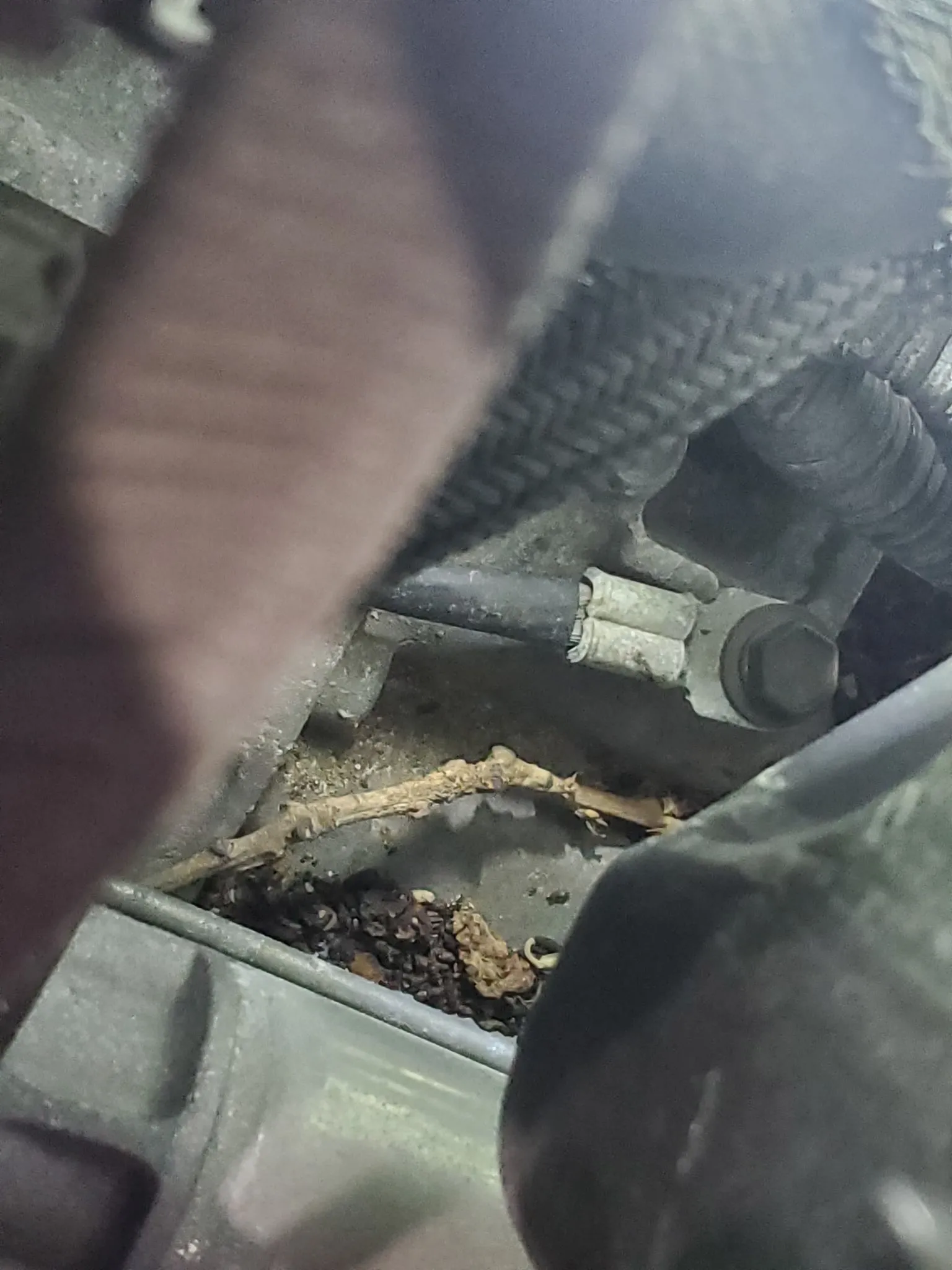
      07/02/2024Read more
    • Carillon Lakes Fall Expo 2021 Image

      Carillon Lakes Fall Expo 2021

      The Carillon Lakes Fall Expo is one of our favorite events. It gives us a chance to visit with different members of this great community. Thank you to everyone from Carillon Lakes who stopped by our booth to talk! Jim and Rich had a great time getting to know everyone and answering any automotive questions. We loved visiting with you and cannot wait until next year.

      11/12/2021Read more
    • Experience the Excellence of 59 Auto Repair’s Digital Inspections Image

      Experience the Excellence of 59 Auto Repair’s Digital Inspections


      At 59 Auto Repair, we take pride in being more than just an auto repair shop; we are a family-owned business deeply rooted in the Plainfield community. Our commitment to providing exceptional service is reflected in every aspect of our work, including our use of digital inspections—a service we've been perfecting for years.

      What Are Digital Inspections? Digital inspections are a key component of our service offering. By utilizing cameras and advanced diagnostic tools, our master technicians conduct thorough assessments of your vehicle. They capture detailed photos and videos of essential components, compiling them into a comprehensive digital report. This report is made available to you through a secure online portal, giving you clear insight into the condition of your vehicle.

      Why 59 Auto Repair Stands Out

      Expertise You Can Trust: Our team of master technicians brings a wealth of knowledge and skill to every job. With years of experience and ongoing training, our technicians are well-versed in the latest automotive technologies and repair methods. This expertise allows us to deliver precise, reliable repairs, regardless of the complexity of the issue.

      A Family-Owned Commitment: As a family-owned business, we treat every customer like a member of our own family. We understand the importance of trust and transparency in auto repair, and we are dedicated to providing honest, reliable service. Our personalized approach ensures that you receive tailored recommendations and clear communication throughout the repair process.

      Transparent and Detailed Service: Our digital inspections offer unparalleled transparency. By providing you with a detailed visual report of your vehicle's condition, we help you understand exactly what needs attention. This clarity allows you to make informed decisions about your vehicle’s maintenance and repairs, without any surprises.

      Efficient and Effective Repairs: With our digital inspection process, we can quickly and accurately identify potential issues. This efficiency helps us address problems before they escalate, saving you time and money. Our goal is to ensure that every repair is handled with precision, leading to a smoother and more reliable driving experience.

      Why Choose 59 Auto Repair in Plainfield? In Plainfield, 59 Auto Repair is recognized for our unwavering dedication to quality and customer satisfaction. Our years of experience with digital inspections exemplify our commitment to staying at the forefront of automotive repair technology. When you choose us, you're not just choosing an auto repair shop—you're choosing a partner who values your vehicle and your trust.Our family-owned values, combined with the expertise of our master technicians make us the top choice for auto repair in Plainfield. We invite you to experience the 59 Auto Repair difference, where your vehicle’s performance and your satisfaction are always our top priorities. For more information about our digital inspections or to schedule an appointment, contact us today. Let 59 Auto Repair be your trusted partner in keeping your vehicle in top shape. We look forward to serving you and your family!

      08/14/2024Read more
    • Where should I bring my Hybrid vehicle for Auto Repair in Plainfield, IL? Image

      Where should I bring my Hybrid vehicle for Auto Repair in Plainfield, IL?


      Hybrid vehicles are a fantastic choice for eco-conscious drivers. They combine the power of an electric motor with a gasoline engine, resulting in increased fuel efficiency and reduced emissions. But just like any other car, hybrids require regular maintenance and occasional repairs to keep them running smoothly. Here at 59 Auto Repair in Plainfield, IL, our certified technicians are experts in hybrid vehicle repair, and we're here to guide you through everything you need to know.

      Understanding Your Hybrid's Needs

      Hybrid vehicles have two main components: an electric motor and a gasoline engine. They also have a high-voltage battery pack that stores energy for the electric motor. This unique combination means that hybrid repair requires a different approach than traditional gasoline vehicles. Our technicians are specifically trained to diagnose and service all aspects of your hybrid, from routine maintenance to complex electric motor and battery repairs.

      Routine Hybrid Maintenance

      Just like any car, your hybrid needs regular maintenance to stay in top condition. This includes oil changes, tire rotations, filter replacements, and multi-point inspections. These services ensure that your hybrid's gasoline engine is operating efficiently and that all the other systems are functioning properly. Here at 59 Auto Repair, we can develop a personalized maintenance plan specifically designed for your hybrid vehicle, helping you avoid costly repairs down the road.

      Hybrid Battery and Electric Motor Care

      The electric motor and battery pack are the heart of your hybrid's fuel efficiency. Our technicians are trained to diagnose any issues with these components and perform the necessary repairs. This may include battery balancing, cooling system checks, or even battery pack replacements. We use cutting-edge diagnostic tools to pinpoint the exact problem and ensure your hybrid's electric drive system is operating at its best.

      High-Voltage System Safety

      The high-voltage battery pack in your hybrid requires special handling. Our technicians have the proper training and equipment to safely work on these components. We understand the importance of following strict safety protocols to protect yourself and our technicians during any repairs.

      The 59 Auto Repair Advantage

      When you bring your hybrid to 59 Auto Repair in Plainfield, IL, you can be confident that you're getting the best possible service. Here's what sets us apart:

      • Certified Technicians: Our mechanics are certified to work on hybrid vehicles and stay up-to-date on the latest technologies.
      • Advanced Diagnostics: We use state-of-the-art diagnostic tools to accurately identify any problems with your hybrid.
      • Genuine or OEM Parts: We use high-quality parts to ensure your hybrid performs at its peak efficiency and maintains its resale value.
      • Competitive Prices: We offer competitive rates on all our hybrid repair services.
      • Convenient Location: We're conveniently located in Plainfield, IL, making it easy to drop off your hybrid for service.
      • Warranty on Repairs: We back our work with a warranty on all repairs, giving you peace of mind.

      Don't Wait to Schedule Your Hybrid Repair Appointment

      By taking care of your hybrid with regular maintenance and repairs from a qualified technician, you can extend its lifespan and ensure it continues to deliver exceptional fuel economy and performance. If you're in the Plainfield, IL area and notice any issues with your hybrid, don't hesitate to contact 59 Auto Repair. Call us at 815-254-9959 or visit our shop to schedule an appointment. We look forward to helping you keep your hybrid running smoothly for miles to come!

      03/07/2024Read more
    • Who repairs Hybrid vehicles in Plainfield? Elevating Your Auto Repair Experience: The Hybrid Repair Advantage at 59 Auto Repair in Plainfield Image

      Who repairs Hybrid vehicles in Plainfield? Elevating Your Auto Repair Experience: The Hybrid Repair Advantage at 59 Auto Repair in Plainfield


      In the fast-paced world of automotive maintenance, staying ahead of the curve is paramount. As technology evolves, so do the vehicles we rely on daily. One of the most notable advancements in recent years has been the widespread adoption of hybrid vehicles. With their eco-friendly design and fuel efficiency, hybrids have become a popular choice for conscientious drivers. However, when it comes to repairs and maintenance, hybrid vehicles present unique challenges that not all auto repair shops are equipped to handle.

      Enter 59 Auto Repair in Plainfield, your trusted partner in hybrid repair excellence. With a commitment to cutting-edge technology and unparalleled expertise, we're here to ensure your hybrid vehicle receives the top-notch care it deserves.

      Hybrid vehicles combine traditional internal combustion engines with electric motors and sophisticated battery systems. While this hybrid technology offers numerous benefits, it also requires specialized knowledge and tools for proper maintenance and repairs. That's where our team at 59 Auto Repair shines.

      Our technicians undergo rigorous training to stay abreast of the latest advancements in hybrid technology. From routine maintenance tasks to complex repairs, we have the skills and experience to keep your hybrid running smoothly and efficiently. Whether it's diagnosing a problem with your battery system or performing a tune-up on your hybrid engine, you can trust us to deliver exceptional results every time.

      At 59 Auto Repair, we understand that convenience is key. That's why we strive to make the repair process as hassle-free as possible for our customers. With our state-of-the-art facility equipped with the latest diagnostic tools and equipment, we can quickly identify issues and provide prompt solutions. Additionally, our friendly and knowledgeable staff are always on hand to answer any questions you may have and provide expert guidance tailored to your hybrid vehicle's needs.

      When it comes to hybrid repair, experience matters. With years of dedicated service to the Plainfield community, 59 Auto Repair has earned a reputation for excellence in hybrid maintenance and repair. Whether you drive a hybrid sedan, SUV, or truck, you can trust us to deliver superior results that keep you safely on the road for miles to come.

      Don't trust your hybrid vehicle to just any auto repair shop. Experience the hybrid repair advantage at 59 Auto Repair in Plainfield today. Contact us to schedule your appointment and discover why we're the premier choice for hybrid owners in the area. Your hybrid deserves the best – and at 59 Auto Repair, that's exactly what you'll get.

      02/12/2024Read more
    • Troubleshooting a Tire Leak from the Rim: Causes and Solutions Image

      Troubleshooting a Tire Leak from the Rim: Causes and Solutions


      We've all experienced the frustration of discovering a tire leak. While it's a common issue, there's often more to it than just a puncture. One of the most elusive and persistent tire leaks can occur from the rim, posing a significant challenge for vehicle owners. In this blog post, we'll delve into the causes of a tire leaking from the rim and explore potential solutions to address this inconvenience.

      Understanding the Issue

      A tire leak from the rim can be particularly vexing because it doesn't always present itself obviously. Unlike a visible puncture or tear, the leak often occurs between the tire bead and the rim's seating surface, making it harder to detect without careful inspection. As air slowly escapes, you may notice a gradual loss of tire pressure or irregular tire performance.

      Common Causes

      1. Corrosion: Corrosion is one of the primary culprits behind rim leaks. Over time, moisture, dirt, and road salt can cause the metal rim to deteriorate, resulting in tiny holes or cracks. This allows air to escape from the tire, leading to pressure loss and potential flat tires.

      2. Damaged Bead: The bead is the part of the tire that seals it to the rim. Any damage or deformation to the bead can prevent a secure seal, facilitating air leakage. Common causes of bead damage include hitting curbs or potholes at high speeds.

      4. Defective Valve Stem: The valve stem is another potential weak point in the tire's sealing mechanism. If the valve stem becomes damaged or fails, it can lead to air leaks from the tire, resulting in underinflation.

      Troubleshooting and Solutions

      1. Visual Inspection: Regularly inspect your tires for signs of leakage. Look for any visible damage or debris around the bead and valve stem. A soapy water solution applied to the tire's sidewalls can help reveal tiny bubbles indicating the leak's location.

      2. Professional Inspection: If you suspect a tire leak from the rim but can't pinpoint the issue, take your vehicle to a trusted tire service center. Experienced technicians can conduct a thorough inspection, using specialized equipment to identify the precise location of the leak.

      3. Rim Cleaning and Maintenance: Prevent corrosion-related leaks by keeping your rims clean and dry. Regularly wash them, especially after driving on salted roads. Applying a protective coating can also help mitigate corrosion.

      4. Proper Tire Installation: Ensure your tires are professionally mounted, following manufacturer guidelines for the specific tire and rim combination. This will help achieve a proper bead seating, reducing the risk of air leakage.

      5. Replace Damaged Components: If a damaged bead or valve stem is identified, have it replaced promptly. It's essential to address these issues to maintain tire integrity and avoid further complications.

       A tire leaking from the rim can be a frustrating and time-consuming problem, but with careful inspection and appropriate action, it's a challenge that can be overcome. Regular maintenance, proper tire installation, and prompt attention to any issues will go a long way in preventing rim leaks and ensuring a safer and smoother driving experience. If you're ever in doubt, don't hesitate to seek professional assistance from tire experts who can help keep your wheels rolling trouble-free.

      07/18/2023Read more
    • The Importance of Vehicle Wheel Alignments: A Smooth Ride and Safer Journey Image

      The Importance of Vehicle Wheel Alignments: A Smooth Ride and Safer Journey


      Most vehicle owners understand the importance of regular maintenance to keep their cars running smoothly. From oil changes to tire rotations, these routine tasks are essential to ensure optimal performance and longevity. However, one often overlooked aspect of vehicle maintenance is wheel alignment. Despite its significance, many drivers underestimate the impact of proper wheel alignment on their vehicle's performance and safety. In this blog post, we will delve into the importance of vehicle wheel alignments and the benefits they bring to both your car and your driving experience.

      What is Wheel Alignment?

      Wheel alignment, also known as tire alignment, is the process of adjusting the angles of the wheels to ensure they are parallel to each other and perpendicular to the ground. The primary purpose of wheel alignment is to optimize the way the tires contact the road, ensuring even tire wear, improved handling, and better overall vehicle performance.

      Importance of Proper Wheel Alignment

      1. Extended Tire Life: A properly aligned vehicle distributes weight evenly across all four tires, minimizing uneven wear. This extends the lifespan of your tires and saves you money by reducing the frequency of tire replacements.

      2. Improved Fuel Efficiency: Misaligned wheels cause tires to drag against the road, increasing rolling resistance and forcing the engine to work harder. Correct wheel alignment can help improve fuel efficiency and save you money at the pump.

      3. Enhanced Handling and Safety: When your wheels are aligned correctly, your car responds more predictably to steering inputs, providing better control, and reducing the risk of accidents. Proper alignment is crucial for maintaining stability, especially during emergency maneuvers.

      When to Get a Wheel Alignment

      Experts recommend getting a wheel alignment check at least once a year or whenever you notice signs of misalignment. Indications that your vehicle may need a wheel alignment include:

      - Uneven tire wear: Check your tires for signs of wear on one side or the middle.

      - Pulling to one side: If your car veers to the left or right when driving on a straight road, it's time for an alignment check.

      - Steering wheel off-center: When your steering wheel is not centered while driving straight, it's likely a sign of misalignment.

      Vehicle wheel alignments are a crucial aspect of car maintenance that should not be overlooked. With proper alignment, you can enjoy a smoother ride, improved fuel efficiency, and enhanced safety. Regularly scheduled alignments will not only extend the life of your tires but also preserve other critical components of your vehicle's suspension system. So, don't neglect this essential maintenance task and ensure your wheels are aligned correctly for a pleasant driving experience and a safer journey.

      08/01/2023Read more
    • Why Regular Vehicle Tune-ups Are Essential for Optimal Performance Image

      Why Regular Vehicle Tune-ups Are Essential for Optimal Performance


      Maintaining a well-functioning vehicle is crucial for ensuring a safe and enjoyable driving experience. One of the most effective ways to keep your car running smoothly is by scheduling regular tune-ups. In this blog post, we will explore the importance of tuning up your vehicle and discuss the various components and services typically included in a comprehensive tune-up. By the end, you'll understand why investing in regular maintenance can save you money, improve fuel efficiency, and extend the lifespan of your vehicle.

      1. Enhanced Performance and Reliability:

      A vehicle tune-up involves inspecting and servicing several critical components, such as the engine, ignition system, fuel system, and more. Over time, these parts can wear down or become dirty, leading to decreased performance and reliability. During a tune-up, a skilled technician will thoroughly examine each component, making necessary adjustments, replacing worn-out parts, and ensuring everything is functioning optimally. The result is a vehicle that performs at its peak, providing better acceleration, smoother handling, and increased reliability on the road.

      2. Improved Fuel Efficiency:

      Neglecting regular tune-ups can lead to decreased fuel efficiency, costing you more money at the pump. A poorly tuned engine may experience problems like clogged fuel injectors, incorrect air-to-fuel ratios, or worn-out spark plugs, all of which contribute to decreased mileage. A comprehensive tune-up addresses these issues, optimizing the engine's performance and improving fuel efficiency. By restoring your vehicle's fuel system to its optimal state, you'll notice significant savings on fuel costs, allowing you to get the most out of every gallon.

      3. Prolonged Vehicle Lifespan:

      Just like any other mechanical system, your vehicle requires regular maintenance to operate efficiently and last longer. Ignoring tune-ups can result in the accumulation of dirt, debris, and carbon deposits, which can cause excessive wear and tear on vital engine components. By addressing these issues through a tune-up, you minimize the risk of major breakdowns and extend the overall lifespan of your vehicle. Regular maintenance helps prevent minor issues from turning into expensive repairs down the line, ensuring your car remains in top condition for years to come.

      4. Safety and Peace of Mind:

      Your safety on the road should always be a top priority. A tune-up includes a thorough inspection of your vehicle's braking system, suspension, tires, and other safety-related components. By identifying and addressing potential issues proactively, you can avoid unexpected breakdowns or accidents caused by faulty brakes, worn-out tires, or other safety hazards. Regular tune-ups also provide peace of mind, knowing that your vehicle is well-maintained and less likely to encounter unexpected problems on the road.

      Investing in regular vehicle tune-ups is a small price to pay for the numerous benefits they provide: improved performance, fuel efficiency, longevity, and safety. Schedule your next tune-up today!

      06/16/2023Read more
    • Why is my vehicle's air conditioning blowing warm?  Image

      Why is my vehicle's air conditioning blowing warm?

      Feeling the Heat? Why Your Car's AC Might Be Blowing Warm Air This Summer

      Summer in Plainfield brings sunshine and outdoor adventures, but nothing can spoil a drive faster than an air conditioning system that’s blowing warm air. If you're experiencing this frustrating issue, you're likely wondering what the problem is and how to fix it. Several factors can contribute to your vehicle’s AC losing its cool, and while a simple ac recharge might seem like the obvious solution, the underlying cause could be more complex.

      One of the most common reasons for warm air blowing from your vents is a low refrigerant level. Refrigerant is the lifeblood of your AC system, and over time, it can slowly leak out. This could be due to a small puncture in a hose, a loose fitting, or a faulty component. Depending on your vehicle's age and the type of refrigerant it uses (older models often use R134A, while newer vehicles typically use 1234YF), the recharge process and necessary equipment will vary. Simply adding more refrigerant without addressing the leak is only a temporary fix, and you'll likely find yourself back in the same warm situation before long.

      However, a lack of refrigerant isn't the only culprit. Other potential issues include a failing compressor (the heart of the AC system), a clogged condenser (which dissipates heat), a faulty expansion valve (regulating refrigerant flow), or even electrical problems. Diagnosing these issues correctly requires specialized knowledge and equipment. At 59 Auto Repair in Plainfield, our experienced mechanics can perform a thorough inspection of your entire AC system. We often use techniques like injecting fluorescent dye into the system to pinpoint even the smallest leaks, ensuring we address the root cause of the problem, not just the symptom.

      Trying to diagnose and fix AC problems yourself can be risky and potentially costly if done incorrectly. Without the right tools and expertise, you could misdiagnose the issue, waste money on unnecessary parts, or even damage your AC system further. This summer, don't suffer through the heat. If your vehicle's air conditioning is blowing warm, bring it to the professionals at 59 Auto Repair in Plainfield. Our skilled mechanics will accurately identify the fault, whether it requires a simple ac recharge or a more complex repair, getting you back to enjoying cool and comfortable drives all summer long.

      06/18/2025Read more
    • Keeping Plainfield Rolling: Your Trusted Car Repair Experts Image

      Keeping Plainfield Rolling: Your Trusted Car Repair Experts

      When you're searching for reliable car repair Plainfield, you need a team you can trust. At 59 Auto Repair, we understand that your vehicle is more than just a mode of transportation; it's an essential part of your daily life. From commuting to work to running errands and enjoying weekend adventures, you depend on your car to keep you moving. That's why we're committed to providing top-notch automotive services right here in Plainfield, IL.  

      Finding a dependable auto repair shop can be a daunting task. You want a place that's not only skilled but also honest and transparent. At 59 Auto Repair, we pride ourselves on our integrity. We believe in clear communication and upfront pricing, so you'll always know exactly what to expect. Whether you need a simple oil change, brake repair, or complex engine diagnostics, our experienced technicians have the expertise to get the job done right. We're dedicated to ensuring your complete satisfaction, and we stand behind our work.

      For those searching specifically for car repair Plainfield, it’s important to know that 59 Auto Repair offers a wide range of services to meet all your automotive needs. We handle everything from routine maintenance to major repairs, including: Oil Changes and Fluid Checks, Brake Repair and Replacement, Tire Rotations and Alignments, Engine Diagnostics and Repair, Transmission Services, Heating and Cooling System Repairs, And much more!

      We understand that car trouble can arise at any time, which is why we strive to provide quick and efficient service. Our goal is to get you back on the road as soon as possible, without compromising on quality. When you choose 59 Auto Repair for your car repair Plainfield needs, you choose a team that values your time and your safety.  

      Plainfield residents deserve a local auto repair shop that they can rely on. We're proud to be a part of the Plainfield community, and we're committed to serving our neighbors with excellence. We use state-of-the-art equipment and the latest techniques to ensure that your vehicle receives the best possible care. Our team is constantly updating their skills and knowledge to stay ahead of the curve in the ever-evolving automotive industry.

      If you're looking for dependable and professional car repair Plainfield, look no further than 59 Auto Repair. We're here to keep your vehicle running smoothly and safely. Contact us today to schedule an appointment or to learn more about our services. We look forward to serving you!

      03/20/2025Read more
    • Where should I take my vehicle for steering and suspension repair?  Image

      Where should I take my vehicle for steering and suspension repair?

      59 Auto Repair: Your Plainfield Steering & Suspension Experts!

      Is your car pulling to one side? Do you hear clunking noises when you go over bumps? Does your steering wheel feel loose or unresponsive? If you're experiencing any of these issues, it's likely your steering or suspension system needs attention. And if you're in Plainfield, IL, there's only one place you should trust: 59 Auto Repair.

      We understand that a smooth, safe ride is essential. That's why we've built our reputation on providing top-notch steering and suspension repairs for all makes and models. Here's why 59 Auto Repair is the best place to bring your vehicle:

      Experienced and Certified Technicians: Our team of ASE-certified technicians have years of experience diagnosing and repairing complex steering and suspension problems. We stay up to date with the latest automotive technology and repair techniques to ensure your vehicle is in expert hands. We are passionate about what we do and take pride in delivering quality workmanship.

      Comprehensive Steering and Suspension Services: We offer a full range of steering and suspension services, including: Wheel Alignment: Ensuring your wheels are properly aligned for optimal tire wear and handling. Shock and Strut Replacement: Restoring your vehicle's ride quality and stability. Ball Joint and Tie Rod Replacement: Eliminating steering play and ensuring precise control. Power Steering Repair: Fixing leaks and restoring smooth steering operation. Control Arm Replacement: Correcting suspension geometry and improving handling. Suspension System Inspections: Identifying potential problems before they become major issues.

      State-of-the-Art Equipment: We invest in the latest diagnostic and repair equipment to accurately pinpoint problems and perform precise repairs. This allows us to work efficiently and effectively, saving you time and money.

      Transparent and Honest Service: We believe in providing honest and transparent service. We'll thoroughly explain the necessary repairs and provide a detailed estimate before any work begins. We'll never recommend unnecessary services, and we'll always keep you informed throughout the repair process.

      Customer Satisfaction Guaranteed: Your satisfaction is our top priority. We stand behind our work and strive to exceed your expectations. We're committed to providing friendly, reliable, and affordable service that you can trust.  

      Why Steering and Suspension Maintenance is Crucial: Safety: A properly functioning steering and suspension system is essential for safe driving. Handling: Well-maintained components ensure precise control and responsiveness. Tire Wear: Proper alignment and suspension prevent premature tire wear. Ride Comfort: A healthy suspension system provides a smooth and comfortable ride.

      Plainfield, IL, Trust 59 Auto Repair: Don't let steering or suspension issues compromise your safety and comfort. If you're experiencing any problems, bring your vehicle to 59 Auto Repair in Plainfield, IL. We'll get you back on the road with confidence.

      Call us today to schedule an appointment or to learn more about our steering and suspension services! We look forward to serving you!

      03/12/2025Read more
    • How to Prepare Your Vehicle for Winter Image

      How to Prepare Your Vehicle for Winter

      With winter fast approaching, it is important to make sure you and your vehicle are ready. 59 Auto Repair is here to help you prepare!

      Check your tires

      When the weather changes, tire pressure will naturally change. It is normal for tire pressure to drop up to 5 psi in the winter months. We recommend checking your tire pressure before winter to ensure proper pressure for the upcoming season. Spare tires should also be checked to ensure good condition. Good tread depth is also essential in the winter for good traction. Winter conditions require deeper tread to keep good contact with the road. We recommend replacing tires between 4/32nds and 3/32nds.

      Schedule your appointment today!

      Test your Battery

      Having your battery tested for winter is essential. Extreme weather conditions strain the vehicle and take more cold cranking amps to start. If your battery is weak, it will not start when the colder weather hits. Batteries should be tested for cold cranking amperage as well as reserve capacity.


      Replace your Wiper Blades

      Wintertime is the time of the year where your wiper blades get the most use. With all the snow and salt from the roads, your wiper blades are more essential than ever. In the winter, you should always clean the snow off your windshield and wiper blades before turning your wiper blades on. We offer two different style wiper blades to suit all your wiper needs.

      Schedule your appointment today!

      Check your Coolant

      Your coolant lowers the freezing point and prevents freeze ups inside your engine. Coolant also is essential for your heat to work properly. In the winter, it is more important than ever to have the proper coolant inside your vehicle. Coolant should be checked for proper level as well as the freezing point. We recommend replacing the coolant every 5 years or 50,000 miles for maintenance.

      Check your Heat and Replace your Cabin Air Filter

      Before it gets cold, turn on your heat and make sure it is coming out warm. Most people do not check their heat before they need it. Like your furnace at home, the heat in your vehicle runs through a cabin air filter. The cabin air filter is responsible for filtering the air entering the cabin of your vehicle. It is critical for good air quality and helps remove dust and other allergens from the air you breathe inside your vehicle. It should be replaced for maintenance every 15,000 miles.

      Add Washer Fluid

      It is important in the wintertime to verify that your washer fluid is rated for winter. Summer washer fluid has a different freezing point than winter washer fluid. We recommend making sure your washer fluid is rated to at least -20 degrees fahrenheit. If it is not, your windshield washer fluid may freeze if the temperature drops too low. This will cause the washer fluid to not work. If the washer fluid freezes, you can park the vehicle inside a garage until the fluid thaws, and add more properly rated fluid. If the washer fluid level gets too low in the winter, it can also cause the washer fluid to freeze.

      Schedule your appointment today!

      Wash and Wax your Vehicle

      Having your vehicle washed and waxed before winter helps seal your paint and prevents rust. Wax also helps to shield the paint from scratches caused by the elements. It also helps prevent the salt buildup on your vehicle caused by the city salting the roads to help with the ice. Wax can be difficult to apply in too cold or too warm of temperatures so applying the wax in the fall is critical for maximum protection of your vehicle.


      Check your Belts and Hoses

      The belts and hoses on your vehicle should be inspected before winter. The drop in temperature causes the rubber on engine belts and hoses to deteriorate. Having a belt break or hose leak can leave you stranded. We recommend checking for cracking, bulging, swelling, or sponginess. Drive belts typically should be replaced for maintenance every 60,000 miles, and cooling hoses should be replaced for maintenance at 100,000 miles.


      Prepare your Emergency Kit

      Emergency kits for your vehicle should include:

      • Properly inflated spare tire, wheel wrench, and jack
      • Jumper cables
      • Multipurpose tool kit
      • Flashlight and extra batteries
      • Reflective triangles and utility reflective vest
      • First aide kit
      • Nonperishable food and water
      • Car charger
      • Whistle
      • Ice Scraper and gloves
      • Blanket
      Check Out our Specials
      11/04/2022Read more
    • Keeping Your Cool: The Importance of Coolant and Your Car's Health Image

      Keeping Your Cool: The Importance of Coolant and Your Car's Health

      Why Your Car’s Coolant Matters More Than You Think

      Have you ever wondered about that colorful liquid sloshing around in your car's engine? It's not just for decoration! That's coolant, and it plays a vital role in keeping your engine from overheating and ensuring your vehicle runs smoothly.

      As your friendly neighborhood repair technicians, we at 59 Auto Repair know a thing or two about this unsung hero, and we're here to explain why it deserves your attention.

      What Does Coolant Do?

      Essentially, coolant circulates through your engine, absorbing heat generated by the combustion process. It then travels to the radiator, where the heat is dissipated before the coolant returns to the engine to repeat the process.

      This continuous cycle prevents your engine from reaching dangerously high temperatures, which could lead to catastrophic engine failure.

      In addition to its primary function, coolant also protects your engine from freezing. It contains additives that lower the freezing point of water, ensuring that the fluid doesn't solidify in cold temperatures.

      Furthermore, coolant helps prevent corrosion and rust within the cooling system, extending the lifespan of vital parts like the water pump and radiator.

      Signs of Coolant Trouble

      So, how can you tell if your car's coolant needs attention? Here are some common warning signs:

      • Warning lights on your dashboard: Most modern vehicles have an engine temperature warning light. If this light illuminates, pull over safely as soon as possible—it indicates your engine is overheating.
      • Coolant leaks: A puddle of colorful fluid (green, orange, or pink) underneath your car may signal a coolant leak.
      • A strong, sweet smell: Coolant has a distinct sweet odor. If you notice this while driving, it could indicate a leak.
      • Engine overheating: If your temperature gauge rises quickly or you see steam from under the hood, your engine is overheating.

      Why You Need a Professional Mechanic Near You

      If you suspect any issues with your coolant, it's essential to seek professional help immediately. While some basic checks can be done at home, addressing leaks or flushing and refilling the system requires expertise and proper equipment.

      This is where your reliable mechanic near me comes in.

      At 59 Auto Repair, our experienced and certified technicians are well-versed in all aspects of car repair. We have the specialized tools and knowledge to:

      • Diagnose coolant leaks: Using pressure tests and advanced methods to locate even the smallest leaks.
      • Perform coolant flushes: Removing contaminated coolant and replacing it with fresh fluid and additives.
      • Replace faulty components: Including water pumps, thermostats, and radiator hoses with high-quality parts.

      Stay Ahead with Preventive Maintenance

      Regular maintenance is key to preventing major repairs and ensuring your car's longevity. We recommend following your manufacturer's maintenance schedule, which typically includes checking coolant levels and condition during routine oil changes.

      Don't wait until your engine is overheating to address coolant issues. If you notice any warning signs, contact 59 Auto Repair, your trusted auto repair shop, today.

      We'll give your car a thorough inspection and make sure your cooling system is in top-notch condition.

      Stay Cool on the Road

      By taking care of your car's cooling system, you're not only preventing expensive repairs but also ensuring that your vehicle runs efficiently and reliably for years to come.

      Let our expert repair technicians at 59 Auto Repair help you stay cool and confident on the road.

      Contact 59 Auto Repair today!

      04/17/2026Read more
    • Why do I hear a clicking noise while turning? Image

      Why do I hear a clicking noise while turning?

      A clicking noise can be an indication of a few different issues on your vehicle. One of the most common issues is a worn CV Axle Shaft. The CV axle joint has boots that contain grease. The grease helps lubricate the joint while the axle moves. When the boot starts to crack, it will leak grease, and when the grease is gone, the axle will make noise. Sometimes a worn cv axle will cause a vibration that increases with speed.

      Other times, a cv axle will cause a knocking noise that can be more pronounced in reverse. Our technicians inspect the cv axle boots for grease on our regular vehicle maintenance inspection. If the cv axle boot is leaking, the cv joint will need to be replaced soon. Call us today to schedule an appointment to have your vehicle inspected!

      10/20/2021Read more
    • Hit the Road with Confidence: Why a Pre-Trip Inspection at 59 Auto Repair is Your Summer Essential Image

      Hit the Road with Confidence: Why a Pre-Trip Inspection at 59 Auto Repair is Your Summer Essential


      Summer is just around the corner here in Plainfield, and for many of us, that means dreaming of open roads, scenic drives, and long-awaited vacations. Whether you're planning a cross-country adventure, a trip to the lake, or just visiting family a few states over, your vehicle is your key to freedom and fun. But before you load up the car and pull out of the driveway, ask yourself: is your vehicle truly ready for the journey? Don't let a preventable breakdown turn your dream vacation into a roadside nightmare. Scheduling a road trip inspection at 59 Auto Repair is the smartest first step you can take.


      Ignoring potential vehicle issues before a long drive is a gamble you don't want to lose. Summer driving conditions, including higher temperatures and potentially long stretches between stops, put extra stress on your car's components. Worn tires are more susceptible to blowouts on hot pavement, aging belts and hoses can crack under pressure, low fluid levels can lead to overheating, and a weak battery might leave you stranded at the most inconvenient time. Imagine the frustration, expense, and lost vacation time dealing with an unexpected repair far from home – it’s a scenario easily avoided with a little preparation.

      At 59 Auto Repair, our comprehensive road trip inspection is designed to catch potential problems before they derail your plans. Our experienced technicians will thoroughly examine your vehicle's most critical systems. We'll check your tire pressure and tread depth, inspect brake pads, rotors, and fluid levels, assess belts and hoses for wear and tear, test your battery's health, top off essential fluids like oil, coolant, and windshield washer fluid, and ensure your lights, wipers, and air conditioning are functioning correctly. We give you a clear picture of your vehicle's condition.


      The benefits of getting this check-up go far beyond just avoiding breakdowns. It's about peace of mind. Knowing that your car has been professionally inspected allows you to relax and actually enjoy the drive, focusing on the scenery and the company instead of worrying about strange noises or potential failures. Furthermore, identifying and addressing minor issues now, like needing new wiper blades or topping off coolant, is far less expensive and stressful than dealing with a major repair hundreds of miles from home. A well-maintained car is also a safer car for you and your passengers.


      Don't wait until it's too late. Before you finalize your summer travel itinerary, make scheduling a road trip inspection at 59 Auto Repair your top priority. Our friendly team here in Plainfield is ready to help ensure your vehicle is safe, reliable, and ready to carry you to your destination and back without a hitch. Give us a call or stop by today to book your appointment, and get ready to hit the road this summer with confidence! Safe travels!

      04/29/2025Read more
    • Stay Cool and Beat the Heat with Professional AC Recharge Service Image

      Stay Cool and Beat the Heat with Professional AC Recharge Service


      As the summer sun blazes overhead, there's nothing more frustrating than a malfunctioning air conditioning system in your car. Driving in sweltering heat can quickly turn into an uncomfortable and even dangerous experience. Thankfully, professional auto repair shops offer AC recharge services that can restore your vehicle's cooling system to its optimal functionality. In this blog post, we will delve into the importance of having your car's AC recharged by professionals and the benefits it brings. 

      1. Trust the Experts:

      When it comes to your car's air conditioning system, it's best to leave the job to the professionals. Certified technicians at reputable auto repair shops possess the necessary expertise, experience, and tools to diagnose and resolve AC issues. They have a deep understanding of automotive cooling systems and can identify the root cause of any problems your AC might be facing.

      2. Comprehensive Inspection:

      A professional AC recharge service is more than just adding refrigerant to your system. It involves a thorough inspection of the entire AC system to identify any leaks, faulty components, or other issues that may be impacting its performance. This comprehensive approach ensures that your AC is recharged correctly and any underlying problems are addressed, preventing future breakdowns.

       3. Environmentally Friendly Practices:

      Recharging your AC system involves handling refrigerants that can be harmful to the environment if mishandled. Professional auto repair shops follow strict guidelines and regulations to ensure the proper disposal and recycling of refrigerants. By opting for professional AC recharge services, you are contributing to environmental sustainability and minimizing the impact on our planet.

       4. Enhanced Performance and Efficiency:

      An AC recharge performed by professionals will not only restore your cooling system but also improve its performance and efficiency. Over time, refrigerant levels in your AC system naturally deplete, resulting in decreased cooling capacity. By replenishing the refrigerant to the manufacturer's specifications, professional technicians can optimize your AC system's cooling power, allowing you to enjoy a comfortable and refreshing driving experience.

       5. Cost-Effectiveness:

      Some vehicle owners may be tempted to purchase DIY AC recharge kits, believing it to be a cost-effective solution. However, these kits often provide a temporary fix and fail to address underlying issues. In contrast, professional AC recharge services may seem like an upfront investment, but they provide a long-term solution that helps you avoid costly repairs down the road. By trusting the professionals, you save money by ensuring your AC system is diagnosed, repaired, and recharged correctly the first time.

      When it comes to keeping cool during scorching summer days, a professional AC recharge service provided by an auto repair shop is your best bet. From their expertise and comprehensive inspections to their commitment to environmental sustainability and cost-effectiveness, the benefits are numerous. Don't let a malfunctioning AC system put a damper on your summer. Schedule an appointment with a trusted auto repair shop and experience the joy of driving in comfort once again. Stay cool and beat the heat with a professional AC recharge!

      06/07/2023Read more
    • How to Prepare for your Road Trip Image

      How to Prepare for your Road Trip

      Going on a road trip can be an exciting and memorable experience. Whether you’re exploring a new part of the country or revisiting a familiar destination, a road trip offers the freedom to travel at your own pace and see things from a unique perspective. However, planning a road trip requires some preparation to ensure a safe and enjoyable journey. In this blog post, we’ll provide you with some essential road trip advice to help you plan and make the most of your adventure.

      1. Plan your route and stops

      Before you hit the road, it is important to plan your route and stops carefully. Map out your route and identify points of interest along the way. You can use a GPS or a mapping app to plan your route and get real-time updates on traffic and weather conditions. Also, plan your stops to rest, eat, and refuel. This will help you avoid exhaustion and hunger during your journey.

      2. Check your vehicle

      Your vehicle is your most essential travel companion on a road trip. Before you leave, make sure that your car is in good working condition. You should check the oil, brakes, tires, and battery. You should also have an emergency kit with you that includes a spare tire, jumper cables, and a first-aid kit. Need someone to check out your vehicle? We can help with that! 59 Auto Repair offers a road trip special that will ensure your vehicle is ready to go the distance.

      3. Pack light and smart

      One of the best things about a road trip is that you have the freedom to pack as much or as little as you want. However, it is important to pack smartly and bring only what you need. Pack a small bag for essentials like clothes, toiletries, and any medications you may need. Also, consider bringing snacks and drinks to keep you fueled during your journey. It is also a good idea to bring a trash bag and napkins for any spills that happen during your trip.

      4. Bring entertainment

      While the driver will need to focus on the road, the passengers will want to bring something along to keep them entertained. From movies, to books, to games, it is best to prepare early to help you pass some time inside your vehicle. The journey may be the best part of the adventure, but it is always a good idea to bring some backup entertainment for the longer stretches of open road.

      5. Stay Connected

      While a road trip is an opportunity to disconnect and enjoy the scenery, it is important to stay connected in case of an emergency. Make sure your cell phone is fully charged and bring a charger and a backup battery. You should also bring a paper map in case you lose cell service.

      6. Be flexible and open-minded

      Finally a road trip is an adventure, and unexpected things can happen. Be flexible and open-minded, and enjoy the journey. Embrace the unexpected and try new things along the way. Remember that the journey is just as important as the destination.

      A road trip can be a fun and rewarding experience. By following all these steps, you can make the most out of your adventure. So, start planning your next road trip and hit the road!

      04/25/2023Read more
    • What does "5mm Brake Pads" mean? Here's What You Need to Know! Image

      What does "5mm Brake Pads" mean? Here's What You Need to Know!

      Hey everyone, and welcome back to 59 Auto Repair's blog! Today, we're diving into the world of brake pads and deciphering that mysterious mechanic talk. Specifically, we're answering the question: "What does it mean when my brake pads have 5mm left?"

      Understanding Brake Pad Measurements

      Your brake pads are those crucial components that press against the rotors to slow down your car. They wear down over time, and knowing their thickness is key to ensuring safe braking performance. When a mechanic mentions a measurement in millimeters (mm) for your brake pads, they're referring to the remaining friction material – the part that makes contact with the rotors.

      Is 5mm of Brake Pad Enough?

      Generally, with 5mm of pad remaining, you're not in immediate danger. However, it's getting close to replacement time. Here's a breakdown:

      • Safe Range: New brake pads typically range from 10-12mm. In this zone, you're good to go for a while!
      • Caution Zone: Around 5mm is where things get interesting. It's still functional, but consider scheduling a brake service soon. The brakes are getting close to being needed.
      • Danger Zone: The danger zone for most vehicles is when the pads reach 3mm or less. At this point, metal-to-metal contact with the rotors can occur, leading to severe damage and compromised braking.

      Factors to Consider Besides Millimeters

      While millimeters are a good guideline, it's important to remember that brake pad wear depends on several factors:

      • Driving Habits: Aggressive braking or frequent hauling puts more stress on the pads. Coming to slower stops helps extend the life of your brake pads. Highway driving versus city driving also extends your brake pad life as you are braking less on the highway than you would around town.
      • Pad Material: Different pad compounds wear down at varying rates. 59 Auto Repair only uses high end brake pads. This is because the brake pads wear in nicer as well as make less noise and leave less brake dust. There are many brake pad options on the market, but they are not all good quality.
      • Vehicle Type: Heavier vehicles naturally require more braking force, causing the brakes to wear more quickly.

      What to Do With 5mm of Brake Pad Left

      Here's the best course of action:

      • Schedule a Brake Inspection: Our certified mechanics at 59 Auto Repair can thoroughly examine your brake pads, rotors, and other components. We'll measure pad thickness, assess overall condition, and advise you on the best course of action.
      • Consider Your Comfort Level: If the idea of thinner brakes worries you, don't hesitate to get them replaced for peace of mind.
      • Plan Ahead: If your mechanic says your pads are okay for now, schedule a future service appointment to avoid last-minute surprises.

      Remember: Brakes are essential for safe driving. Don't ignore any warning signs like grinding noises, pulsating brake pedal, or increased stopping distances.

      Stay Safe on the Road!

      By understanding brake pad measurements and taking proactive steps, you can ensure your car maintains optimal stopping power. For any brake-related questions or to schedule a service appointment, contact the friendly team at 59 Auto Repair today!

      04/09/2024Read more
    • Why is my Engine Knocking?  Image

      Why is my Engine Knocking?

      From Knock Knock to No Piston: Why Engine Knocks Can't Be Ignored

      Car troubles often come with their own soundtrack. A grinding noise might indicate brake trouble, while a high-pitched whine could point to a belt issue. But one sound you should never ignore is a persistent knocking coming from the engine. It could be a sign of a major problem – a missing piston.

      Let's rewind a bit. Pistons are the tireless athletes of your engine, constantly moving up and down within cylinders to compress fuel and air and create power. A knocking noise, however, indicates something's amiss with this rhythmic dance.

      Knocking Blues: The Culprit Behind the Missing Piston

      There are a few reasons a knocking noise can lead to a missing piston:

      • Piston Slap: This occurs when the clearance between the piston and cylinder wall becomes excessive. As the engine runs, the piston sways slightly, causing a knocking sound. Left unattended, this excessive movement can wear down the piston and cylinder wall, potentially leading to a catastrophic failure where the piston breaks and disappears.
      • Detonation: Imagine an uncontrolled explosion instead of a smooth burn within the cylinder. This abnormal combustion, also known as knocking, puts immense stress on the piston. Over time, it can weaken the piston, leading to a potential break and, you guessed it, a missing engine buddy.

      The Engine Goes Silent (Because It Can't Run)

      If the knocking sound progresses and a piston does break, your engine will tell you loud and clear. It likely won't start at all, or if it sputters to life, it'll run very rough with even louder knocking noises. Performance will be severely hampered, and attempting to drive could cause significant damage to other engine components.

      Silence the Knocking Before It Silences the Engine

      The key takeaway here is this: don't ignore a knocking sound in your engine. Early detection is crucial. Take your car to a qualified mechanic who can diagnose the cause of the knocking. Depending on the severity, they might recommend:

      • Piston Replacement: If the damage is confined to the cylinder with the knocking sound, replacing the worn piston and potentially resurfacing the cylinder wall could be an option.
      • Engine Rebuild: In severe cases, where the knocking has caused significant damage to the pistons and other internal components, a complete engine rebuild might be necessary.
      • Engine Replacement: Depending on the type of vehicle, sometimes a complete engine replacement is the better way to go. A certified mechanic will help you determine which way is best in your individual case.

      The cost of repairs can vary greatly depending on the extent of the damage and the type of engine. However, the potential consequences of a missing piston – a hefty repair bill or even needing a whole new engine – far outweigh the cost of addressing a knocking sound early on.

      Remember, a healthy engine is a quiet engine. Be attentive to any unusual sounds and address them promptly. After all, a little TLC now can save you a major headache (and potentially a missing piston) down the road.

      If you would like to schedule an appointment to have your knocking noise checked, please call 59 Auto Repair at (815)254-9959.

      03/13/2024Read more
    • How do I know I need brakes? Image

      How do I know I need brakes?

      Your car is a marvel of engineering, but let's be honest, it doesn't exactly send you a text message when it needs a little TLC. When it comes to your vehicle's most critical safety feature—the brakes—it communicates in its own special way. Ignoring these signals is like ignoring a smoke alarm in your house; it’s a risk not worth taking. At 59 Auto Repair, we believe an informed driver is a safe driver. So, let's decode your car's language and figure out if it's trying to tell you it's time for a brake repair.

      One of the most common signs you need new brakes is an unmistakable, high-pitched squeal when you press the pedal. Think of it as your car's built-in "Hey, look at me!" alert. This sound is often caused by a small metal indicator built into your brake pads, designed specifically to let you know they're wearing thin. If you're hearing this metallic symphony on the streets of Plainfield, it's the perfect time to have a professional take a look before that squeal turns into something more serious. Ignoring it can lead to more extensive and costly damage down the road.

      If you've moved past squealing and into the territory of a deep, rumbling, or grinding noise, your car is now screaming for help. This usually means your brake pads have worn down completely and you now have metal grinding against metal—specifically, the brake caliper grinding against the brake rotors. This is a severe safety issue that significantly reduces your stopping power. Continuing to drive in this condition can damage your calipers, turning a routine brake job into a more involved and expensive brake repair. Don't let a small issue become a major headache.

      Sometimes, the message isn't what you hear, but what you feel. Does your car pull to one side when you apply the brakes? Does your brake pedal feel "spongy" or mushy, sinking further to the floor than usual? Or maybe you feel a pulsing or vibration through the pedal or steering wheel when you slow down. These are all tactile clues that your braking system is compromised. A vibrating pedal often points to warped brake rotors, while a pulling sensation could indicate a stuck caliper or uneven wear on your brake pads. For any of these issues, a prompt and professional brake repair in Plainfield is essential for your safety.

      Here at 59 Auto Repair, we are your local experts for everything related to your vehicle's stopping power. From inspecting brake pads to replacing brake rotors, our skilled technicians handle every brake job with precision and care. Don't guess when it comes to safety. If you're experiencing any of these signs, or just feel like something is "off," bring your vehicle to us. We'll perform a thorough inspection and provide an honest assessment. For a trusted brake repair Plainfield service that puts your safety first, schedule your appointment with 59 Auto Repair today!

      06/13/2025Read more
    • Diagnosing and Addressing AC Compressor Failure in Your Vehicle Image

      Diagnosing and Addressing AC Compressor Failure in Your Vehicle


      Few things are more frustrating than having the air conditioning fail in your vehicle, especially during hot summer days. The AC compressor plays a critical role in cooling the cabin by compressing the refrigerant and circulating it through the system. However, like any mechanical component, AC compressors can fail over time. In this blog, we will delve into the causes of AC compressor failure in vehicles, signs to look out for, and steps you can take to address the issue effectively.

      1. Causes of AC Compressor Failure:

      Several factors can contribute to AC compressor failure in vehicles. Understanding these causes can help you prevent or address the issue promptly:

      a. Lack of Lubrication: Insufficient lubrication due to low refrigerant levels or a malfunctioning oiling system can lead to compressor failure. Lubrication is vital to reduce friction and prevent excessive heat buildup.

      b. Refrigerant Leaks: Frequent or significant refrigerant leaks can result in inadequate pressure levels within the compressor, causing it to overwork and eventually fail. Common causes of leaks include damaged hoses, O-rings, or seals.

      c. Electrical Issues: Problems with electrical components such as the compressor clutch, relays, or wiring can disrupt the proper functioning of the compressor, leading to failure.

      d. Excessive Pressure or Overheating: High system pressure, often caused by blockages or restrictions in the refrigerant flow, can strain the compressor and cause it to fail. Overheating due to external factors or inadequate cooling can also lead to compressor failure.

       2. Signs of AC Compressor Failure:

      Recognizing the warning signs of a failing AC compressor can help you address the issue before it worsens. Look out for the following indications:

       a. Weak or Warm Airflow: If your AC system is blowing air that isn't as cold as it should be, or if the airflow is weak, it may be a sign of compressor failure.

      b. Unusual Noises: Strange noises, such as grinding, squealing, or rattling, coming from the AC system could indicate a failing compressor or other mechanical issues.

       c. AC Cycling On and Off: An AC system that frequently cycles on and off without adequately cooling the cabin may point to compressor problems.

      d. Refrigerant Leaks: If you notice refrigerant pooling under your vehicle or detect a sweet, chemical odor, it may be a sign of a refrigerant leak, which can eventually lead to compressor failure.


       3. Addressing AC Compressor Failure:

      If you suspect AC compressor failure in your vehicle, it's essential to take appropriate action to prevent further damage and restore the functionality of your AC system. Consider the following steps:

       a. Professional Diagnosis: Consult a certified mechanic or an automotive AC specialist to diagnose the issue accurately. They will use pressure gauges, leak detectors, and other tools to identify the source of the problem.

       b. Compressor Replacement: In many cases, a failed AC compressor will require replacement. It's crucial to hire a skilled professional to carry out this task, as it involves proper refrigerant evacuation, system flushing, and component installation.

      c. System Inspection: Along with compressor replacement, it's advisable to inspect and address other components of the AC system. This includes checking for leaks, replacing faulty hoses or O-rings, and ensuring proper lubrication.


      05/18/2023Read more
    • Keeping Your Car Healthy: How to Check Your Oil Level Like a Pro! Image

      Keeping Your Car Healthy: How to Check Your Oil Level Like a Pro!


      Hey there, gearheads and car enthusiasts! Today, we're gonna tackle a super important, but super easy, car care task: checking your oil level! This might sound fancy, but it's something anyone can do at home with a little know-how.

      Why is Checking Your Oil Level Important?

      Think of your car engine as a hardworking athlete. Just like athletes need oil to keep their muscles moving smoothly, your engine needs oil to keep all the parts working together without getting grumpy and grinding to a halt. Regularly checking your oil level helps you catch any leaks or problems early on, saving you from major engine trouble (and a hefty repair bill) down the road!

      Alright, Let's Get Greasy (Kind Of!)

      Here's what you'll need:

      • A rag (to wipe your hands... and the dipstick!)
      • Your car's owner's manual (this will be your guide!)

      Step 1: Park It Up and Chill

      Find a flat, level surface to park your car on. Make sure the engine is completely off and cool (check your owner's manual for how long to wait after driving).

      Step 2: Pop the Hood!

      Most cars have a latch under the steering wheel to open the hood. Prop the hood up securely with the rod (look for the little illustration!).

      Step 3: Meet the Dipstick!

      This is your oil level measuring tool. It's usually a brightly colored handle (think yellow or orange) with a loop on the end, located near the front of the engine. Consult your owner's manual if you have trouble finding it.

      Step 4: Pull, Wipe, Repeat!

      Grab the dipstick by the loop and pull it straight out. Be careful, there might be a little oil on it! Wipe the oil off the dipstick with your rag and then put it back in the tube all the way down.

      Step 5: The Big Reveal!

      Now pull the dipstick out again. See those markings on the end? The area between the markings (usually two holes or lines) shows the ideal oil level for your car. If the oil is somewhere in between those markings, you're good to go!

      Uh Oh, My Oil is Low!

      If the oil level is below the lower marking, it's time to top it up! But before you go pouring in any random oil, consult your owner's manual for the exact type of oil your car needs. Adding the wrong oil can be a recipe for disaster!

      Mechanic Help When You Need It!

      Even the coolest gearheads might not feel comfortable checking their oil level for the first time. That's where we come in! Here at 59 Auto Repair in Plainfield, our friendly mechanics are happy to check your oil level for you during your next visit, or any time you swing by. We'll make sure your car has the happy juice it needs to keep running smoothly!

      So there you have it! Checking your oil level is a breeze and a super important part of keeping your car healthy. But remember, if you ever have any questions or concerns, don't hesitate to call the experts at 59 Auto Repair in Plainfield – we're always here to help!

      05/30/2024Read more
    • Why Does My Brake Booster Whistle? Image

      Why Does My Brake Booster Whistle?

      A whistling noise coming from your car when you press the brake pedal is definitely not normal and can be a cause for concern. While there are a few possibilities, it's highly likely the culprit is your brake booster.

      What is a Brake Booster?

      Your brake booster is a key part of your car's braking system. It uses engine vacuum to multiply the force you apply to the brake pedal. This makes it much easier to slow down your car, especially at higher speeds.

      Why Does the Brake Booster Whistle?

      The whistling sound typically indicates a vacuum leak in the brake booster itself. This leak can be caused by a tear or worn diaphragm, which is a flexible seal inside the booster.

      Here's what happens:

      • When the diaphragm is damaged, engine vacuum can escape, causing the whistling noise.
      • This leak also reduces the booster's effectiveness, meaning you'll need to press much harder on the brake pedal to achieve the same stopping power.

      Should I Be Worried?

      A whistling brake booster is definitely a safety concern. Here's why:

      • Reduced Braking Performance: A compromised booster means you'll need more force to brake effectively, increasing stopping distances. This can be dangerous in emergency situations.
      • Potential for Further Damage: A neglected vacuum leak can worsen over time, leading to a complete failure of the brake booster.

      What Should I Do?

      If you hear a whistling noise when braking, it's important to get your car checked by a qualified mechanic as soon as possible. Here at 59 Auto Repair, our experienced technicians can diagnose the problem and recommend the best course of action.

      In most cases, a whistling brake booster will require replacement. It's crucial to use high-quality parts and ensure proper installation for optimal braking performance and safety.

      Don't Ignore the Whistle!

      Taking care of your brakes is essential for safe driving. If you hear a whistling noise coming from your brakes, don't hesitate to schedule an appointment with 59 Auto Repair. We'll get your car back to safe stopping condition and ensure you have peace of mind on the road.
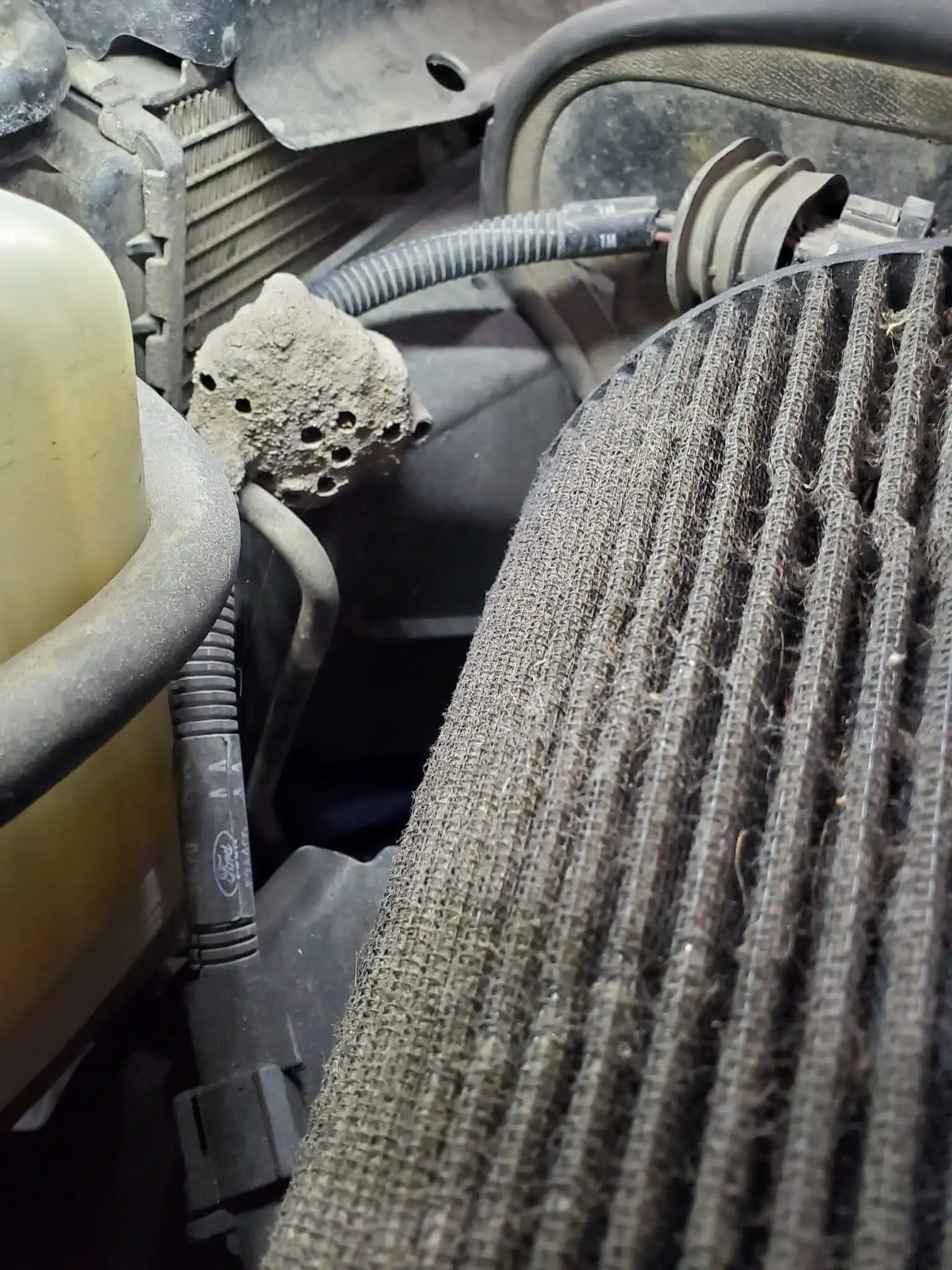

      05/22/2024Read more
    • Preparing Your Vehicle for Winter Image

      Preparing Your Vehicle for Winter

      As winter approaches, it's crucial to ensure that your vehicle is ready to face the challenges of cold temperatures, snow, and icy roads. Making the necessary preparations will not only keep you safe but also help prevent costly breakdowns and ensure your vehicle's longevity. In this blog post, we'll outline the essential steps to make sure your vehicle is winter-ready.

      1. Check Your Tires: Your tires are your vehicle's first line of defense against winter road hazards. Make sure they have sufficient tread depth to grip the road in slippery conditions. Consider switching to winter tires for improved traction. Also, check tire pressure regularly, as it tends to drop in colder weather.

      2. Test Your Battery: Cold weather can be tough on your vehicle's battery. Ensure it's in good condition by having it tested. If it's older than three to five years, consider replacing it to prevent any unexpected breakdowns on a chilly morning.

      3. Inspect the Heating System: Don't wait until you're freezing in your car to realize the heating system isn't working correctly. Have it inspected to ensure it is in proper working condition.

      4. Top-Off Fluids: Check and refill all essential fluids, including antifreeze, windshield washer fluid, and brake fluid. Antifreeze is vital for preventing freezing and engine damage.

      5. Replace Wiper Blades: Visibility is crucial during winter weather, so ensure your wiper blades are in good condition. Consider switching to winter wiper blades designed to handle ice and snow.

      6. Inspect Lights: Check all your vehicle's lights, including headlights, taillights, and turn signals. Winter days are shorter, and proper lighting is essential for safety.

      7. Carry an Emergency Kit: Be prepared for unexpected winter emergencies by packing an emergency kit. It should include items like a flashlight, extra warm clothing, a blanket, non-perishable snacks, and a first aid kit.

      8. Maintain Your Brakes: Properly functioning brakes are critical in winter driving. Have your brakes inspected and ensure they are in top condition to help you stop safely on icy roads.

      9. Check the Four-Wheel Drive: If you have a four-wheel-drive vehicle, test it before winter arrives to ensure it's working correctly. This feature can provide extra traction when driving in challenging winter conditions.

      10. Plan Regular Maintenance: Regular maintenance is essential in any season, but it's especially important in winter. Stick to your vehicle's maintenance schedule, and don't skip any services.

      By taking these steps to prepare your vehicle for winter, you'll not only keep yourself safe on the road but also extend the life of your vehicle and reduce the likelihood of costly repairs. Remember that it's always a good idea to consult a professional mechanic for a comprehensive inspection and any necessary repairs or maintenance specific to your vehicle. A winter-ready vehicle is your ticket to a safer and more comfortable driving experience during the colder months.

      11/09/2023Read more
    • Help us sock the competition this Socktember! Image

      Help us sock the competition this Socktember!


      Help us sock the competition this Socktember!

      59 Auto Repair has teamed up with other auto repair shops across the nation to collect NEW SOCKS for local charities. Our team is The Socket Wrenches and our goal is to raise 100k pairs of socks as a team! All new socks collected at 59 Auto Repair will go to RichEnDeed, with other team members socks going to the charity of their choice.

      What is Socktember?


      Socktember was started in 2020 in Washington state by the DJOJO to collect socks for local charities. Each year, it has grown to include more teams across more states, even spreading into Canada. The premise was simple; most local community services need socks. It is one of the highest demand items.

      For the month of September, we will collect new socks in our lobby. We also have collection sites at the addresses listed below.

      59 Auto Repair Monday-Friday 7a-5p 24010 W Renwick Rd Plainfield IL

      Advance Auto Parts Monday-Saturday 7:30a-9p Sunday 9a-8p 15935 Illinois Route 59 Plainfield, IL

      Napa Auto Parts Monday-Saturday 730a-7p Sunday 9a-5p 23835 W 135th Street Plainfield, IL

      Where will 59 Auto Repair’s Socks be donated?


      59 Auto Repair will be donating our new socks to RichEnDeed. It is a charity located in Plainfield.

      RichEnDeed provides the community a place to donate new or unwanted items that are available to anyone in need for FREE. Their motto is “Take what you need, leave what you can and be grateful for what you have”

      Click here to visit their website


      How can you get involved?

      By donating NEW socks! Now through the end of September, 59 Auto Repair will be collecting new sock donations. Want to donate online? Scan our Amazon wish list to send socks directly to us or Click this link

      Who is on our team?

      Who are The SOCK-et Wrenches? Our Team is made up of 10 Auto Repair Shops across the United States! How do we know each other? We met through ATI -- the Automotive Training Institute. Our group meets on a monthly basis to collaborate, learn, and grow together. This year we decided to team-up to collect socks together, across the country. At the end of the month, each of us will donate the socks that we collect within our own local community.

      Let me introduce you to some of our friends: A&H Automotive in Delray Beach, FL; Automotive Blessings in Kennesaw, GA; Buddy Isles in Littleton, NC; 59 Auto Repair in Plainfield, IL; Graham Auto Repair in Graham, WA & Yelm, WA; Ray & Dana's Inman Auto Care in Colonia, NJ; Mad Hatter Auto Repair in Omaha NE & Council Bluffs, IA; Rick's Auto Service in Mishawaka, IN; Ryan's Servicenter in Lanoka Harbor, NJ; and V&F Auto Inc. in Agawam, MA.

      Want to learn more about the History of SOCKtember? Click Here

      08/29/2023Read more
    • What is a cabin air filter? Understanding the Importance of Cabin Air Filters in Car Repair: A Guide for Plainfield Drivers Image

      What is a cabin air filter? Understanding the Importance of Cabin Air Filters in Car Repair: A Guide for Plainfield Drivers


      When it comes to car maintenance, the cabin air filter often goes unnoticed, yet it plays a crucial role in ensuring a comfortable and healthy driving experience. So, what exactly is a cabin air filter, and why is it important for car repair in Plainfield?

      A cabin air filter is a vital component of your vehicle's ventilation system, responsible for filtering the air that enters the cabin through the heating, ventilation, and air conditioning (HVAC) system. Its primary function is to trap dust, pollen, mold spores, and other airborne contaminants, preventing them from circulating inside the vehicle. This not only improves the air quality within the cabin but also protects occupants from potential respiratory issues and allergies.

      In Plainfield, where seasonal changes bring about varying levels of allergens and pollutants, having a clean cabin air filter is especially important. A clogged or dirty filter can lead to reduced airflow, decreased HVAC performance, and unpleasant odors inside the car. Furthermore, it can strain the HVAC system, potentially leading to more significant issues down the line and requiring costly car repairs.

      Regular inspection and replacement of the cabin air filter are essential for maintaining optimal air quality and HVAC performance in your vehicle. While the frequency of replacement may vary depending on driving conditions and environmental factors, it is generally recommended to replace the cabin air filter every 15,000 miles, or at least once a year.

      Fortunately, replacing the cabin air filter is a relatively simple and affordable maintenance task that can be performed during routine car servicing. Many Plainfield auto repair shops and service centers offer cabin air filter replacement as part of their standard maintenance packages.

      By staying proactive with cabin air filter maintenance, Plainfield drivers can enjoy cleaner air inside their vehicles, reducing the risk of respiratory issues and allergies, and prolonging the lifespan of their HVAC system. Additionally, maintaining a clean cabin air filter can contribute to a more pleasant driving experience overall, ensuring that you and your passengers remain comfortable on the road, regardless of the season.

      In conclusion, while the cabin air filter may seem like a small component of your vehicle, its role in maintaining air quality and HVAC performance should not be overlooked. By prioritizing cabin air filter maintenance as part of your car repair routine in Plainfield, you can ensure a healthier and more enjoyable driving environment for you and your passengers.

      02/09/2024Read more
    • Why It's Vital to Have Your Tires Checked Before Winter Image

      Why It's Vital to Have Your Tires Checked Before Winter


      As the days grow shorter and the temperature drops, winter approaches, and with it comes a unique set of challenges for drivers. Snow, ice, and cold temperatures can make the roads treacherous, turning your daily commute into a potential hazard. One crucial aspect of preparing your vehicle for winter is having your tires checked. Here's why it's important to ensure your tires are in optimal condition before the cold season arrives.

      Traction and Safety: Winter roads are unpredictable, and maintaining proper traction is essential for safe driving. Your tires are the only point of contact between your vehicle and the road. Tires with worn treads may not be able to grip the road surface adequately, increasing the risk of accidents, especially on icy or snowy roads. Regular tire checks and maintenance, such as tire rotations and alignments, can significantly improve your vehicle's traction, ultimately keeping you and your passengers safe.

      Reduced Stopping Distances: When the roads are slick with ice or snow, your vehicle's ability to stop quickly is compromised. Having tires with good tread depth can reduce your stopping distances, allowing you to react more effectively to potential hazards. This can be the difference between avoiding a collision and a potentially dangerous situation.

      Improved Handling: Winter conditions require precise vehicle control. Worn or improperly inflated tires can negatively affect your vehicle's handling, making it difficult to navigate through snow and ice. By checking your tires and ensuring they are in good condition, you can maintain better control over your vehicle, reducing the likelihood of skidding or losing control in slippery conditions.

      Enhanced Fuel Efficiency: Properly maintained tires can contribute to better fuel efficiency. Underinflated tires create more rolling resistance, forcing your engine to work harder and consume more fuel. By having your tires properly inflated and aligned, you can save on fuel costs, which can be especially beneficial during the holiday season when travel is more frequent.

      Preventing Costly Repairs: Neglecting your tires can lead to more significant problems down the road. For example, driving on underinflated tires can cause premature tire wear and potentially damage your vehicle's suspension and alignment. Avoiding these issues through regular tire checks and maintenance can save you from costly repairs in the long run.

      Peace of Mind: Knowing that your vehicle is equipped with reliable tires can provide peace of mind during the winter months. You'll feel more confident on the road, even in challenging conditions, knowing that your tires are up to the task.

      In conclusion, having your tires checked before winter is a crucial step in ensuring your safety, the safety of your passengers, and the longevity of your vehicle. From improved traction and handling to reduced stopping distances and enhanced fuel efficiency, the benefits of well-maintained tires are clear. Don't wait until the first snowfall; take proactive measures to have your tires inspected and serviced by a professional to ensure a safe and worry-free winter driving experience. Your safety and peace of mind are worth it.

      10/31/2023Read more
    • Why is my car's air conditioning blowing warm?  Image

      Why is my car's air conditioning blowing warm?

      Oh, the glorious Illinois summer! It’s just around the corner, and while we all love the sunshine, there's one thing that can quickly turn a blissful drive into a sweltering nightmare: a broken car air conditioner. If you're sweating bullets in your vehicle and searching for "car repair Plainfield" to fix that frosty problem, you've come to the right place! Here at 59 Auto Repair, we're not just experts in all things automotive; we're also your Plainfield IL air conditioning gurus, ready to get you chilling out on the road again.

      Let's face it, nobody wants to spend their commute feeling like they’re driving through a desert. A properly functioning AC system isn't just a luxury; it's a necessity for comfort and even safety on those really hot days. Overheating can lead to fatigue and a lack of concentration, so keeping your cool literally keeps you safe. When your car's AC starts blowing warm air, making strange noises, or simply not blowing at all, it's a clear sign that it's time for a professional to take a look. Don't suffer through another hot ride!

      Now, you might be wondering what goes into fixing your car's AC. It's more than just "adding freon" (a common misconception!). Modern automotive air conditioning systems are quite sophisticated, and they rely on a refrigerant to cool the air. For many years, the standard refrigerant was R-134a. Most vehicles on the road today still use R-134a, and our skilled technicians at 59 Auto Repair are fully equipped and experienced in diagnosing and repairing systems that use this refrigerant. We can check for leaks, inspect components like the compressor, condenser, and evaporator, and ensure your R-134a system is running at peak performance.

      But wait, there's a new kid on the block in the world of automotive refrigerants: 1234yf. This newer refrigerant was introduced to be more environmentally friendly, with a much lower global warming potential than R-134a. Many newer vehicles (generally 2017 and newer models, though it can vary by manufacturer and model year) are designed to use 1234yf. Servicing these systems requires specialized equipment and training, and you guessed it – 59 Auto Repair is ahead of the curve! Our team has the expertise and the cutting-edge tools necessary to properly service and repair your vehicle’s 1234yf air conditioning system. So, whether your car is a seasoned veteran or a brand-new ride, we've got your AC needs covered.

      Beyond just the refrigerant, an effective AC repair involves a thorough inspection of the entire system. This includes checking for leaks in hoses and connections, examining the compressor for proper function, ensuring the condenser is clean and free of obstructions, and verifying that the evaporator isn't clogged. Even the smallest leak can lead to a significant loss of cooling power. Our comprehensive diagnostic process ensures we pinpoint the exact problem, rather than just guessing. This saves you time and money in the long run by avoiding unnecessary repairs.

      So, if you're in Plainfield, IL, and your car's air conditioning is on the fritz, don't sweat it! Give 59 Auto Repair a call or stop by. We're your local experts for "car repair Plainfield," and we're passionate about keeping you comfortable on the road. From routine AC recharges to complex compressor replacements, we handle it all with a smile and the highest level of professionalism. Get ready to enjoy a perfectly chilled ride, no matter how hot it gets outside. Your comfort is our priority, and we look forward to getting your AC blowing icy cold air again!

      06/12/2025Read more
    • Unveiling the Importance of Emissions Testing: Promoting Cleaner and Greener Roads Image

      Unveiling the Importance of Emissions Testing: Promoting Cleaner and Greener Roads

       
      Emissions testing plays a vital role in ensuring that vehicles on our roads are environmentally friendly and comply with established regulations. While the topic of emissions testing may seem complex and technical, its significance cannot be overstated. In this blog, we will delve into the world of emissions testing, exploring its purpose, procedures, and the positive impact it has on our environment and overall air quality.

      Understanding Emissions Testing

      1. What is emissions testing?

      Emissions testing, also known as vehicle emissions inspection or smog testing, is a process that measures the amount of pollutants emitted by a vehicle's exhaust system. It aims to identify excessive emissions of harmful substances, such as carbon monoxide (CO), nitrogen oxides (NOx), and hydrocarbons (HC), which contribute to air pollution and negatively impact human health.

      2. Why is it important?

      Emissions testing serves multiple crucial purposes. First and foremost, it helps ensure that vehicles comply with local, regional, and national emissions standards, promoting cleaner air and reducing pollution levels. Additionally, it assists in identifying malfunctioning or poorly maintained vehicles that may emit pollutants at higher-than-allowed levels, leading to timely repairs and improvements.

      3. How does it work?

      Emissions testing is typically performed using specialized equipment that measures the exhaust emissions while the vehicle is running. The process may involve a combination of tailpipe emissions testing, onboard diagnostics (OBD) scanning, and evaporative system leak testing, depending on the specific requirements and regulations in place. Testing protocols can vary between different regions and countries.

      The Positive Impact of Emissions Testing

      1. Environmental benefits

      Emissions testing significantly contributes to reducing air pollution, which has a direct impact on public health and the environment. By identifying vehicles that emit excessive pollutants, corrective actions can be taken, including repairs, maintenance, or the retirement of high-polluting vehicles from the road. This, in turn, leads to cleaner air, improved respiratory health, and a reduction in greenhouse gas emissions.

      2. Technological advancements

      Emissions testing has been a driving force behind the development of cleaner and more efficient automotive technologies. Stricter emissions standards and the need to pass testing requirements have spurred innovation in vehicle design, leading to the introduction of catalytic converters, improved fuel injection systems, hybrid and electric vehicles, and other advancements aimed at reducing harmful emissions.

      3. Compliance and enforcement

      Emissions testing acts as a mechanism for ensuring compliance with emission standards set by regulatory bodies. Through regular testing and monitoring, authorities can identify non-compliant vehicles and take appropriate actions, such as issuing fines, penalties, or requiring repairs and retesting. This creates a level playing field and fosters a culture of responsible vehicle ownership and operation.

      Emissions testing is a critical component of efforts to combat air pollution and promote environmental sustainability. By identifying vehicles that exceed emission limits, emissions testing helps maintain cleaner air quality, protect public health, and drive the adoption of cleaner automotive technologies. It is imperative that vehicle owners and operators prioritize regular emissions testing to ensure their vehicles meet required standards and contribute to a greener and healthier future. Together, let's embrace the importance of emissions testing and work towards cleaner and more sustainable transportation systems.
      05/10/2023Read more
    • What happens when your battery cables rust? Image

      What happens when your battery cables rust?


      Your car battery is the lifeblood of your vehicle's electrical system. It provides the power to start your engine, run your lights, and keep all the other electronic components functioning. But even the most robust battery can be brought down by a seemingly minor issue: rusted battery cables.

      Rust, the bane of many a mechanic and car owner alike, can wreak havoc on your battery cables. As the metal components degrade, the electrical connection between the battery and your car's electrical system weakens. This can lead to a number of problems, including:

      • Difficulty starting your car: This is the most common symptom of rusted battery cables. The corrosion acts like an insulator, preventing the proper flow of electricity needed to crank your engine.
      • Dim lights: If your battery isn't getting a good connection, it won't be able to provide enough power for your headlights, taillights, and other lights to shine as brightly as they should.
      • Electrical malfunctions: In severe cases, rusted battery cables can cause electrical gremlins, leading to erratic behavior from various electronic components in your car.

      Spotting the Signs of Rust

      The good news is that rusted battery cables are usually fairly easy to spot. Here are some telltale signs to look for:

      • Green, white, or blue crusty buildup around the battery cable terminals (the ends that connect to the battery posts)
      • Cracks or fraying in the cable insulation
      • Loose cable connections that easily wiggle

      Taking Action on Rust

      If you suspect your battery cables are rusted, it's important to take action sooner rather than later. Here's a quick guide to get you started:

      1. Disconnect the battery: Safety first! Always disconnect the negative terminal first, followed by the positive terminal.
      2. Inspect the cables: Check the severity of the rust. If it's a light layer of corrosion, you may be able to clean it with a wire brush and a baking soda solution.
      3. Cleaning the cables: For a more thorough cleaning, you can purchase a battery terminal cleaning kit from your local auto parts store. These kits typically include a wire brush, cleaning solution, and terminal protector.
      4. Replace excessively damaged cables: If the rust is severe, or if the cables are cracked or frayed, you'll need to replace them altogether.

      You can always bring your vehicle to the trusted mechanics at 59 Auto Repair and we will clean the battery cables for you.

      Preventing Future Rust

      Once you've dealt with the existing rust, there are steps you can take to prevent it from coming back:

      • Apply terminal protector: After cleaning the terminals, coat them with a thin layer of petroleum jelly or a commercially available terminal protector spray. This will help to prevent moisture from reaching the metal.
      • Inspect regularly: Make it a habit to check your battery cables for signs of rust during routine maintenance checks.

      By following these tips, you can keep your battery cables rust-free and ensure your car starts reliably every time you turn the key. Remember, a little preventive maintenance can go a long way in avoiding a roadside headache down the line.

      If you want someone to take care of the maintenance for you, give us a call today at (815)254-9959 and we can schedule an appointment.

      03/20/2024Read more
    • Squeaking while Braking  Image

      Squeaking while Braking

      Why does my car squeak when I brake? Squeaking while braking is an indication that the brake pads are worn out. Brake pads have a wear indicator that will make noise when the brake pads get thinner. The technician will inspect your brake pads, brake rotors, brake calipers, and other braking components to see what needs to be replaced. The life of your brakes vary depending on the type of driving you do; if you do more highway driving your brakes tend to last a little longer than if you do a lot of around town driving due to the amount you use the brakes. If you suspect your brakes are worn, please give us a call to schedule an appointment! Now through the end of the June (5/1-6/30/22) receive a $40 Visa Gift when you spend $250 or more on brake parts! 

      05/12/2022Read more
    •  Navigating Auto Repairs in Plainfield: Your Comprehensive Guide Image

       Navigating Auto Repairs in Plainfield: Your Comprehensive Guide


      In the vibrant community of Plainfield, where every turn of the road unveils a new adventure, ensuring your vehicle is in top-notch condition is crucial. Whether you're a long-time resident or a newcomer, finding reliable auto repair services in Plainfield is essential for the longevity and performance of your vehicle. In this comprehensive guide, we'll explore the key aspects of auto repair in Plainfield, helping you make informed decisions and keep your vehicle running smoothly.

      Local Auto Repair Shops:

      Start your journey by exploring the local auto repair shops in Plainfield. 59 Auto Repair is an establishment with a solid reputation and positive customer reviews. Personal recommendations from friends and family can also be valuable in finding trustworthy service providers. Did you know 40% of 59 Auto Repair’s new customers come in from a friend’s recommendation? Remember, a reliable auto repair shop not only fixes your car but also provides excellent customer service.

      Services Offered:

      Different auto repair shops specialize in various services. Some may focus on general maintenance, while others excel in complex repairs or specific vehicle makes. Make sure to choose a shop that aligns with your needs. Whether it's routine maintenance, brake repairs, or engine diagnostics, selecting a shop with expertise in the required service ensures quality workmanship. 59 Auto Repair has skilled mechanics that are ready to take on all your automotive needs.

      Certified Technicians:

      Certifications are a testament to the skills and knowledge of auto technicians. When searching for auto repair in Plainfield, prioritize shops with certified technicians. Certification from reputable organizations indicates that the technicians have undergone rigorous training and are up-to-date with the latest industry standards. 59 Auto Repair employs ASE Certified technicians that go to training throughout the year to keep up to date on technology changes.

      Transparent Pricing:

      Auto repairs often come with uncertainties, but a transparent pricing policy can alleviate concerns. Seek auto repair shops in Plainfield that provide detailed estimates before starting any work. Understanding the costs involved helps you make informed decisions and avoids any surprises when it's time to settle the bill. 59 Auto Repair also performs digital inspections on every vehicle so you know exactly what we find.

      Timely and Efficient Service:

      Time is of the essence when it comes to auto repairs. Choose a shop that values your time and provides timely and efficient services. Quick turnaround times without compromising on quality are indicative of a well-managed and customer-focused auto repair facility.

      In conclusion, navigating the world of auto repair in Plainfield doesn't have to be daunting. By considering the factors mentioned above, you can confidently choose an auto repair shop that meets your needs. Whether you're facing an unexpected breakdown or planning routine maintenance, this guide will empower you to make informed decisions and ensure your vehicle remains a reliable companion on Plainfield's roads. Give 59 Auto Repair a call today to make an appointment!

      01/26/2024Read more
    • Elevating Excellence: What It Means to Be an ASE World Class Technician and Its Value to 59 Auto Repair Image

      Elevating Excellence: What It Means to Be an ASE World Class Technician and Its Value to 59 Auto Repair

      At 59 Auto Repair, we're not just about fixing cars; we're about delivering peace of mind and building lasting trust with our customers. That's why we're incredibly proud of our commitment to excellence, a commitment exemplified by the prestigious ASE World Class Technician recognition. But what exactly does it mean to be "World Class," and how does it translate into tangible benefits for you, our valued customer, and our business? Let's dive in.

      What Does It Mean to Be an ASE World Class Technician?

      Imagine a doctor who not only specializes in one area but has mastered virtually every medical discipline. That's essentially what an ASE World Class Technician is in the automotive world. It's not just another certification; it's the pinnacle of achievement for automotive professionals.

      The National Institute for Automotive Service Excellence (ASE) is a non-profit organization that tests and certifies automotive professionals. While thousands of technicians hold various ASE certifications, the "World Class Technician" designation is incredibly rare and signifies an extraordinary breadth and depth of knowledge.

      To earn this elite status, a technician must achieve 22 specific ASE certifications, encompassing a wide range of automotive disciplines. These include:

      • A1-A8 (Automotive Series): Covering everything from engine repair and automatic transmissions to brakes, steering and suspension, electrical systems, heating and air conditioning, and engine performance.
      • T1-T8 (Medium/Heavy Truck Series): Demonstrating expertise in areas specific to larger vehicles.
      • B2-B5 (Collision Repair Series): Highlighting proficiency in structural analysis, damage repair, and painting/refinishing.
      • L1 and L2 (Advanced Level Certifications): These are specialized tests that delve into advanced engine performance and diagnostic skills.

      Only a tiny fraction of the estimated 887,000 technicians in the U.S. achieve this level of recognition – typically fewer than 50 annually. It's a lifelong designation, a testament to a technician's unwavering dedication to continuous learning and mastery of the ever-evolving automotive landscape.

      The Value an ASE World Class Technician Adds to 59 Auto Repair

      Having ASE World Class Technicians on our team at 59 Auto Repair isn't just a badge of honor; it's a direct investment in the quality, efficiency, and trustworthiness of our services. Here's the immense value it adds to our business and, more importantly, to you:

      1. Unparalleled Expertise and Diagnostic Accuracy: With 22 certifications under their belt, our World Class Technicians possess an encyclopedic knowledge of vehicle systems. This translates to quicker, more accurate diagnoses, even for the most complex and elusive automotive problems. Less time spent troubleshooting means faster repairs and lower costs for you.
      2. Superior Quality of Work: Their comprehensive understanding ensures that repairs are not just done but done right the first time. This reduces the likelihood of repeat visits for the same issue, saving you time, frustration, and money in the long run. You can be confident that your vehicle is in the most capable hands.
      3. Staying Ahead of the Curve: The automotive industry is constantly innovating. From advanced driver-assistance systems (ADAS) to hybrid and electric vehicles, the technology is evolving rapidly. Our World Class Technicians are committed to ongoing education and are always up-to-date with the latest advancements, ensuring we can service even the newest and most sophisticated vehicles.
      4. Enhanced Customer Confidence and Trust: When you see the "ASE World Class Technician" insignia, it instills a profound sense of confidence. It tells you that your vehicle is being handled by a professional who has voluntarily gone above and beyond to prove their skills and commitment to excellence. This trust is the cornerstone of our business at 59 Auto Repair.
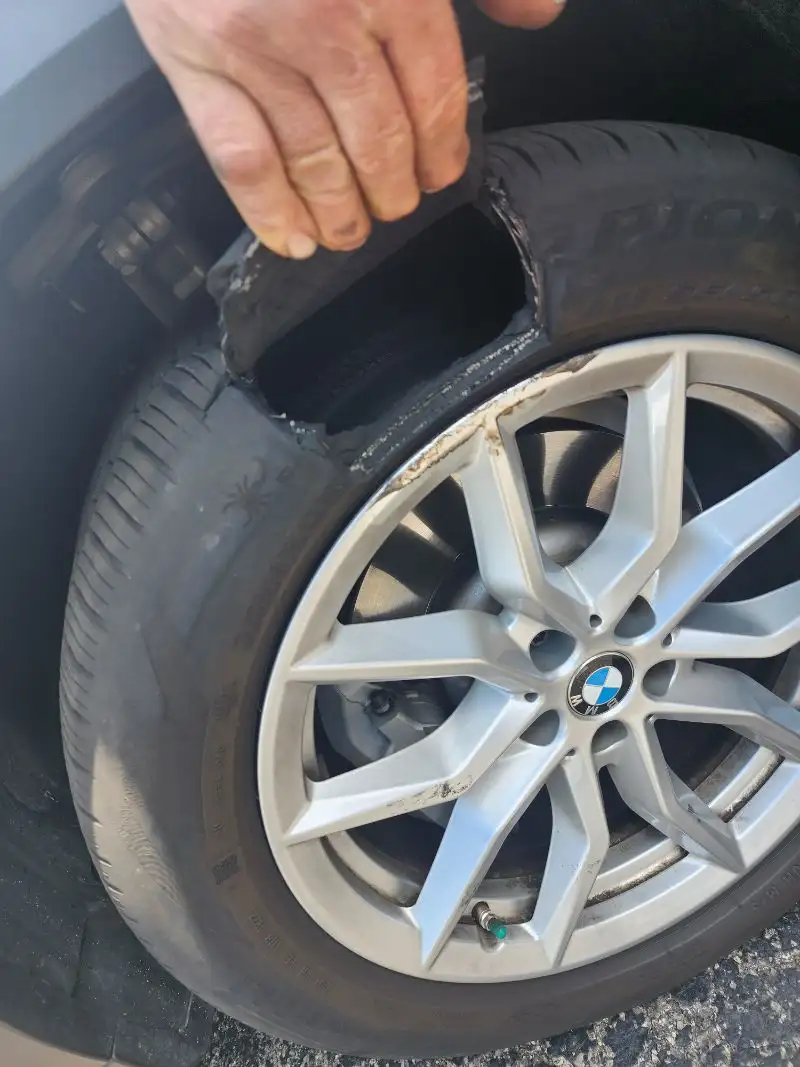
      5. Efficiency and Cost-Effectiveness: Their ability to accurately diagnose and efficiently repair means less wasted time and parts. This translates into more streamlined service and a more cost-effective solution for our customers. We aim to get you back on the road safely and efficiently, without unnecessary expenses.

      At 59 Auto Repair, we believe that investing in our technicians' growth and expertise is the best way to invest in our customers. The presence of ASE World Class Technicians on our team reflects our unwavering dedication to providing the highest caliber of automotive service. When you choose 59 Auto Repair, you're choosing a team that's truly "World Class."

      06/24/2025Read more
    • Replacing Your Vehicle's Tires: Ensuring Safety and Performance Image

      Replacing Your Vehicle's Tires: Ensuring Safety and Performance


      When it comes to maintaining your vehicle, few things are as crucial as its tires. A worn-out or damaged set of tires can compromise both your safety and the performance of your vehicle. In this blog post, we'll explore the importance of replacing your vehicle's tires and provide some essential tips to help you make informed decisions.

      1. Safety First:

      Your vehicle's tires are the only contact point between your car and the road. As such, they play a critical role in ensuring your safety while driving. Worn-out tires with reduced tread depth can significantly impact your vehicle's ability to grip the road, especially in wet or icy conditions. By replacing your tires before they become excessively worn, you minimize the risk of hydroplaning, skidding, or losing control of your vehicle, thus enhancing your safety and the safety of others on the road.

      2. Improved Performance:

      Beyond safety concerns, replacing your vehicle's tires can also have a significant impact on its overall performance. Tires with adequate tread depth and in good condition provide better traction, responsiveness, and handling. They ensure optimal braking performance and cornering stability, allowing you to enjoy a smoother and more enjoyable driving experience. Whether you have a sports car, a family SUV, or a compact sedan, selecting the right set of tires designed for your specific vehicle can enhance its performance and make your daily commutes or road trips more enjoyable.

      3. Signs of Wear and Tear:

      Knowing when to replace your tires is essential. Some common signs of wear and tear include worn-out tread patterns, cracks, bulges, or uneven wear. Additionally, if you frequently find yourself needing to add air to your tires, it may be a sign of a slow leak or puncture. Regularly inspecting your tires for these signs and having them checked by a professional is crucial. Many tires have wear indicators—small rubber bars located between the tread blocks—as a visual indication of when the tires need to be replaced.
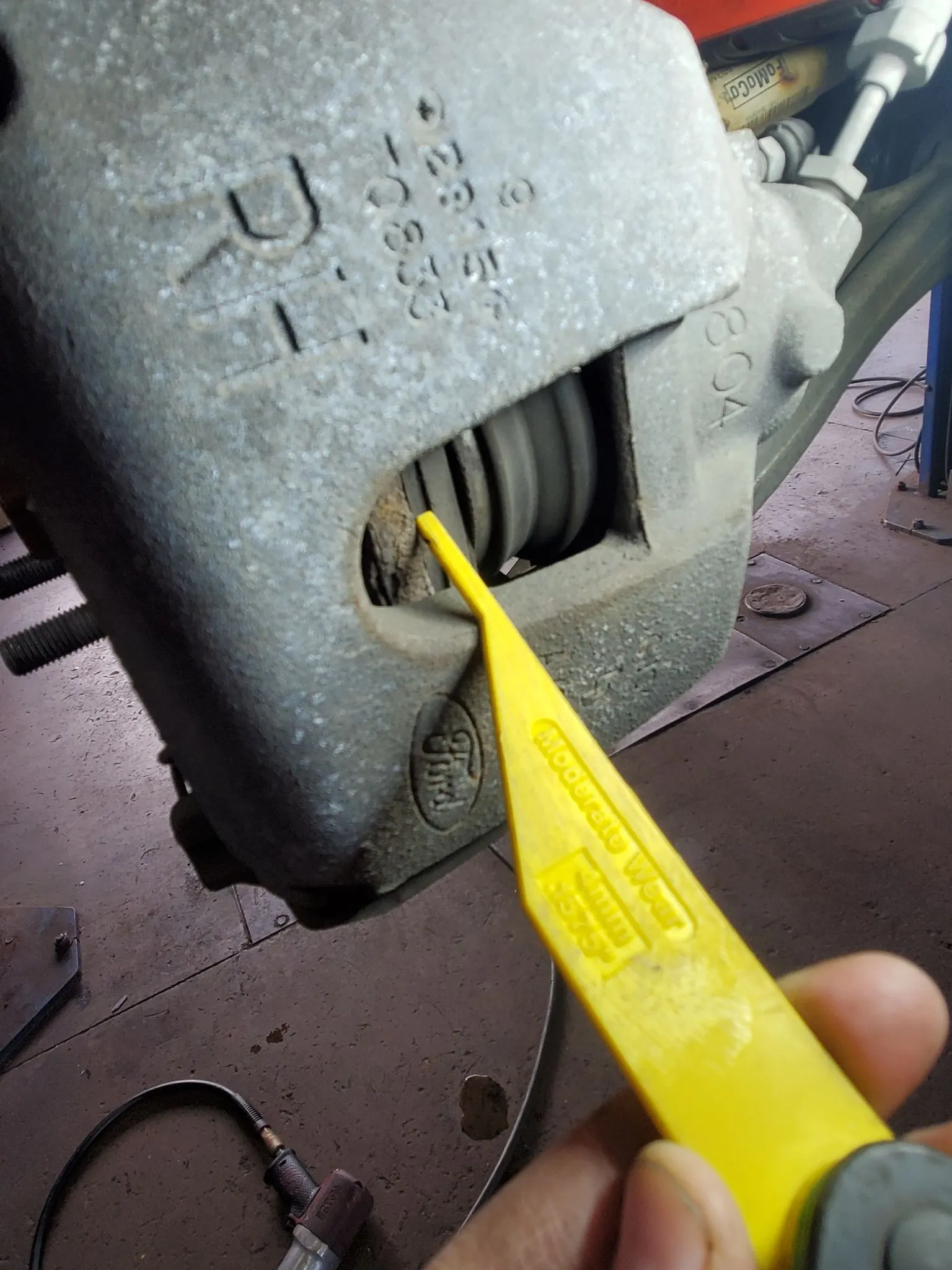
      4. Choosing the Right Tires:

      When it comes to selecting new tires, there are several factors to consider. These include the type of vehicle you drive, the weather conditions you typically encounter, and your driving habits. Different tire types, such as all-season, summer, or winter tires, are designed to perform optimally in specific conditions. Additionally, considering the tire's load capacity and speed rating is important to ensure compatibility with your vehicle's specifications. Consulting with a tire professional or referring to your vehicle's manual can help you make an informed decision and select the right set of tires for your needs.
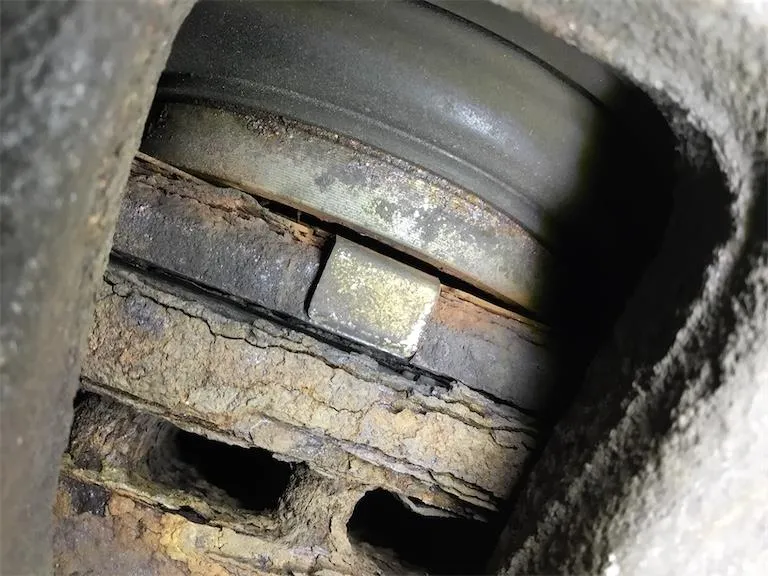
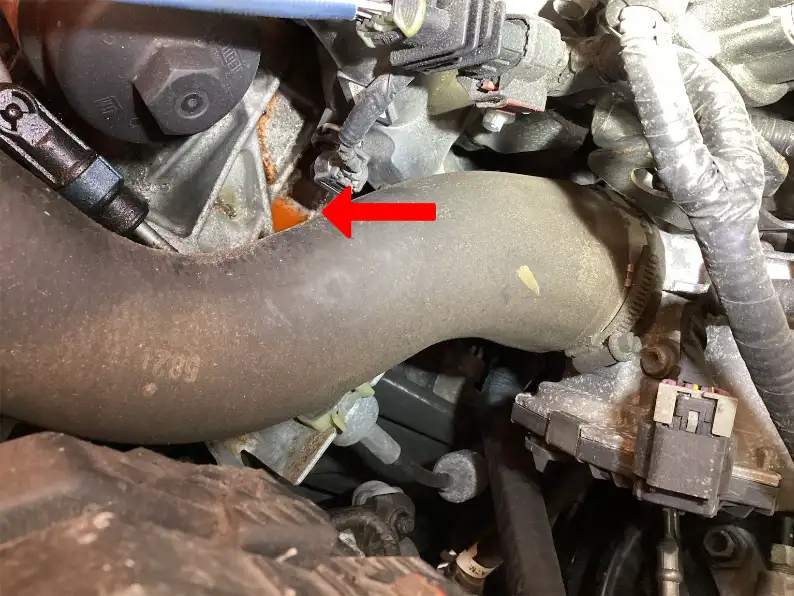
      Replacing your vehicle's tires is not only a matter of safety but also an investment in its overall performance. By staying vigilant, regularly inspecting your tires, and replacing them when necessary, you can enjoy a safer and more enjoyable driving experience. Prioritize tire maintenance and make informed decisions to ensure your vehicle is ready to hit the road with confidence.

      07/03/2023Read more
    • The Dangers of a Loose Ball Joint: A Critical Vehicle Safety Concern Image

      The Dangers of a Loose Ball Joint: A Critical Vehicle Safety Concern

      When it comes to vehicle maintenance and safety, there are numerous components that require regular attention. One such critical element is the ball joint, a vital part of a vehicle's suspension system. A loose ball joint can have severe consequences, affecting not only the performance of your vehicle but also jeopardizing your safety and that of others on the road. In this blog post, we will delve into the dangers of a loose ball joint, emphasizing the importance of regular inspections and maintenance to ensure a smooth and secure driving experience.

      Understanding the Ball Joint:

      Before we explore the dangers, let's briefly understand what a ball joint is and its role in a vehicle's suspension system. The ball joint serves as a flexible pivot point, connecting the control arms to the steering knuckles or axle assemblies. It enables the wheels to move up and down while steering, maintaining stability and providing a comfortable ride.

      Dangers of a Loose Ball Joint:

      1. Loss of Steering Control: A loose ball joint can significantly impact your ability to control your vehicle. When a ball joint becomes worn or loose, it affects the alignment of the wheels, leading to imprecise steering and reduced responsiveness. This can make it challenging to navigate corners, change lanes, or make sudden maneuvers, increasing the risk of accidents.

      2. Wheel Misalignment: A loose ball joint can cause the affected wheel to become misaligned. Misaligned wheels result in uneven tire wear, compromising traction, and reducing braking efficiency. This not only decreases the overall performance of your vehicle but also poses a serious safety hazard, especially in adverse weather conditions or emergency situations.

      3. Suspension System Failure: The ball joint acts as a crucial link in the suspension system, which helps absorb shocks and vibrations from the road. A loose ball joint compromises the suspension's integrity, causing excessive play and instability. This leads to a bumpy ride, reduced handling capabilities, and an increased likelihood of losing control, particularly when encountering bumps or potholes.

      4. Tire Damage and Blowouts: As a ball joint becomes loose, it allows the affected wheel to move and wobble independently. This irregular movement puts additional stress on the tire, resulting in uneven wear and tear. Over time, this can lead to tire damage, including bulges, cuts, or tread separation, ultimately increasing the risk of a sudden tire blowout, which can have catastrophic consequences while driving at high speeds.

      Prevention and Maintenance:

      Prevention is always better than dealing with the aftermath of a loose ball joint. Regular maintenance and inspections are crucial to identifying and addressing potential issues early on. Here are some essential maintenance practices:

      1. Regular Inspections: Have your vehicle inspected by a qualified mechanic regularly, especially if you notice any unusual noises, vibrations, or changes in handling. A professional can check for signs of wear and tear, excessive play in the ball joint, or any other suspension-related concerns.

      2. Routine Maintenance: Follow the manufacturer's recommended maintenance schedule for your vehicle, which often includes suspension system inspections. This includes lubricating the ball joint if applicable, checking for signs of damage, and replacing worn-out parts promptly.

      3. Be Vigilant: Pay attention to any warning signs indicating a problem with your suspension system or ball joints. These signs may include clunking or rattling noises, vibrations, difficulty steering, or uneven tire wear. Taking prompt action can prevent further damage and ensure your safety on the road.

      A loose ball joint is a significant safety concern that should not be taken lightly. It compromises the vehicle's handling, steering, and overall stability, posing a risk to both the driver and others on the road. Regular inspections and maintenance are essential to identifying and addressing ball joint issues before they escalate. Call us for an appointment today!
       
      06/12/2023Read more
    • How does a catalytic converter go bad?  Image

      How does a catalytic converter go bad?

      Most catalytic converters fail because of overheating, fouled substrate, or structural damage. When a catalytic converter fails, it can cause the check engine light to come on. If it breaks, it will also make the exhaust sound louder than normal. The catalytic converter will fail from fouled substrate if the vehicle is burning too much oil. This will cause a build up of carbon in the converter, which will internally damage it. If you have dark exhaust smoke, reduced acceleration, sluggish engine performance, the smell of rotten eggs, or a check engine light, your catalytic converter may need to be replaced. Our mechanics will inspect the exhaust system to determine if the catalytic converter is bad. Call us today to schedule an appointment!  

      04/27/2022Read more

    We are a Digital Shop

    The 59 Auto Repair technicians use the latest technology to not only tell you if there are any issues with your vehicle, but show you. If we uncover an issue the photo will be e-mailed to you for your records. At the end of every visit you will receive a detailed report regarding the general health of your vehicle. Our #1 goal is to keep you safe on the road.

    Read more
    Background Image Image
    • Bosch_Service
    • AAA APPROVED AUTO REPAIR
    • 2021 NAPA SHOP OF THE YEAR
    • ASE BLUE SEAL OF EXCELLENCE RECOGNIZED BUSINESS
    • Napa Gold Cert.
    • Napa Auto Care 23 Backgroundless
    • AutoTechIQ
    Google Maps is loading